Professor David Nutt receives 2013 John Maddox Prize for Standing up for Science

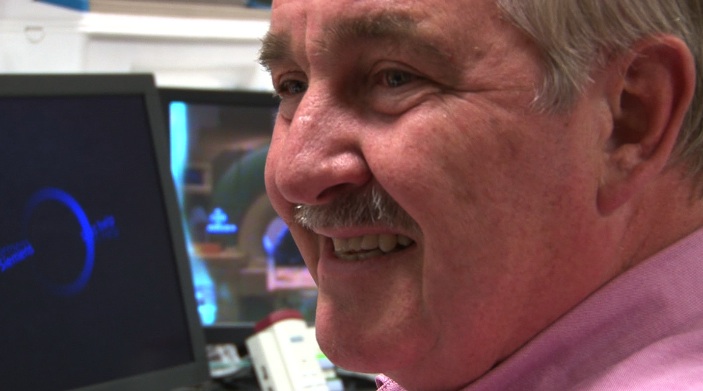
The Royal Pharmaceutical Society played host to a packed crowd last night as Professor David Nutt was announced this year’s winner of the John Maddox Prize for Standing Up for Science.

More than 100 members of the scientific community attended the event to see the former UK government chief drugs advisor awarded the international prize. He was recognised for his courage in promoting science and evidence on a matter of public interest, despite facing difficulty or hostility in doing so.

The prize, now in its second year, is a joint initiative of Nature, the Kohn Foundation, and the charity Sense About Science. Sir John Maddox, former editor of Nature for 22 years, whose name the prize commemorates, was a passionate and tireless champion and defender of science, engaging with difficult debates and inspiring others to do the same.

The judges awarded the prize to Professor Nutt in recognition of the impact his thinking and actions have had in influencing evidence-based classification of drugs, in the United Kingdom and elsewhere in the world, and his continued courage and commitment to rational debate, despite opposition and public criticism.

Professor David Nutt

Professor David Nutt


The Awards has so far featured onNewsnight (36.30 – 45.52), including a live interview with Professor Nutt and judge Colin Blakemore, as well as the Guardian, the ConversationYahoo News and Imperial College London. Continue reading

First Arab fellow of the Lister Institute of Preventive Medicine in the UK

sherif el khamisy

{credit}Sherif El-Khamisy{/credit}

Sherif El-Khamisy, director of the Center for Genomics at Zewail City of Science and Technology, became the first Egyptian and Arab to win a prize fellowship at the Lister Institute of Preventive Medicine, a UK medical research charity which supports young researchers. He beat a total of 164 nominees to be one of the four fellows who will receive £200,000 to further his research.

El-Khamisy and his team are working on repairing DNA breakage and the impact this can have on human health. “Our programme will utilise a combination of cellular and whole animal approaches to unravel the mechanisms by which breaks in one strand of DNA – the most abundant DNA lesion in cells – are repaired and determine the impact of loss of these mechanisms on tissue viability,” he explains. “This work will expand our knowledge of DNA repair and translate it into tangible ideas and new treatment paradigms for cancer and degenerative disorders.”

Using the research fund, El-Khamisy will maintain his current lab at the University of Sussex while also running a new one at the University of Sheffield. “The Sussex lab work will focus primarily on the drug discovery aspects of our work – very exciting leas are already in the pipeline,” he says. The new lab at Sheffield will focus on molecular, cellular and whole animal approaches – particularly zebra fish – to study the mechanisms involved in DINA breakage and repair.

“Both labs will feed and interact with the Genome Center at Zewail City, focusing on Egypt-related problems – primarily living with cancer,” he adds. Ultimately, El-Khamisy hopes his research can produce new treatments which would improve patient quality-of-life, particularly at old age.

“Besides the research financial award and recognition, [the fellowship] puts us on the map of top quality scientists and allows us to be part of a prestigious network of people who meet routinely to collaborate and discuss science. It is all about the network,” says El-Khamisy. “I am thrilled that the award now goes to an Egyptian scientist and hope that our research will open new frontiers in medicine, particularly in the field of genome stability”

Mutant-flu researchers appeal Dutch court ruling on export permits

The Erasmus Medical Center in Rotterdam, the Netherlands, where researchers led by Ron Fouchier created mammalian-transmissible strains of the H5N1 avian flu virus, this week appealed a September court ruling obliging it to request an export permit before submitting such research for publication.

Export controls are part of an international legal regime intended to prevent exports of technology or information that could result in proliferation of chemical or biological weapons — including ‘dual-use’ materials that can have both legitimate and malicious uses. H5N1 is one of a list of more than a hundred dangerous human, animal, and plant pathogens that fall under export control laws.

Last year, the Dutch government invoked European export control legislation to oblige Fouchier and the centre to obtain an export permit before publishing a paper in Science describing how he engineered the strains. Fouchier initially threatened to defy the government by publishing without a permit, but conceded under protest. He applied for a permit in April, and the government granted it a few days later. (See “The Netherlands grants export licence for mutant flu work” and the Nature Special on Mutant flu.)

Although Erasmus MC acquiesced to the government, it also filed a legal challenge, arguing that it should not have needed to apply for a permit – on the grounds that the work fell under exemptions in EU export control laws for ‘basic research’, and that it described methods that were already in the public domain (see “Court upholds need for export permits for risky flu research“). One goal of the challenge was also to have future papers on similar research exempted from the need to apply for an export permit before publishing.

On 20 September, however, a ruling by the district court of the North Holland region of the Netherlands rejected these arguments, affirming that the research had practical goals beyond basic research, and that its methodology was novel — and so did not qualify for exemption. The court also argued that the need to prevent the proliferation of biological weapons outweighed the few weeks of delay necessary for government review of such papers.

It’s this ruling that Erasmus MC has now decided to appeal, just as the six week window in which it could do so drew to a close. Fouchier was unavailable for comment. A spokesman for the centre says that because the case is under appeal, Erasmus MC and its staff may not discuss the issues with the media.

Reactions: Philippe Zinck

Philippe Zinck is at the Catalysis and Solid State Chemistry Unit, University Lille 1 (France) and works on polymerization catalysis, with a focus on functional and bio-based polymers. He goes on Twitter by @PhilippeZinck.

1. What made you want to be a chemist?

I studied materials science, because at that time the materials science department of my college was more oriented toward research. I did the first year of my masters as an exchange student in Berlin, and the macromolecular chemistry teacher was really excellent, so I fell in love with that specialty. When I went back to France I chose the polymer chemistry department for the second year of my masters and my lab training period, and I stayed for my PhD.

2. If you weren’t a chemist and could do any other job, what would it be – and why?

Well I think I could have been a researcher in many other fields like physics or biology for example. What really makes me happy in my job is the research adventure. A bit like the ancient explorers, the researcher is discovering new territories, and that’s what makes me happy and excited when I go to work every morning (or almost).

3. What are you working on now, and where do you hope it will lead?

We are just starting a biorefinery project for making bio-based polymers, with several industrial and academic partners. It’s a 10 year project, and you rarely have projects that last so long in our profession. Honestly, I don’t know where it will lead, but it gives me the opportunity to work on issues in society. I hope it will be a success story.

4. Which historical figure would you most like to have dinner with – and why?

Pierre-Gilles de Gennes. I find the way he conducted research fascinating. A lot of his discoveries were achieved through analogies between different research fields. Besides, he was also an excellent teacher, and did a lot to raise high school student’s interest for research. He also took an interest in societal issues. I had the chance to give a seminar in his lab several years ago and to meet him briefly, but not to have dinner with him!

5. When was the last time you did an experiment in the lab – and what was it?

I had to open my lab-book to check. It was in July 2010, I was trying to polymerize some carbohydrate derivatives in a new way, but it did not succeed. These kinds of reactions almost never work, and that would have demoralized the students, so I used to do them myself.

6. If exiled on a desert island, what one book and one music album would you take with you?

I’m hesitating between a world encyclopedia of wines and a longboard user manual, but the latter will definitely be more useful on a desert island! For the music, I’ll take one of Pink Floyd’s albums, probably Atom Heart Mother, a fantastic brass instruments album.

7. Which chemist would you like to see interviewed on Reactions – and why?

Well, I think that green chemistry is more than ever an essential issue for our society, for many reasons that I will not explain here. Scientists from this area should be interviewed on Reactions, like Barry Trost for example, among many others.

 

NME’s weekly science dose (Oct 25 – Oct 31)

If there is one thing that the Middle East has an abundance of (besides oil), it would be conflicts. We start our weekly update with a visit to two of these conflict zones: Iraq and Syria.

A recent the survey on the number of people killed in Iraq, the first since 2006, has found that nearly half a million people have died due to the war, though not all deaths are a direct result of violence. Around 40% of those deaths were due to poor healthcare and sanitation, as well as infrastructure failures, which have increased since the US-led invasion of Iraq. Baghdad was the worst hit with violence, but even though the news tend to report most about explosive cars and suicide bombs, gunshots were responsible for 63% of the war-related violent deaths – more than three times those killed by bombs and explosives actually.

In neighbouring Syria, the ongoing civil war is creating a healthcare crisis across the country. Many doctors have fled in fear for their lives, leaving inexperienced doctors – and often veterinarians – to handle the influx of injured people due to the fighting. Experienced doctors outside the country are trying to ease these doctors into these daunting situations using modern technology to help them. Webcams and Skype are being set up in operation rooms to allow doctors thousands of kilometres away to guide local doctors on tricky operations. They are also offering video tutorials to teach them about other conditions they are likely to meet as they try to fill the healthcare void in their country.

On a non-conflict related threat (but still a very real one), researchers found that the increasing aridity of global drylands due to climate change may alter the nutrients cycle in the soil, leading to a decrease in carbon and nitrogen but an increase in inorganic phosphorous in the soil. This could negatively affect the people who depend on drylands for living, since it could lead to a decrease in the plant productivity. It will also decrease the capacity of these ecosystems to act as CO2 sinks and capture the greenhouse gas from the atmosphere.

Beyond the hood

The Kepler telescope has found an interesting new exoplanet, reported in yesterday’s Nature. It has a similar size to Earth, a similar density to Earth and probably has a similar core to Earth. But that’s where the similarities end. The exoplanet which is dubbed Kepler-78b, is a lava planet, with temperatures on the surface usually reaching 2000-2800°C. It’s year is only 8.5 hours long, orbiting its star about 100 times closer than our planet orbits the Sun.

In fact, it is so close to its star that scientists are confused it could form where it did. While it may not the habitable planet we are all waiting for, it’s an important step in the search for Earth-like planets, now that scientists can measure planets this small.

On a more earthly note, two new treatments for Hepatitis C are nearing approval, with scientists saying these can make a cure for the viral epidemic, for the first time, a real option. This is the first HCV treatment since interfeuron came into use, and and when taken with ribavirin, eliminates hepatitis C in around 80% of people. The main hurdle for these drugs would be the cost, since most of the people who carry the hepatitis C virus worldwide may not be able to afford the treatment. However, for countries such as Egypt where nearly one in every five carries the virus, the new treatment may be the most important break the healthcare system ever got to fight the spread of the epidemic.

Alice’s Analysis: Pieces of Light by Charles Fernyhough

Over the coming months, Nature’s Head of Press, Alice Henchley, will be reading and reviewing the books shortlisted for the 2013 Royal Society Winton Prize for Science Books, at a rate of one every week.  The winner will be announced at a public event at the Royal Society on the 25th November 2013 during which shortlisted authors will discuss their books with host Dara O Briain.  Prior to the announcement,  we’re running a competition on Of Schemes and Memes to win a set of the shortlisted books – all you have to do is predict the winning book and enter our prize draw.

Pieces Book jacketMemory, and its idiosyncrasies, is something we all have in common.  With this as a basis, it’s easy for Fernyhough to draw us into Pieces of Light.  Try to remember your earliest childhood memory.  How old were you?  How well does the memory tally with those of your parents, your siblings?  It’s these kinds of scenarios that set you as an active character in the book and are at its heart, prompting us to question what memory truly is and how it functions.

In the case of early memories, it seems that few individuals remember events from when they were less than two and a half. Fernyhough explains that this is likely because we have not yet developed the ability to describe experiences in words and we need this ability to use language in order to code and store them.  He turns to many other elements of memory, including our memories of late teens and early adulthood, why smells and sounds can evoke such strong recollections and how we create imagined memories. Using endless case studies and anecdotes from his own life, with neurological asides, he explains autobiographical memory. Continue reading

Bundled RNA balls silence brain cancer gene expression

{credit}Mirkin lab, Northwestern{/credit}

Scientists have developed a nanotechnology-based way to silence a key genetic switch involved in the formation of glioblastoma brain cancer. The technique, which delayed tumor growth in mice, consists of an injection of synthetic balls of RNA with a gold nanoparticle core. Researchers think similarly engineered RNA blobs, called spherical nucleic acids (SNAs), could eventually be used to treat Alzheimer’s disease and other neurodegenerative ailments.

“We are really excited about this,” says Alexander Stegh, a cancer biologist at the Northwestern University Feinberg School of Medicine in Chicago who helped develop the new cancer-killing SNA platform. “It’s a really novel approach.”

One of the biggest challenges for researchers wishing to treat brain-related diseases is crossing the blood-brain barrier, a separation of circulating blood that blocks bacteria and large molecules from entering the brain. Recent attempts to address this issue in brain cancer have involved injecting gene-silencing RNA directly into brain tumors. This method, called RNA interference (RNAi), is designed to neutralize the expression of important oncogenes. But injecting RNA through the skull poses a number of safety and logistical issues, and is inefficient in cases involving more than one tumor site.

Continue reading

Citizen Science: A Hobby with implications

Petra

Petra D’Odorico is an environmental / earth system scientist studying land vegetation dynamics from space and in the field. She has a PhD from the University of Zurich where she continued working as a postdoc at the Remote Sensing Laboratories of the Geography Department. Currently, she is a Postdoctoral Fellow at the Grassland Science Group at the Institute of Agricultural Sciences of the Swiss Federal Institute of Technology, working on plant phenology and ecosystem biogeochemical cycles.

How ordinary people are helping us understand climate change and much more 

When it all began, not much was known about them and the academic elite were wary. But then – in times of harsh budget cuts with institutional funding and research support drying out – mistrust is a luxury only few can afford. Unsurprising then, that in recent years academia has begun opening its gates to a workforce that has appeared at the right time, seems intelligent enough, is eager to contribute and has enough free time to help collect data on all kinds of species and phenomena: Citizen Scientists. But how did it all begin?

Back in 1999, the University of California at Berkeley invited citizens to donate idle time on their home computers to analyze radio telescope data with the hope of discovering signals from extraterrestrial civilizations (SETI@home). In 2005, a second project kicked off, this time run by the University of Washington in Seattle, allowing volunteers to download a program devoted to the difficult problem of protein folding (Rosetta@home). Soon it became clear that computing power was not the only resource hiding in those homes. Scientists realized that human brainpower was the real capital to be outsourced. By mid-2008, an interface allowed users not just to assist the computation but also to interact with it helping it to converge to a solution more quickly. The Citizen Science Era had officially begun!

Continue reading

‘Ethical failure’ leaves one-quarter of all clinical trials unpublished

Hundreds of thousands of patients have been exposed to potential harm in clinical trials whose results have yet to be published since their completion nearly five years ago.

This amounts to “a failure to honour the ethical contract that is the basis for exposing study participants to the risks inherent in trial participation,” says the team behind the finding.

In a paper published today in the British Medical Journal, Christopher Jones, a physician at Cooper Medical School of Rowan University in Camden, New Jersey, and his colleagues looked at 585 clinical trials registered on the US government’s ClinicalTrials.gov website and officially completed as of January 2009. For 171, or 29%, of those, the team found no existing peer-reviewed publication. Although some of these had reported their results on ClinicalTrials.gov, 133 trials had no results on this site or in published journal papers.

Many medical researchers fear that studies that do not prove a treatment is effective are more likely to remain unpublished, skewing the medical literature and harming patients by giving a false impression of treatments’ efficacy. There are also concerns that the pharmaceutical industry may be tempted to bury findings that do not support the use of its products. (In Jones’s study 150 of the unpublished trials were funded by industry, 11 by the US government and 20 by other sources.)

But there is a more fundament ethical problem stemming from researchers’ failure to publish their findings, the authors of the report write.

“The non-publication of trial data … violates an ethical obligation that investigators have towards study participants,” they say. “When trial data remain unpublished, the societal benefit that may have motivated someone to enrol in a study remains unrealized.”

They estimate the total number of patients involved in just the 171 trials they found were unpublished was 299,763.

The Science of Spin

Julia Archbold is a National Health and Medical Research Postdoctoral Fellow at the Institute for Molecular Bioscience in Brisbane, Australia. She has worked for industry, spending three years as a screening biologist with AstraZeneca in Australia. Her PhD research investigated the structures of T cell receptors and their ligands, providing insight into organ transplant rejection. Her PhD work led to the Victorian Premier’s Award for Medical Research in 2010. After postdoctoral work at the University of Auckland in Professor Ted Baker’s lab on G protein coupled receptors, Julia has returned to the University of Queensland to continue working in the area of structural immunology. This year she was awarded the UQ Early Career Researcher Grant for her work on the structures of Membrane Proteins. Julia also contributes articles to the Australian Biochemist magazine.

Science arose from poetry… when times change the two can meet again on a higher level as friends.Johann Wolfgang von Goethe

The definition of spin according to the free dictionary is “to provide an interpretation of (a statement or event, for example), especially in a way meant to sway public opinion”. Should swaying and convincing your peers that your interpretation of your results is correct be the basis for a good research article? Do we, as researchers, need to fine-tune the science of spin?

spinning topIt was my PhD supervisor at Monash University who repeatedly asked me this question, etching it into my brain: “Julia, what is the punch line of your paper?” Back then I was confused: how do I know what the main message of my paper will be is if I haven’t finished my experiments or written the paper? But looking back, I realize he was training me. To write a good research article, you must know the main message you are trying to get across. The end of your paper, as well as the ending sentence of your abstract, is absolutely critical. You need to have a short, catchy, one sentence summary of the main finding of your work, and why people should care.

At the end of my PhD, I attended a media training session. The trainers encouraged us to simplify our research to communicate our results with the public. Again, they told me to come up with ‘one short catchy sentence’ to convey my research to the public, and repeat that over and over in interviews, so that people get the take home message. For those who have ever participated in the 3 minute thesis competition, you will know how hard it is to condense years of research into a couple of minutes let alone one sentence!

Since my PhD days, both of the institutes I have worked at, namely the University of Auckland and the University of Queensland, have emphasised our obligation as scientists to communicate our research with the public. It is the public who fund the majority of our research and they deserve an explanation of why they should continue to give us the dollars. And thus, the science of spin is born. How do you put the best light on your research to attract the money from the funding bodies, from the public and get published in the best journals? Continue reading