Standing up for science

Dr David Robert Grimes

Dr David Robert Grimes

Guest post by Dr David Robert Grimes

Next week, the winner of the 2016 John Maddox Prize for standing up for science will be announced. The prize is unique in that it rewards not just sound science and evidence, but courage and communication. Living in an era recently pronounced to be “post-truth” recognising those individuals who share their work, even in the face of challenge and personal attacks, feels more relevant than ever.

One of the curious paradoxes of our time is that it has never been easier to access information, yet this same freedom allows misinformation to metastasize ever further at a furious rate. This can make it difficult to parse the sea of claims we encounter every day. If we as a society are to make informed decisions, then scientists have a crucial role to play by lending their expertise to public discussions, and helping people understand what the evidence tells us. And equally, scientists have a lot to learn from this exchange of ideas and views.One of the major issues with communicating science is that contentious topics are often divided along ideological lines and impervious to the evidence. And when this bias is an issue, one can be attacked for communicating the scientific consensus if it clashes with strongly held beliefs, be it the subject vaccination, genetically-modified organisms or climate change. In these circumstances, threats, smears and personal abuse are not uncommon reactions.

2016 John Maddox prize advert

Click here for to read more about the recipient of the 2016 prize


This can be deeply unpleasant, and sometimes makes challenging dubious science feel like a Sisyphean task. The John Maddox Prize for standing up for science is a way of rewarding contributions to the public understanding of science, and of honouring those who stand fast when the going gets tough. Past winners have lost their jobs or funding, had their reputation and research challenged. But the best of them go on. The prize is also a timely reminder that we must be guided by evidence and the scientific method rather than the sound and fury of strong ideological convictions or invective rhetoric.

In 2014 I was awarded the prize. It was an honour, and on a personal level it was also a shot in the arm which reminded me that despite the occasional hostility such work may receive, communicating science and advocating for evidence-based policy is truly appreciated and ultimately worthwhile.

I continue to engage in science outreach every day because I firmly believe that scientists can help shape the vital discussions we need to have as a society, on issues that affect everyone — from climate change to geopolitics.  If we are truly to find pragmatic effective solutions to the towering issues facing us today, we will need to encourage evidence in the public sphere, and help facilitate that dialogue.

Yes it’s tempting to give into despair, and embrace the idea we live in a post-truth society where facts simply don’t matter. But this is unduly cynical – the evidence to date strongly suggests the public at large highly value objective evidence in shaping our decision making.

Sir John Maddox, whom this prize commemorates, knew that better than anyone. As his friend Walter Gratzer said: “His forthrightness brought him some enemies, often in high places, but many more friends. He changed attitudes and perceptions, and strove throughout his long working life for a better public understanding and appreciation of science.” We all have a part to play in continuing his legacy and standing up for science every day.

Dr David Robert Grimes is a physicist and cancer researcher, based at University of Oxford. He writes on science and society for a variety of outlets, including The Guardian and Irish Times and contributes frequently to radio and television. He was awarded the John Maddox Prize in 2014. He tweets at @drg1985

The winner of the 2016 John Maddox Prize for standing up to science will be announced on Thursday 17 November at a reception London. Follow @nresearchnews and @senseaboutsci  to hear the news first.

Nominations open: 2014 John Maddox Prize for Standing up for Science

2.0.1

John Maddox: A tireless champion and defender of science.

Nominations are open for the annual John Maddox Prize for Standing up for Science. The award recognises an individual who has promoted sound science and evidence on a matter of public interest.

Last year saw more than 100 members of the scientific community gather at the Royal Pharmaceutical Society to congratulate Professor David Nutt. The former UK government chief drugs adviser was awarded the international prize as recognition for his courage in promoting science and evidence, despite facing difficulty of hostility in doing so.

The prize, now in its third year, is a joint initiative of Nature, the Kohn Foundation, and the charity Sense About Science. Sir John Maddox, former editor of Nature for 22 years, whose name the prize commemorates, was a passionate and tireless champion and defender of science, engaging with difficult debates and inspiring others to do the same.

On winning the award in 2013, Professor Nutt, said: “Science is arguably the defining characteristic of humanity. It therefore is imperative that scientists play their full role in all aspects of human life. Being awarded this prize gives me the confidence to continue to do what’s right, and hopefully will inspire others to follow suit.”

Continue reading

Nature Partner Journal Editor honoured in Queen’s Birthday Honours List

Honoured for his services to medicine.

Honoured for his services to medicine.

Professor Aziz Sheikh, the Joint Editor-in-Chief of the new Nature Partner Journal, npj Primary Care Respiratory Medicinehas been awarded an OBE for services to medicine in the Birthday Honours list.

The award is recognition of the contributions Aziz has made throughout a career during which he has advised the English and Scottish Governments on patient safety, was an adviser to NHS Connecting for Health’s Evaluation Programme, served as a member of the Information Technology for Patient Safety Expert Working Group of the World Health Organization’s World Alliance for Patient Safety (2009-2010), and is now chairman of the Patient Safety in Primary Care Working Group for the World Health Organization.

Professor Sheikh is Professor of Primary Care Research & Development at The University of Edinburgh, UK where he is also co-director of its Centre for Population Health Sciences and the head of its Allergy & Respiratory Research Group.

He read Physiology and Medicine at University College London and then read Epidemiology at the London School of Hygiene and Tropical Medicine.  Clinically, he trained in General Practice at Northwick Park Hospital in Harrow and received specialist training in allergy at the Royal Brompton Hospital.  He has Fellowships from the Royal College of Physicians in both London and Edinburgh and the Royal College of General Practitioners.

Professor Sheikh has editorial experience with a number of journals, including the BMJ (editorial advisor, Primary Care editorial advisor) and PLOS Medicine (section advisor, Guidelines and Guidance). He holds visiting chairs at the University of Birmingham (UK), Queen Mary’s University of London (UK), Maastricht University (Netherlands), and Brigham and Women’s Hospital/Harvard Medical School (USA). He regularly publishes in leading international journals and details of his publications can be found on Research Gate.

He was appointed Joint Editor-in-Chief of the Primary Care Respiratory Journal in 2011 and in 2014 oversaw the re-launch of the journal under its new title, npj Primary Care Respiratory Medicine, as part of the Nature Partner Journal series.

Professor David Nutt receives 2013 John Maddox Prize for Standing up for Science

The Royal Pharmaceutical Society played host to a packed crowd last night as Professor David Nutt was announced this year’s winner of the John Maddox Prize for Standing Up for Science.

More than 100 members of the scientific community attended the event to see the former UK government chief drugs advisor awarded the international prize. He was recognised for his courage in promoting science and evidence on a matter of public interest, despite facing difficulty or hostility in doing so.

The prize, now in its second year, is a joint initiative of Nature, the Kohn Foundation, and the charity Sense About Science. Sir John Maddox, former editor of Nature for 22 years, whose name the prize commemorates, was a passionate and tireless champion and defender of science, engaging with difficult debates and inspiring others to do the same.

The judges awarded the prize to Professor Nutt in recognition of the impact his thinking and actions have had in influencing evidence-based classification of drugs, in the United Kingdom and elsewhere in the world, and his continued courage and commitment to rational debate, despite opposition and public criticism.

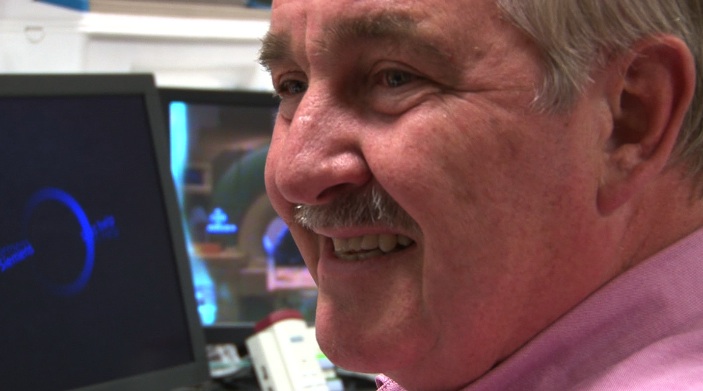
Professor David Nutt

Professor David Nutt


The Awards has so far featured onNewsnight (36.30 – 45.52), including a live interview with Professor Nutt and judge Colin Blakemore, as well as the Guardian, the ConversationYahoo News and Imperial College London. Continue reading