A New Science of Learning, Accessible to All

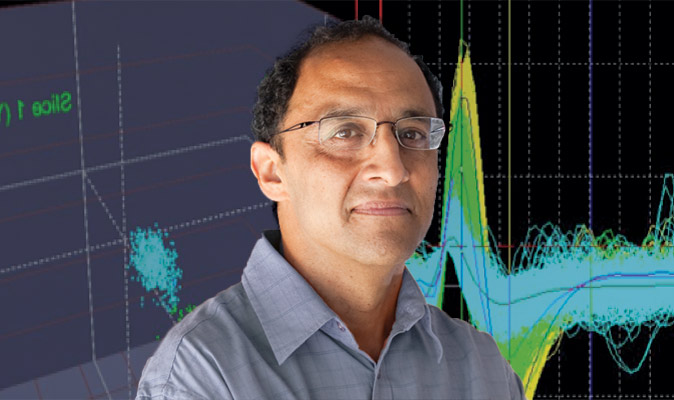
web_pankajGuest post by Professor Pankaj Sah, Director, Queensland Brain Institute and Editor-in-Chief, npj Science of Learning

In partnership with Nature Publishing Group, the Queensland Brain Institute is launching an open access journal dedicated to the science of learning – npj Science of Learning. We want to create a forum through which neuroscientists, psychologists and educators interact to produce a deeper understanding of how we learn. Just as important as this interdisciplinary approach is the open access model we are adopting. Education affects us all, and we want the findings, discussions and debates within the journal to be accessible to everybody, academic or not.

Education and the neuroscience of learning may seem like they dovetail perfectly. After all, learning takes place in the brain and is the foundation of education. As we understand more about how the brain learns, surely this knowledge can inform educational practice? In theory yes, but there is a large conceptual gap between knowing the neural processes that underlie learning and using this to benefit classroom practices. This is where cognitive psychology comes in, as an essential stepping stone between the neuroscience of learning and practical implementation. Ultimately, we think that it is this collaborative approach from researchers in different disciplines—neuroscience, cognitive psychology and education—that will improve educational practice and long-term educational outcomes.

We also think that open access is the right move for academic publishing in general, and even more so for npj Science of Learning. Although the prohibitively high costs of academic journal subscriptions have prevented even the most exclusive, well-funded research institutions from maintaining comprehensively stocked libraries, the impact on middle-tier or lower-tier institutions—particularly from developing countries—is much greater. This unbalanced impact on socioeconomically underdeveloped countries is especially relevant in the field of education.

Education is associated with enhanced health and wellbeing and a more productive economy, and it is exactly these factors that are high priorities for disadvantaged countries. Yet if a paywall prevents people from poorer countries from having access to the cutting edge discourse on learning and education, they cannot learn from or contribute to the debate. It just doesn’t make sense for the most impacted people to be sidelined from the discussion, and we’re happy that by making our content open access, everybody can contribute and everybody can benefit.

Another reason we think that the open access format is ideal for a journal on the science of learning is that the interested parties are not just academics. Teachers and policymakers are two notable examples. Their ideas and opinions currently drive education practice and assessment, and we feel that this thinking should be shaped by the research – it is no use finding ways to improve classroom learning if those practices cannot or will not be implemented. Traditionally, however, these groups have not had direct and easy access to academic research. Open access overcomes this issue and should allow informed debate of the issues at hand by all parties. Parents are another group who are heavily invested in education, yet they too are currently removed from the policies and research that will shape the futures of their children and grandchildren.

This wide array of interested parties does pose a problem of sorts, as does the interdisciplinary nature of the journal: how can we ensure that everybody can understand the specialised research findings that are at the heart of the journal? To address this concern, npj Science of Learning will further break down the barriers to collaborative advance by providing jargon-free summaries of all the research we publish. We want all parties to be able to contribute to the discussion on learning and education, and that requires making the research accessible not just financially, but also intellectually.

We are looking forward immensely to seeing how the collaborative framework enabled by our journal will influence education through a new science of learning. By ensuring that research, discussion and policy perspectives are accessible to all, we think that open access is the ideal platform for our journal dedicated to improving learning and education.

Professor Pankaj Sah is renowned for his work in understanding the physiology of excitatory synapses and synaptic plasticity in the amygdala, an area of the brain involved in emotional processing. He is currently Deputy Director (Research) and Director of the Science of Learning Research Centre at The Queensland Brain Institute (QBI). Previously he was group leader at the John Curtin School of Medical Research at the Australian National University and moved to The University of Queensland as a founding member of QBI in 2003.

His laboratory continues to study the amygdala using a combination of molecular tools, electrophysiology, anatomical reconstruction and calcium imaging. More recently his laboratory has begun research work on humans doing electrophysiological recordings in patients undergoing electrode implantation for deep brain stimulation for the treatment of movement disorders in Parkinson’s disease, essential tremor and Tourette’s syndrome. He has published over 90 papers in international peer reviewed journals.

 

Connecting Minds from Across the Globe

Guest post by Myra Biblowit, President & CEO of the Breast Cancer Research Foundation

Myra-Biblowit_Headshot_2015As the most common cancer in women worldwide and the second most common cancer overall, breast cancer remains a fact of life.

The latest data released in 2012 showed that nearly 1.7 million women around the globe were diagnosed and incidence rates are on the rise. It is the leading cause of cancer death in the world’s poorest countries.  If we do not put a stop to this epidemic, 13 million people will lose their lives to breast cancer in the next 25 years.

That prognosis, however, does not have to become our reality.  At the Breast Cancer Research Foundation, we know how to bring an end to cancer. The answer: Research.

Why Research

It is because of research that we have learned more about breast cancer in the past two decades than in the last 500 years.  Thanks to the tireless efforts of physicians and scientists, we have learned that breast cancer is not just one but many diseases, we have advanced our understanding of the inherited risk of breast cancer and developed precision medicine and individualized therapies to put an end to one-size-fits-all treatment.

When BCRF was founded just over 20 years ago, a breast cancer diagnosis inspired fear and little hope. Scientific understanding of the nature of the disease and how it moved through the body was still nascent. Investigations on prevention strategies were fledgling, screening methods were limited and treatment options were few.

Since 1993, BCRF has raised $575 million in critical funding for cancer research worldwide to fuel advances in tumor biology, genetics, prevention, treatment, metastasis and survivorship. This year, BCRF is the largest private funder of breast cancer research in the world. Every hour of research we fund improves outcomes and saves lives.

We have made research our mission because investing in research produces real results.  BCRF funded researchers have been deeply involved with every major breakthrough in prevention, diagnosis, treatment and survivorship.  Deaths from breast cancer have dropped 30 percent over the last 20 years.  If diagnosed early, a breast cancer diagnosis has a 90 percent survival rate vs. the 65 percent survival rates in the 1970s. That is real progress.

Research is revolutionizing our understanding of cancer, answering questions critically important to patients and transforming lives every days as women and men get the help they need. The breakthroughs that have been achieved from breast cancer research are also helping to inform other cancers including ovarian, cervical, and melanoma. Today, with science and technology working hand in hand, we are closer to prevention and cure than ever before.

A world free of cancer is possible. Research is the key to making that hope a reality. Partnering with the Nature Publishing Group is a critical step towards further elevating BCRF’s scientific leadership in cancer research.

Collaboration is Key

At the Foundation, we have underscored the critical tenet of collaboration in research for over two decades—across institutions and disciplines. We support 240 scientists on five continents working around the clock on solving one of the world’s greatest health problems. The launch of our open access journal, npj Breast Cancer, in partnership with Nature Publishing Group in June 2015 is a great step towards fostering and further expanding this model of knowledge sharing. The research published in this journal is free to access immediately upon publication, and can be easily shared, meaning that it is accessible to clinicians and patients as well as researchers.

This October, BCRF will host two key research symposia connecting scientists from around the world. The Symposia, in New York and Boston, will highlight progress made in breast cancer research while addressing topics that are top of mind in the field.

On October 29, more than 180 researchers will gather 1,000 guests at the New York Symposium and Awards Luncheon at the Waldorf Astoria titled “Progress in Killing Drug-Resistant Cancer Cells.” Panelist Dr. Joan Brugge of Harvard Medical School will be honored with the Jill Rose Award for her distinguished work to advance understanding of the molecular and cellular biology of breast cancer. Dr. Suzanne Fuqua of Baylor College of Medicine and Dr. Vered Stearns of Johns Hopkins will also serve on the panel moderated by BCRF Scientific Director Dr. Larry Norton and BCRF Scientific Advisory Chairman Dr. Clifford Hudis—both of whom also serve at Memorial Sloan Kettering Cancer Center and as the Editors-in-Chief of npj Breast Cancer.

On October 23, the Boston Research Symposium and Luncheon held in memory of noted breast surgeon Dr. Carolyn Kaelin, will gather more than 300 guests. The discussion, titled “Understanding Women’s Risk for Breast Cancer and Other Cancers,” will feature panelists Dr. Judy Garber of Dana-Farber Cancer Institute and Dr. Nadine Tung of Beth Israel Deaconess Medical Center, moderated by Chairman of BCRF’s Scientific Advisory Board Dr. Clifford Hudis.

Before our scientists take the stage for these public events, they will take part in a scientific meeting, a tradition that’s been in place since 2003. Conceived by Scientific Director Dr. Larry Norton, the conference presents the opportunity to explore important topics in breast cancer research, with a program carefully chosen by BCRF’s Scientific Advisory Board. This year’s meeting, held at Memorial Sloan Kettering Cancer Center, will feature a series of presentations and lively discussion from BCRF-supported experts on the prevailing challenges of drug resistance and strategies to improve outcomes through novel combination therapies and precision medicine. These scientific meetings have historically inspired new collaborations and scientific discourse that accelerate discovery, and we are confident that the outcomes of this year’s meeting will be no different in taking us to our ultimate goal of better prevention and treatment of breast cancer.

Join us. Help fuel the research of today needed to save lives tomorrow. Visit bcrfcure.org.

Visit the npj Breast Cancer website to find out more.

The Breast Cancer Research Foundation (BCRF) is committed to being the end of breast cancer by advancing the world’s most promising research. Founded by Evelyn H. Lauder in 1993, BCRF-funded investigators have been deeply involved in every major breakthrough in breast cancer prevention, diagnosis, treatment and survivorship. In 2015, BCRF will award $48.5 million to support 240 researchers at leading medical institutions internationally, making it one of the largest non-governmental funders of breast cancer research in the world. By investing 91 cents of every dollar directly in its mission, BCRF remains one of the nation’s most fiscally responsible nonprofits. BCRF is the only breast cancer organization with an “A+” from CharityWatch, together with Charity Navigator’s highest rating of four stars 13 times since 2002. Visit www.bcrfcure.org to learn more.


npj Parkinson’s Disease: Opening Up Access to Scientists and Patients Alike

Guest post by James Beck and Paul Zimmet, Parkinson’s Disease Foundation.

Many scientists, as evidenced by recent discussions, appreciate the value of an open access journal – the convenience of being able to immediately and freely access the latest articles, for example, and the value in a freer exchange of scientific ideas. But what may be less obvious is why this matters to the community served by the Parkinson’s Disease Foundation (PDF) – the patients whose lives are directly impacted by the advances and disappointments in Parkinson’s disease research.

Just two months ago, when the PDF announced its partnership with Nature Publishing Group (NPG) in launching npj Parkinson’s Disease, both communities were on our minds. Our primary goal of working with NPG is to create a home where the best science about Parkinson’s disease can be gathered in one place for all to read and freely shared. But equally important to PDF is the goal of empowering the Parkinson’s community to be a part of the research that will ultimately solve their disease.

People with Parkinson’s disease, or any chronic condition, need to be well-informed about their own disease in order to fight it effectively. But how can you do that when most people do not have direct access to the latest research on the disease?

PDF believes that open access can help to change that. In this way, open access is the right thing to do for the patient community. But even more compelling, we would argue that it is the effective thing to do … because it can accelerate Parkinson’s research.

This has been our experience working with our network of more than 200 PDF Research Advocates. They (including one of the authors of this blog) can directly attest to the effectiveness of this patient engagement approach.

PDF Research Advocates "in action"- educating the Parkinson's community about the importance of participating in PD clinical research studies. (Image: PFD)

PDF Research Advocates “in action”- educating the Parkinson’s community about the importance of participating in PD clinical research studies. (Image: PDF)

Continue reading

Nature Partner Journal Editor honoured in Queen’s Birthday Honours List

Honoured for his services to medicine.

Honoured for his services to medicine.

Professor Aziz Sheikh, the Joint Editor-in-Chief of the new Nature Partner Journal, npj Primary Care Respiratory Medicinehas been awarded an OBE for services to medicine in the Birthday Honours list.

The award is recognition of the contributions Aziz has made throughout a career during which he has advised the English and Scottish Governments on patient safety, was an adviser to NHS Connecting for Health’s Evaluation Programme, served as a member of the Information Technology for Patient Safety Expert Working Group of the World Health Organization’s World Alliance for Patient Safety (2009-2010), and is now chairman of the Patient Safety in Primary Care Working Group for the World Health Organization.

Professor Sheikh is Professor of Primary Care Research & Development at The University of Edinburgh, UK where he is also co-director of its Centre for Population Health Sciences and the head of its Allergy & Respiratory Research Group.

He read Physiology and Medicine at University College London and then read Epidemiology at the London School of Hygiene and Tropical Medicine.  Clinically, he trained in General Practice at Northwick Park Hospital in Harrow and received specialist training in allergy at the Royal Brompton Hospital.  He has Fellowships from the Royal College of Physicians in both London and Edinburgh and the Royal College of General Practitioners.

Professor Sheikh has editorial experience with a number of journals, including the BMJ (editorial advisor, Primary Care editorial advisor) and PLOS Medicine (section advisor, Guidelines and Guidance). He holds visiting chairs at the University of Birmingham (UK), Queen Mary’s University of London (UK), Maastricht University (Netherlands), and Brigham and Women’s Hospital/Harvard Medical School (USA). He regularly publishes in leading international journals and details of his publications can be found on Research Gate.

He was appointed Joint Editor-in-Chief of the Primary Care Respiratory Journal in 2011 and in 2014 oversaw the re-launch of the journal under its new title, npj Primary Care Respiratory Medicine, as part of the Nature Partner Journal series.