Obama launches multibillion-dollar brain-map project

You are currently viewing a placeholder content from YouTube. To access the actual content, click the button below. Please note that doing so will share data with third-party providers.

More Information

US President Barack Obama today officially launched an ambitious multi-year project to probe the human brain in action. In a preview of his 2014 budget request, expected next week, he said he would ask Congress for about US$100 million to get the Brain Research through Advancing Innovative Neurotechnologies (BRAIN) Initiative off the ground.

The ambitious plan, originally dubbed the Brain Activity Map, created a buzz when word of it crept out ahead of schedule in February. With big backers in the White House, such as Tom Kalil at the Office of Science and Technology Policy (see ‘Behind the scenes of a brain-mapping moon shot‘), it seemed as though the project had the chance of becoming a signature administration initiative. This morning in the grand East Room of the White House, Obama left little doubt of that, comparing the BRAIN Initiative to the US quest to put a man on the Moon and calling it “the next great American project”.

Between our ears, he said, “there is this enormous mystery waiting to be unlocked, and the BRAIN Initiative will change that by giving scientists the tools they need to get a dynamic picture of the brain in action.”

Current technology allows scientists to record the activity of up to hundreds of neurons in action. The BRAIN Initiative aspires to map the function of thousands or hundreds of thousands of neurons simultaneously, as they function at the speed of thought. Obama acknowledged the difficulties involved, but said: “Think about what we could do once we do crack this code.” He imagined an amputee playing the piano or throwing a baseball, people fully recovering after a stroke or traumatic brain injury and cures for autism and Alzheimer’s disease.

Significantly, the White House has engaged Cori Bargmann, a neuroscientist at Rockefeller University in New York, to co-chair a National Institutes of Health (NIH) committee that will develop a detailed scientific plan for the project including timetables, milestones and cost estimates. (Neurobiologist William Newsome of Stanford University will be the other co-chair.) Bargmann had been one of the proposed project’s vocal critics, suggesting to Nature that it represented “central planning inside the [Washington, DC] Beltway” and worrying whether it would crowd out “bottom-up”, investigator-initiated research.

The president’s 2014 budget, due for release as soon as next week, will request $50 million in funding for the BRAIN initiative through the Defense Advanced Research Projects Agency; $40 million from the NIH, mainly through an existing multi-institute initiative called the NIH Blueprint for Neuroscience Research; and $20 million from the National Science Foundation. Details on the kind of work that each agency will contribute are available on this fact sheet. The project is expected to cost billions of dollars over more than a decade.

The White House also noted its plans to collaborate with private foundations that are already at work in dynamic brain-mapping efforts. It highlighted commitments from the Allen Institute for Brain Science in Seattle ($60 million annually over four years); the Howard Hughes Medical Institute’s campus at Janelia Farm in Ashburn, Virginia (at least $30 million annually); the Kavli Foundation in Oxnard, California, whose original efforts brought the project to the White House’s attention ($4 million annually for ten years); and the Salk Institute for Biological Studies in San Diego, California, which has committed $28 million.
Report recommends devolution for US global AIDS relief programme

The huge, ten-year-old US programme that provides HIV treatment and prevention in dozens of developing countries needs to begin shifting to host-country ownership of the programme, according to an advisory report released today.

The 700-page report, from the US Institute of Medicine, also says that the President’s Emergency Plan for AIDS Relief (PEPFAR), which spent more than $38 billion between 2004 and 2011, needs to increase its emphasis on HIV prevention, particularly through sexual transmission. “There really needs to be an emphasis on looking at the prevention portfolio, on sexual transmission,” says Ann Kurth, a member of the authoring committee who is executive director of the New York University College of Nursing-Global.  Jen Kates, a committee member who is the director of HIV Policy at the Kaiser Family Foundation, a health policy-focused non-profit in Washington DC, adds, “The critical issue for the future is how to sustain what’s been done.”

Transferring ownership of PEPFAR programmes, which were launched in 2003 under US President George W. Bush as an emergency response to a global epidemic, will not be simple, given the diverse constituent countries and their range of health infrastructures and capabilities. “The authors are stuck not knowing what to suggest in terms of transitioning from US funded and run programmes to local ones,” said Roger Bate, a health economist who specializes in malaria and HIV/AIDS at the American Enterprise Institute, a Washington DC think tank.  He adds that Republicans in Congress are less likely to support funding health systems — where progress is difficult to measure — than the handing out of drugs and condoms.

The 2008 law that last authorized PEPFAR expires at the end of the 2013 fiscal year. It required the IOM assessment released today. Congressionally-authorized programmes can, and often do, continue to operate in the absence of authorizing legislation if Congress is willing to fund them in its annual spending laws. A related commentary by the authoring committee chairman, Robert Black of the Johns Hopkins University Bloomberg School of Public Health in Baltimore, Maryland, appears in the Lancet today.

Study disputes racial bias in NIH grant-making

A new study challenges the notion that there is racial bias in grant-making at the US National Institutes of Health (NIH), a major concern for the agency since a 2011 study, published in Science, found evidence of such bias.

The original study, led by Donna Ginther, an economist at the University of Kansas in Lawrence, found that, after controlling for other factors such as publication record and educational background, black applicants were 10% less likely than whites to land an NIH award (see ‘Black applicants less likely to win NIH grants‘). Agency director Francis Collins called the findings “unacceptable” and chartered a working group of his advisory committee to address the problem.

In December, Collins implemented many of that group’s recommendations, launching a ten-year, US$500-million initiative to provide grant support and mentoring to minority undergraduates, as well as a study-section programme piloting anonymized applications (see ‘NIH tackles major workforce issues‘).

Now, writing in the Journal of Informetrics, Ge Wang, until this week the director of biomedical imaging at the Virginia Tech–Wake Forest University School of Biomedical Engineering and Sciences in Blacksburg, challenges the idea that there is a problem — at least, a problem with bias in NIH study sections. (Wang has just moved to the Rensselaer Polytechnic Institute in Troy, New York.)

Wang and his colleagues applied a mathematical analysis to a random sample of 40 black faculty members in both clinical and basic sciences at the top 92 US medical schools. They were paired with 80 white faculty members using criteria matched for gender, degree, title, specialty and university. The authors found that the black scientists were less productive.

They also identified a subgroup of 11 black faculty with NIH funding and paired them with 11 white faculty members. They found that the black faculty outdid white counterparts in both number of NIH-funded projects and funding totals when compared to scientists with similar productivity levels. “In contrast to the [Ginther et al] Science paper,” the authors conclude, “our results suggest that there is no significant racial bias in the NIH review.”

Obama orders research into gun violence

US President Barack Obama waded directly into scientific politics yesterday when he announced a series of measures addressing gun violence in the wake of the 14 December shooting in an elementary school in Newtown, Connecticut, that left 26 people dead — 20 of them children.

Of the 23 actions he took under presidential authority on 16 January, Obama chose to highlight just a few in remarks he delivered at the White House. One of them was a presidential memorandum directing the Centers for Disease Control and Prevention (CDC) and other public-health service agencies to “conduct or sponsor research into the causes of gun violence and the ways to prevent it”.

An accompanying White House document added:

The CDC will start immediately by assessing existing strategies for preventing gun violence and identifying the most pressing research questions, with the greatest potential public health impact. And the Administration is calling on Congress to provide $10 million for the CDC to conduct further research, including investigating the relationship between video games, media images, and violence.

The presidential move is a direct challenge to gun-rights proponents in Congress, who since 1996 have used prohibitions written into funding bills to muzzle CDC research on gun violence, as Nature noted in an August 2012 editorial (see Who calls the shots?’).

Congress also last year began forbidding the National Institutes of Health (NIH) to spend any money, “in whole or in part, to advocate or promote gun control.”

The White House document said that the administration had conducted a legal analysis of Congress’s prohibitions and has concluded that the research ordered by Obama yesterday “is not prohibited by any appropriations language.”

It remains to be seen whether Congress will agree.

United Airlines ends transport of research primates

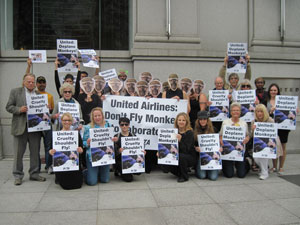
Protestors at the Chicago offices of United Airlines in May 2012.{credit}PETA{/credit}

United Airlines, the world’s largest carrier, will no longer ship non-human primates to research labs. Clarifying a policy that has been ambiguous since it merged with Continental Airlines in 2010, the airline today issued this statement: “We do not book, accept or transport non-human primates to or from medical research facilities domestically or internationally. We do ship non-human primates between zoos and sanctuaries within the 50 United States and Puerto Rico.”

With the adoption of similar rules by Air Canada last month (see ‘Air Canada to stop transporting research primates’), there are no longer any North American carriers that will move the thousands of primates that are imported each year to the United States and Canada (see ‘Activists ground primate flights’). The number of major airlines that say they fly research primates has now dwindled to four: Air France, China Eastern Airlines, Philippine Airlines and Vietnam Airlines.

United has been under pressure from activists with People for the Ethical Treatment of Animals (PETA), which launched a campaign after the merger, demanding that the merged airline explicitly adopt a policy banning research primate transport. Before the merger, Continental transported research primates; United did not. PETA says that its supporters sent 130,000 protest e-mails to the carrier and demonstrated at its office in Sydney, Australia, and at its Chicago headquarters.

The announcement marks an about face from a fiercely pro-research stance that a United official published on the website of the Animal Transportation Association in September 2011. It challenges other airlines to review their policies forbidding research primate transport. It reads, in part:

Virtually every major medical advance of the last century has depended upon research with animals … I know that the greater good of mankind can be served by our assisting this industry in the transport of these animals.

Lisa Schoppa, the author of the statement and then the manager of United’s PetSafe programme, has since left the company. A United spokeswoman would not say when and why she left.

//

Air Canada to stop transporting research primates

{credit}BUAV{/credit}

Air Canada, one of the few major airline companies that still transports primates for research, was given the go-ahead to stop moving macaques and other non-human primates bound for research labs, after a decision today from its regulatory agency, the Canadian Transportation Agency (CTA). The airline applauded the decision and said that, effective December 22, it will require all non-human primate shippers to sign a declaration that the animals are not intended for research or experiments.

The airline tried to abandon research primate transport more than a year ago, after the British Union Against Vivisection publicized the airline’s movement of monkeys from China to Canada.  But Queen’s University, in Kingston, Ontario, and the Public Health Agency of Canada both filed complaints with the CTA, arguing that the proposed policy change was discriminatory and unjust.  Today, the CTA disagreed, freeing the airline to remove itself from the dwindling list of passenger carriers that still transport lab-bound primates, such as the long-tailed macaques pictured here in a cargo hold en route to a European lab.  The remaining primate-transporting carriers include Air France and United Airlines.

(Nature took a close look at this issue earlier this year, in “Activists ground primate flights“. We also examined the pressure that activists are bringing to bear on cargo carriers such as UPS and FedEx, in “Lab animal flights squeezed“.)

The CTA decision says that Air Canada’s proposed new policy would not be discriminatory, because it would apply to all shippers, not just Queen’s University, or groups like them. Admittedly, the agency writes, the rule change is bound to affect certain shippers, like research universities, adversely compared to others. But it says the airline has a “rational basis” for the proposed change: continuing to transport lab-bound primates could hurt Air Canada’s reputation and commercial interests.

Martin Pare, a professor at the Centre for Neuroscience Studies at Queen’s University, says he is “shocked” by the transportation agency’s decision. With available airline carriers dwindling, he says, obtaining research primates could become a problem in Canada, which lacks a breeding colony of macaques. Canadian scientists may now need to discuss establishing such a colony, says Pare, who uses Rhesus macaques to examine side effects of drugs such as Ritalin.

Animal activists celebrated the decision. “The public can [now] book Air Canada flights with a clear conscience,” says Justin Goodman, director of the laboratory investigations department at People for the Ethical Treatment of Animals (PETA) in Washington DC. (The group was granted “interested person” status in the complaint, and nearly 19,000 people signed a PETA petition lobbying the CTA to allow Air Canada to change its policy.)

Goodman says his organization will continue to focus its campaign on United Airlines. United’s global media relations unit did not immediately respond to a request for comment.

//

Research beagles released as pets

Beagle dogs at the Chennai quarantine facility await transfer to rescue groups. {credit}PETA INDIA{/credit}

Seventy beagle puppies originally intended for pharmacology research were released to adoptive families in India on Saturday, several weeks after activists alerted the Indian government that the animals had been falsely described as “pets” by the contract research organization seeking to import them.

The company, Bangalore-based Advinus, had been receiving beagle shipments from the Chinese arm of Marshall BioResources, a major research animal breeder based in North Rose, New York, since at least 2010. As Nature‘s news blog reported last month (see ‘Research dogs shipped to India under airline’s radar’), the dogs, which are a sought-after breed for toxicology research because of their docility, were flown to companies in India and Japan by Cathay Pacific, which refuses to transport research animals. Marshall had represented the dogs to the airline as being for “breeding” and “genetic research” purposes. “They won’t be hurt or killed as lab animals,” the Chinese arm of Marshall wrote to the airline.

Scott Marshall, the president and chief executive of Marshall BioResources, said last month that he needed to investigate the matter and would have no comment until he did. He did not respond to two additional e-mailed requests for comment this week.

The pups had been in quarantine in Chennai since the Cathay Pacific flight from China landed on 19 October. People for the Ethical Treatment of Animals in India obtained a photo of them and additional documents indicating that they were intended for research use at Advinus, and reported the information to the Indian government’s Committee for the Purpose of Control and Supervision of Experimentation on Animals. The committee investigated and, on Saturday, as The Times of India reports, the government released them for distribution to adoptive owners by Blue Cross and People for Animals, two animal groups in Chennai. The crated pups pictured are shown in the quarantine facility in Chennai shortly before their release.


Texas cancer agency in criminal probe

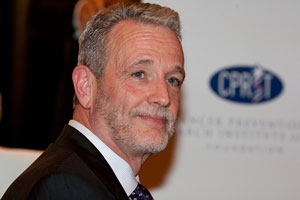
When Bill Gimson, the executive director of the Cancer Prevention and Research Institute of Texas (CPRIT), submitted his resignation on Monday, he wrote, in part, that he has “been placed in a situation where I feel I can [no] longer be effective.”

Yesterday, the reason for that became clearer, with the news that the agency is under criminal investigation by the District Attorney (DA) of Travis County in Austin, where CPRIT is located.

This 7 December letter from the Travis County DA to CPRIT General Counsel Kristen Doyle, and this letter from the DA to Gimson, notify the agency of the launch of the investigation, and note that the destruction of any documents or e-mails is a criminal offence under the Texas penal code. “We will be in touch in the near future with a subpoena or other legal demand for documents and/or electronic mail,” the letter adds.

Interviewed today by Nature, Gregg Cox, the director of the public integrity unit in the DA’s office, said that the office was alerted to concerns about potentially criminal activity surrounding the awarding of certain CPRIT grants after this 17 November expose ran in The Dallas Morning News.

It revealed that a major campaign contributor to Texas governor Rick Perry and lieutenant governor David Dewhurst also had ties to companies that scored poorly on review but nonetheless received CPRIT awards.

The DA’s office is also examining an unreviewed, US$11-million CPRIT grant made in 2010 to Dallas-based Peloton Therapeutics, says Cox. “Peloton is part of [our investigation] but there are other allegations as well, and we are going to be looking at all of it.”

Cox says the team from the DA’s office will include at least two attorneys, one investigator — a licensed police officer who does detective work — and one analyst, an accountant who helps track the money. “But it could grow to be even larger,” he says.

As the DA’s investigation drew headlines this week, it also came to light that, upon CPRIT’s recent request, the Texas attorney general has opened a civil investigation of the circumstances surrounding the granting of the unreviewed $11-million award to Peloton. In this 10 December letter from the attorney general’s office to Jimmy Mansour,  the chairman of CPRIT’s governing oversight committee, Texas’s first assistant attorney general Daniel Hodge notes that the attorney general’s review will include efforts to help CPRIT resurrect missing electronic files and an investigation of “any financial interest CPRIT staff or any other individual may have had in the Peloton grant award.”

Separately, Jay Dyer, the attorney general’s appointed representative to the CPRIT governing board, scolded Gimson in this 7 December letter for taking two months to notify CPRIT’s governing board about the unreviewed Peloton grant. The lack of review became known to CPRIT staff when an audit was completed in late September this year.

In response to an interview request, Gimson said in an e-mailed statement: “CPRIT will cooperate fully with the Attorney General’s office and the Travis County District Attorney’s office on their investigations. There will be no further comment at this time.”

There was one bright spot for CPRIT this week: it announced that Margaret Kripke, a respected cancer immunologist and, until recently, part of a three-member panel that advises the US president on the nation’s cancer programme, will become the agency’s chief scientific officer, beginning on 7 January.  Here is a summary of Kripke’s conversation with reporters yesterday.

Executive director of Texas cancer agency resigns

{credit}Bob Daemmrich Photography, Inc./CPRIT{/credit}

William Gimson, the increasingly embattled executive director of the Cancer Prevention and Research Institute of Texas (CPRIT) is stepping down.

In this 10 December resignation letter, Gimson told the $3 billion agency’s governing board “I have been placed in a situation where I feel I can [no] longer be effective.”

Gimson, who will stay in the job through the governing board’s next meeting on 17 January, added that “the last 8 months have been extremely difficult for those at CPRIT — during this time they have not been able to do their jobs due to wasted efforts expended in low value activities that do nothing to advance cures for cancer.”

Nature called for changes in leadership at the highest levels of CPRIT in this editorial in October.

Before moving to CPRIT almost four years ago, Gimson was chief operating officer at the Centers for Disease Control and Prevention in Atlanta, where he spent 35 years. His resignation came the same day that the agency named cancer immunologist and former MD Anderson Cancer Center executive vice president Margaret Kripke as its chief scientific officer.

She replaces Nobel laureate Al Gilman, who resigned in protest at the failure of an $18 million grant to MD Anderson to be scientifically reviewed.

CPRIT’s chief commercialization officer, Jerry Cobbs, was forced out on 19 November, and dozens of CPRIT’s scientific peer reviewers have also quit in the wake of Gilman’s resignation.

//

Texas cancer agency names new chief scientist

{credit}CPRIT{/credit}

The Cancer Prevention and Research Institute of Texas (CPRIT) has found a chief scientific officer to replace Nobel laureate Al Gilman, who resigned in October in protest over the institute’s awarding of an unreviewed US$18-million grant.

The Austin-based institute’s new top scientist will be Margaret Kripke, a cancer immunologist who in 2007 retired as executive vice-president and chief academic officer of the huge University of Texas MD Anderson Cancer Center in Houston. A news release from CPRIT notes that Kripke founded the department of immunology at MD Anderson and that until recently she served on a three-member panel that advises the president of the United States on the nation’s cancer programme. Kripke, who earned a PhD in immunology from the University of California, Berkeley, is an expert in the immunology of skin cancers. She’s also a big backer of women in science: the Legend award established by MD Anderson in 2008 and named after Kripke honours people who have helped women advance in cancer science and medicine.

“She’s a very good choice,” says Ed Benz, the president of the Dana-Farber Cancer Institute in Boston, Massachusetts. “She has good administrative experience and she’s certainly an accomplished scientist. People regard her highly.” (Benz, a Kripke Legend award winner, gave the $5,000 that came with it to his institute’s office of faculty development.)

Kripke, who  will take up her new role in January, will immediately face the task of rebuilding the institute’s reputation within the research community following Gilman’s departure from CPRIT and the controversy that has surrounded it. Last March, while approving the $18-million grant to MD Anderson without scientific review, the institute simultaneously shelved several grants that had already been approved by its peer reviewers.  (Those awards have since been funded.) Late last month, the agency revealed that a second grant, awarded in 2010 to Dallas-based Peloton Therapeutics, was also funded without review. Those funds have been frozen until the appropriate reviews are conducted.

“If there is a person who can clean up CPRIT, it’s Margaret Kripke,” said a senior physician and scientist at MD Anderson who declined to be named. “She is all business. She is tough as nails. It will not be business as usual at CPRIT.”

In the news release, Kripke says that she is honoured to take the new position, adding:  “The opportunity created by CPRIT to advance cancer research, prevention and treatment and to put Texas at the forefront of these fields is unparalleled.”