Away from home: Why your visa type matters

The ‘Away from home‘ blog series features promising young Indian postdocs working in foreign labs. They recount their experience of working in foreign lands, the triumphs and challenges, the cultural differences and what they miss about India. They also offer useful tips for other Indian postdocs headed abroad. You can join their online conversation using the #postdochat hashtag.

Our ‘Away from home’ interactive map features 47 bright Indian postdocs from around the world. Write to us at npgindia@nature.com to suggest names of postdocs from countries and disciplines we haven’t covered yet.

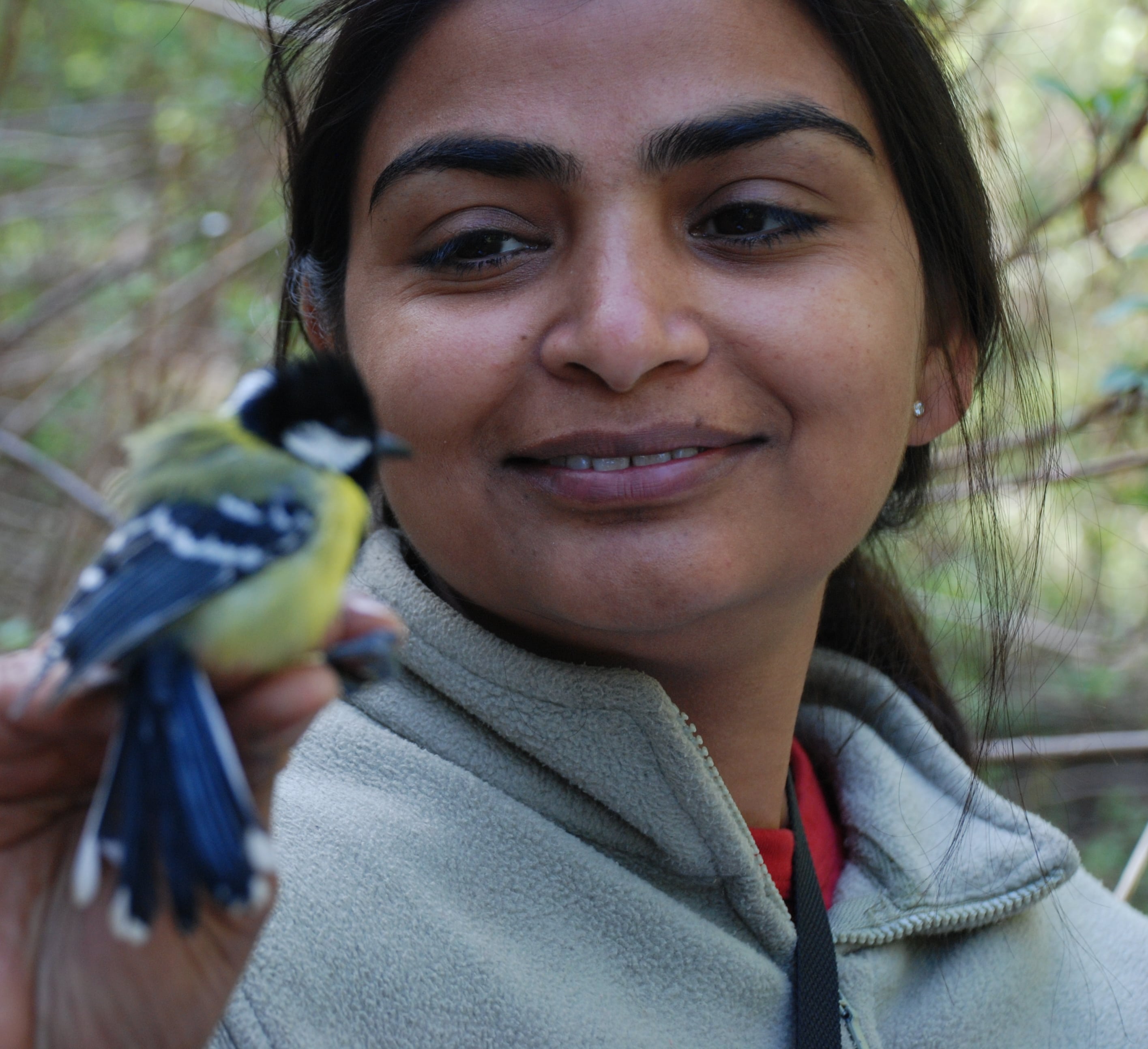
Today we feature Fareha Razvi, a postdoc researcher at the University of Nebraska Medical Center (UNMC), Omaha, Nebraska, USA and a PhD from Fraunhofer Institute in Germany. Fareha tells us why choosing the right visa type is so essential for a research career in a foreign land.
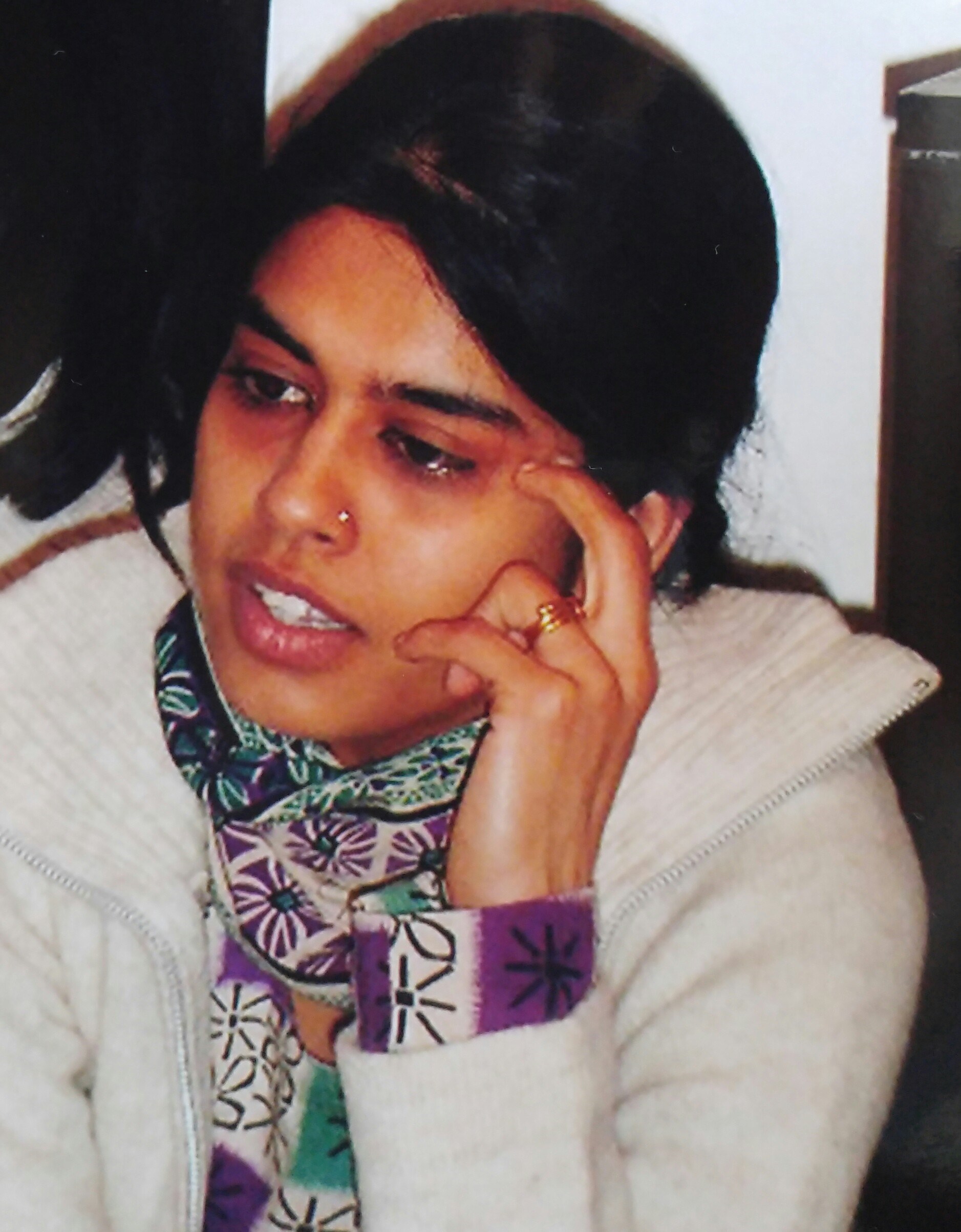
Fareha Razvi

Love at first sight

What saw me leave my home country India was my passion for “gene silencing” research. When I was a teenager, my mom wanted me to become a doctor. Sadly I failed in all medical entrance exams. So the only way I could become a doctor was to get a PhD. I did a bachelors in botany and masters in genetics from Delhi University. During masters, I stumbled upon the research area of gene silencing. I was completely fascinated with this mysterious phenomena. At that time, nobody knew how and why it occurs. I decided to do a PhD in this field.

Fortunately, I got a PhD offer from Fraunhofer Institute in Germany in my area of interest. It was a hard decision to leave India and my family, but the passion for this research area and encouragement by the family made the transition possible. After PhD, I felt the need to continue exploring this field and took up a postdoc opportunity in the same field but in a different biological system.

Bittersweet research

I arrived in the US for a postdoc in gene silencing and the biological system was green alga. I realised that research in gene silencing was making tremendous progress.  Scientists around the world had started unraveling this phenomena. In 2006, the Nobel  Prize in Physiology or Medicine was awarded to a group which discovered the trigger of this process. Based on the understanding of the mechanism of this process, the trigger of silencing “siRNA” has been implicated in therapeutic use by many pharmaceutical companies and it also holds potential use as vaccine for certain diseases.

For a couple of years, I worked on basic gene silencing research but then I moved to a lab that was working on its application. I enjoyed every project during my postdoc. I realised that two things can make a research career bitter or sweet – the research and the mentor. Passion for your research motivates you to excel and a good mentor becomes the backbone of your career goals, scientific temperament and professional skills. Based on my PhD and postdoctoral experience, the advice I have for future postdocs is: no matter which country, lab or field you opt for, it is important that your career goals are clear and each year you work towards them along with your project goals.

Visa choice can tell on career goals

Many of us leave our country excited about the offer from a foreign institute but we fail to weigh the pros and cons of the visa type we are offered. I left India thinking that after my PhD from Germany I will return and take up a teaching position at one of the colleges of Delhi University. But after PhD, I wanted to explore more in my research field. So I went to the US. After a while I realised that my H1B visa was due to expire and I had to leave the country. My career dreams terminated in 2012 not due to lack of funding but because of my visa. This is another advice that I would like to give to new postdocs, apart from making choices for research project and mentor, a right choice of visa type is equally relevant.

After spending a year being jobless in India I returned to the US on a spouse visa. It took me almost 3 years to get back to research because not many places were able to sponsor a working visa (H1B). The situation that I encountered is not very common but it can happen if you don’t take care to choose your visa type in the first few years of stay in the US. Also, as foreigners we look for a job that can give us a working visa.

Fortunately, I was able to restart my career as a postdoc in the pathology and microbiology department of University of Nebraska Medical Center (UNMC), Omaha. It was exciting and challenging at the same time to work with microbes and not plants. The best thing I like about being a microbiologist is that I don’t have to wait for months to prove my hypothesis. Bacteria grow so fast that you can propose multiple hypothesis and work on them in a very short period of time. Currently, I am working to unravel a metabolic pathway which is as fascinating as it was working in gene silencing. I did get an opportunity to teach at the Metropolitan community college at Omaha which was very satisfying.

Tips from a postdoc

  • Choose a research area that fascinates you (self-motivation is the key to success)
  • Choose a mentor who appreciates a work-life balance and cares for your goals
  • Choose the right visa type
  • Know your goals so that you work towards them from day one

Indian at heart

The two things I miss most about my home country are the typical Indian wedding — the lavish food and dresses — and live performances – theatre, classical dance, ghazal recitals.
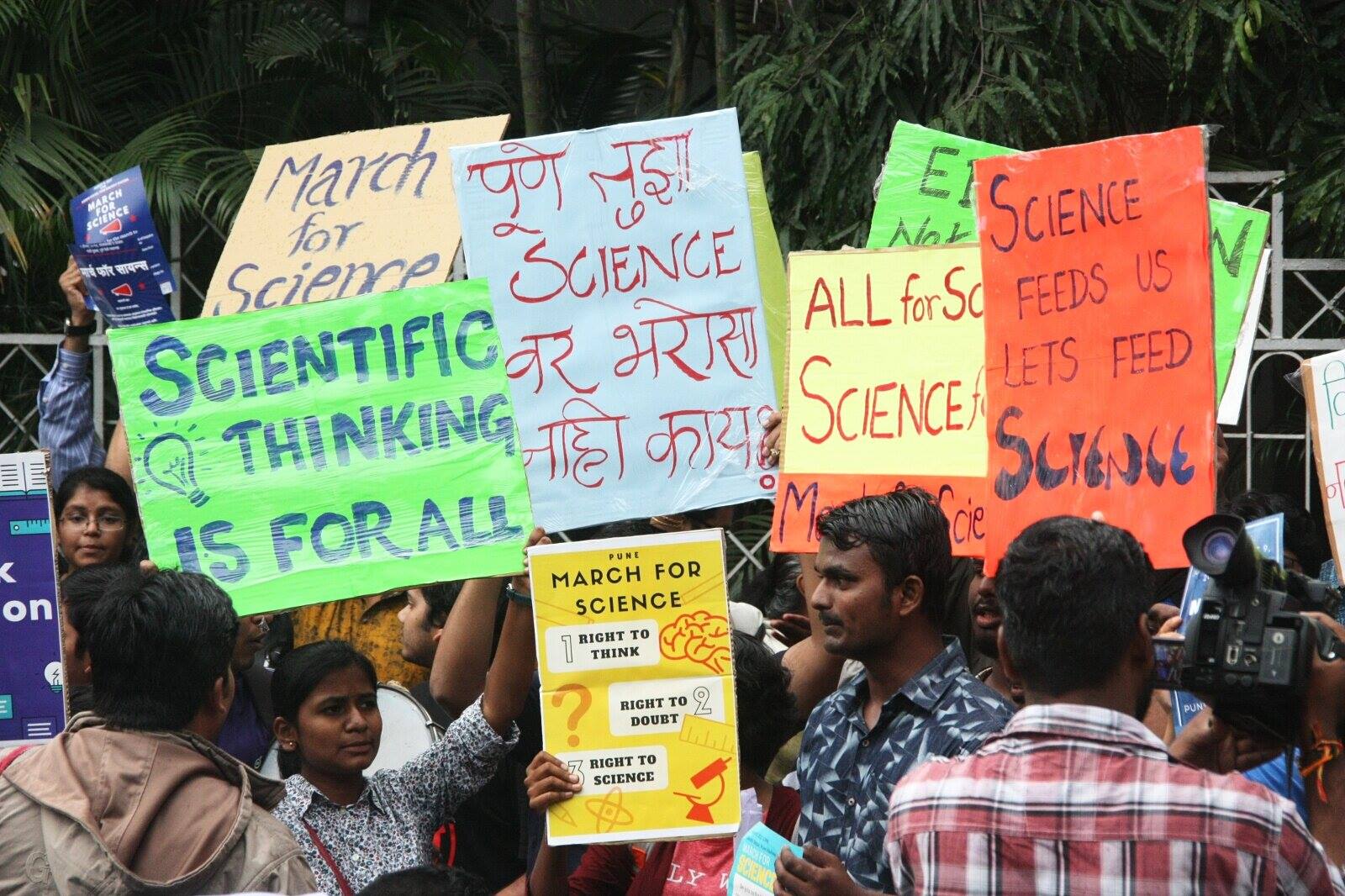
Why I marched for science: Debunking myths, promoting rationality

Following the “March for Science” in 600 cities across the world on 22 April 2017, Indian scientists gave a call for “India March for Science” on the 9 August 2017. On that day, more than 15,000 scientists, science teachers, research scholars, students, and science-loving people came out on the streets of 43 cities and towns of India.

Scientists within India did not join the global protest. Did they miss the boat? Yes, say Vineeta Bal and Aurnab Ghose from the Indian Institute of Science Education and Research, Pune. Along with Satyajit Rath from the Agharkar Research Institute, Pune, they joined hundreds of scientists in the ‘India March for Science’ held, albeit belatedly, across the country. Here’s the trio’s guest post on the unique challenges facing India’s science that made the protests timely.

[The views expressed are personal].

The protestors in Pune

The protestors in Pune{credit}Sourabh Dube{/credit}

There is a need to focus attention on the current trajectory of scientific pursuits in India – we need rationality and scientific temper in our society, and for that, we need the scientists of today and tomorrow.

The process of rational thinking needs to be inculcated early in life by encouraging young children to ask questions, by providing avenues for finding logical answers, by discouraging blind faith and acts associated with the perpetuation of blind faith. In many of these contexts, formal education can help. Hence there is a clear need to develop curricula which encourage curiosity and experiment-driven learning and discourage faith-driven irrational approaches and unquestioning attitude to learning.

One of the major demands during our ‘India March for Science’ was to increase the budget on education and spend it on developing young minds to think rationally and critically. While the exact proportion of GDP that should be spent on education can be debated, there is no doubt that in India there is a clear need to increase governmental spending on education at all levels.

Another demand during the event was that spending on research in science should be increased. For the last many decades, every successive government has promised to increase allocation for science research for various departments. Departments affiliated to defence research have seen substantial increases in certain years but civilian science research departments have not been as consistently fortunate.

While it is true that in recent years the funds allocated during the budget speech by the Finance Minister of the country appears higher than the previous year and hence can be used to counter the scientists’ arguments that there is no budgetary increase, the larger reality is far less promising. Funding is unpredictable, with even inflation not allowed for in some years, it is seldom available on time, and it is terribly patchily distributed. The Director General of CSIR (the largest network of laboratories in the country) has admitted near bankruptcy, stipends of research personnel are being withheld or delayed; there is thus little doubt that the funding for civilian scientific research in India is sub-optimal.

Bengaluru MarchScience research is a continuous, often long-term, process. It can’t start and stop arbitrarily. Hence there has to be an equivalence between the sustainability of efforts and sustainability of the associated funding. Also, just like in science education, rationality should be the mainstay of any science research. For this to be practised, development of reasonable models based on available data, refinement and testing of these models and evidence-based modification or rejection of the models should be the basis of scientific efforts and policy.

Funding for research where the outcome appears to be already defined is undesirable – a case in point is the Scientific Validation and Research on Panchgavya (SVAROP) project. The research aims to prove the usefulness of panchgavya, a concoction of five cow products (dung, urine, milk, curd and ghee) used in traditional Indian rituals. The Indian Science Congress, a major annual scientific meeting in the country, has also been used as a platform to promote pseudoscience. Such efforts undermine the basic tenets of science where research questions are asked with a hypothesis in mind and the knowledge gained is likely to support or refute the hypothesis. Instead, these regressive efforts foster superstition in society by pretending that pseudoscience is ‘science’.

The Indian march

At least 15000 people participated in the Indian march in several cities. About 700 people participated in the Pune march. Besides demonstrating solidarity with the global ‘March for Science’, the Indian students, teachers and researchers stressed on inculcating rational thinking in the society. The relevance of rationality in society was highlighted by the explicit and public reference to the work done over many decades in Maharashtra by the rationalist Narendra Dabholkar, an intellectual who was murdered for his stance against superstition.

India March for Science

{credit}Sourabh Dube{/credit}

August 9 was chosen for its historic significance as the day of the launch of the Quit India movement against erstwhile British rulers, with an implicit corollary of self-empowerment in making societal decisions. It is World Indigenous Peoples’ Day, underlining the most underprivileged sections of society in need of the empowering potential of science. It’s also Nagasaki Day, which reminds us that science disconnected with society can be used for horrific ends. Together, these reminders make the urgent point underlined by the march for science, that science must be recommitted and reconnected to society, and that society must rediscover the progressive potential of science and value it appropriately as an open-minded, fearless enquiry into causes.

We marched despite direct orders prohibiting some scientists from participating in the ‘March for Science’ and many refraining from joining due to perceived threats to their jobs and possible harassment. The practitioners of science who hit the streets were demanding freedom of speech to express their concerns, freedom for dissent and discussion, assurance of steady supply of funds for pursuing scientific research, provision of more funds for education for all.

In a democratic country such as India, these are basic demands to make. If a country’s scientific community need to take to the streets for such basics, there is serious need for introspection.

Physicist Soumitro Banerjee from the Indian Institute of Science Education & Research Kolkata, who joined the march in India’s capital Delhi, talks about the policy changes that scientists want to see in the wake of the march.

The march in Kolkata

The march in Kolkata

I marched for science in New Delhi because the funding support for scientific research in India is sorely inadequate, having remained stagnant in the range 0.8%-0.9% of India’s GDP for far too long. Other countries with similar aspirations have provided financial support for science exceeding 3% of GDP. It is not difficult to imagine the crisis facing most Indian scientific institutions because of paucity of funds.

The education system that supplies the scientific manpower is also in bad shape. The public school system, where a majority of Indian children get their education, is deplorable. Many schools are without proper buildings, toilets, and playgrounds, have overcrowded classrooms, face acute shortage of teachers and are without laboratory facilities. As a result, a vast majority of children are deprived of the opportunity of being a part of the scientific manpower of this country.

The college and university system is also reeling under acute shortage of infrastructure, teaching and non-teaching staff, and funds for research.

The situation is crying out for urgent redressal, and the march demanded allocation of 3% of GDP for R&D and 10% of GDP for education.

A bigger area of concern is that in recent times attempts to spread unscientific beliefs and superstition are on the rise. Sometimes, unscientific ideas lacking in evidence are being propagated as science, patronised by persons in high positions. Untested personal beliefs of educational administrators and textbook writers are infiltrating the education system, and mythology is being taught as history.

This is vitiating the cultural atmosphere of the country. There is an article in the Indian Constitution (Article 51A) that demands every Indian citizen to develop a scientific temper, humanism and spirit of inquiry, and the current cultural atmosphere runs counter to that. The march demanded that the government uphold this provision of the Constitution.


Suggested links:

Thousands across India march in support of science

What happened at March for Science events around the world

India’s ‘yoga ministry’ stirs doubts among scientists

Small samples: A statistician’s nightmare

What happens when a statistician is handed over a sample size of one?

Poulami Barman, a statistician at Mayo Clinic, USA faced a similar challenge while working on a prostrate cancer trial. In this guest blog piece, Poulami writes about her journey from Vellore Institute of Technology (VIT) in India to the premier US lab, how she handled the transition and the uniqueness of working on a sample size of one.

Poulami Barman

Poulami Barman

Never settle

Till high school, I was this nerd who loved both math and biology. After 12th grade, I realised I was not “nerd enough” to pursue a career in biology and decided to go the math route. I wanted the best of both worlds and chose biotechnology for a major in undergrad — it slowly became clear to me that I was wired more towards the math equations and didn’t enjoy the biology side that much. With little career advice, I thought a complete change in major was not possible, and hence got into a Masters in Bioinformatics in the US.

During the first year of grad school, all my nightmares came alive in the form of coding and the biology knowledge needed for course work. The culture shock did not make it easy and I was almost dropping out of school but stayed on when my father insisted. I got an internship at a reputed hospital — that further exposed my weak coding skills. The turning point, however, came when I got an assistantship with Dr. Yolande Tra. She recognised my skill in statistics and encouraged me to take more courses in this field.

Under Dr. Tra’s mentorship, I aced in statistical analysis class which helped me land my first full-time job as a Clinical Data Analyst at Johnson & Johnson. My excitement did not last long, as I soon realised that the job involved a lot of coding and not much statistics. I did not like the monotony of the job and decided to go back to school, but this time to get a second masters in statistics. I moved to Texas A&M University – where I enjoyed working 14-16 hours a day and realised what passion actually meant. I got a job at Mayo Clinic after Masters, and there was no looking back. I never settled for a career until I had exactly what I wanted.

Statistics in medical science

With the growing complexity of biological data and disease biology, clinicians are leaning more towards personalised care therapies. The field of oncology is no stranger to this. 4 years ago, I got involved in one such study to recruit stage IV prostate cancer patients that are castrate resistant and to find specific markers that cause drug resistance. This was to be done by sequencing their genomic data before and after Abiraterone acetate/prednisone (AA/P) treatment. The presence or absence of markers could then decide the treatment regimen for the patients.

Data was collected with trials on mice injected with tumour cells from patients. Various treatment combinations were tested on the mice models. It was like having parallel patient avatars built from mice. A similar trial was conducted at Mayo Clinic on breast cancer patients. I was lucky to be involved in both these projects at some point. This is one of the best perks of being able to work in this specific role.

The pet peeve of all statisticians is a small sample size. And I was asked to provide inferences with just one sample! The analysis needed to focus more on gene-set within patient comparisons or one-vs-many control comparisons. The ideas was to learn the association of time-to-treatment change. We found that in metastases, Wnt/β-catenin pathway activation is associated with primary AA/P resistance and increased CCP with acquired drug resistance.

It has been a unique study in many ways, and to name a few; it provided a mutational genomic landscape for metastatic prostate cancer; mice models of metastatic prostate cancer (which has never been done before); and a stepping stone to single sample (n=1) analysis. The findings from the PROstate Cancer Medically Optimized Genome Enhanced ThErapy (PROMOTE) study was recently reported in PLOS One in 2015.

Bending the rules

Being involved in interesting and challenging projects like this one, and being paid to do what I love is a dream come true. The first couple of years at Mayo, I suffered from the Imposter Syndrome. I was working closely with researchers, and highly qualified people, and only 2 masters without a doctorate seemed petty. Don’t let the misconception of requiring a doctorate to pursue a career in research deter you. As long as one has the persistence and the penchant for it, research need not be sour grapes.

From an unsure novice in the US to someone who works with the best researchers in her field, I have grown a lot. And it was not a straight line; in fact, it was the worst and the best roller coaster ride I have ever taken. Every time I see someone eating street food at 2 a m in a Bollywood movie, and every Dushera, I miss home terribly. But, I think I have made a home for myself here — a small group of friends, and if I had to call any place home, other than Kolkata, it would be my Texas family. I met my husband and now have a sweet little family here in Rochester MN.

Ageism in academic jobs in India

Let’s talk career with Naturejobs

Every now and then, Indigenus brings you some interesting and relevant posts from sister blog Naturejobs, a leading online resource for scientists in academia and industry who seek guidance in developing their careers. The blog delivers a mix of expert advice and personal stories to help readers review, set and achieve their career goals.

Today we have Farah Ishtiaq, a Wellcome Trust/DBT India Alliance Intermediate Fellow at the Centre for Ecological Sciences, Indian Institute of Science, Bangalore. Her research explores the ecology and evolution of vector-borne diseases — the role of migration, host immunity, vector genetics, and climate change on malaria transmission in high-altitude Himalayan birds.

Farah shares her experience on how age and success are linked in acquiring faculty positions in India.

Farah Ishtiaq

Farah Ishtiaq

India has recently been portrayed as a land of abundant opportunity in academia, investing seriously in research and development to attract skilled scientists. The government has introduced several attractive funding opportunities, with the aim of bringing back scientists working abroad to establish a long-term career here, and improving the overall research infrastructure. Wellcome Trust/DBT India Alliance (WT/DBT) fellowships, for example, have no age or nationality restrictions, relying on qualifications, research experience, career trajectory and the candidate’s determination to establish their own independent research.

WT/DBT India alliance was initiated to develop a large cohort of internationally competitive researchers and help in developing scientific excellence and leadership; a model recently adopted and launched by the Alliance for Accelerating Excellence in Science in Africa (AESA) as well. Since Africa shares a similar burden of healthcare with India, as well as many workplace challenges, Indian scientists are perceived as key collaborators in this mission.

There’s a problem here though: age limits on academic positions. Prospective candidates for assistant professor in India are preferred by academic institutions to be younger than 35. Although funding bodies are not hiring agencies, the age limit imposed on faculty positions by academic institutions sabotages the driving principle behind these new funding opportunities — the current system is unable to absorb enough competent, experienced scientists.

The dilemma for early-career researchers is serious; many fellows are facing this harsh reality and an uncertain future. Every research position has a maximum age limit in India; from a junior research fellow (JRF), with a cut off at 28 years old, to postdoctoral researchers where it is 35 (or 40 years for women). These limits put the Indian academic landscape in stark contrast with many other countries that also follow a tenure-track system.

A Nature special issue in 2015 explored some of the unique opportunities – and the unique problems – of working as a scientist in India

A Nature special issue in 2015 explored some of the unique opportunities – and the unique problems – of working as a scientist in India

Overall, this makes India a viable option and destination only for scientists of a selected age class. And it certainly gets more complicated for women who want to pursue a career in science and raise a family, with very little allowance made for taking time out for such.

I am now in my vigorous 40s, which prevents me from being offered an entry-level faculty position. I am also a recipient of a WT/DBT India Alliance fellowship. My funding allowed me to establish an independent laboratory to study the ecology and evolution of emerging infectious diseases in wild bird populations, but despite this incredible research opportunity, I feel my career clock is ticking faster than ever. Getting funding to do science is no longer a problem, but academic policies that prevent competent scientists becoming established are preventing me from succeeding. I feel redundant — surely the quality of my science should be the focus rather than my age?

What I would have done differently

Hopefully, this should give others like me some insight on avoiding some of the mistakes I made. First, I should have found a trust-worthy mentor who could have helped me to navigate my career path.

Never put all your eggs in one basket. I should have pitched my grant idea to multiple host institutions to maximise my likelihood of finding an institution that would guarantee a more permanent position by this stage.

Do your homework in understanding the system and host academic institution. Even though I deferred my fellowship for a year as my daughter was too little to be left in a crèche, I realise I should have used that time to negotiate or better understand the policy or the institute’s vision for a research fellow like me. Many academic institutions have no guidelines on the role, involvement and career development of academic fellows.

Many academics fail to understand the role and potential of fellows like me and often consider them just as an extended postdoc — not as a long-term prospect or potential collaborator. Hence, I did not get enough of an opportunity to teach and to mentor PhD students. Having my own PhD students would have bolstered my career at this stage, and allowed me to evolve as a mentor.

Local advice & mindset

I’ve received various pieces of advice for improving my faculty application and to enhance my chances of a secure job — this was to publish my current research: i) without foreign authors; and ii) as senior or first author in more prestigious journals such as ScienceNature or PNAS. Whilst the first is possible, the second is easier said than done.

Apparently, that was the only thing my CV was missing — a clearer demonstration of my calibre and merit as an independent researcher. Interestingly, for established faculty struggling to earn tenure in India, the culture emphasises quantity of publications rather than quality.

And, whilst the second piece of advice (primarily from engineers, cell or molecular biologists) is sound, what was missing was perspective on research in the field of ecology — collecting and publishing groundbreaking ecology data in top journals can take years longer than other disciplines. The journals I have been publishing in are not familiar to some of the members of recruitment panels I’ve met with. I have even been asked if ‘Ibis’ and ‘Parasites & Vectors’ were proper journals.

Should India be a role model for developing nations?

We are struggling to keep our skilled workers, despite the spending per researcher being equivalent to a developed nation like the UK. I hope other developing countries don’t replicate the above policies, as they certainly don’t help to address some of the major longer-term developmental challenges, including a shortage of researchers. In India, with only 200,000 full time researchers (and only 14% of them women) from a population of 1.3 billion, new research institutes currently being developed end up short of skilled workers and blinkered to new research areas.

This all said, I am still very excited. I have a competitive edge and enthusiasm for research where I can play a leading role in high-quality research. Perhaps, it’s time to explore science career options elsewhere, maybe in Africa, and hope no one will question my age?

Suggested posts

What I learnt from researching in Germany

Away from home: Collaboration in a global organisation

Away from home: ‘Research not Nobel-driven’

Double Shift: schooling Syria’s child refugees

xxx

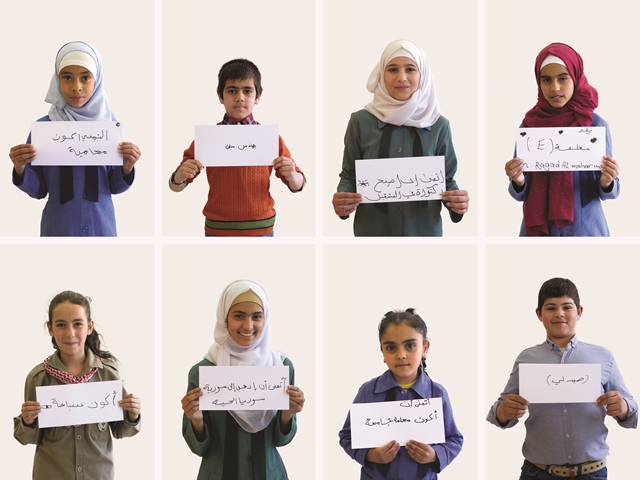
Jordanian and Syrian pupils in Al-Arqam school’s double-shift programme declare their ambitions, from doctor and ship’s engineer to teacher, swimmer and professor.{credit}Paula Ellguth, Marjam Fels{/credit}

Imagine this. You’re 12 years old. Half your family has been killed in conflict, and you find yourself in a country where every other word is a mystery. You’re desperate for stability — not least, school enrolment.

This is reality for many of the 8 million children who make up half the world’s refugees. Education is one of the biggest hurdles they face: only half have access to primary schooling. Potentially, they are a lost generation, at risk from abuse, trafficking and criminalisation, disenfranchised in ways and magnitudes unimaginable to many. A country’s loss of intellectual capital is tragic: how much more so, losing the intellectual future its children represent.

Now, a rich multimedia web documentary is revealing how Jordan — a nation hosting 657,000 registered Syrian refugees — is lighting a candle in the murk. Called Double Shift, the video, audio and text showcase the findings of an innovative social-science research project looking at how the “double shift” educational system, in which different groups are taught morning and evening, is working in the country. Already deployed for decades in Jordan and in other nations from Uganda to the United States, the system is being rolled out anew to accommodate children fleeing the war: Lebanon has adopted it, and Jordan, as Double Shift documents, is following suit to serve 160,000 school-aged Syrian refugees.

xxx

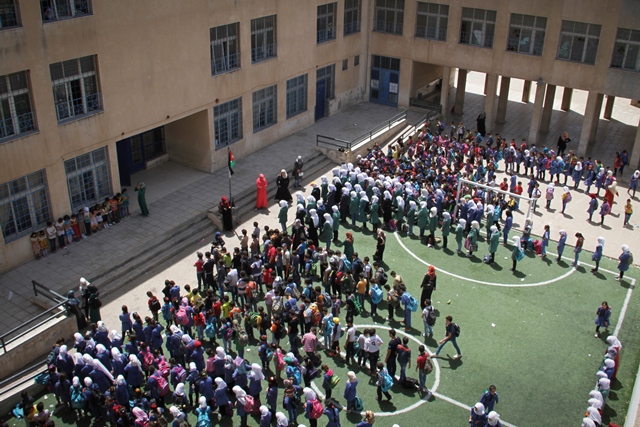
The noon switchover from the Jordanian to the Syrian cohort allows few close encounters. A football club and Saturday centre bridge the gap.{credit}Paula Ellguth, Marjam Fels{/credit}

Double Shift is a joint effort by the WZB Berlin Social Science Center and the European Bank for Reconstruction and Development. Its team of social scientists and visual designers used a variety of methods to capture data from Syrian refugee children in a Jordanian school, from “cultural probe” — giving students digital cameras to document their daily lives — to participatory workshops.

The findings reflect the day-to-day complexities child refugees cope with, notes Steffen Huck, director of WZB research unit Economics of Change. “Some showed the traumatic effects of the war in Syria,” he says. A questionnaire given to 88 Jordanian and Syrian students at Al-Arqam school in Sahab, southeast of Amman, is a case in point. It suggests overwhelming positivity about the school, with 90% reporting approval and more than half finding the classroom clean and safe. A subjective assessment hints at different insights.

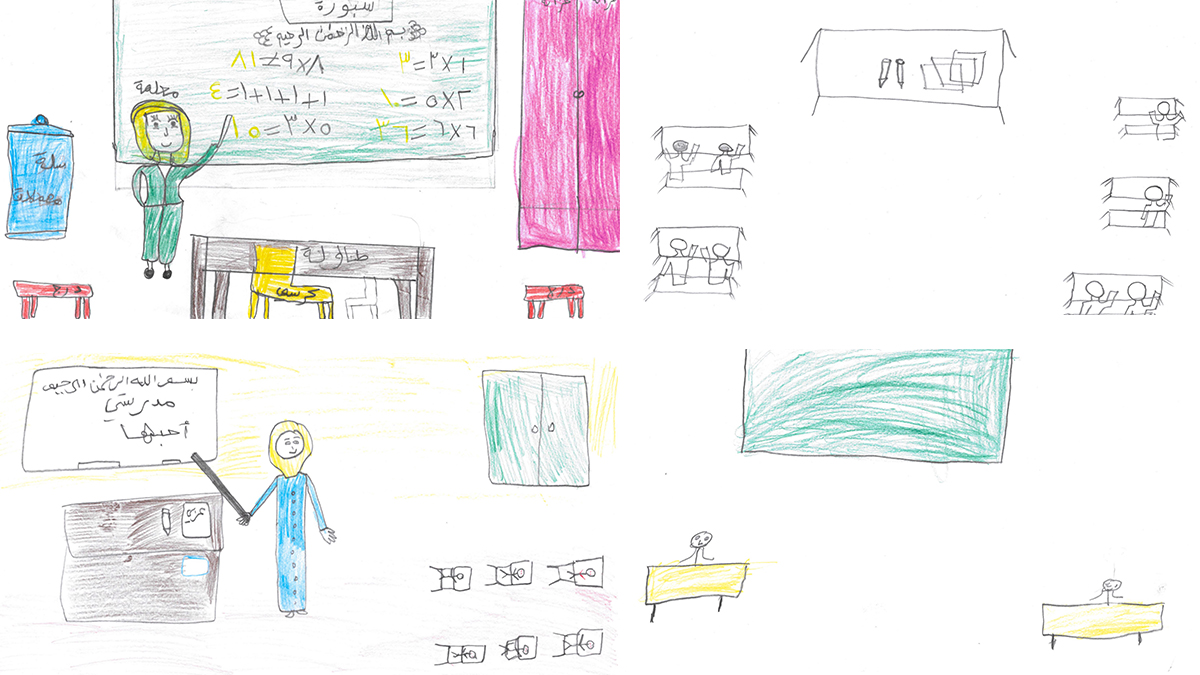
Each student was supplied with five colours and a pen and asked to draw their classroom. “The Jordanian children used significantly more colours than the Syrian,” Huck said. “They also painted in a larger portion of the sheet of paper.” Huck speculates that these differences could indicate relatively withdrawn psychological states among the Syrian children.

xxx

At Al-Arqam school, the differences in coverage and colour use between the Jordanian children’s drawings (left) and those of the Syrian child refugees were marked.{credit}Paula Ellguth, Marjam Fels{/credit}

Jordan’s public schools are already under strain, with teachers, classrooms, water, cooling and heating all in short supply. Class sizes can number 45. The pressures on both teachers and pupils are clear, and the separate shifts (Jordanian children in the morning, Syrian in the afternoon) risk entrenching difference. Yet as Double Shift documents, Al-Arqam is building bridges through a mixed soccer club and Saturday centre for study and play.

Meanwhile, Huck and colleagues have done the maths on another gain: US$167,552,165.00. That is their figure for the total net benefit to the country’s economy of enrolling 50,000 Syrian child refugees in Jordanian schools. As it happens, a new cohort of that size is poised to enter the educational system, thanks  to international funding and support from agencies such as UNICEF.

“As the Syrian civil war drags on with no end in sight,” Huck says, “Jordan’s efforts do not only set a humanitarian example but become more and more an investment in its own future.”

xxx

A rare meeting during the midday double-shift switchover.{credit}Paula Ellguth, Marjam Fels{/credit}

Double Shift offers a balanced examination of one school and the headteachers, parents and children who make up its community. It pans out, too, to the wider picture, where other factors come into focus.

Sarah Dryden-Peterson, who researches the nexus of education and social stability, has reported on serious issues with Lebanon’s double-shift programme on the non-profit Brookings Institute website. She reveals that Syrian children may be bullied, and that teachers may be exhausted and poorly trained to cope with their pupils’ psychological trauma. But solutions to fast-moving, critical situations often are partial or quasi-experimental.

If a ‘war child’ is to become an engineer, a surgeon, a pilot — as so many of the children interviewed by Double Shift passionately wish — it’s bedrock we need, not sand. As Dryden-Peterson has noted:

The average length of exile for refugees is 17 years. That’s the equivalent of a child’s whole shot at education, from birth to high school graduation… Syrian refugees do not need temporary education programs. They need access to a complete education.

Currently, debates over STEM teaching and anxieties over science in a politically chaotic world proliferate. Yet the fate of this traumatised, uprooted generation seems an afterthought to governments, who increasingly de-prioritize education in aid portfolios. Policymakers and pundits forget, perhaps, that it was refugees in flight from another appalling war who built American science and technology.


For Nature’s full coverage of science in culture, visit www.nature.com/news/booksandarts.

Starting early for a dream PhD

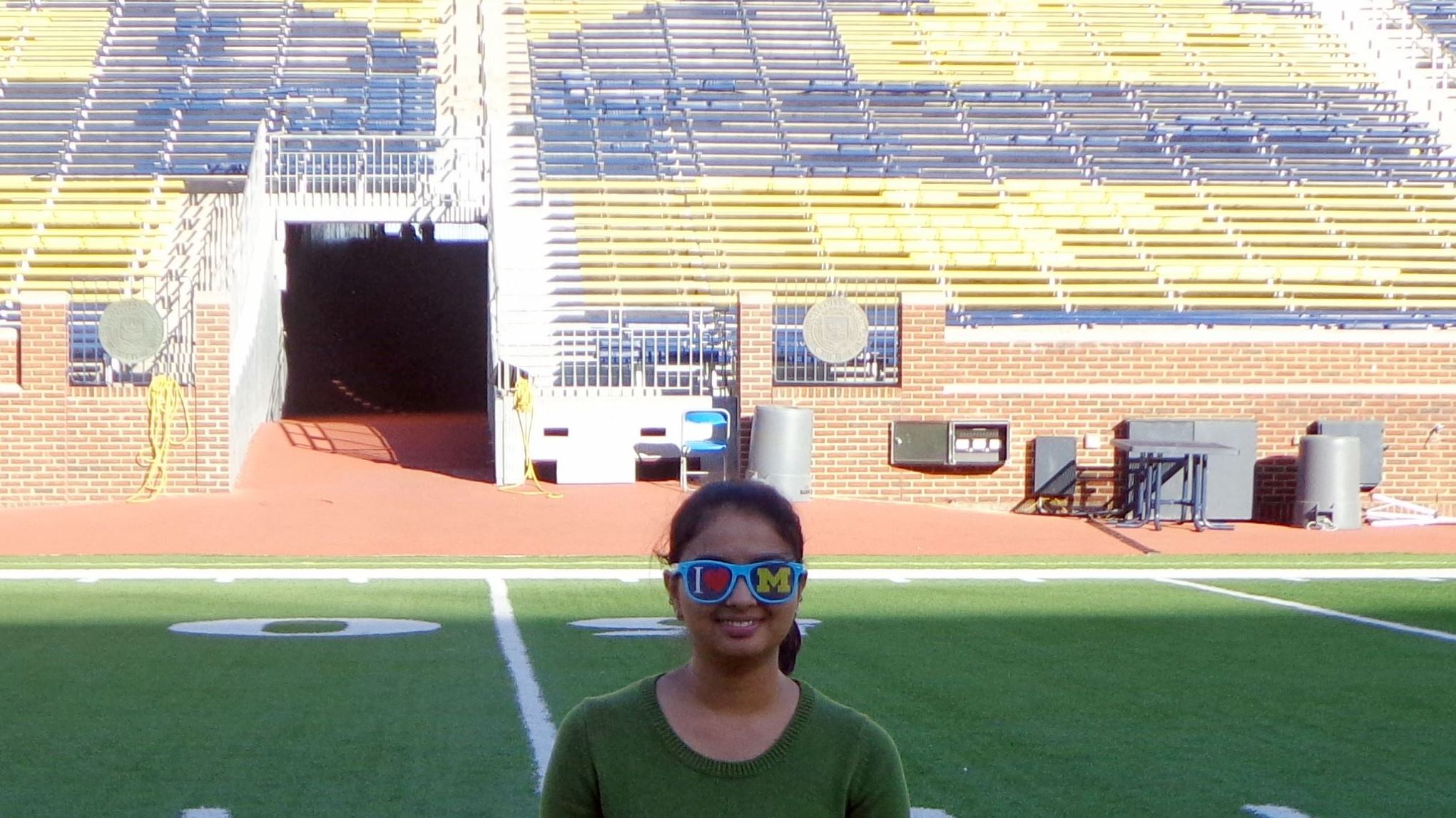
Chetna Gopinath is a fifth year PhD candidate in the Cellular and Molecular Biology Program at the University of Michigan. Born and raised in Bangalore, she moved to the US for a Master’s in Biomedical Science from State University of New York in Albany and subsequently a PhD. Chetna talks of how starting early in her quest for the best places to study shaped her scientific interests and her career path in the US.

Chetna Gopinath

Chetna Gopinath

Career Path

My fascination for biology began in high school. In biology classes, the inner workings of the human body intrigued and inspired me to expand my knowledge in this field. During that time, ‘Biotechnology’ was an upcoming and exciting field, gaining a lot of attention. It offered an array of opportunities and was a perfect blend of biology and technology. So, after 10th grade I opted for biotechnology as an elective subject and later decided to pursue a bachelor of engineering in Biotechnology.

At undergrad level, I quickly realised that I enjoyed life science courses such as genetics and molecular biology the most. I wanted to switch paths from engineering to life sciences and eventually work in the biotech industry. So I decided on a Master’s degree in the US since it not just offered great opportunities in the area but also was a hub of many biotech companies. I took the Graduate Record Examination (GRE) and Test of English as a Foreign Language (TOEFL) exams in the third year and applied to eight Masters programmes in the US. I chose a two-year Masters programme instead of committing to an intensive PhD programme to get a flavour of biomedical research.

At the State University of New York at Albany, where I enrolled for a Master’s in Biomedical Science, a number of funding options are available to students such as teaching assistantships, research assistantships, and tuition waivers. F1 (or student) visa holders are permitted to work on-campus, so students have the option of working in various University jobs such as in the cafeteria or in the library. I reached Albany three weeks before orientation, which helped me settle in and find my bearings. During this time, I set up meetings with several professors and spoke to them about their research and was fortunate to receive a research assistantship to perform my Master’s thesis in Dr. Alain Laederach’s laboratory. I received a monthly stipend, which helped cover both my living expenses and a significant portion of my tuition fees. My Master’s thesis research involved studying changes in the secondary structure of RNA brought about by disease-associated mutations. This experience triggered my interest in studying cellular and molecular mechanisms underlying human diseases.

My experience in the Master’s programme served as a jumping off point for the rest of my career: it helped me solidify my interest in the life sciences, determine the type of research I was interested in, and gave me an academic foundation to build expertise that would be valuable for the rest of my career. In order to gain more research experience, and to further my knowledge of the molecular pathology of human disease, I worked in Dr. Anthony Antonellis’ laboratory in the department of Human Genetics at the University of Michigan as a full-time research associate. Here, I studied the transcriptional regulation of key genes involved in Schwann cell development and peripheral nervous system (PNS) myelination. My research paralleled my Master’s thesis in that I was again investigating molecular mechanisms of genetic diseases, so I could use the skills I learned during my Master’s. Working in the Antonellis laboratory also allowed me to gain new experiences in zebrafish model systems and in the neuroscience field. I chose to attend the University of Michigan for my PhD, where I am currently in the Cellular and Molecular Biology programme at the University of Michigan Medical School.

Most PhD programmes require first-year students to do two to three lab rotations, which are like trial runs that allow students to spend time in different labs before committing to a mentor and a lab for their thesis research, along with taking classes. Lab rotations helped me explore different topics of research. Choosing a thesis lab after your rotations is a tough challenge. Some of the important considerations are the funding situation of the lab, successful publication record, a collaborative lab environment and a supportive mentor. For all these reasons, I decided to go back to Dr. Antonellis’ laboratory for my PhD thesis.

My PhD thesis involves understanding the molecular mechanisms underlying Schwann cell development. Schwann cells produce the myelin sheath in the PNS. Myelin sheath wraps around the axons to allow rapid communication between the central nervous system (brain and spinal cord) and the peripheral tissues. Damage to the peripheral nerve via physical damage, toxicity, diabetes or inherited mutations results in peripheral neuropathy, which is characterized by muscle weakness and sensory loss in the hands and feet. There are currently no treatment options available for these debilitating diseases. However, defining the regulatory pathways underlying Schwann cell biology will help us understand the pathology of peripheral neuropathy and design therapies for peripheral nerve repair. My dissertation focuses on defining regulatory pathways important for Schwann cell myelination by identifying target genes of SOX10, a key transcription factor regulating PNS myelination.

Pursuing a PhD has been an invaluable experience. In addition to the technical skills I learned at the lab bench, I acquired a number of transferable skills that I can take with me into any career I choose. Grad school has been an excellent avenue to learn things like how to give oral presentations, writing grants, management skills from working with undergraduate students, collaborations, and, most valuable, critical thinking and problem solving abilities. I know that whether I choose to stay in academia, or move into the biotech industry, my combined skill set will help me advance into any position.

Culture shock

I thought I had the American culture all figured out by watching Friends (one of my favorite sitcoms) but I was wrong. I expected every city in the US to be like New York City. Being born and raised in a big city like Bangalore and moving to a small city like Albany, which has less than one-sixth of the population of Bangalore, was a big change. While people were friendly, they tend to live independent lives with little to no intervention from neighbours unless specifically requested. Small talk, be it about sports or weather, is an important aspect of social interaction in the US. The first few months were an adventure and everyday was a new learning experience; from figuring out the public transportation system to the different types of food, to chores as trivial as grocery shopping.

A second wave of culture shock happened during the first day of my biochemistry class. Classroom etiquette took on a whole new meaning; habits frowned upon in India such as eating and drinking coffee/tea during lectures and referring to professors by their first names were the norm rather than the exception. Most undergraduate colleges in India require a minimum of 75% attendance to be able to write the semester exam but here most classes do not have a minimum attendance requirement. The idea behind this is that students should be in class if they truly want to learn and feel that they will gain valuable knowledge from being present, rather than being forced to attend. The concept of ‘open book’ exams was completely alien to me and, contrary to what I initially anticipated, turned out be a lot harder as compared to closed book exams.

I kept an open mind and over time began to blend into the culture. These experiences have taught me a lot about myself and have helped me be the person I am today.

Tips for students interested in pursuing PhD in the U.S.

  • Having a Master’s degree is not a requirement to apply to PhD programmes.
  • Plan ahead of time: It takes almost a year and a half to prepare for the GRE and TOEFL exams, and to put together your application. GRE scores are valid for five years and TOEFL scores are valid for two years so my advice is to take these tests sooner rather than later.
  • Competitive PhD programmes look for students with undergraduate research experience. My advice would be to gain as much research experience as possible during your semester breaks. Volunteering at non-profit organisations also helps your application.
  • Professors in the US are friendly and helpful, so do not hesitate to contact them with questions.
  • Most universities in the US offer a myriad of research opportunities, which at times can seem overwhelming, so spend some time narrowing down to a few research areas to focus on.

Revisiting Feynman on physical law

Posted on behalf of Andrea Taroni

9780262533416

Physics, along with jurisprudence, is principally known for its laws. And physical laws are amazing: they can predict almost anything, from the effects of gravity to why the Sun shines. Explaining them is surprisingly hard, however. Anybody first encountering them in the classroom, typically as mathematical formulae applied to abstract problems, can attest to that. The result is countless hours spent by teachers, educators and popularisers of science devising ways to make physics (and its laws) ‘more interesting’.

Richard Feynman’s The Character of Physical Law – published in 1965 and now newly reissued by MIT with a foreword by Frank Wilczek – stands out as an early example of a successful attempt towards this end. The book is based on a series of lectures the iconic physicist had delivered the previous year at Cornell University. But it’s a layered work, and clearly shows Feynman also drawing from another set of lectures, delivered at the California Institute of Technology from 1961 and 1963. Those would go on to become his most famous work: The Feynman Lectures in Physics (reviewed here).

However, whereas The Feynman Lectures were an attempt to reinvigorate the pedagogical approach to ‘freshman’ physics, The Character of Physical Law is, in Wilczek’s words, far more than an exposition of facts and ideas. It is also a character study of Feynman himself.

By physical law, Feynman is quick to explain that he means “the rhythm and pattern of phenomena of nature which is not apparent to the eye, but only to the eye of analysis”. In other words, the very phenomena we uncover through painstaking empirical observation, and tend to ultimately write down as mathematical equations. But the topic of the lectures is broader still. They focus on the characteristics common to all the laws: “that is another level, if you will, a higher generality over the laws themselves”.

The big picture

What is really striking about The Character of Physical Law is Feynman’s ease in covering broad areas of physics — for instance, the law of gravitation, the relationship between physics and mathematics, the role of symmetry in physical laws. But crucially, he is equally adept at discussing the history of these topics and their relevance to everyday life, and lucidly articulating the reasons why one might be curious about them. It is this combination of skills that allows him to avoid excessive abstraction and philosophising, a common pitfall when looking at the big picture of things.

For instance, Feynman kicks off by discussing the law of gravitation. In plain words, this describes how a particle is attracted to every other particle through a force directly proportional to the product of their masses, and inversely proportional to their distance. Though acknowledging that it is a discovery of the Enlightenment, he argues that by “describing its history and methods, the character of its discovery, its quality”, he recontextualises it for the present.

In the space of a few pages, the reader learns the way mathematician and astronomer Johannes Kepler established how the planets orbit around the sun. And they are provided with a clear description of the Newtonian mechanics that explain what makes them go around — including, of course, a brief explanation that, eventually, even Newton’s laws are found wanting and Einstein’s relativity takes over. At the next level of generality, Feynman also considers other instances in which inverse-square laws appear in nature — for example, to describe the interaction between electrical charges. The reader is invited to think deeper as each layer of description is peeled away, while at the same time keeping in mind the common threads that bind them together. Yet Feynman isn’t afraid to admit when even the boundaries of his knowledge are reached: “instead of having the ability to tell you what the law of physics is, I have to talk about the things that are in common to the various laws; we do not understand the connection between them”.

This approach certainly demonstrates an unusual depth of physics understanding. It also reveals Feynman’s humanity. Feynman was of course famously charming and charismatic — and, arguably, flawed, perhaps propagating the myth of his stage persona a little too enthusiastically. But ultimately he was, in my view, a man driven by a playful, down-to-earth spirit of curiosity, not the dry and abstract reasoning of a detached academic.

Rules of the game

As Wilczek notes in the foreword, a lot has happened in physics since 1965; yet The Character of Physical Law holds up extremely well today. My favourite chapter is the one on symmetry in physics. Feynman starts off by noting that symmetry appears to fascinate the human mind, if only for aesthetic reasons. But he chooses to emphasise the symmetry within the laws of physics themselves. Certain laws can be symmetric with respect to time and space, for example, but not necessarily under changes of scale. The implications of these symmetries are more obvious in some cases than others. But the key point is that by focusing on these underlying rules of the game, one gains an appreciation for the character of the physical laws they apply to.

To underline that, he masterfully explicates the far-reaching implications of charge-parity violation in the weak nuclear force. In his own words, “it is as if 99.99% of nature is indistinguishable right from left, but that there is one little piece which is completely different”. This ultimately explains the preponderance of right-handed molecules, such as proteins, that play a central role in the biochemistry of life. Feynman’s genius as a communicator lies in his ability to explain this connection in a manner that is accessible, fascinating and accurate in equal part.

Ultimately, I wouldn’t go quite as far as Wilczek by describing The Character of the Physical Law as the single best introduction to modern physics. Somehow, I suspect there is a reason why the more incremental approach espoused in The Feynman Lectures in Physics has gained traction with a wider readership over the years. But for the interested reader looking for more, this book offers enlightenment to those exploring its facets.

Andrea Taroni is chief editor of Nature Physics. He tweets at @TaroniAndrea. 


For Nature’s full coverage of science in culture, visit www.nature.com/news/booksandarts.

From tin men to Terminator: Robots reviewed

Posted on behalf of Celeste Biever

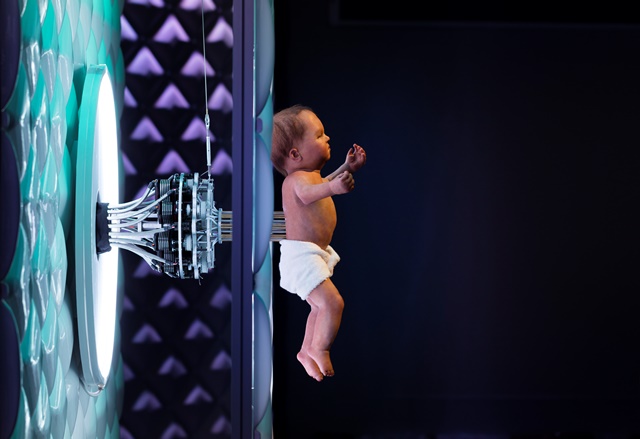
Animatronic baby, John Nolan Studio

Animatronic baby, John Nolan Studio.{credit}Plastiques Photography, courtesy of the Science Museum{/credit}

The baby’s skin looks soft and its hair downy as it blinks and stretches out its arms. Then I spot the plug and mass of wires protruding from its back.

Brainchild of London-based John Nolan Studio, the animatronic infant is a fitting start to the blockbuster Robots exhibition at London’s Science Museum. Its impressively comprehensive array of automatons is a reminder both of machine-like qualities in people, and of the challenges of imitating humans in mechanical form.

Historical automata crowd the first section, ‘Marvel’. A small, hand-carved mechanical monk from the 1560s was crafted to walk and beat its breast in contrition. Is this really a robot? Yes, says chief curator Ben Russell, who has long pondered this question: “A robot is a machine that looks life-like or behaves in life-like ways.” This summary proved a tough but useful curatorial filter, he says.

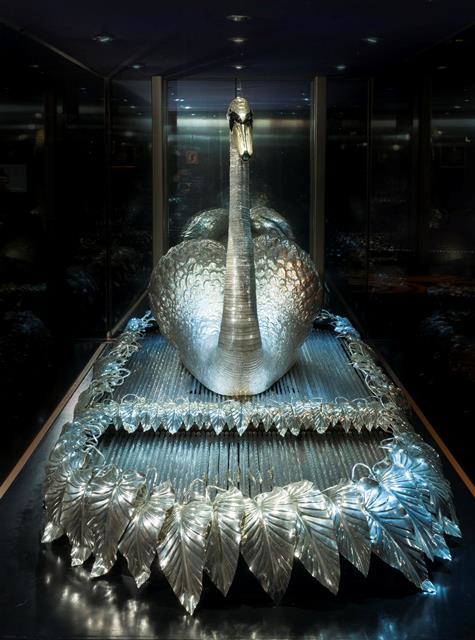
Clockwork 'Silver Swan', John Joseph Merlin, 1773.

Clockwork ‘Silver Swan’, John Joseph Merlin, 1773.{credit}The Board of Trustees of the Science Museum{/credit}

Another highlight here is the Silver Swan, a life-sized clockwork bird on a glass pool crafted in 1773 by Belgian inventor and instrument-maker John Joseph Merlin, whose work inspired Charles Babbage. (The automaton is on loan from the Bowes Museum in county Durham, northern England.) In his 1869 travelogue The Innocents Abroad, American writer Mark Twain noted the avian wonder ‘swimming’ as “comfortably and unconcernedly as if he had been born in a morass instead of a jeweller’s shop”. The lifelike movements of its serpentine neck still impress – but visitors beware: to preserve the delicate machine, it will only play at certain times.

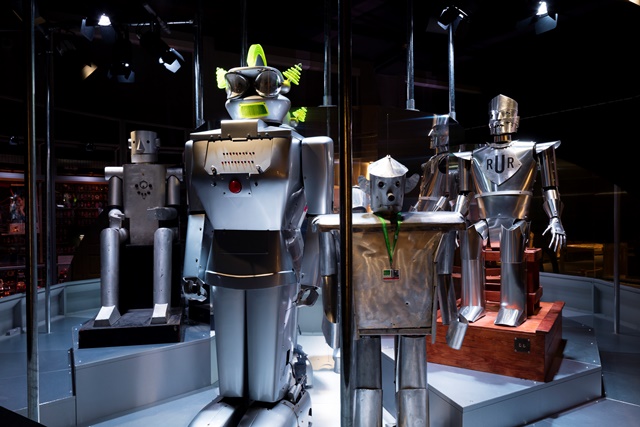
Classic twentieth-century robots Sitting Robot, Cygan, George and Eric (left to right).

Classic twentieth-century robots Sitting Robot, Cygan, George and Eric (left to right).{credit}Plastiques Photography, courtesy of the Science Museum.{/credit}

A clutch of robots classiques includes an impressive collection of dumb but engaging tin-giants dating back to the 1920s. Eric is arguably the star. The replica we see was commissioned for the exhibition and paid for by a Kickstarter campaign. Amateur engineer William Richards and mechanic Alan Reffell built the original Eric in 1928 for the annual Society of Model Engineers exhibition in London, where it a gave a speech as a stand-in for the Duke of York. Its feet bolted to a 12-volt electric motor, Eric could also stand, sit down and move its arms.

As I gaze at a Terminator from 2009 film Terminator Salvation, I’m reminded of how popular culture, as well as science and engineering, shaped the modern concept of a robot. The intimidating android “had to be there”, says Russell. “This is what people think a robot is like.”  Another delight for aficionados is a 1923 first-edition copy of Czech writer Karel Čapek’s play R.U.R. (Rossum’s Universal Robots), which coined the word ‘robot’.

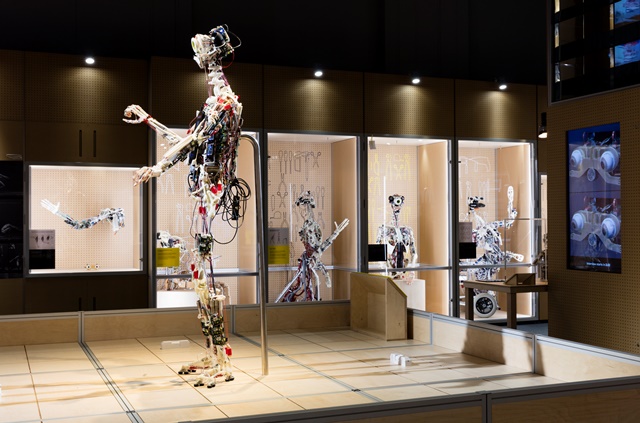
ECCEROBOT, Rob Knight and Owen Holland, 2004-2011.

ECCEROBOT, Rob Knight and Owen Holland, 2004-2011.{credit}Plastiques Photography, courtesy of the Science Museum.{/credit}

It’s one thing to dream, quite another to construct. The reality check is a gaggle of bots from a range of top labs — experiments shedding light on what it means to be human. Here are multiple versions of the life-sized ECCEROBOT (Embodied Cognition in a Compliantly Engineered Robot), each a skeletal display of tendons and bones. Built by robotics engineer Rob Knight, cognitive roboticist Owen Holland and the ECCEROBOT Consortium between 2004 and 2011, the series explores embodied cognition: how the structure of the human body shapes the evolution of intelligence and consciousness.

Juxtaposing several attempts at creating bipeds, this section also showcases the joy of tinkering. Honda’s well-resourced P2, unveiled in 1996, was the first full-bodied robot to walk on two legs. It stands next to the Shadow Biped — a pair of legs snaked through with wires and gauges, developed by inventor Richard Greenhill and other members of the Shadow Robot Project Group in a London attic from 1987 to 1997. (It managed a few wobbling steps.) The group evolved into the Shadow Robot Company, makers of the dexterous robotic hand on display.

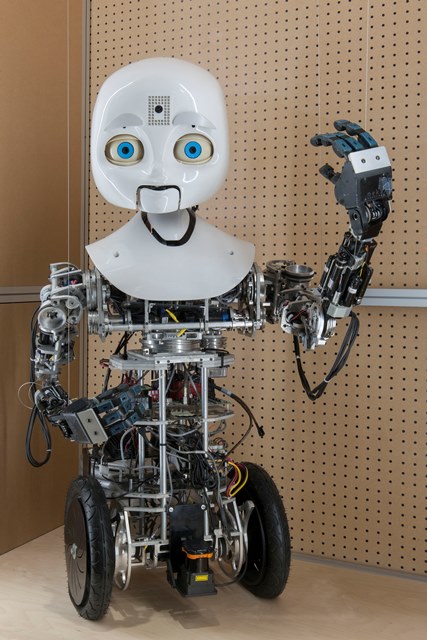
Nexi, Cynthia Breazeal, 2008.

Nexi, Cynthia Breazeal, 2008.{credit}The Board of Trustees of the Science Museum.{/credit}

The show’s research chops are also evident in the inclusion of Cog, the Massachusetts Institute of Technology project led by robotics pioneer Rodney Brooks that ended in 2003. The exhibit only features Cog’s head – a mess of wires and metal. While it’s not visually arresting, I was thrilled to see Cog: it was built to address the fascinating, once radical, question of whether human level intelligence could emerge from physical interactions with the environment, without any higher-level programming.

The emerging field of human-robot interaction gets a look-in with Inkha, built by Matthew Walker and Peter Longyear at King’s College London. A pair of bulbous eyes and rubbery lips attached to a metal frame, it served as a receptionist at King’s between 2003 and 2014. And the freakish, blue-eyed Nexi was built in 2008 by human-robot interaction pioneer Cynthia Breazeal of MIT. Through its ability to carefully control movements such as face-touching, Nexi was used to study the role of non-verbal communication.

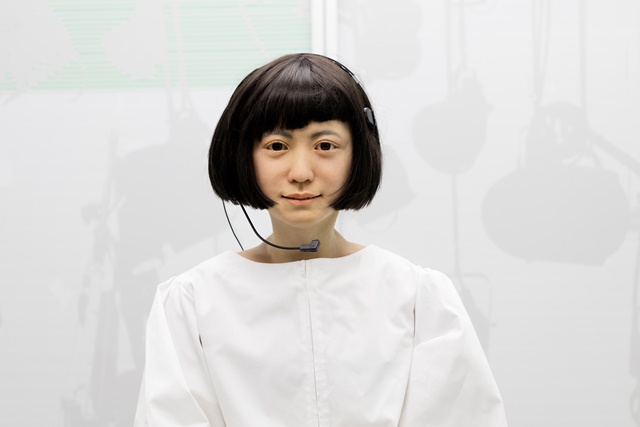
Robot child Kodomoroid, Hiroshi Ishiguro Laboratories.

Robot child Kodomoroid, Hiroshi Ishiguro Laboratories.{credit}Plastiques Photography, courtesy of the Science Museum.{/credit}

Today, of course, robots have escaped the lab, showing up in factories, homes and even clinics.  As I trek through the last room, a corridor lined with a range of humanoids already out in the real world, I ponder how robots will evolve next. Will they become ever more realistic, like the alarmingly life-like robot child Kodomoroid? Its creators at Hiroshi Ishiguro Laboratories in Japan have used such ‘geminoids’ — android ‘twins’ of real individuals — to monitor reactions when compared with the human originals. Robo-toddler Kaspar, by contrast, makes a virtue of robotic limitations. Its creators at the University of Hertfordshire are examining how children with autism,  who can be overwhelmed by diverse facial expressions, react to Kaspar’s much simpler, carefully controlled mannerisms.

This is a timely show, in a society now grappling with the implications of the robot invasion, enabled by speedily evolving, hyper-sophisticated machines. It does a beautiful job of demonstrating robotics’ embarrassment of riches and how humanity got here, powered at first by belief, then dreams and most recently hardcore research and engineering. The question that scientists, engineers, consumers and industry now have to answer is: where do we point this formidable engine?

Celeste Biever is Nature’s chief news and features editor. She tweets at @celestebiever.

Robots runs at London’s Science Museum from 8 February to 3 September.


For Nature’s full coverage of science in culture, visit www.nature.com/news/booksandarts.

The importance of networking in science

Let’s talk career with Naturejobs

Every week, Indigenus brings you some interesting and relevant posts from sister blog Naturejobs, a leading online resource for scientists in academia and industry who seek guidance in developing their careers. The blog delivers a mix of expert advice and personal stories to help readers review, set and achieve their career goals.

This week we have a guest blog by Naturejobs journalism competition winner Ashish Nair, who found new hope at the Naturejobs Boston Career Expo.

play-stone-1237458_1920

A long time ago in a land galaxy far far away, there was a great gathering where those weary of the well-trodden trail of tenureships and grants repaired themselves. The gathering in question was the Naturejobscareer expo, a free one-day event organized for students and scientists alike. Featuring some truly inspiring speakers, it gave a much-needed boost to my hope for a career in science that can be both emotionally and financially (yes, $$$) satisfying.

After all, academic research seems to have less and less cash to go around recently for the swelling ranks of newly minted PhDs and post-docs; not to mention the technicians without whom no project can be run. For me, the difference seems especially stark when my friends in management and medicine are mulling over their property portfolios. Given this near-saturation, it often seems as if employment options are limited within academic research while career pathways elsewhere feel equally difficult to navigate. It is natural, therefore, that young scientists-in-training feel anxious about the future.

profile-pic2However, academic research need not be a gladiator’s pit; nor are career pathways outside the arena of academic research scarce or hard to come by. The key requirement in both cases is networking. Dr. Jim Gould, the director of the HMS/HSDM Office for Postdoctoral Fellows at Harvard Medical School, emphasized the importance of networking at the early stages of a research career. In a detailed (and brutally honest) presentation, he outlined the difficulties that face early career researchers, emphasizing the high level of competition for a limited number of places, all against a backdrop of shrinking research funding.

Despite this, Jim pointed out it wasn’t all doom and gloom. Academic research isn’t a dead end option that involves working on other people’s projects and ideas simply to secure funding. The key, he explained, was to decide what you wanted out of a scientific career, using an individual development plan to assess your skills and interests against your objectives. Armed with this knowledge, the next important step is to network with like-minded researchers and industry leaders, pooling resources and knowledge to enable the pursuit of mutually motivating goals and ideas. He explained how events like symposia and research conferences present the kind of low-risk, high-reward setting that give students the opportunity to network confidently and professionally with both their own peers and leaders in the field.

And if the individual development plan reveals that academic research isn’t your mug of media? Not a problem, according to Lauren Celano, CEO of Propel Careers. Speaking on the industry job market and the requirements for prospective employees, Lauren emphasized just how many different career pathways existed outside of academic research: ranging from industry and pharma to law and marketing, and provided a detailed exposition of the skills required for many of these roles.

Echoing Jim, she accentuated the importance of networking and collaboration to identify both the skills required for various industrial roles, as well as the opportunities to acquire them. Transitioning from academia to industry was neither impossible nor did it need to be difficult, provided scientists have confidence in the universal applicability of their skillset and network with those who had already made similar transitions. She urged scientists to be aware of these options and to have confidence in the transferability of their skills and talents. Demonstrating leadership experience in any capacity (clubs, charities, project work, etc.) and good interpersonal skills are an added plus when looking for industry roles.

Flying back to Melbourne, I was already busy updating my LinkedIn profile and signing up for a Twitter account (yes, I’ve only just started speaking hashtag); the words ‘network’ and ‘connectivity’ ringing bells in my brain. Of course networking involves a lot more than that but hey; I’ve got to start somewhere.

More importantly, having talked to both fellow grad students and post-PhD luminaries (again, networking), I understood that abandoning academia’s soulless grant-chasing does not negate your training or your claim to being a scientist. What makes you a scientist is the ability to cast out for a solution beyond the ken of current knowledge and reach for it using a patient, logical, step-by-step approach. And outside of the lab door is a whole world of career options, just waiting for you to reach out.

Ashish Nair is a researcher who discovered to his amazement that his written thesis apparently described a cogent, well-executed PhD project- despite all evidence to the contrary. He now invests more time in writing. Apart from writing for science, he still likes to work at the bench and also enjoys travel blogging.

Suggested posts

Counting all the ways connections matter

The beginner’s guide to the LinkedIn network

Transferable skills: What are scientists good at (other than science?)

The faculty series: A case study

Finding job satisfaction as a science strategist

Let’s talk career with Naturejobs

Every week, Indigenus brings you some interesting and relevant posts from sister blog Naturejobs, a leading online resource for scientists in academia and industry who seek guidance in developing their careers. The blog delivers a mix of expert advice and personal stories to help readers review, set and achieve their career goals.

This week we have Naturejobs Editor Jack Leeming speaking to Gautham Venugopalan. After completing his PhD and postdoc at The University of California, Berkeley in the biophysics of cancer cell growth, Gautham completed a science policy fellowship sponsored by the American Association for the Advancement of Science (AAAS). He describes how that experience led him to a job as an analyst at Gryphon Scientific, a consultancy focused on public health and national security.

Gautham Venugopalan

Gautham Venugopalan{credit}Richard Novak{/credit}

Tell me how you planned your career path.

I could tell you a story that I thought I should do this, and then I thought I should do that, and it all prepared me for this grand thing. But let’s be real. That’s not how that works.

Why did you get a PhD?

I have a history of just jumping off and doing things that I’ve never done before.  I went into the biology program in my senior year. And I decided to try grad school. At the time I was thinking, all these programs that I’m applying to are really solid, I’ll have an interesting skill set that I can use to do something, and I’ll work that out.

Did you do much outside the lab during your training?

I ended up starting a nonprofit in grad school with a few of my friends. I spent time at the career center at UCSF; I did a fellowship at the U.S. State Department.


And when did you decide you wanted to be a consultant?

I didn’t sit there thinking I want to go for a consulting job as much as I found a job that had a lot of the mix of things that I wanted professionally and personally.

What does it take to do your job?

In any consulting role, you have to be comfortable with ambiguity. If there wasn’t ambiguity, they wouldn’t be hiring you.

They want people who can understand complex scientific concepts. They want someone who can understand both the big picture and the details, and communicate that strongly to other people who don’t have the same expertise. Can you explain biology to someone who is setting policy, or to someone who is using that to make a decision?  Can you distil things down and make evidence-based recommendations?

You said planning for interviews guided how you wrote your resume. What did you mean?

I went to an interviewing workshop, and the thing that they really emphasised was being able to tell stories in interviews. You think about it from this perspective: what is the story you would tell someone who wants to hire you? You want to make sure that the things you are focusing on are the things that people want to hire you for. No one cares in my current job if I can run PCR or do sterile cell culture, but that was a big chunk of what I was doing.

It’s very different if someone is going to hire you for your hands than for your perspective.

Instead of writing a resume, I wrote stories about how I would answer the questions in the interviews, and that helped me think how I should write those bullet points on my resume. It was a lot easier for me to go from storytelling to bullet points than to think “these are the most important things I’ve done.”

You can read more from Gautham here.