Announcement: The Naturejobs blog is moving house

We’re no longer publishing career stories from our global community of scientists on this platform.  Instead they’ll be posted in a shiny new home at nature.com/careers alongside the latest print news and features from Nature’s careers section. We believe this will better serve our authors and audience.

If you have a careers story to tell, you can get in touch with the editors here.

The blog will continue to be home to more than 1000 posts dating back to 2011, including advice on how to polish your CV, how to answer tricky interview questions, the best way to mentor colleagues, and how to thrive in careers both inside and outside academia.

We plan to migrate some of this important content over to nature.com/careers in due course, along with our monthly podcast about careers in science. Subscribe to our weekly newsletter — or follow our RSS, Twitter, Facebook or Instagram — for regular updates and to get the latest careers advice and information.

If you have any questions or comments please feel free to email the editors here.

The Naturejobs team.


Suggested posts

How to answer: Why do you want to work for us?

Done is better than perfect: overcoming PhD perfectionism

Why scientists should communicate hope whilst avoiding hype

Make your cover letter and CV stand out

How to answer: What is your greatest weakness?


Follow us

Twitter / Facebook / Instagram / LinkedIn / Newsletter / RSS / Atom / Feedburner



How to track the “lost generation” of scientists

“We should not consider it a disaster that someone trained to a high level doesn’t remain in academia,” Jean-Pierre Bourguignon, president of the European Research Council, told a panel discussion about science’s “lost generation” last month.

In this podcast Bourguignon and two of his fellow panel members  tell Julie Gould how better career tracking data from universities and other institutions would show how few achieve staff positions, challenging the perception that academia is the only worthwhile career option.

Continue reading

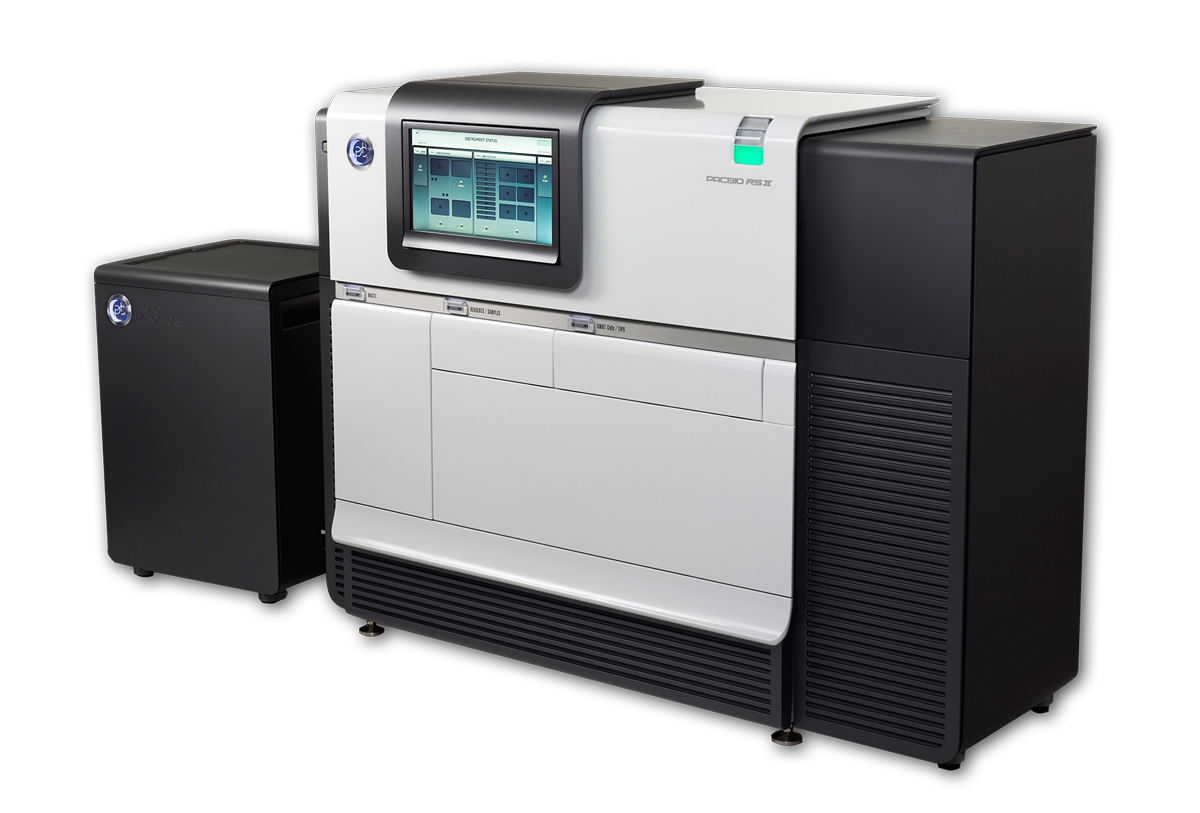
TechBlog: PacBios are hackable, too

{credit}Pacific Biosciences Inc.{/credit}

Sometimes, a DNA sequencer is more than it seems. In this month’s Technology Feature, I talk to the researchers who have figured out ways to squeeze new life from an outdated DNA sequencer, the Illumina GAIIx. That’s a popular choice for sequencer-hackers, but not the only one. Stanford structural biologist Joseph Puglisi uses a PacBio RSII from Pacific Biosciences to plumb the biochemistry of protein translation.

The RSII was designed as a single-molecule DNA sequencer, in which powerful cameras capture the flashes of light that result when a DNA polymerase molecule tethered to the base of a microscopic well inserts a fluorescently labeled base into newly synthesized DNA. But according to Jonas Korlach, the company’s chief scientific officer, that’s just one of its applications. “Yes, it’s a sequencer, but at the same time it’s also the world’s most powerful single-molecule microscope.”

All that’s required to make that microscope record something other than DNA synthesis, fundamentally, is for researchers to replace the tethered DNA polymerase with another enzyme, and to add the appropriate fluorescent reagents. To alter the running conditions, researchers also need PacBio to ‘open’ its system software to afford them greater control — for instance, to adjust experimental temperature, imaging conditions, and fluid addition. According to Korlach, just four instruments worldwide have been tweaked in this way. (As with the Illumina hardware discussed in the Technology Feature, such hacks only work on PacBio’s older RSII; the newer Sequel is not hackable, Korlach says.)

The company offers these researchers what support it can, but because they are pursuing home-brew applications, Korlach says, researchers who run into technical issues must solve them in-house. “They are mostly on their own.”

Researchers have used these modified systems to address the biophysics of cell-cell interaction, transcription, splicing, and in Puglisi’s case, translation. Puglisi’s is a structural biology lab, and structural methods tend to provide static pictures. But biology is dynamic. So, his team typically pairs the methods up. “We always like to couple structural investigations with some way to animate the structure and bring it to life,” Puglisi says. Since 2014, the lab has published some 25 studies using the RSII to study the ribosome.

In one recent study, for instance, Puglisi’s team studied the impact of modifying one particular carbon atom in the backbone of RNA. That modification, they found, causes the ribosome to pause, possibly in order to allow ancillary biological processes, such as protein folding or protein processing, to occur.

“The biology of the system really still needs to be worked out, but the dynamic behavior and structural signatures that we saw were so striking that … there has to be some neat biology here,” Puglisi says.

Korlach, who worked with Puglisi on some of his earliest efforts on the RSII, says the team, with Puglisi’s postdoc Sotaro Uemura (now at the University of Tokyo) worked out these methods on nights and weekends, when the laboratory was otherwise unoccupied. And he recalls the excitement of getting the system to work that first time.

“It was pretty thrilling when we saw the first traces of real-time dynamics of ribosome translation,” he says. “That was the first time any human had ever seen a ribosome make a protein in real time on a single-molecule level, with codon resolution. Those are the types of milestones that as a method developer you live for.”


Jeffrey M. Perkel is Technology Editor, Nature


Suggested posts

Lattice light-sheet microscopy gets an AO upgrade

‘Carbon rainbow’ enables highly multiplexed microscopy

New instruments advance mass spec imaging

Writing an academic CV in English: 7 tips

By Elliot Brooks

This is a sponsored post from Nature Research Editing Service, part of Springer Nature

A well-written cover letter and CV are both crucial in securing an interview. It is the first opportunity in any job application for you to impress your prospective employer, and therefore it is vital that you present yourself well on paper.

When writing your CV, it’s important to adapt your writing to the format and expectations of the job application process – to give a brief but engaging account of relevant qualifications, skills and experiences. For many researchers, however, writing style isn’t the only hurdle when it comes to building an effective CV.

Now, more than ever, research is takes place in a truly global environment – research collaborations and education programmes are shared across continents. English frequently is referred to as the “universal language of research” (over 80% of journals indexed in Scopus are published in English) – and it is therefore becoming more common for prospective employers to request job applications written in English. This can be an obstacle for researchers who don’t speak English as a first language.

For researchers who don’t feel confident writing in English, we at the Nature Research Editing Service have compiled a few quick tips below to help with English CV writing. For more general tips on writing academic CVs, see here.  

7 tips for English CV writing

  1. Keep your sentences short and clear. Avoid writing complex sentences as these can be confusing and you may lose the attention of your prospective employer.
  2. Write in past tense. The one exception might be when describing your current role – you may prefer to describe tasks that you’re still doing using the present tense.
  3. Use ‘dynamic’ and ‘action’ verbs such as attained, accomplished, conducted, established, facilitated, founded, managed, etc (or attaining, accomplishing, etc if you are describing your current role). See more here.
  4. Use abbreviated sentence construction. This is acceptable for CV writing in order to save space. Where possible, you can leave out sentence subjects (“I”, “my”), possessive pronouns (“my/mine”) and even articles (“the”, “a”). You can use lists – replacing “and” with a semicolon. Make sure to have a friend or colleague whose native language is English to check that your sentences are clear and easy to read.
  5. Spacing, aligning and layout are very important when you write your CV, in order to create a positive and professional impression.
  6. Use a thesaurus to help you improve vocabulary and avoid repetition.
  7. Proofread. Look out for grammatical and spelling errors, as well as sentences that are not clear. You could also ask a colleague whose native language is English to proofread your CV.

As well as following these tips, you may wish to use a professional editing service to polish the your written English in your CV and job application documents. Professional editors will, for a fee, edit your documents to ensure the English is well-written and error-free.

Nature Research Editing Service is one such editing service. It is provided by Nature Research and available to all researchers — whether they’re publishing with Springer Nature or elsewhere. It offers English editing for all academic documents, including CVs and covering letters. See here for 10% off your first CV edit.


Notes

Nature Research Editing Service is part of Springer Nature Author Services. It is a service provided by Nature Research, publisher of Nature and Scientific American, and available to all researchers.

Reference

Van Weijen, 2012 The Language of (Future) Scientific Communication. Research Trends https://www.researchtrends.com/issue-31-november-2012/the-language-of-future-scientific-communication/


Elliot Brooks is an Associate Publishing Manager with the Researcher Services team at Springer Nature.


Suggested posts

Don’t Panic! How to make your CV look its best

38 tips on writing an academic CV

Career toolkit: CVs and resumes


University drops test scores from graduate-admissions criteria

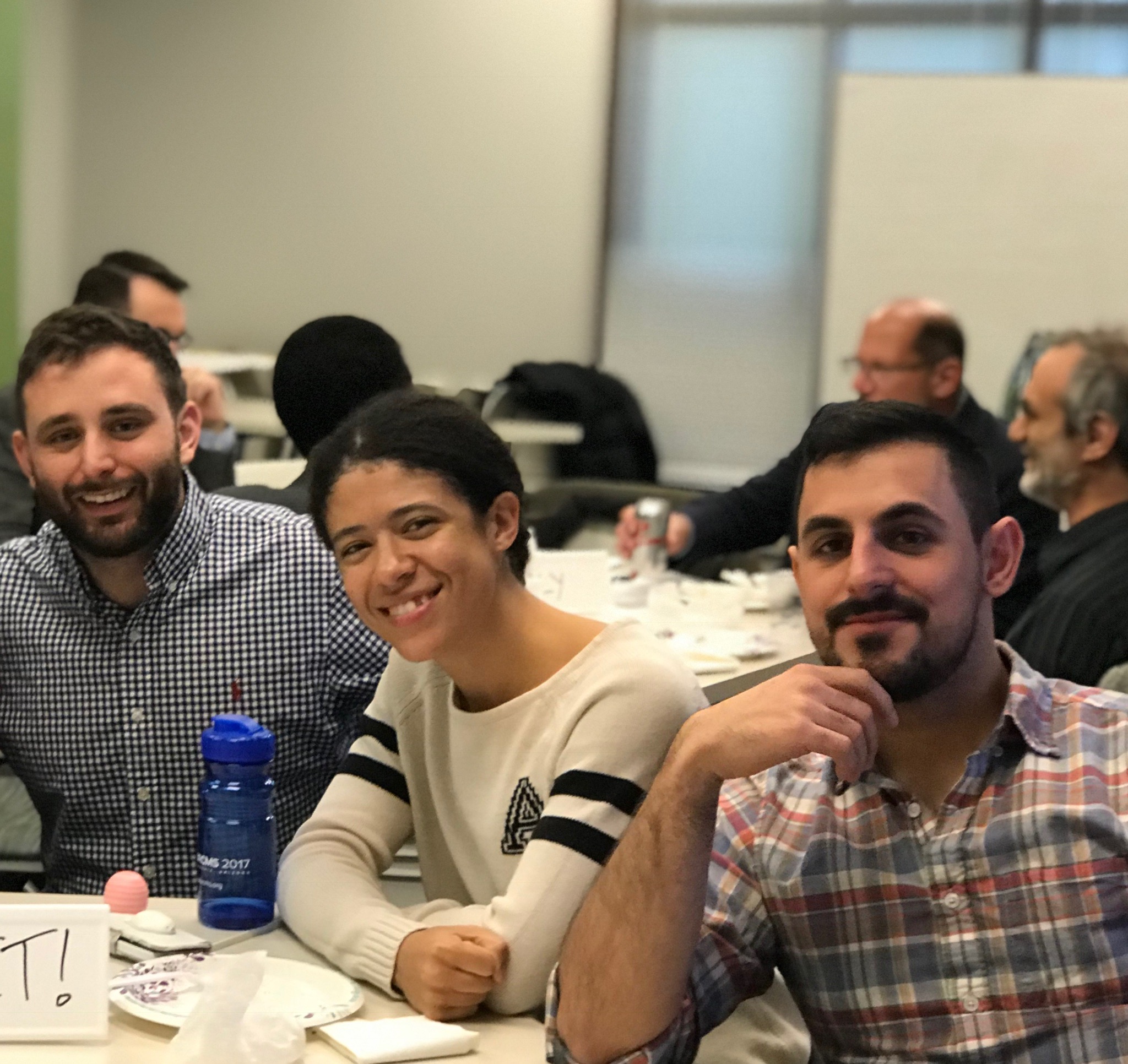
PhD students have led a successful push for greater inclusivity of under-represented groups in science, technology, engineering and maths.

{credit}Cody Anthony Hernandez{/credit}

Above, GRIT co-founders Cody Hernandez, Christina Roman, and Mat Perez-Neut, PhD students at the University of Chicago in Illinois, take a break.

By Kendall Powell

Continue reading

Done is better than perfect: overcoming PhD perfectionism

The most important thing a PhD will teach you is how and when to stop.

By Atma Ivancevic

Sometimes ‘OK’ is OK enough

I submitted my PhD thesis on the evolution of jumping genes in December 2016, four days before Christmas. It wasn’t perfect — in many ways, it wasn’t even good. By the end of my graduate studies, I had hoped to be a proficient programmer and an established scientist with multiple high impact papers. At the bare minimum, I expected to find evidence to support my hypothesis. Instead, my thesis was largely unpublished, my coding was preliminary, and my results were inconclusive. In my eyes, it was a failure. Continue reading

Why scientists should communicate hope whilst avoiding hype

How we communicate our research is important in maintaining public trust in science

By Eileen Parkes

“Exciting new line of attack for aggressive breast cancer”

I read that headline recently. “Fantastic” I thought, quickly followed by, “How have I missed this?”. My disappointment as I read the article (the new treatment had only been shown to work in cells in the lab, not in humans) turned to anger as I thought what someone with breast cancer might think whilst reading this. Someone who had coped with bad news and difficult treatments, hoping for a cure only to be disappointed again and again by overblown headlines.

Continue reading

Lowering the stakes on exams could help close the gender gap in STEM classes

Women tend to underperform in introductory STEM (Science, Technology, Engineering and Mathematics) courses, but tweaking how courses are graded could help change that.

By Diana Crow

In many undergrad STEM courses, high-stakes exams — such as mid-terms and finals — determine as much as 60-70% of the student’s overall grade. However, this emphasis on tests may be inadvertently putting some students at a disadvantage.

An emphasis on high-stakes exams at undergraduate level may be a contributor to the gender gap

Continue reading

How could universities and funders improve the situation for postdoctoral scientists?

What the research system needs to be doing to improve the world that postdocs face

By David Bogle

I’ve already written about how PhDs can prepare for and decide whether or not they should pursue a postdoc. Here, I will discuss what more universities and funding agencies should be doing as stakeholders in training and employing researchers.

Universities must be doing more to ensure the postgraduate experience is a positive one

Employers, both at universities and elsewhere, need a range of sophisticated research skills at their institutions. Early career researchers have already shown themselves to be incredibly talented; and society needs them to drive innovation in the economy. This is all the more important in the context of an ongoing war for talent. Researchers must have the opportunity to develop as ‘creative critical autonomous intellectual risk takers’ for the sake of society. Continue reading