What is the reality for disabled STEM students and job-seekers?

Nick von Behr, Contributor 

Barriers still exist for disabled graduates looking for jobs in STEM. How can we bridge the gap?

Credit: STEM Disability Transition Group

STEM Disability Transition Group Conference London 2013 Moving up, Moving on{credit}Credit: STEM Disability Transition Group {/credit}

Earlier this month, the STEM Disability Transition Group, of which I am a member, organised a conference about in and out of university transitions for disabled students in the STEM subjects.

The conference was a great success, bringing together a range of delegates from the English university sector, other parts of the education system and employment. Many mentioned how useful it was for them to be able to engage face-to-face on shared issues around supporting disabled students in the STEM subjects.

There were fascinating speakers, including two STEM graduates who explained in a very personal way the obstacles they had to overcome at university and in accessing employment because of their particular disabilities. An official from the UK Government’s Department for Work and Pensions (DWP) explained the Government’s forthcoming employment strategy for the disabled. One shocking statistic was that the employment rate for people with mental health conditions is as low as 15%. While higher levels of qualifications increase the employability of disabled people, there are still significant gaps a few years after graduation between their employment rates and those of the non-disabled. Continue reading

Using maths and IT to help tackle HIV

Maths and IT play an essential role in most public health campaigns, and offer the chance for mathematicians to use their skills for social good. 


Global health and statistics

{credit}Credit: iStock/Thinkstock{/credit}


Crispin Sapele is Director of Systems and Operations at CHAMP, a not for profit organisation which was set up to respond to the growing need for corporate HIV/AIDS programmes within Zambia. In December 2003 CHAMP set up a dedicated HIV hotline that offers a 24/7, 365 day counseling and information service. At CHAMP, Sapele’s role has been in planning, analyzing and evaluating the impact of such programmes, using his statistical background. Naturejobs spoke to Sapele about why maths is such a vital part of global health campaigns.

How did you get into global health?

I started off studying mathematics at the University of Zambia almost 20 years ago. I actually originally wanted to do engineering but after the first year I met one of the first mathematics professors here in Zambia and got inspired by him to do maths, so I made the switch.  After my degree, which lasted four years, I immediately got a job at the national statistics office (CSO). And with that I got my first taste of managing and running statistical health programmes, such as surveys and censuses.

How did you end up at CHAMP working on HIV prevention programmes? Continue reading

Working in global health: Jennifer Stevenson

Jennifer Stevenson is a research associate at the Johns Hopkins Malaria Research Institute, Johns Hopkins Bloomberg School of Public Health, and resident entomologist at the Macha Research Trust in Zambia, where she is working on new techniques for malaria control. Stevenson studied biological sciences at the University of Oxford, and did both an MSc and PhD at the London School of Hygiene and Tropical Medicine investigating ways to control mosquitoes. After spending 5 years working in Kenya on malaria research, she moved to Macha, Zambia in March this year. Macha is a small rural community area in the Southern Province of Zambia, which is made up mainly of traditional villagers who live in homesteads scattered over the savannah. Stevenson has spent 12 years working in public health, and has spent much of that time working in remote locations in Uganda, Venezuela, Kenya, and now Zambia. Naturejobs caught up with her in Macha to find out more about her work and career.
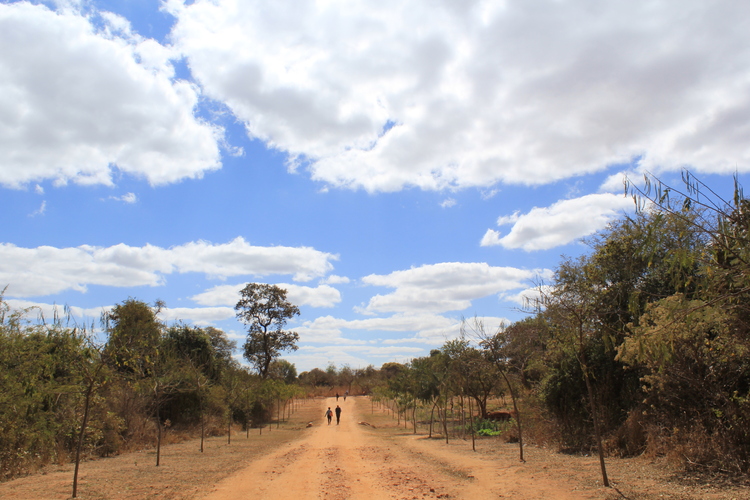
 

Macha

{credit}Credit: Catherine de Lange{/credit}


When did you decide that global health was what you wanted to do?

When I started research on mosquitoes I was very interested in the biology and the behaviour of mosquitoes but really with the aim of eventually doing that somewhere where it actually means something. When I started my job in Kenya I became more involved in the global health side and that really grabbed my attention. I really enjoyed the epidemiology – how to roll out surveys and plan operational research. Here in Macha, it’s going to be more on the entomological side, with some field-work. Going back further, my father was a researcher in topical medicine in Kenya so I got to tag along with him and see the work he was doing, and right from an early age I was fascinated by that.

What is it about global health that really appealed to you?

There’s a lot of challenges and I like a challenge! You also learn something new almost every day, you get to work with some fantastic people, fantastic communities, some great academics in the field. And being able to work in Africa, you really get to see what the challenges are and get a feel for what can work: it really focuses your mind on driving towards something that could really help.

There are setbacks and there are a lot of times when it can be quite difficult though. But at the end of the day when you can see a change it’s really worthwhile. In the project I was working on in Kenya, we were doing a randomised controlled trial where we were proving bed-nets, spraying houses, testing and treating people for malaria. We had a great community involvement there and we were able to help some of the families. There were some very sick children we were able to help, which was very fulfilling.

Do you ever worry that when you leave the field your efforts will be undone?

That is always a challenge because with these research projects you come in with a set amount of money over a set timeline. What we try to do is to train people up and be able to find positions for them afterwards. For instance in Kenya, it was great seeing people [we trained] who had just left school getting into the position where they were applying for permanent roles at, say, the Kenya Medical Research Institute, and really seeing them thrive. So part of this work is capacity building as well, and obviously that’s very rewarding.

How do you feel about spending such long periods away from home?

I normally try when I’m out in these places to think: home is here. I come from a family who moved around the world anyway so actually defining where home is is difficult. Although I’m british I was brought up in Kenya and we also spent some time in Indonesia. It was only when I was 16 or 17 that I moved back to the UK.
Credit Jennifer James

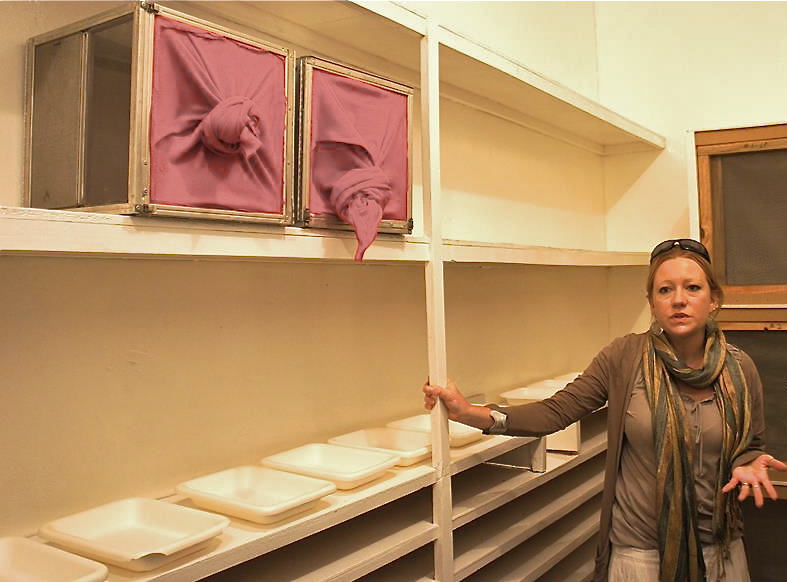
Jennifer Stevenson in the newly refurbished insectary at Macha {credit}Credit: Jennifer James{/credit}

Entomology is one part of these projects. What other kinds of  roles are there in global health?

There’s a great range. There are people who have done pure science – biochemistry or molecular biology – who then move into public health. A colleague of mine went down that route and is now doing a masters in public health with a view to get into policy. There are people who are mathematical modellers and get into epidemiology. So I don’t think there’s a set route, it’s a real mix.

Any advice you’d give to someone thinking of a career in global health?

I think the key thing is to get experience. I had an upbringing that gave me a lot of exposure anyway. A lot of people won’t have that chance, but getting to volunteer on projects and getting that experience is really key. Go out and work in areas that you might be interested in, like Africa. I think it’s also important to speak to people in the kinds of fields you might be interested in. In terms of leading up to my degree I think one regret I always had is not doing maths at A-Level. Whatever you get into in the science world in public health, maths is key.
 

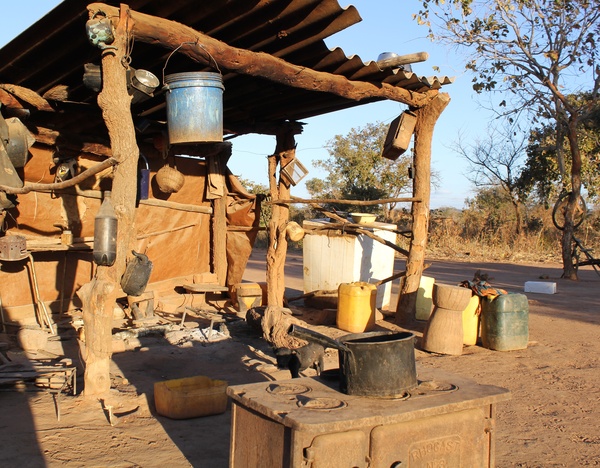
Stevenson's work is split between entomological studies in the Macha labs, and field work, where she visits homesteads in the area, such as the one below.

Stevenson’s work is split between entomological studies in the Macha labs, and field work, where she visits homesteads in the area, such as the one below. {credit}Credit: Catherine de Lange{/credit}
 

homestead small

{credit}Credit: Catherine de Lange{/credit}

Naturejobs is in Zambia with the International Reporting Project, speaking to people working in global health, in particular those studying malaria, HIV/AIDS and TB. 

So you want to work in global health?


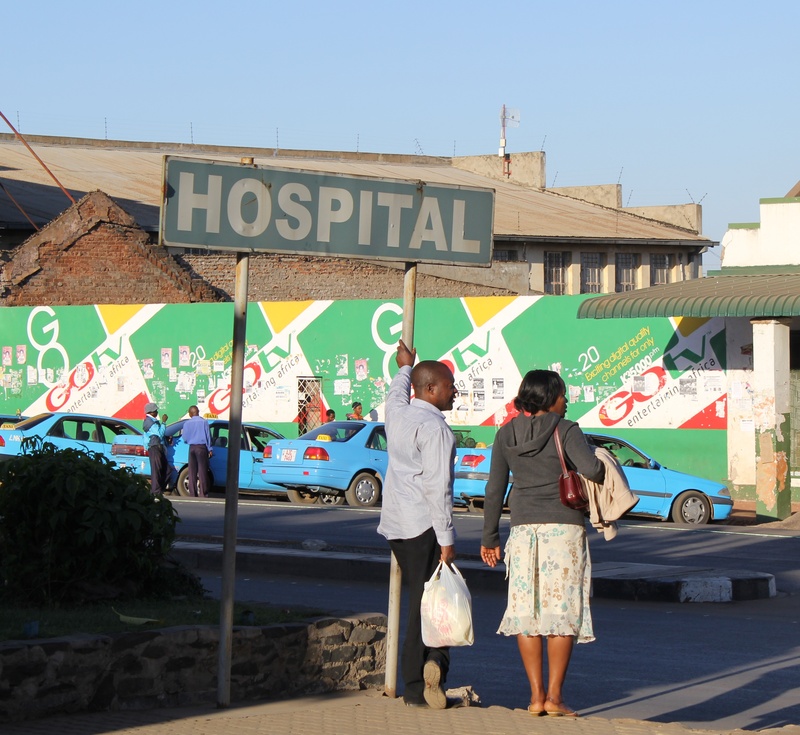
Zambia Hospital

{credit}Credit: Catherine de Lange{/credit}

With advances in healthcare and modern medicine, its often the poorest and most hard to reach people who get left behind. Careers in global health can take you on incredible adventures, and can be an rewarding way to use your science to make a difference to some of the world’s biggest health issues.

What is more, there are diverse career paths into global health roles as a range of skills are needed, from mathematical modelling to medicine. Over the next couple of weeks, Naturejobs will be travelling to Zambia with the International Reporting Project to speak to people working on the front-line of global health, to discover what those jobs involve, what kinds of issues they are working on, what skills are needed, and to find out what it’s like working often far from home on some of the most complex and intractable issues in public health. Not all jobs are on the front-line though, so we’ll also be looking at ways to work on global health nearer to home.

The series will be kicking off later today, when we speak to entomologist Jennifer Stevenson, who has travelled the world to work on new methods for controlling malaria.

Join us here on the Naturejobs blog, and on our social media sites – follow us on Twitter at @naturejobs and on Facebook.

You can also take part in our global health jobs poll, here: Global health jobs often involve long stints abroad. Would it put you off?


Robert Winston: Why students should bother with science communication

By Chandrika Nair, contributor

RobertWinston

{credit}Imperial College London{/credit}

As a PhD student myself,  I know too well that taking ‘time out’ from your research to gain so-called soft skills like communication might feel like an unwanted distraction, or a waste of time. Which was why I turned up to listen to Robert Winston – medical doctor, scientist, and science communicator – address PhD students at Imperial College London last week, where he strongly advised us to brush up on our storytelling skills.

Better science communication means better papers.

During the talk, Winston pointed out that storytelling is a powerful and innate communication tool.“We’ve been telling stories around campfires since the early days of human evolution,” he said, and scientists need to take that tool and apply it to their research. In order to publish in top journals, we must get the narrative right. Leading them through the story, we first convince readers and editors that the rationale behind our work is sound. Then, we strive to remain intelligible as we walk them through how we obtained our data. Finally and crucially, we persuade them that our results are relevant and that our research was worth doing at all. So stories matter, even in science.

Science ‘miscommunication’ is dangerous. Continue reading

Your online CV: 6 tips to get it to the top of the pile

An online CV is now an everyday part of the job hunt, but there are some simple ways to make sure yours catches the eye of a potential new boss.


Who needs paper?

Who needs paper?{credit}iStockPhoto/Thinkstock{/credit}

We all know it’s a fiercely competitive job market out there. And when focusing on applying for jobs and fending off the competition for elusive openings, it’s easy forget about those employers who are out there searching for talented people like you.

At Naturejobs, we have scientific employers around the world searching for potential candidates and downloading their CVs . If you haven’t already uploaded your CV you really are missing out on a simple route to finding a perfect role and connecting with great science employers.

If you’re planning on uploading your CV to Naturejobs, use the following checklist to get your CV to the top of the list.

  • Stay current. Make sure your online profile is complete. Provide as much information about yourself as possible so a potential new boss knows exactly who you are and what makes you tick. Check your CV is up to date, and do that regularly, topping it up with any new information on, say, public speaking, awards or new publications. If you have been shortlisted by an employer, they will be alerted every time you update your CV.
  • Link it all up. The joy of online job hunting is you can include plenty of web links in your CV to other materials should anyone be interested, without spamming them if they are not.
  • Re-location re-location. The majority of the employers who are using our website are looking for people who might be willing to relocate. Have a good think about whether this applies to you, and if it might, tick that box!
  • Be specific. Remember that employers will be using the search tool to find the ideal candidate. Maximise your chances of getting to the top of the pile by selecting all the specialties that apply to you when filling out your profile, rather than using the ‘other’ box, as it’s unlikely employers will be searching for ‘other’ as a specialty.
  • Match up the keywords. Check the keywords you use in both your CV and your personal summary, as both of these are picked up when an employer searches. Check through the job advertisements and job descriptions of positions you are interested in, and make sure they match the words in your personal summary and CV.
  • Be visible. Make sure your CV is searchable by ticking the box on your profile page.  Of course, the option is there to make your CV invisible to employers in case you are worried about a current employer seeing your profile. Remember though – these days, it’s fairly customary to have an online employment profile, even if you are not actively seeking a new job. It’s the way many scientific collaborations now take place.

For more tips on writing a CV and cover letter, check out the Naturejobs career toolkit here.


Bad day? Release that aggression with our new game, Lab Smash

Ready to smash it up? Take out your frustrations with Lab Smash, the new Facebook game from Naturejobs.

Ready to smash it up?

Ready to smash it up?{credit}Naturejobs{/credit}

So, all that pipetting is driving you nuts and anomalous results making your blood boil? Ready to smash it up? Before you flip your lid and take it all out on your equipment/bench neighbor/boss/defenseless lab-technician, take five and try out our new Facebook game, Lab Smash.

Race against the clock to smash up your lab, from test tubes to microscopes, and pitch your efforts against your friends to make it to the top of the leaderboard. It’s the safest way to take out that pent-up aggression, leaving you free to return to the bench as zen as a yogi.

Play now.

Happy smashing!

Science internships waiting for your application

To make it easier for you to find a great work placement, we’ve dedicated this blog post to upcoming opportunities in science, technology, engineering and maths.

We will be updating this list regularly, so keep checking back for more.

If you have a paid internship suitable for scientists you’d like us to add to the list, please send details to naturejobseditor@nature.com

Continue reading