Most read on Naturejobs: April 2015

Data science, the postdoc series and work/life balance have been favourite reads this month.

Wow. We’re at the end of April 2015. Can you believe it? I hardly can. This month has flown by for the Naturejobs team as we are putting together the last few preparations for the Naturejobs Career Expo in Boston in May, and of course working with all the contributors for the Naturejobs blog!

I’ve had a look at the numbers, and here are the top ten most read articles from Nature Careers and the Naturejobs blog in April 2015.

data-science-industry

Clicking on the image will take you through to the Data Science article{credit}PW Illustration/Getty{/credit}

Technology companies are looking for people with quantitative skills. Where better to look than in science? Data science: Industry allure shows how data scientists can make the move into industry.

One of the biggest decisions in a postdoc’s career is choosing the right lab (and hence, the right supervisor to work with). The postdoc series: Finding the right lab shows early career researchers what factors they need to consider when choosing their laboratory, whether for their first, second or fifth postdoc (let’s hope not…).

In this interview, Turning point: Arun Shukla, Arun explains why now is a good time for scientists to return to India. Continue reading
Tenure-track: Women have the advantage

Women have a 2:1 advantage over men when applying for tenure-track roles in mathematically intensive subjects in academia.

Naturejobs-podcastStephen Ceci and Wendy Williams from Cornell University recently published a paper suggesting that when applying for tenure-track positions in mathematically intensive subjects, women have the advantage. Why? That’s what they wanted to know.

They had both gone through actual hiring data which showed that fewer women applied for these jobs, but when they did, they were the preferred candidate. A common argument for this is that when women have reached that stage, they are the stronger candidate because they have survived discrimination in various forms throughout their career leading up to this point. The paper, published in PNAS, says this isn’t the case.

Instead, their research suggests that women have the advantage, just because they are women and that competence wasn’t what was setting them apart. They sent identical applications to more than 800 tenure-track faculty in the US to consider, the only difference in these applications was the gender, and women were still the preferred candidate.

This is a very different story to what many people see and feel every day in academia, and thus this paper has had a lot of criticism. In this podcast I give Williams and Ceci an opportunity to share their results, their motivations for their research, and give them an opportunity to speak out about some of the criticism they’ve received.

You can find out more about their study on their website, and read the paper, National hiring experiments reveal 2:1 faculty preference for women on STEM tenure track, for free on PNAS.

Considering how much interest this paper has received, we’re keen to know what you think! If you have any comments about the research or any first-hand experience you want to share, please leave a comment on the blog.

Work/life balance: Remain flexible

Flexibility is the only viable way to remain competitive as a scientist while still juggling a life, says Igor Zlobine.

Contributor Igor Zlobine

flexible-naturejobs-blog

{credit}Image credit: Image Source/Alexander Porter C{/credit}

Are we living to work, or are we working to live? I’m not certain as to how many scientists have delved deep into their souls to ask this question, but I think it’s pertinent that we all do.

Work/life balance, that mystical unicorn, remains an elusive goal for undergraduates, graduates, post-docs and professors alike. And as I am about to embark on a PhD, I’m thinking about how I can manage my time to make sure I stay relatively sane. I’ve heard too many horror stories about people half way through their PhD going for a “coffee break” never to be seen again.

For me, flexibility is the only viable way to remain competitive while still juggling a life. I’ve set hours for myself, centered approximately around a 9-5ish type of schedule (typically including some work at home on Sundays) but I break them if absolutely required, if for example we are finishing a paper, or when I was close to completing my thesis. We need to move away from the notion of “work” and “life” as two separate entities that exist in parallel universes never to interact with one another. Continue reading

The postdoc series: Help for lost postdocs

Self-reflection can help young researchers analyze their skills and plan for their futures.

write-think-naturejobs

{credit}Wavebreak Media/Thinkstock{/credit}

Alice asked the Cheshire Cat, who was sitting in a tree, “what road do I take?”

The cat asked, “where do you want to go?”

“I don’t know,” Alice answered.

“Then,” said the cat, “it really doesn’t matter, does it?”

— a paraphrased version of the scene in Lewis Carroll, Alice’s Adventures in Wonderland

Karen Hinxman completed two postdocs before realising she was on the wrong road and wasn’t cut out to be a professor. “I still love science and research, but I’m better suited to my current role,” she says. Now she’s a career consultant at Imperial College London, working with other postdocs who are looking for careers advice. “The perpetual postdocs are usually still there either because they are determined to become professors, but more often than not, they don’t know what else to do.”

Hinxman’s postdoctoral experience, like that of many others we’ve seen in this series, was beneficial when it came to finding a job outside academia. She had an insider’s point of view of what life as a postdoctoral researcher was like. “What comes next very much depends on the postdoc, what kind of person they are and what career they are hoping for.” Continue reading

From Scotland to Brazil: The postdoc: Are you in or are you out?

Gina Maffey contemplates her next career move, having applied for positions both inside and outside of academia.

Contributor Gina Maffey

Gina-maffey-naturejobs-blog-postdoc

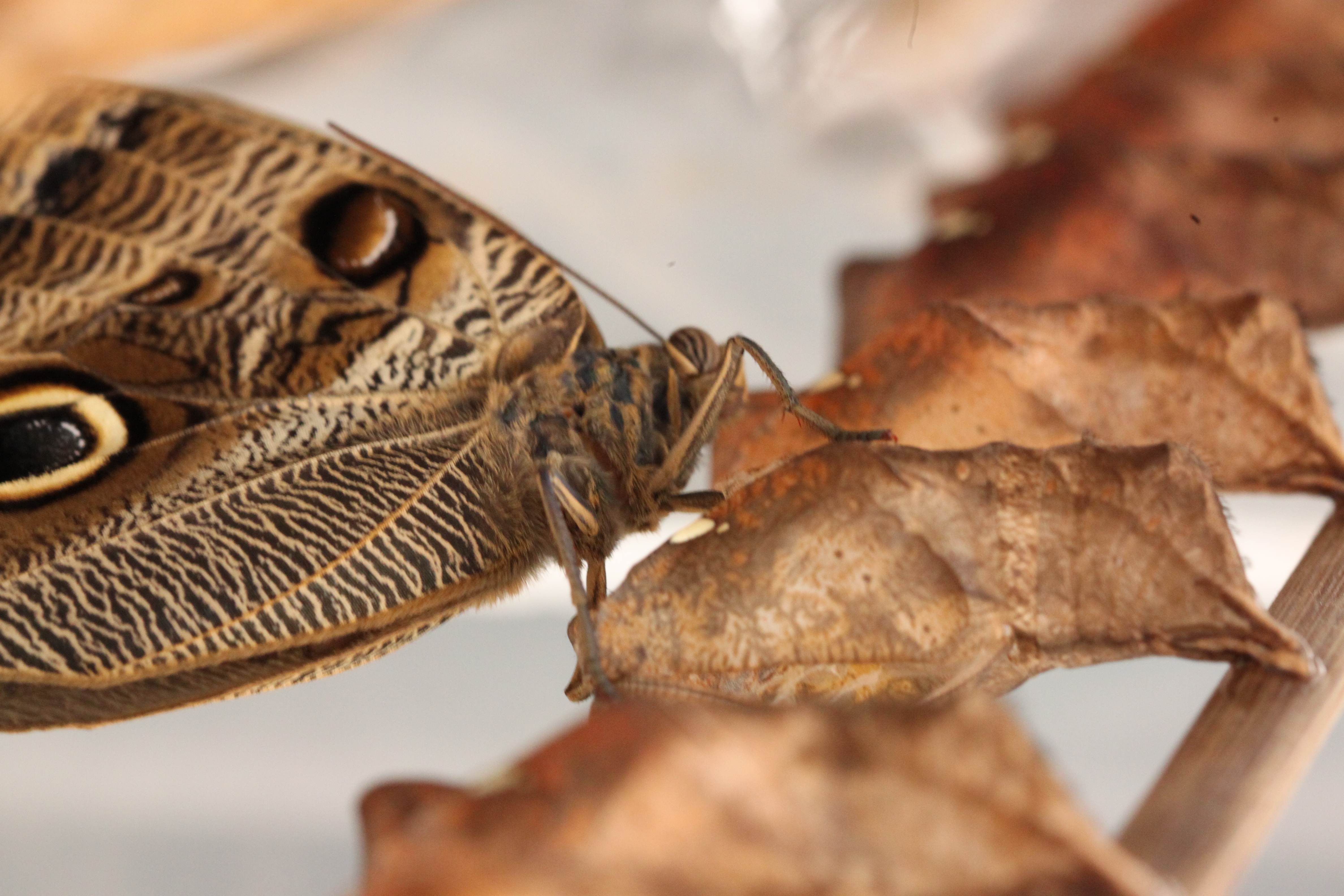
Morpho butterfly emerges from chrysalis {credit}Image credit: Gina Maffey{/credit}

The bus turns down another road, and once again I stare at the buildings trying to gauge their familiarity. Is this a new route that we’re driving along or is it just that the last journey has already become fogged in my memory? It’s my favourite part of the week this, my three hour jaunt on a Thursday morning to my Portuguese lesson. For half an hour on that journey there is no one translating on my behalf, no one explaining how things work here and I am alone, independent and travelling. It is liberating.

I watch people get on and off the bus. Fascinated by the way things work, and with only a few weeks of Brazilian life behind me, still comparing everything to a European model. As the city shifts from high-rise flats to sprawling suburbia, my present preferred topic of contemplation swings into view: What am I going to work on in Brazil? Continue reading

Job search: Probing questions

Job security comes from having more control over your career, which starts with asking probing questions, says Clare Jones.

Contributor Clare Jones

Questions-naturejobs-blog“I want to leave academia and find a job that has more security and less stress. Where should I start looking?”

Wanting to leave academia for a less stressful and more secure job, is a regular comment made in individual careers appointments with early career researchers. Academic life has certainly become more stressful, and the early stage research career has a great deal of uncertainty about it. More and more people are considering whether or not this is the career for them. However I do not want to move immediately to providing job search resources as this may not be beneficial initially, and difficult as it might be I would like you to consider:

Why are you looking for something less stressful?
As a Careers Adviser and someone with a “career” to manage, I am concerned when the motivation to make a change is about seeking a less stressful job. I do accept that some reading this may have a diagnosed stress condition and they do need to carefully balance their career and condition. For others (myself included) we can get “stressed” by our work or career situation in very different ways. Do think about why you are stressed: are you working on the wrong project?; or in the wrong environment or group?; have your priorities for your career and your life changed? By identifying, and accepting, that you or your priorities have changed or that the choice you made to undertake academic research hasn’t worked out as you hoped, you may avoid simply changing one stressful situation for another. Continue reading

Career paths: Tracking PhDs

PhD graduates can take part in a survey to help create a visual map of career clusters.

Melanie-sinche-naturjeobs

PhD Melanie Sinche{credit}Image credit: Stephan Lieske{/credit}

Melanie Sinche is a nationally certified career counselor focused on STEM careers, currently serving as a Senior Research Associate at the Labor and Worklife Program in Harvard Law School, studying employment patterns of science PhDs. She formerly served as Director of the FAS Office of Postdoctoral Affairs at Harvard University. She is an accomplished career counselor, trainer, and speaker. In addition to building three career centres for graduate students and postdoctoral scholars, she has delivered career development presentations and training sessions for universities, government agencies, professional associations and non-profit organizations across the country on career-related topics for graduate students and postdocs. Her current focus is to improve data collection on PhDs and postdoctoral scholars across the U.S. She is also working on a book-length project on careers for PhDs in science with Harvard University Press, scheduled to be on the market in the fall of 2016. In this interview, Julie Gould asks Sinche about how she got involved and interested in this field, her new book and how PhD graduates can help with her research.

How did you get involved in the STEM careers space?

I don’t actually have a STEM background – other than my dad having a PhD in physics and being involved in scientific organizations over the years, such as the Society for Native Americans, Chicanos in Science and the Biomedical Sciences Careers Program in Boston. I was actually in graduate school decades ago for Russian and Eastern European Studies at the University of Michigan (UoM). But while I was there, I volunteered at the career centre to be a peer counsellor and work with other grad students, reviewing CVs and advising. I absolutely loved it.

When I was close to finishing my studies and was thinking about my career – whether or not to do a PhD – a job opened up in the career centre at Michigan and I took it. I’ve been in this field ever since. Continue reading

Work/life balance: A question of identity

Achieving work/life balance comes hand-in-hand with understanding yourself and your identity as a researcher, says Justin Chen.

questions

{credit}iStockphoto/Thinkstock{/credit}

Contributor Justin Chen 

During my third year at MIT, I began playing basketball with a small group of graduate students. The weekly games, casual and sloppy, were a chance to talk and catch up. During a break, a friend confessed that he felt guilty for spending a few hours away from lab. “But then I tell myself exercise is good for my research,” he said. “It clears my mind and helps me focus.” I had heard similar justifications for having hobbies and found them puzzling. “What about saying that exercise is good for you?” I asked. To what extent can we separate our personal identity (or a comprehensive view of who we are) from our research? I joked, “soon you’ll be saying eating is good for my productivity or breathing is good for my research.

The question of identity is linked to the issue of work-life balance. Most of us have a broad identity consisting of several things like mother, runner, writer, wife, daughter, baker, musician etc., but researchers usually have one identity: their job as a scientist.  Among professions, science is unique in that some researchers choose their projects.  As an undergraduate in a developmental biology lab, I was captivated by embryos. They were not much more than three layers of tissues flattened together in the pellucid shape of an animal.  While looking under the microscope I began to wonder how a single cell becomes a complete animal and eventually applied to graduate school to find out. This decision, in one sense, freed me to follow a passion but in another way my research became a shadow or alter ego constantly trailing me. Continue reading

The postdoc series: What comes next?

A postdoc sets you up for a variety of careers, including academia, editing, working in industry, core laboratories and more.

cross-roads

{credit}Ratch/Shutterstock{/credit}

The obvious path for many people doing a postdoc is to look for a more permanent academic position as a tenure-track professor. But it isn’t the only one! There are plenty of other things a postdoc can do. Here are just a few examples.

For those who have the want, determination, and, let’s face it, a bit of luck, working as an academic professor can be worth the battle. Dr Esther Bullitt is currently going through her application to become a tenure-track professor. “There were biological questions that I wanted to pursue, and having the independence to do so was absolutely compelling,” she says. One of the challenges that she faces in her application is to make sure that she stands out from the rest of the crowd. “There are many excellent scientists working on many interesting questions, so you need to demonstrate a broad set of skills that go beyond a great project and a well-developed plan for the science.” To be promoted to professor, Bullitt says that postdocs need a well-documented track record in: funding; publishing your research; being nationally and internationally recognized as an expert in your field; giving invited seminars; teaching; university committee work. “Probably in about that order,” she adds. Continue reading

Work/life balance: Get inspiration

As well as an opportunity to relax, time away from the bench might bolster creativity, says Grigori Guitchounts.

Contributor Grigori Guitchounts

istock_thinkstock_mentor

{credit}iStockphoto/Thinkstock{/credit}

About a year after graduating from college, I interviewed for a lab technician position with a postdoc who was gearing up to start his own lab. Chatting in Cambridge’s hipster Area Four coffee shop on a disappointingly freezing March day, I was trying to assess what kind of lab environment I should expect. After all, a highly competitive top-notch institution such as his was notorious for producing overworked, stressed people. “I work about one hundred hours in the lab every week,” he said, “plus another twenty in the clinic. And I have a kid at home.” Noticing my incredulous expression, he added, “science does not wait.”

I couldn’t help but imagine all that this young scientist was missing out on. At the peak years of his ability to explore life, this man was spending every waking hour digging deeper and deeper into ever more esoteric areas of science, and the protruding belly and baggy eyes couldn’t hide that the hours were taking their toll. Clearly his schedule did not allow for anything resembling a work-life balance, which is typically taken to mean the moderation in time spent working that allows one to engage in leisure activities daily. Taking the time to engage in activities outside the lab might not be for everyone; some are happy to be doing experiments sunrise to sunset. But besides being a way to relax, leisure activities can often reset one’s mind and inspire. Taking a break from the lab can often be the extra push needed to complete a difficult task. More importantly, time away from the bench might bolster creativity, which is crucial to the progress of science. Why then is a work-life balance so elusive for scientists? Why do so many feel that in order to succeed, they must immerse themselves completely in experiments? Continue reading