Most read on Naturejobs: November 2014

It’s been another busy month for the Naturejobs team this month, but we’ve had some great stuff on the blog too. We’ve looked at funding cycles in academia, jobs for bioscience researchers, networking, event planning and much more. Here we’ve got a list of your favourite posts from this month, which includes some of our videos from the Naturejobs Career Expo! We’re really pleased that you like them and we’ll definitely be making more at Expos to come.

We also want to give a special thank you to all our guest authors too: Scott Chimileski, Samuel Brod, Sarah Blackford, Gary McDowell and Simon Hazelwood-Smith! If you think you have an idea for a blog post on the Naturejobs blog, an experience that you’ve learned from and want to share or a science-career related event you went to, please do get in touch with me by email at naturejobseditor [AT] nature [DOT] com.
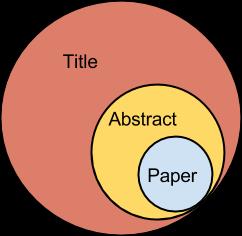
big-research-better-writing

How to get published in high impact journals: Big research and better writing{credit} Image credit, Macmillan Science Communication{/credit}

1. How to get published in high-impact journals: Big research and better writing. This post outlines some top tips from Nature and Macmillan editors on how to get your research into high impact journals.

2. Ask the expert: What other jobs can bioscience researchers and PhD students consider if they want to leave academia? Sarah Blackford was our expert this month and she answered this question with a list of potential roles that bioscientists can easily fit into. But remember that you don’t need to pigeon-hole yourself: if you think you’ve got the skills to do something that’s not on the list (teaching, for example) then go for it!

3. What isn’t science communication? Samuel Brod writes up the science communication panel from the Naturejobs Career Expo in London this year. It’s a frank insight into what to consider before diving into a science communication career. Continue reading
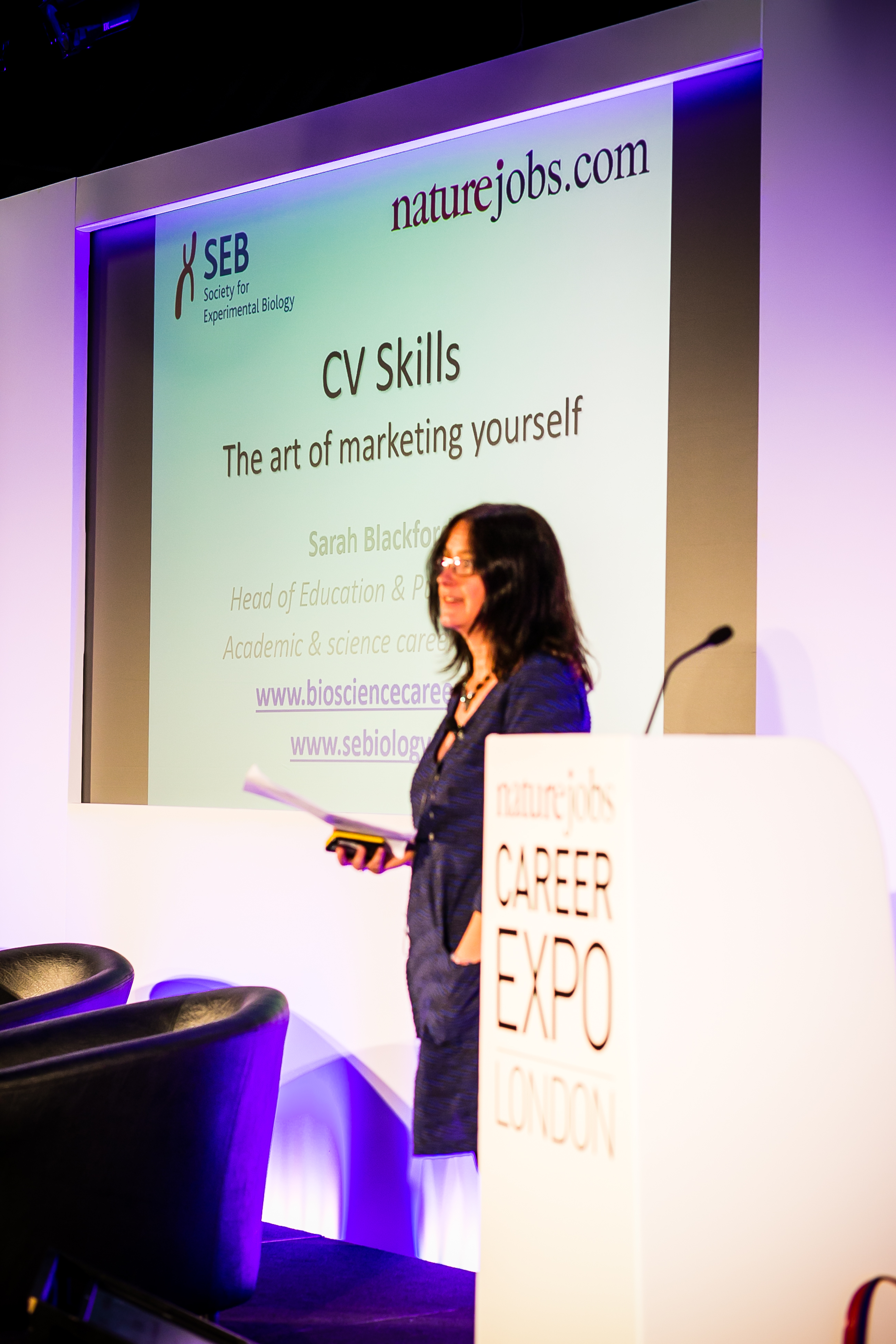
CV skills with Sarah Blackford

Simon Hazelwood-Smith reports on Sarah Blackford’s Top Tips for a job winning CV at the 2014 Naturejobs Career Expo in London.

Contributor Simon Hazelwood-Smith

Sarah-blackford-CV-NaturejobsWhat is the purpose of a curriculum vitae, or CV? One obvious answer that it is a document that helps a job applicant to get through the initial candidate-selection process and into an interview. But how do you make sure that your CV gives you the highest chance of selection by an employer? And should you change your CV when applying for different types of science-related positions?

Answering these and other questions in the final talk of the day at Naturejobs Career Expo on 19 September in London, UK, was Sarah Blackford, a careers adviser at the Society for Experimental Biology in the UK. With 15 years of experience in scientific-careers advice, Blackford is an indubitable expert in the field. She says that you can employ some simple and straightforward tactics to improve your CV.

Almost all employers look for evidence in a CV of certain candidate attributes. Communication skills are essential for effective teamwork, and enthusiasm and a good attitude are important for showing that you would easily fit in to the organization where you are applying.

Applicants must be careful to target their CV to the job advert. An excellent way to do this is to go through job adverts and highlight the skills that the employer is seeking. But it is not enough to just state that you have the skills and attributes listed in the job description. Your CV should provide evidence that your skills match the position’s requirements. Continue reading

Top Ten Tips for Research Data Management

Sally-Rumsey-Scidata14At the Publishing Better Science through Better Data (#scidata14) event hosted by Nature Publishing Group and Scientific Data, University of Oxford librarian, Sally Rumsey, presented her top ten tips for successful Research Data Management (RDM) for researchers. We’ve reproduced them below for your reading pleasure along with further advice that Rumsey gave at the event. Have a read and tell us what you think – do you agree with the list? Do any ring particularly true for you? Are there any others you would add? Share your views in the comments section below.

Imagine the worst case scenario. What if someone stole your laptop, your department went up in flames, or your data were infected with a virus or some other disaster were to take place? Would your data be retrievable?  These are all questions you should ask yourself to make sure that you don’t get caught out and find yourself being made an example of a data-loss horror story. Continue reading

Networking, not working?

There’s a disconnect between students and employers when it comes to networking at the London Naturejobs Career Expo 2014

Contributor Samuel Brod

Networking-samuel-brod

{credit}Image credit: Samuel Brod{/credit}

Wandering the booths at the Naturejobs Career expo held in London last September, I spent some time talking to the international exhibitors about the qualities they thought any aspiring scientist required for success. Replies varied across the nations:

“To think carefully about the questions you address and how you ask them”

– Professor Roberto M Cesar Jr. University of São Paulo, Brazil

“Well organised and good communicators”

– Bertram Welker. TU Berlin, Germany

“Dedication and motivation”

– Makoto Matsumoto. Otsuka Pharmaceuticals, Japan. (Translated by Olivia Simma)

“Originality and the drive to make a contribution to society”

-Selcen Gulsum Aslan Oszsahin. Tübitak, Turkey

“Curiosity, passion and Compassion. Everything else will come”

– Professor Lam Yee Cheong. Nanyang Technological University, Singapore.

One point everyone agreed on was the importance of networking. As Professor Cesar, a computer scientist with over twenty years of research experience put it: “You cannot be a competitive researcher alone… Successful candidates have a multinational knowledge of their field and international connections.” To do this he suggested young scientists “take the opportunity to work abroad” and “be aware of the global perspective of their research” Continue reading

Enough doom and gloom Part 3: Standing upon the great infrastructure of science

“There is a whole infrastructure out there helping young people doing good science, to continue doing good science.”

Contributor Scott Chimileski

The collective infrastructure of science built over the past three hundred and fifty years is among the most remarkable of human achievements – yet we continue to work towards a sustainable model for funding research. We wonder, how much money should be spent on science, and who should pay for it? Which investigators should conduct the science that is paid for? And, what should we study: practical subjects, or anything interesting? Answers to these questions become even more important when funding opportunities seem to be drying up.

So far, we have found reasons for optimism by drawing upon history. Federal funding for science has gone up and down in cycles, however has increased overall. And, sources of funding have shifted over time. Here we look at the present day through the experience of a recently hired assistant professor and a well known senior scientist.

Jonathan-Klassen

{credit}Image credit: Jonathan Klassen{/credit}

Jonathan Klassen is a new faculty member at the University of Connecticut. His lab (@KlassenLab) studies a network of symbioses within colonies of fungus-growing ants. The ants cultivate a particular fungal species as a food source and simultaneously utilize antibiotic-producing bacteria that colonize their exoskeleton to keep other fungal pathogens out of their gardens. But how did Klassen beat the odds, despite statistics that show very few trainees become professors? Continue reading

Ask the expert: What other jobs can bioscience researchers and PhD students consider if they want to leave academia?

Sarah Blackford, academic and science career specialist, shows that bioscience researchers and PhD students have opportunities in many different roles outside of academia.

Contributor Sarah Blackford

Thanks to everyone who voted – I’m not surprised that this was the highest scoring question. I’ll also incorporate a little bit about how to prepare and where to look, since these questions came a close second and third.

Here is a list of career areas which I present in my career workshops with PhD students and postdoctoral researchers. Researchers in scientific disciplines other the biosciences may also be able to see careers on this list of relevance and interest to them.The careers are ordered so that those at the top of the list are the closest and most familiar to PhD-qualified graduates and researchers. 

  • Academic Research (universities, research institutes, government)
  • Research in industry/business (technology companies, bioindustry, food technology, policy think tanks, media)
  • Teaching (university, colleges, schools)
  • Scientific services (advisory, sales, data management, technical specialist)
  • Associated commercial careers (technology transfer, patent examiner, patent attorney, regulatory affairs, marketing)
  • Communication (publishing – editorial, commissioning, production – press officer, outreach, medical writer)
  • Administration/management  (conference organisation, science administration, policy)
  • Self-employment/consultancy (spin-out company, freelance)
  • General professional careers  (finance, project management) Continue reading

How to publish better science through better data

Scientific Data and Nature host an event that explores how different stake holders can collaborate with researchers to publish better science through better data management.

Data, without a doubt, are the foundation of science. If you’re a researcher, your life is data: you spend your days generating it, analysing it, and writing papers about it. You share it with colleagues and collaborate on projects that will build on it and find new and exciting things. But policy makers, funders and universities are also involved in the conversation – each trying to solve the problem of managing the increasing influx of data whilst keeping the integrity of science high.

Last Friday, PhD students and postdoctoral researchers came to the Nature offices to learn about how research data affects a scientist’s ability to publish and get research funding. The event, Publishing Better Science through Better Data, consisted of a series of talks from editors, data curators, software developers and funding body representatives, all giving their perspective on how data affects scientific research and publishing.

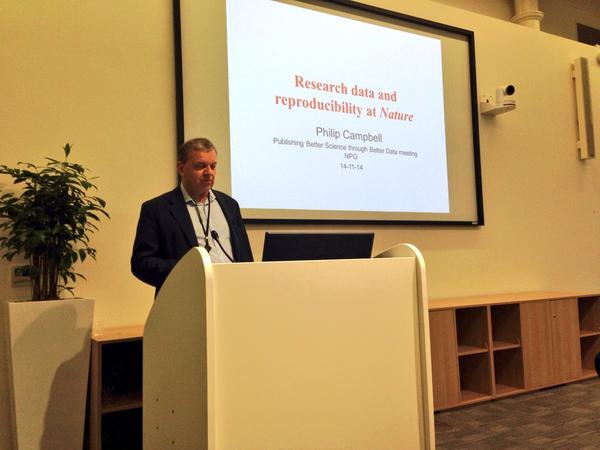
Phil-campbell-scidata14

{credit}Image credit: Nandita Quaderi (@DrNandiQ){/credit}

The editor’s perspective

Philip Campbell, Editor-in-Chief of Nature and its sister journals provided an editor’s perspective and shared how Nature journal was handling the reproducibility problem: “It mostly consists of things that are bad or sloppy science, not fraud.” To minimize the amount of “sloppy science” being published in Nature, editors have put a check-list in place for scientists that they submit along with their papers, making the research process more transparent. “It’s improving the reliability of the design of experiments, which is what we want to see happening.” Continue reading

What’s the biggest challenge you’ve faced as a woman in academia?

For some women the challenges are greater than others.

At the Naturejobs Career Expo in London this September, a panel of four academics got together to discuss their wildly different careers. Jim Usherwood from the Royal Veterinary College only spends his time doing research. Anita Hall from Imperial College London only does teaching. Lorraine Kerr and Louise Horsfall from the University of Edinburgh split their time (with different percentages) between research, teaching, business and management.

In this short Q&A film three of the panellists give their opinions (based on their experiences) about the challenges they’ve faced as women in academia.

Anita Hall from Imperial College London touches on some of the stereotypical things, including self-confidence.

Louise Horsfall says “I feel that it’s been an advantage” to being a women in science. But as a junior lecturer this might change.

Lorraine Kerr, with her experience of working across the academia/industry background. hasn’t had any challenges, she’s pleased to report!

Read more about How to navigate an academic career and about all the other conference sessions and workshops at the Naturejobs Career Expo in London.

Other Q&A videos from the Naturejobs Career Expo, London 2014

How important is having a mentor in your academic career?

How do you achieve work/life balance in academia?

Should I apply for a fellowship or a postdoc after my PhD?

Have you faced any challenges as a woman in academia? Or do you know anyone who has? Please share your thoughts with us using the comments section below.

Enough doom and gloom part 2: Curiosity is the currency of science

Science funding sources have varied over the decades, and will continue to do so as the sociological and political influences change, says Scott Chimileski.

Contributor Scott Chimileski

Twenty-first century science is global, rapidly communicated and irreversibly intertwined with virtually every aspect of society. This immensity creates the impression that our current scientific culture has been established for a very long time. However, the National Science Foundation (NSF), NASA and the Department of Energy (DOE), pillars of basic science that we recognize them to be, were all established after many of today’s senior investigators were born. In addition to appreciating the cyclical nature of funding (see part one), it is critical to consider how and why funding sources have changed throughout the history of science.

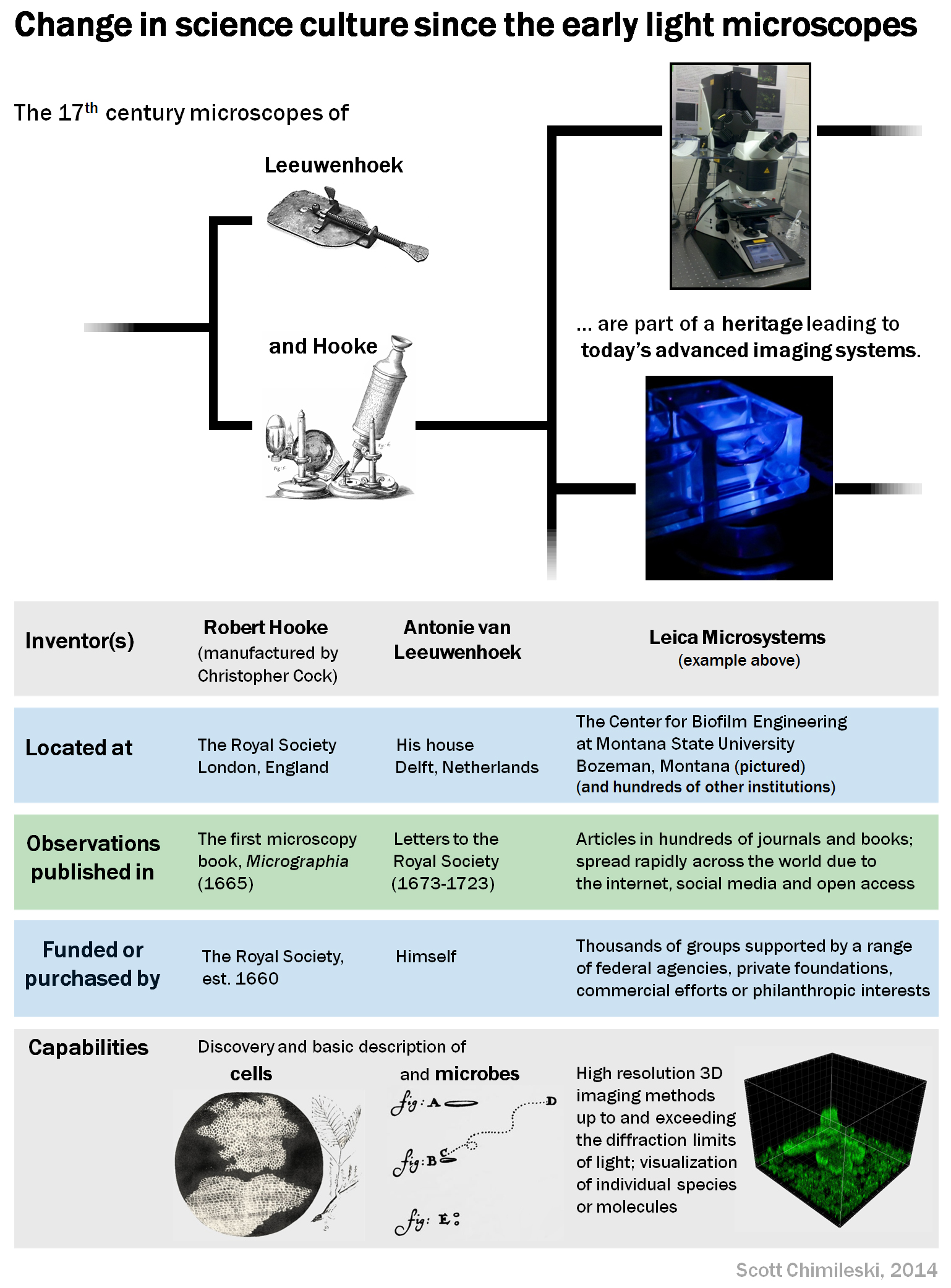
From the scientific revolution at the end of Renaissance through the 19th century, science was largely self-funded or driven by the patronage of other independently wealthy individuals. Many famous forefathers of science had side jobs. Antonie van Leeuwenhoek, whose observations of bacteria in the 17th century inspire microbiologists to this day, was a house manager. Little is known of how he made his microscopes, let alone exactly how he paid for supplies. His contemporary Robert Hooke, another pioneer of microbiology, was an architect and city surveyor. Johannes Kepler wrote horoscopes. And, Galileo Galilei – celebrated for early observations of Saturn’s shape and the Milky Way Galaxy – pitched his telescopes to the military of the Republic of Venice as naval instruments, and to the House of Medici in Florence as a means for naming distant moons after members of this powerful dynasty.

science-funding-inventors Continue reading

Ask the expert: Meet Dr Frances Saunders

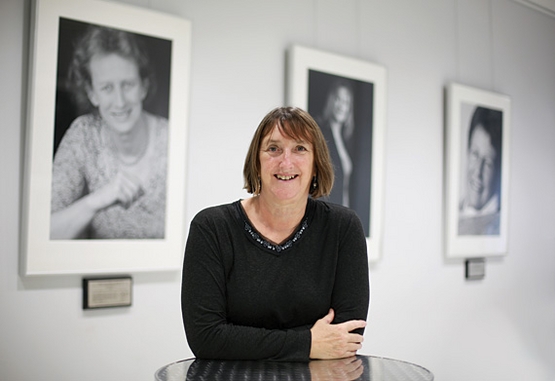
Dr Frances Saunders

{credit}Courtesy of: Times Higher Education{/credit}

Meet our expert for this month: Dr Frances Saunders, President of the Institute of Physics.

What is your scientific background?

I have a degree in physics and undertook research early in my career in the field of liquid crystal displays and opto-electronic devices. I was attracted by both the interdisciplinary nature of the research involving physics, chemistry, human factors, electronics and manufacturing techniques as well as the opportunity to see my work used in practical devices. I then broadened my interests into leading and managing a wide range of research projects with applications in defence and security.

How did you come to take on the role that you currently have?

I took early retirement from my role as Chief Executive of the Defence Science and Technology Laboratory just over two years ago and have been building a portfolio of activities focused on supporting the physics and engineering communities – from education to exploitation. I am currently President of the Institute of Physics, a Trustee of the Engineering Development Trust and work on a number of topics for the Royal Academy of Engineering. Continue reading