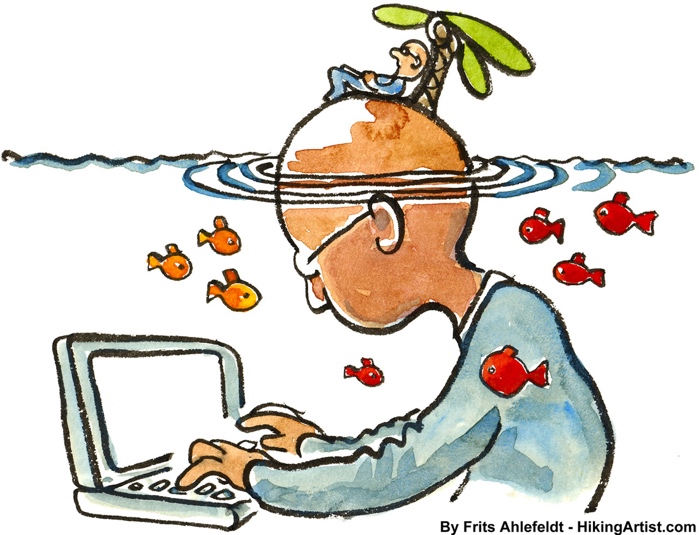
Time management: stressed science needs to slow down

time-life-product-email-management-inbox-1053475-pxhere-smaller

There’s no shortage of time management advice. Maybe it’s time to reconsider our approach, says Eileen Parkes.

A Saturday morning email from a senior professor arrives. A flurry of Reply All emails swiftly follow. Should I join in — show I’ve read the email on a sunny Saturday?

The academic life has a reputation for long hours. A recent global survey of academics makes bleak reading, with researchers describing ever-increasing workloads and struggles with work-life balance. Earlier this year, academics worldwide joined a Twitter argument about their working hours, with many agreeing that a 60 hour week was an expected part of an academic career. Continue reading

Depression and anxiety are common among graduate students

A study assessing the mental health of 2,279 PhD and master’s students from around the world has brought new attention to a pressing issue: For many, the pursuit of an advanced degree takes an emotional toll, as reported online on 6 March in Nature Biotechnology.

glasses-1611121_1920-1024x683 Continue reading

When conferences collide with family needs

As a busy scientist with two young children, one of Rebecca Calisi’s most vexing challenges is figuring out how to attend scientific conferences without a huge disruption in family life. Bringing children to conferences is an option, but not all are especially welcoming to the needs of families, especially to mothers with young children.
1008602_10151664484247933_418737272_o (3)

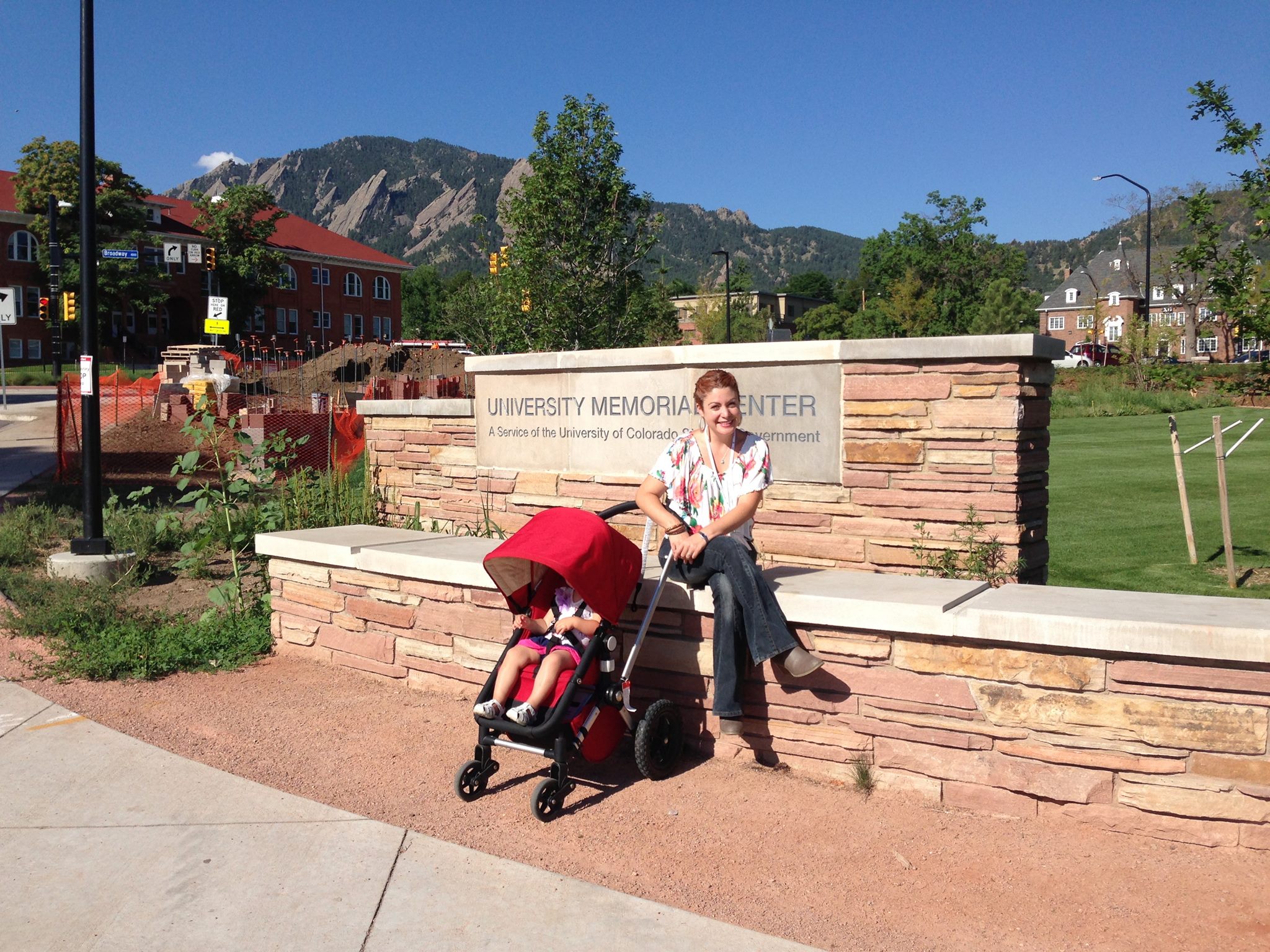
Rebecca and her daughter at the annual conference for the Animal Behavior Society at the University of Colorado in 2013

Calisi, a behavioural neuroscientist at the University of California, Davis, and a group of 45 other scientist-parents, have turned their frustrations into a call for action. In a paper published online Monday in Proceedings of the National Academy of Sciences, the researchers detail the shortcomings of past conferences and offer a blueprint for making conferences more welcoming and accessible to parents of young children.

By not providing accommodations for children, Calisi says, conferences can unintentionally create barriers that exclude large swaths of scientists—especially early-career scientist-mothers who may not be able to afford childcare. “One part of promoting diversity is supporting women with children,” Calisi says. “If institutions say they want to support diversity, they should put their money where there mouth is.”

In the paper, Calisi and co-authors suggest that conferences could fund on-site childcare services, lactation rooms and other amenities by asking for voluntary donations during registration. Exhibitors who make a donation could receive a sign or emblem that show their support. “I guarantee you they would get more foot traffic,” Calisi tells Nature. The paper also calls for all conferences to clearly state that parents are allowed to bring babies to talks and poster sessions. For now, she says, rules about children seem to change from conference to conference and even from hour to hour. She notes that researchers with babies were recently turned away from a poster session at a large conference even though the official policy permitted children in the exhibit area.

A practical, comfortable space for breastfeeding or pumping breast milk is an especially important accommodation, Calisi says. “A lactation room tells you a lot about how much a [scientific] society values women,” she says. In November, she turned to Twitter to complain about the facilities at the Society for Neuroscience (SfN) annual meeting, held last year in Washington DC.  Within hours of that tweet, the society provided more comfortable lounge chairs for mothers. “It’s not that the society was anti-women,” she says. “They just didn’t know.”

SfN, for its part, aims to become more inclusive. “The society is actively exploring ways to continue to enhance the spaces for nursing mothers in San Diego [California] this year and at SfN’s future meetings,” says society spokesperson Kara Flynn in a statement to Nature. She adds that the society is committed to “fostering a welcome and diverse community in which all scientists are able to contribute fully.”

Some conferences are already parent-friendly, Calisi says. She recently attended the annual meeting of the American Academy for the Advancement in Science in Austin, Texas, where the lactation room was comfortable and easily accessible. “I gave them two thumbs up,” she says.

Chris Woolston is a freelance writer in Billings, Montana.


Suggested posts:

The single scientist-parent

Motherhood and science 

From the frontlines 

Cristina Lo Celso: Career-changing encounters

cristinaCristina Lo Celso is the first woman to receive the UK Academy of Medical Sciences Foulkes Foundation Medal since the award was launched in 2007.  While a postdoc at Harvard University Lo Celso developed microscopy techniques that allowed blood stem cells to be viewed inside their natural environment for the first time. She describes her career to date, how she chose science over medicine, and her mentors.

Why did you choose a career in academic research rather than medicine? 

I did consider medicine.  Antonio Lo Celso, my paternal grandfather, was a surgeon in Sicily before retiring to Turin, where I grew up. He got me interested in human health and how the body works. But when I was about 15 I read Dominique Lapierre’s 1991 book Beyond LoveIt’s about clinicians and scientists and patients during the early stages of the HIV epidemic and it made me realise that research can make a massive difference. Continue reading

Surviving academia as an early career researcher: an unreliable guide

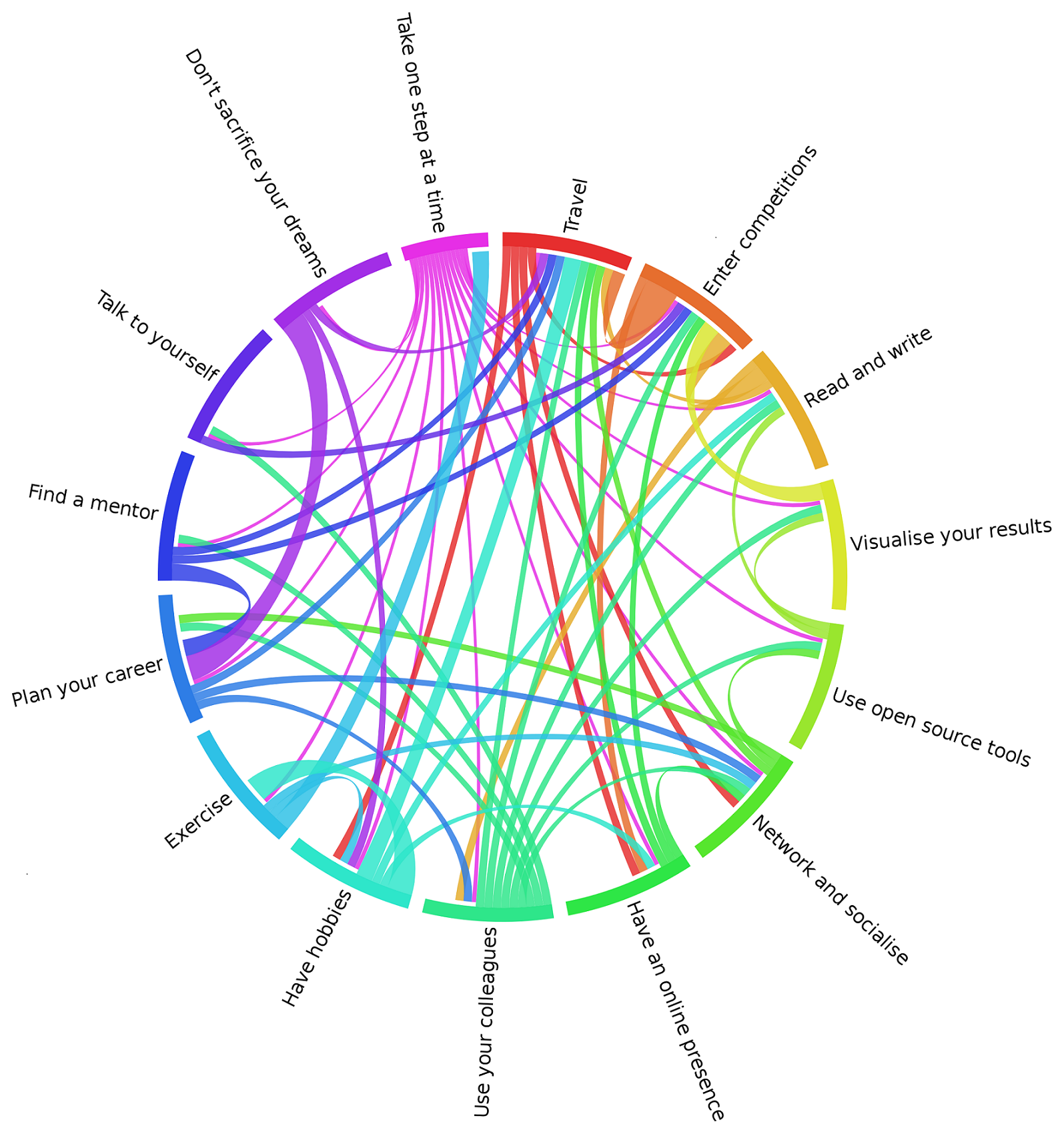
Being an early career researcher is exciting but terrifying. Use this guide to make the most of your PhD or postdoc experience, says Atma Ivancevic.

In today’s cut-throat world of grants and publications, being an early career researcher (ECR) can feel more than a little daunting. As an ECR myself, I can’t guarantee that this will help you make it to the other side unscathed. But I’m still here, and if you’re reading this, you probably are too. Outlined below are the things I’ve learnt during the ups and downs of post-PhD life.


circos-table-myxvjxw-smaller

Continue reading

Do it for science – not for tenure

Career advice from a Nobel Laureate

By Judith Reichel

I recently had the pleasure of joining the 67th Lindau Nobel Laureate meeting at Lake Constance in the south of Germany. The weeklong meeting alternates its main focus between chemistry, physics, and medicine & physiology each year — the three categories of natural sciences the Nobel Prizes are awarded for. This year the focus was back on chemistry, and I was lucky enough to be invited by the organisers to cover the event on their blog.

Throughout the week I met handpicked junior researchers, talented fellow science communicators and journalists, and — above all — sat down with Nobel Laureates for one-on-one interviews.

One of them was Martin Chalfie, who won the 2008 prize in Chemistry with Osamu Shimomura and Roger Y. Tsien for their development of the now widely used Green Fluorescent Protein (GFP) tag. Inserting the gene sequence for GFP into a host organism produces the protein within a cell, which allows for the visualization of intricate biological processes.

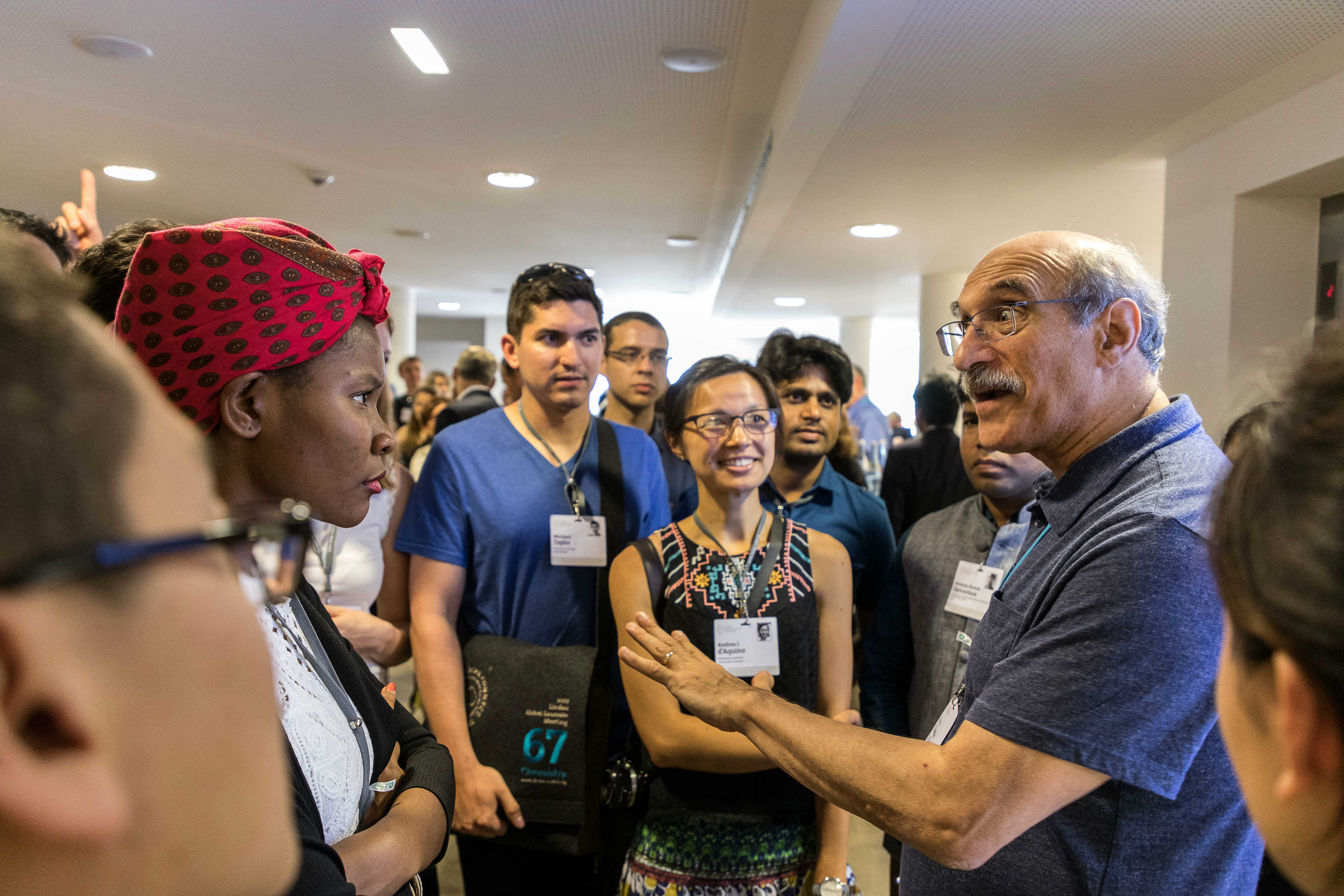
Chalfie talking to students at Lindau 2017

Chalfie talking to students at Lindau 2017{credit}Christian Flemming/Lindau Nobel Laureate Meetings Young Scientists in conversation with Martin Chalfie{/credit}

Continue reading

How to fix your separation anxiety

Navigate your career as a woman scientist at the right pace to avoid physical and psychological burnout, says Komal Atta

I write this as I wait outside my toddler’s summer preschool. It’s the same routine every day — I drop her, she wails, I leave. Later, the teacher reassures me that she’s completely fine as soon as I’m gone.

Lab coats and mouth mask at coat hook

This is classic separation anxiety. I am overcome by guilt. Continue reading

In sickness and in health: the importance of taking regular breaks

Time away from work is crucial for daily productivity and personal development, says Atma Ivancevic.

A few weeks ago, I took my first sick day for the year. I was mentally and physically exhausted: disheartened by delays and failures in the laboratory, and constantly bad-tempered from headaches and stress. I started staying up late. I stopped exercising and gave up my hobbies. I ignored my friends, partner and family, irritated by the distractions they presented. I prioritized work to the extent that I became miserable and unproductive, existing on bad coffee and fast food.

pic

I was not alone. Continue reading

Postdocs and parenting: A tough combination

Parenthood is always demanding. But having a baby during a stint as a postdoctoral researcher? That’s a special kind of challenge—a challenge that requires much support from institutions, co-workers and mentors. Unfortunately, that support can be sporadic and unpredictable, if it can be detected at all, reports Chris Woolston.

childcare

Continue reading

On academic job insecurity and the ultimate tenure

Thoughts from Contract No. 17.

By Mila Petrova.

My latest mini-meltdown came after eight years in research employment, at the beginning of Contract No. 17. It came late. I’d lost a couple of thousand GBP from moving out hastily, lived for two months with my mum, moved far from the city of my university to use the affordable seaside lets in winter, and was about to live out of a suitcase in a youth hostel while my “permanent” accommodation became free. Three masters, PhD, top UK University and all. Most read paper of the month and a “will be delighted to hear about your ongoing work” letter from a senior parliamentary official in my inbox.

A coffee cup falling from chalkboard with formula of speed.

Continue reading