Do it for science – not for tenure

Career advice from a Nobel Laureate

By Judith Reichel

I recently had the pleasure of joining the 67th Lindau Nobel Laureate meeting at Lake Constance in the south of Germany. The weeklong meeting alternates its main focus between chemistry, physics, and medicine & physiology each year — the three categories of natural sciences the Nobel Prizes are awarded for. This year the focus was back on chemistry, and I was lucky enough to be invited by the organisers to cover the event on their blog.

Throughout the week I met handpicked junior researchers, talented fellow science communicators and journalists, and — above all — sat down with Nobel Laureates for one-on-one interviews.

One of them was Martin Chalfie, who won the 2008 prize in Chemistry with Osamu Shimomura and Roger Y. Tsien for their development of the now widely used Green Fluorescent Protein (GFP) tag. Inserting the gene sequence for GFP into a host organism produces the protein within a cell, which allows for the visualization of intricate biological processes.
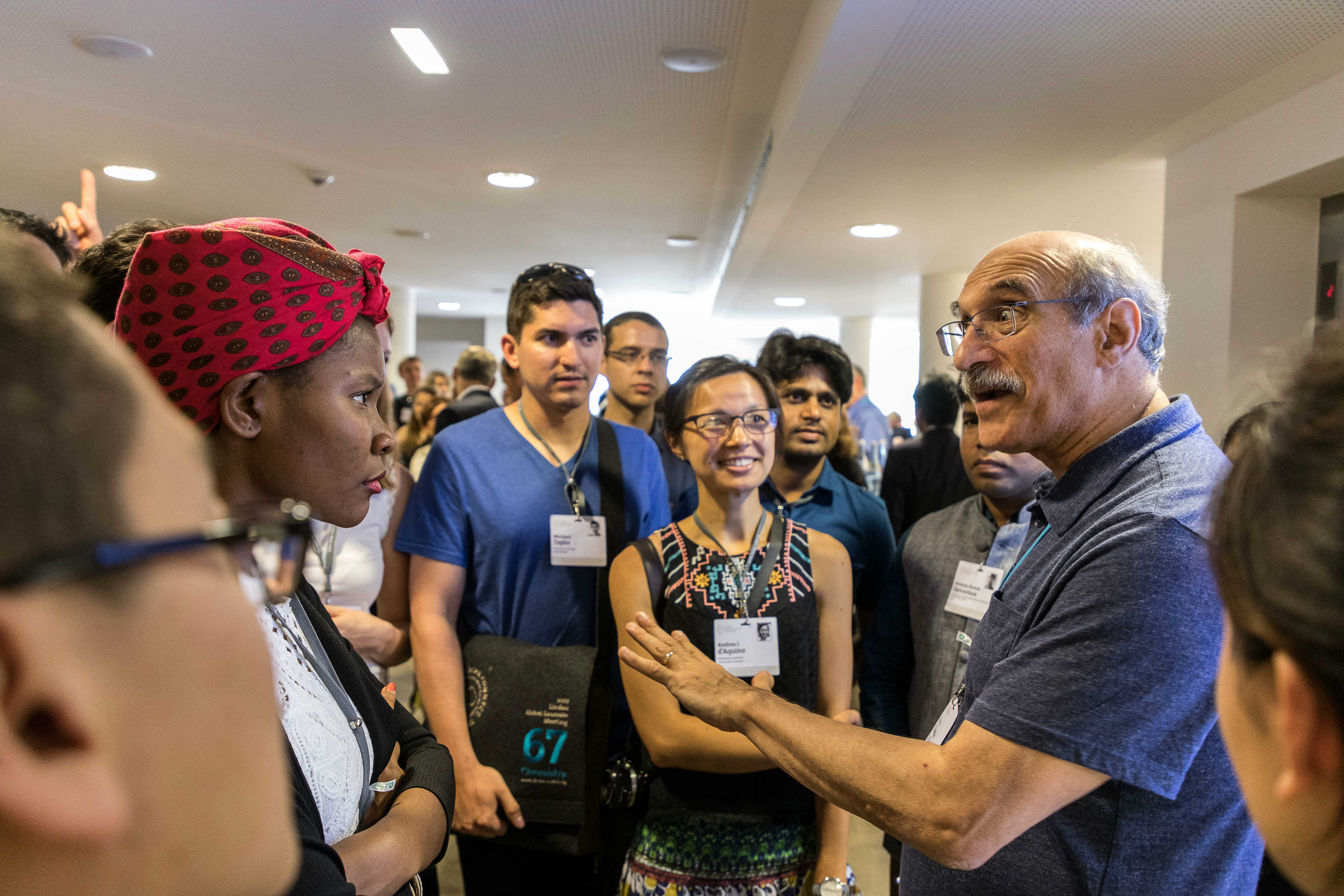
Chalfie talking to students at Lindau 2017

Chalfie talking to students at Lindau 2017{credit}Christian Flemming/Lindau Nobel Laureate Meetings Young Scientists in conversation with Martin Chalfie{/credit}

Continue reading

You need a mentor or three

Choosing a mentor (or mentors) is one of the most important decisions facing an early-career scientist.

It is crucial to your professional success to have one or more strong and knowledgeable advocates and guides in your court. And you can’t leave this up to chance or a random meet.

mentoring-naturejobs-blog

{credit}Istockphoto/ThinkStock{/credit}


Continue reading

More US graduate students win right to unionize

The National Labor Relations Board (NLRB) overturns existing ruling in 3-1 decision

Graduate students who work as teaching or research assistants at private universities won the right on Tuesday to join unions, overturning an opposing decision by the NLRB in 2004.

istockphoto/Thinkstock

{credit}istockphoto/Thinkstock{/credit}

Continue reading

The precious, precious networking platinum that is Lindau

Alaina G. Levine is live from the Lindau Conference

Lindau is a special conference. Here, under the banner of Educate-Inspire-Connect, and above cobblestone streets, next to a city hall dating back to the 1400s, networking is very much encouraged, supported, facilitated and emphasised. And the networking here is precious, precious platinum.

marketing-man-person-communication (1)

Continue reading

Team science and the early career researcher

The current trend towards increased research collaboration and larger groups is fuelled by the need to answer bigger questions, but this approach puts individual contributions at risk.

Guest contributor Lucia Possamai

Research ventures where several researchers, groups or institutions work together to answer a research question is becoming known as ‘team science.’ It can be seen at work today in large genetics studies, such as the 100,000 genomes project, in multi-centre clinical trials, or in rare disease consortia. Even on a smaller scale, it is becoming more common for publications to arise from collaborative projects.

As an early career researcher I can appreciate that team science is not just good for science: it gives those of us embarking on our scientific careers the opportunity to take part in research with high impact that would otherwise not be accessible to us. It can remove the pressure to obtain independent funding – in many cases, all funding will have been obtained as part of the larger project’s grant.

Continue reading