Researcher mobility in a post-Brexit world

flag-of-the-united-kingdom-smaller

Existing UK immigration rules can support foreign-born researcher movement after Brexit, but the attractiveness of the UK research environment may still keep the best and brightest away, says Erica Brockmeier

Whether you’re relocating around the block, across town, or to a completely new city, moving is not a trivial task. For many PhD students and early career researchers, moving to a new research group can play a key role in professional development. It’s a way to gain new perspectives for your research, expand your professional network, and to work in a prestigious or well-known group in your field. Sometimes the best move for your career isn’t just across towns or cities, but is one that involves moving away from your home country, either temporarily or permanently.


Continue reading

Tracking down the holy grail of academia

Connections and research proposal that complements a department are essential in obtaining a tenure-track faculty position, Louisa Cockbill learns from Kate Smith.

Having been awarded a faculty position at the University of Colorado, newly minted assistant professor Kate Smith is preparing to move from to the US from the UK. Here, she describes her experience of tenure interviews, how to maintain a passion for research and, crucially, how to find the elusive off-switch from science.

running a Growth

Having done a PhD, I know the pressures of academic research and how crucial it is for early career researchers to gain advice and encouragement from the success stories of others, like Kate. I caught up with her to see what advice she would give to others curious about the tenure track.

Continue reading

You need a mentor or three

Choosing a mentor (or mentors) is one of the most important decisions facing an early-career scientist.

It is crucial to your professional success to have one or more strong and knowledgeable advocates and guides in your court. And you can’t leave this up to chance or a random meet.

mentoring-naturejobs-blog

{credit}Istockphoto/ThinkStock{/credit}


Continue reading

New hope for EU researchers?

Pursuing a research career is tough in any nation, maybe especially so for junior scientists who are facing a difficult path and have far fewer traditional metrics to ease their way: grants and funding, publications, collaborations.

bratislava-1324684_1920

Bratislava Castle, Slovakia

Continue reading

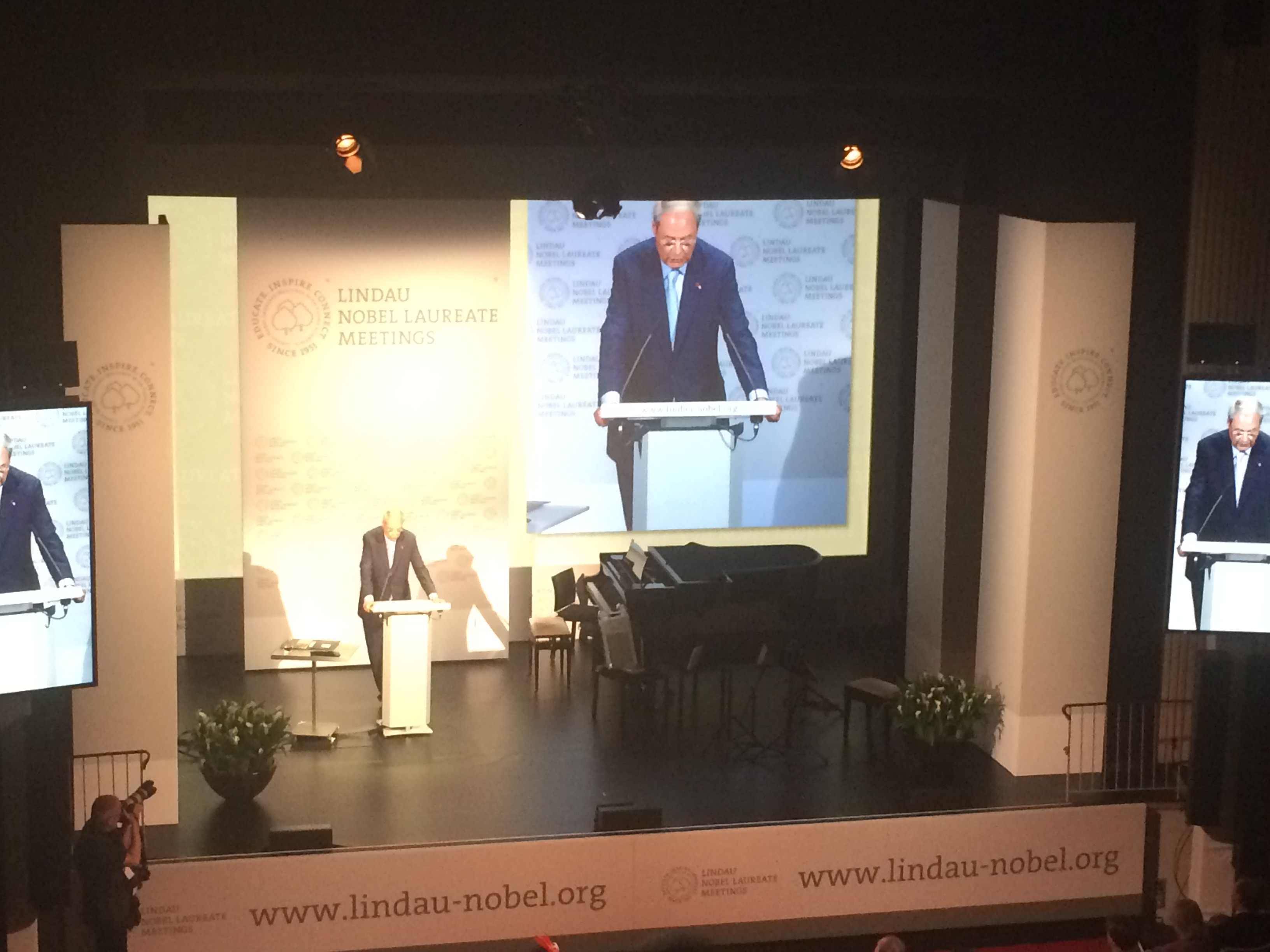
Return to Nerd Heaven: Lindau

Alaina G. Levine is live from the Lindau conference

In 2012, I flew across the pond from the deserts of Arizona to the shores of Lake Constance on the German/Austrian/Swiss border. I wasn’t on holiday per se, but I might as well have been. When I arrived in the tiny hamlet of Lindau, Germany, I was met with two very sweet offerings: spaghetti ice cream and hundreds of nerds swarming the island town. I couldn’t have been happier.IMG_4306

Continue reading

Bridging science and real world impact with confidence

What does it take for someone in science to make a difference in the world? We often seek success and validation through the rigour of our research and studies, but the key may be in our attitude.

Naturejobs career expo journalism competition winner Diane N.H. Kim

Confidence is not something we normally associate with science. In this field, grounded in facts and far from emotions, it’s no wonder we have trouble seeing how our attitudes affect our success. A confident attitude is considered much more important for an actress on the red carpet, or a politician delivering a speech. Scientists are still largely portrayed and perceived as solitary individuals with passive personalities, spurred by a media portrayal of a lone scientist in their basement lab.DK_profilepicture Continue reading

Team science and the early career researcher

The current trend towards increased research collaboration and larger groups is fuelled by the need to answer bigger questions, but this approach puts individual contributions at risk.

Guest contributor Lucia Possamai

Research ventures where several researchers, groups or institutions work together to answer a research question is becoming known as ‘team science.’ It can be seen at work today in large genetics studies, such as the 100,000 genomes project, in multi-centre clinical trials, or in rare disease consortia. Even on a smaller scale, it is becoming more common for publications to arise from collaborative projects.

As an early career researcher I can appreciate that team science is not just good for science: it gives those of us embarking on our scientific careers the opportunity to take part in research with high impact that would otherwise not be accessible to us. It can remove the pressure to obtain independent funding – in many cases, all funding will have been obtained as part of the larger project’s grant.

Continue reading

The art of negotiating a better salary

Andy Tay picked up some tips on negotiation at the Naturejobs Career Expo, San Francisco. Here they are.

Naturejobs career expo journalism competition winner Andy Tay

Negotiation is a powerful skill. And, whilst graduate education arms you with technical credentials for a career, it often misses out training for soft skills like negotiation. An ability to negotiate effectively can convince your counterparts to care for your interests, allowing you to maximise personal gains such as pay or career development.

{credit}iStockphoto/Thinkstock{/credit}

At the recent Naturejobs Career Expo, San Francisco, Doug Kalish shared some pieces of advice with the participants on the art of negotiating for one’s interests. Here’s some of his tips on negotiating job offers and salary. Continue reading

Career paths: Realize your inner entrepreneur

Scientists are inherently entrepreneurs, as Ada Yee learned when comparing the two during a business school talk.

Contributor Ada Yee

entrepreneur-naturejobsI slipped into a chair at the “Reserved for Latecomers” table, and poured a coffee. I was at a talk by Stanford business school alum Amy Wilkinson on her book “The Creator’s Code”– describing six traits that make entrepreneurs successful. I felt out of place. As a dyed-in-the-wool academic, I’d never counted myself in on the Silicon Valley buzz, but a lab mate had given me his ticket. It was 7am, and I’m a 10am-to-10pm-type grad student—but a grad student nevertheless—and so not one to turn down free eggs and bacon.

My school prides itself on being an innovation incubator, a campus that spawned the founders of Google, Cisco, and Yahoo. Nevertheless, there remains in me a feeling that science and business don’t mix. The majority of academic science still operates on an apprenticeship model, where “losing” students to companies is to lose them from the academic pantheon and kill your own lineage. Growing up in the Silicon Valley, I read headlines on the conflict of interest held by professor-scientists with industry ties in the post Bayh-Dole era (the 1980 decree that paved the way for tech transfer). At a party recently, a student-turned-startup member told me,  “academic scientists like to dig really deep into a problem. That doesn’t work in industry. It’s too slow.” Continue reading