The power of data shared

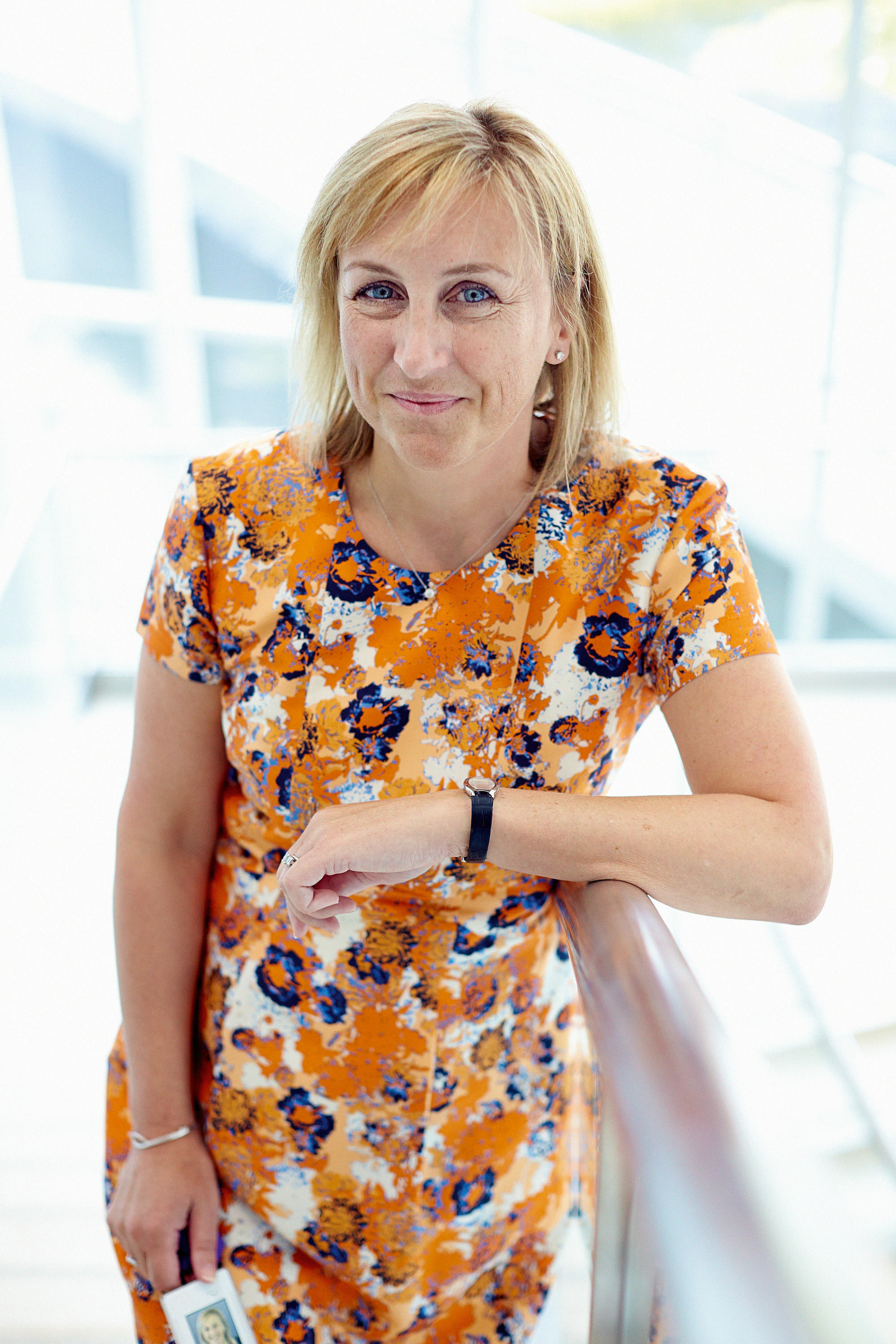
In a world of interdisciplinary research, we need to make data freely available, says Katie Ember

Better Science through Better Data writing competition winner Katie Ember

Every Monday in the University of Edinburgh’s School of Chemistry, the Campbell group gather in Room 233 for a lab meeting. If you’re hosting the meeting, you bring cake. Or you forget and everyone pretends they’re not feeling a bit hungry and disappointed. Then, two scientists in the group present that month’s work.

Every Friday in the Centre for Regenerative Medicine, a fifteen minute cycle from the School of Chemistry, the Forbes group file into the first floor meeting room. After battling with the “motion-activated” lights, we all talk through what we’ve achieved that week.

Teamwork

The reason I go to two lab meetings in one week is because I’m attempting to detect liver damage using laser light. It’s multidisciplinary and it’s hard: requiring input from biologists, physicists and transplant surgeons from different institutes. The end result is that I spend about four hours each week not doing science but discussing it. Whilst this may seem like a strange way to do research, I cannot overstate how important it is. Continue reading

Quick profiles: Emma Hilton

Emma Hilton worked as a doctor for nine years, including four in clinical research.  After that, she shifted to pharma. Here she shares her story.

Emma is now Global Medical Affairs Leader for Chronic Obstructive Pulmonary Disease (COPD) in GSK’s Respiratory Division.

As a child, I was fascinated by how things work, especially the human body, and I decided I wanted some kind of career in science. Medicine seemed like the ideal avenue and offered a reassuringly clear path including training and employment prospects.

career-decisions-naturejobs-blog

{credit}iStockphoto/Thinkstock{/credit}

Continue reading

Away from Home: Marrying bioinformatics & benchwork

We’re bringing you the best stories in lab mobility from Nature India.

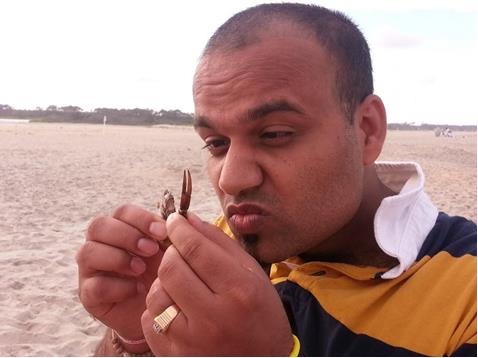
Today we feature Animesh Shukla, a biotechnologist from Meerut Institute of Engineering and Technology in Uttar Pradesh, India who went to Carnegie Mellon University and Indiana University of Bloomington in the USA for PhD. Animesh, who works as a scientist designing ELISA assay kits for Meso Scale Diagnostics now, says planning ahead of time for a postdoctoral career could open up several doors in the land of opportunities.

Animesh Shukla

The biology dream

My school teacher Jessy Kuruvilla sparked my interest in biology. She used to explain the subject in such an interesting way that I still remember many things she taught us. I don’t remember much of any other subject. In high school I was interested in both biology and physics (specifically fluid dynamics). I never used to score really high marks in these subjects but had very good understanding of the basics.

I used to catch and collect live and dead insects or small animals and used to look at them. Some of my friends used to make fun of me (they still do) but that is what friends are for! Continue reading

Careers in industry: Medicine maker

Pauline Williams shares her thoughts on her career outside of academia.

As a junior doctor working in geriatrics, I could never have imagined that in 20 years time I would have led the development of a medicine which has the potential to save hundreds of thousands of babies’ lives.


Pauline Williams

Pauline Williams

Continue reading

Bridging science and real world impact with confidence

What does it take for someone in science to make a difference in the world? We often seek success and validation through the rigour of our research and studies, but the key may be in our attitude.

Naturejobs career expo journalism competition winner Diane N.H. Kim

Confidence is not something we normally associate with science. In this field, grounded in facts and far from emotions, it’s no wonder we have trouble seeing how our attitudes affect our success. A confident attitude is considered much more important for an actress on the red carpet, or a politician delivering a speech. Scientists are still largely portrayed and perceived as solitary individuals with passive personalities, spurred by a media portrayal of a lone scientist in their basement lab.DK_profilepicture Continue reading

Lindau: Winning the war

At this summer’s 64th Lindau Nobel Laureate Meeting, 37 laureates spent a week with 600 young scientists from almost 80 countries to share their ideas, experiences and knowledge. Discussions revolved around global health, the latest findings in cancer and Aids research, challenges in immunology, and future approaches to medical research. All of the lectures can be viewed on Lindau’s Mediatheque website.

We’ve already heard about the future directions of HIVageing research and the side-effects of pharmaceuticals. This week Lorna explores the war on cancer.

Winning the war

In 1971, the then president of the United States, Richard Nixon, declared ‘war’ on cancer. Since then, billions of dollars have been poured into cancer research worldwide, but a cure for the disease is still a long way off. In this Nature Video, reporter Lorna Stewart marks the scientific milestones of the past four decades. She explores cancer genetics with Nobel laureate Michael Bishop, vaccines with fellow laureate Harald zur Hausen, and two young researchers tell Lorna about some of cancer research’s greatest success stories.

Nature Outlook also produced a supplement based on the Lindau meetings.

Lindau: May cause drowsiness

At this summer’s 64th Lindau Nobel Laureate Meeting, 37 laureates spent a week with 600 young scientists from almost 80 countries to share their ideas, experiences and knowledge. Discussions revolved around global health, the latest findings in cancer and Aids research, challenges in immunology, and future approaches to medical research. All of the lectures can be viewed on Lindau’s Mediatheque website.

We’ve already heard about the future directions of HIV and ageing research. This week Lorna explores the side effects of pharmaceuticals.

May cause drowsiness

The benefits of modern pharmaceuticals are often accompanied by side effects, and although some are minor, like headaches or drowsiness, others can be much more serious. In this Nature Video, reporter Lorna Stewart asks scientists if we will ever eliminate side effects. Lorna is surprised when Nobel laureate Martin Evans claims there are no side effects, and fellow laureate Oliver Smithies explains how complicated it can be to eliminate the unwanted effects of taking medicine. However, exciting research is on the horizon, as two young researchers explain.

Nature Outlook also produced a supplement based on the Lindau meetings.

Lindau: The long goodbye

At this summer’s 64th Lindau Nobel Laureate Meeting, 37 laureates spent a week with 600 young scientists from almost 80 countries to share their ideas, experiences and knowledge. Discussions revolved around global health, the latest findings in cancer and Aids research, challenges in immunology, and future approaches to medical research. All of the lectures can be viewed on Lindau’s Mediatheque website.

Reporter Lorna Stewart was there for Nature Video to capture the unique spirit of the Meeting. In a series of four films, she asks both laureates and young researchers some of the most profound questions in medicine. The first film, HIV in hiding, highlights the research of Françoise Barré-Sinoussi who was awarded the Nobel prize for the discovery of HIV.

This is the second film: The long goodbye.

Growing old is inevitable and across the world average life expectancy is increasing. With the prevalence of age-related diseases following suit and a limited pot of resources, where should scientists be targeting research? In this Nature Video, superstar statistician Hans Rosling sets the record straight about the cause of the world’s ageing population and Nobel laureate Oliver Smithies, now 89, gives his opinion on medical research priorities. But when Lorna talks to young researchers, they disagree with the laureates on where scientists should be focusing their efforts.

Nature Outlook also produced a supplement based on the Lindau meetings.


Lindau: HIV in Hiding

At this summer’s 64th Lindau Nobel Laureate Meeting, 37 laureates spent a week with 600 young scientists from almost 80 countries to share their ideas, experiences and knowledge. Discussions revolved around global health, the latest findings in cancer and Aids research, challenges in immunology, and future approaches to medical research. All of the lectures can be viewed on Lindau’s Mediatheque website.

Reporter Lorna Stewart was there for Nature Video to capture the unique spirit of the Meeting. In a series of four films, she asks both laureates and young researchers some of the most profound questions in medicine. The first film, HIV in hiding, highlights the research of Françoise Barré-Sinoussi who was awarded the Nobel prize for the discovery of HIV.

HIV in hiding
In 2008, Timothy Ray Brown became the first person to be cured of HIV — or so many claim. Brown is known as ‘the Berlin patient’ and six years on, the virus has still not been detected in his blood. In this Nature Video, Lorna wants to know the implications of his remarkable treatment. But her dreams of an imminent cure quickly fade as Nobel laureate Françoise Barré-Sinoussi, who discovered HIV, brings Lorna back to Earth with a bump.

Nature Outlook also produced a supplement based on the Lindau meetings.


Lindau: A picture of health

Nature Video presents four films from the 2014 Nobel Laureate Meeting in Lindau.

Reporter Lorna Stewart travels to the German island of Lindau to meet 600 of science’s brightest young minds and 37 rock stars – Nobel laureates.

In a series of four films, Stewart asks some of the most profound questions in medicine. In one film, superstar statistician Hans Rosling helps Stewart get to grips with the realities of an ageing global population. In other films, Stewart delves into the past 40 years of cancer research, wonders if we’ll ever eliminate side effects when we take medication, and receives a reality check on the battle against HIV.

Get a taste in this trailer.

You can view all the Nature Lindau films here and Nature Outlook also produced a supplement based on the Lindau meetings.