Announcement: The Naturejobs blog is moving house

We’re no longer publishing career stories from our global community of scientists on this platform.  Instead they’ll be posted in a shiny new home at nature.com/careers alongside the latest print news and features from Nature’s careers section. We believe this will better serve our authors and audience.

If you have a careers story to tell, you can get in touch with the editors here.

The blog will continue to be home to more than 1000 posts dating back to 2011, including advice on how to polish your CV, how to answer tricky interview questions, the best way to mentor colleagues, and how to thrive in careers both inside and outside academia.

We plan to migrate some of this important content over to nature.com/careers in due course, along with our monthly podcast about careers in science. Subscribe to our weekly newsletter — or follow our RSS, Twitter, Facebook or Instagram — for regular updates and to get the latest careers advice and information.

If you have any questions or comments please feel free to email the editors here.

The Naturejobs team.


Suggested posts

How to answer: Why do you want to work for us?

Done is better than perfect: overcoming PhD perfectionism

Why scientists should communicate hope whilst avoiding hype

Make your cover letter and CV stand out

How to answer: What is your greatest weakness?


Follow us

Twitter / Facebook / Instagram / LinkedIn / Newsletter / RSS / Atom / Feedburner


TechBlog: PacBios are hackable, too

{credit}Pacific Biosciences Inc.{/credit}

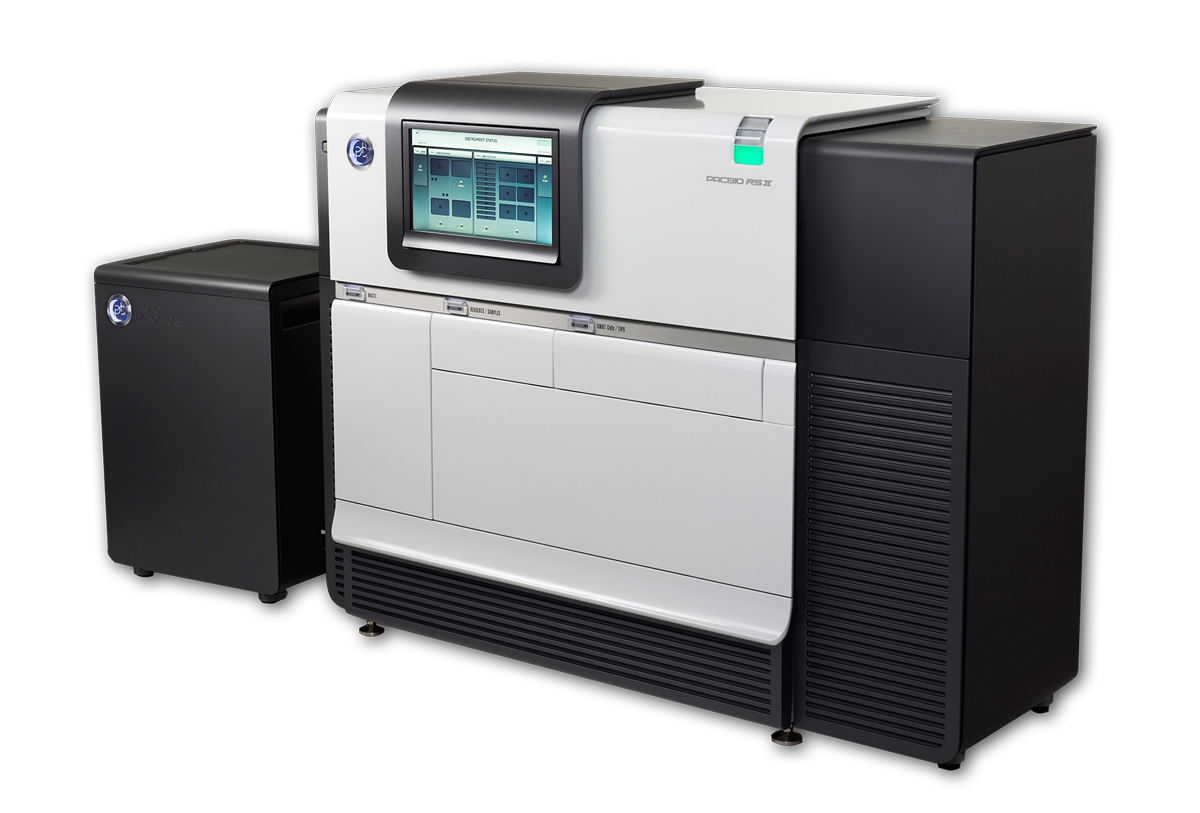
Sometimes, a DNA sequencer is more than it seems. In this month’s Technology Feature, I talk to the researchers who have figured out ways to squeeze new life from an outdated DNA sequencer, the Illumina GAIIx. That’s a popular choice for sequencer-hackers, but not the only one. Stanford structural biologist Joseph Puglisi uses a PacBio RSII from Pacific Biosciences to plumb the biochemistry of protein translation.

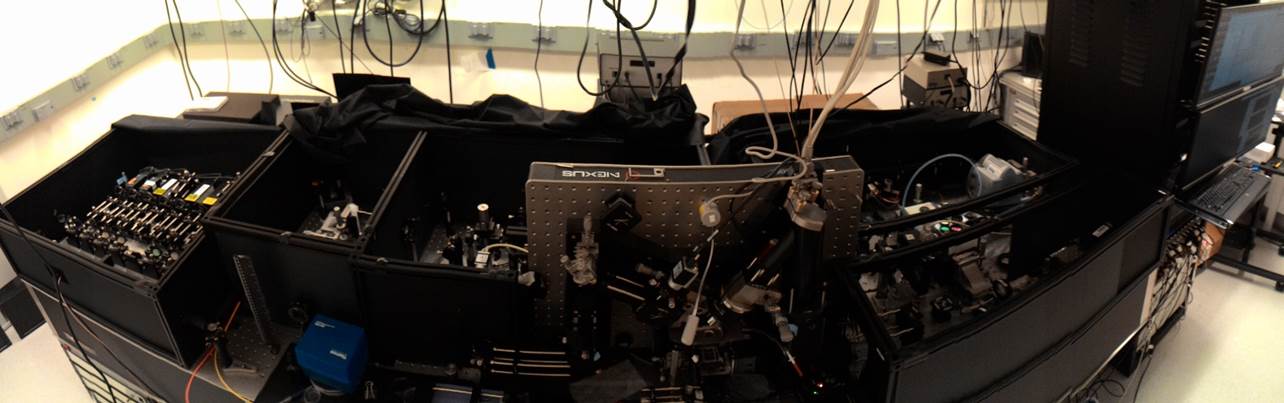
The RSII was designed as a single-molecule DNA sequencer, in which powerful cameras capture the flashes of light that result when a DNA polymerase molecule tethered to the base of a microscopic well inserts a fluorescently labeled base into newly synthesized DNA. But according to Jonas Korlach, the company’s chief scientific officer, that’s just one of its applications. “Yes, it’s a sequencer, but at the same time it’s also the world’s most powerful single-molecule microscope.”

All that’s required to make that microscope record something other than DNA synthesis, fundamentally, is for researchers to replace the tethered DNA polymerase with another enzyme, and to add the appropriate fluorescent reagents. To alter the running conditions, researchers also need PacBio to ‘open’ its system software to afford them greater control — for instance, to adjust experimental temperature, imaging conditions, and fluid addition. According to Korlach, just four instruments worldwide have been tweaked in this way. (As with the Illumina hardware discussed in the Technology Feature, such hacks only work on PacBio’s older RSII; the newer Sequel is not hackable, Korlach says.)

The company offers these researchers what support it can, but because they are pursuing home-brew applications, Korlach says, researchers who run into technical issues must solve them in-house. “They are mostly on their own.”

Researchers have used these modified systems to address the biophysics of cell-cell interaction, transcription, splicing, and in Puglisi’s case, translation. Puglisi’s is a structural biology lab, and structural methods tend to provide static pictures. But biology is dynamic. So, his team typically pairs the methods up. “We always like to couple structural investigations with some way to animate the structure and bring it to life,” Puglisi says. Since 2014, the lab has published some 25 studies using the RSII to study the ribosome.

In one recent study, for instance, Puglisi’s team studied the impact of modifying one particular carbon atom in the backbone of RNA. That modification, they found, causes the ribosome to pause, possibly in order to allow ancillary biological processes, such as protein folding or protein processing, to occur.

“The biology of the system really still needs to be worked out, but the dynamic behavior and structural signatures that we saw were so striking that … there has to be some neat biology here,” Puglisi says.

Korlach, who worked with Puglisi on some of his earliest efforts on the RSII, says the team, with Puglisi’s postdoc Sotaro Uemura (now at the University of Tokyo) worked out these methods on nights and weekends, when the laboratory was otherwise unoccupied. And he recalls the excitement of getting the system to work that first time.

“It was pretty thrilling when we saw the first traces of real-time dynamics of ribosome translation,” he says. “That was the first time any human had ever seen a ribosome make a protein in real time on a single-molecule level, with codon resolution. Those are the types of milestones that as a method developer you live for.”


Jeffrey M. Perkel is Technology Editor, Nature


Suggested posts

Lattice light-sheet microscopy gets an AO upgrade

‘Carbon rainbow’ enables highly multiplexed microscopy

New instruments advance mass spec imaging

The million-dollar question every scientist should be asking

Both science communicators and researchers carry the onus of answering science’s most important question

By Jessica Eise

I recently had a phone call with a frustrated colleague looking for some advice. She had two key pressure points, both common in the field of science communication.

First, she often couldn’t make sense of what scientists were telling her. They would explain their advanced, varied concepts increasingly quickly and impatiently as she struggled to understand them. Both parties would leave frustrated, having not achieved much. The scientists might wrongly assume she’s stupid to have not understood.

Douglas Adams’ The Hitchhiker’s Guide to the Galaxy asked “What is the answer to life, the universe and everything?” To communicate effectively, scientists should simply ask “So what?”{credit}By IllusionConscious [CC BY-SA 3.0 (https://creativecommons.org/licenses/by-sa/3.0)], from Wikimedia Commons {/credit}

Continue reading

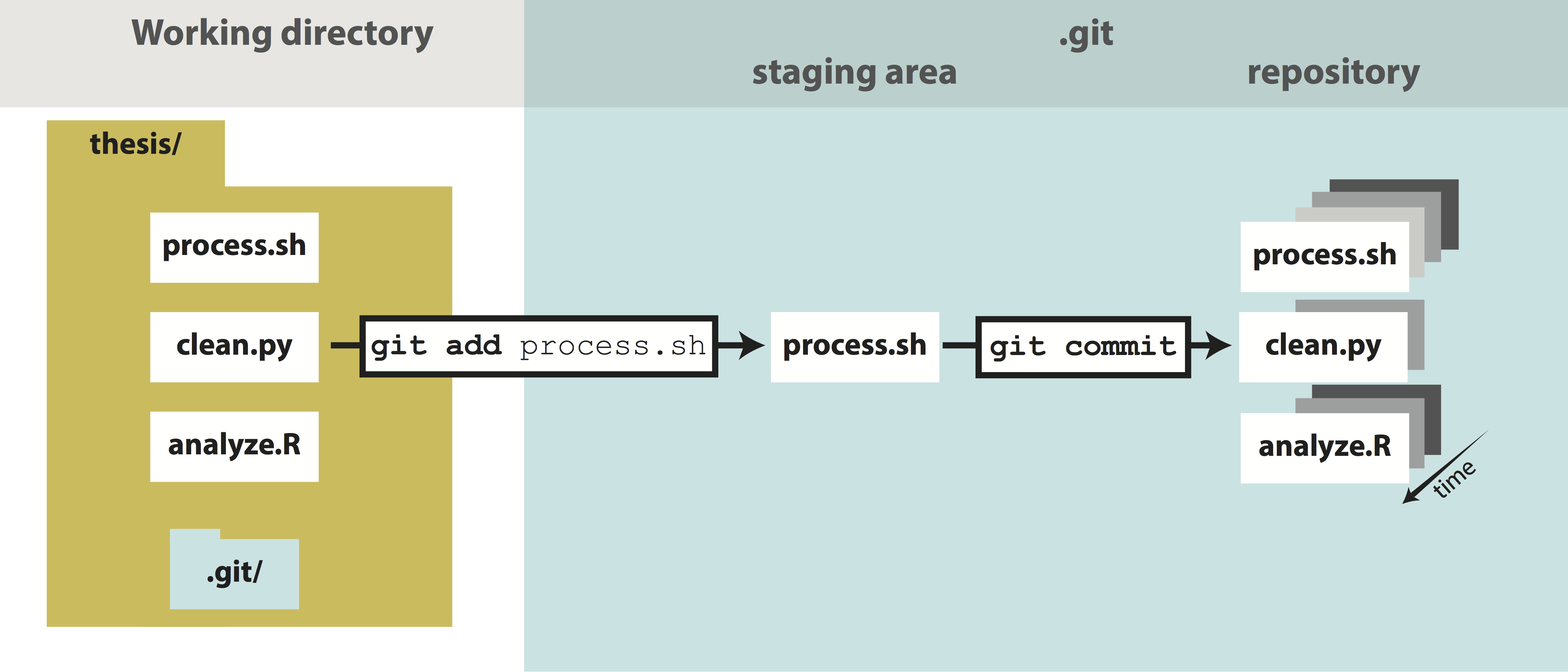
TechBlog: Git: The reproducibility tool scientists love to hate

{credit}PLOS Comput Biol, 12, e1004668 (2016){/credit}

Early in his graduate career, John Blischak found himself creating figures for his advisor’s grant application.

Blischak was using the programming language R to generate the figures, and as he iterated and optimized his code, he ran into a familiar problem: Determined not to lose his work, he gave each new version a different filename — analysis_1, analysis_2, and so on, for instance — but failed to document how they had evolved.

“I had no idea what had changed between them,” says Blischak, who now is a postdoctoral scholar at the University of Chicago. “If the professor were to come back and say, ‘which version did you use to create this figure?’ I would have had no idea.”

Later, while attending a workshop on basic research computing skills, he discovered a better approach: Git.

Continue reading

Some science and some serendipity

What at first looks like a setback may be an opportunity in disguise, says Flavia Scialpi

I keep my business cards in the top drawer of my desk at work. They are in two bulky boxes and take up a lot of space, but I like them there because I can see them every time I pull out a pen. They are a memento of how very often you can’t foresee where an opportunity lies – and therefore to seize each and every one of them.

I have been in academia for almost half my life, and I am now engaged in my first position in industry at Synpromics, a biotech company. It is the first time in my professional career that I hold a position that requires and provides business cards.

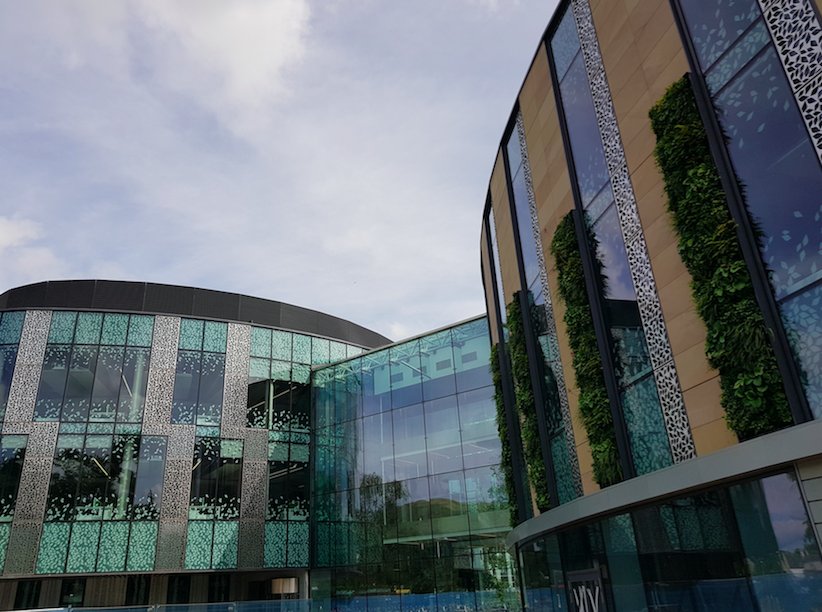
New Accomodation at Roslin Innovation Centre

Scialpi’s new Accomodation at Roslin Innovation Centre

A few years ago I thought I wouldn’t have any chance to land a job in industry. Nor was I very interested in it, to be honest; I was content with academic research, greatly enjoying the highs and bitterly venting about the lows. I went for a well-trodden path; I got my PhD in Italy, where I’m from, and then ventured abroad for a postdoc. I felt the world was my oyster and I found a second home in beautiful Scotland. Continue reading

TechBlog: Tell-tale LIPSTIC reveals cell-cell interactions

Screen Shot 2018-05-22 at 8.44.27 AM

{credit}Pasqual, G. et al. Nature 553, 496–500 (2018).{/credit}

By Esther Landhuis

The mammalian immune system is a sprawling network of cells, each with unique properties and functions. As discussed in my latest Technology Feature, immunologists have developed a range of technologies to characterize those populations, from mass cytometry to single-cell DNA sequencing.

But the immune system is, in fact, a system, and its members don’t act alone. Immune activity depends upon cell-to-cell interaction, as when a dendritic cell cozies up to a T cell and activates it, or when a T cell run-in prompts a B cell to make antibodies. “When those cells meet physically, that’s when you start an immune response,” explains Gabriel Victora, an immunologist at Rockefeller University in New York.

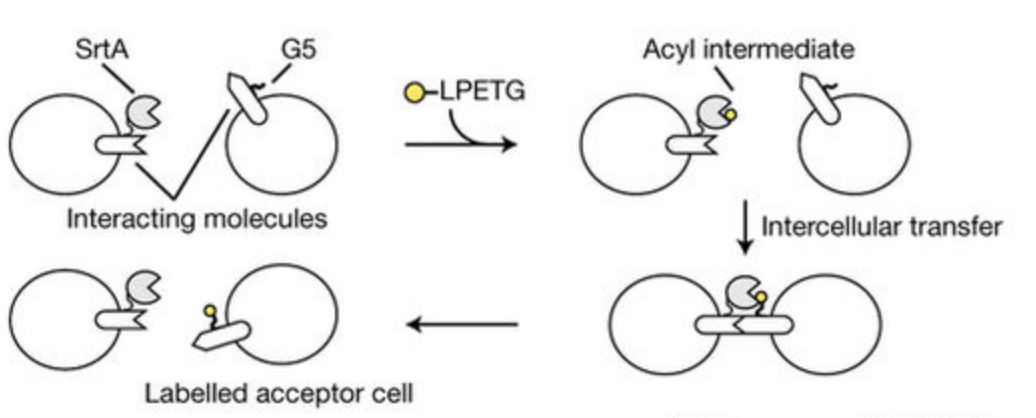
Victora and coworkers came up with a clever way to track these sorts of kiss-and-run incidents using a method they’ve aptly named LIPSTIC (Labelling Immune Partnerships by SorTagging Intercellular Contacts). The system is designed such that an interaction between protein receptors on two cells — from a dish or a mouse — triggers an enzymatic reaction that tags one of the cells with a tell-tale reporter molecule. That tag – a five amino-acid peptide capped with biotin – is like lipstick on a paramour’s collar, Victora says: “You know there has been an interaction if you put ‘lipstick’ on one cell and it shows up on the other.”

In a study published in January in Nature, the Rockefeller team used the LIPSTIC approach to study interactions between dendritic cells and CD4+ helper-T cells in transgenic mice – interactions that are critical for jumpstarting CD8+ killer-T cells in response to immunization. “Within one lymph node we could detect the dozen or so dendritic cells that were starting an immune response,” Victora says.

Immunologist Scott Mueller of the University of Melbourne in Australia is also using LIPSTIC mice to determine how dendritic cells signal to CD4+ T cells – but his group is examining immune responses to viral infection. By visualising these cellular interactions in real-time with intravital microscopy, “we hope LIPSTIC will help us identify the types of interactions between cells that we cannot ‘see’ by other methods,” Mueller says.

At this point LIPSTIC mice are set up to analyze cell-cell interactions mediated by the pairing of CD40 and CD40L surface proteins, which are found on antigen-presenting cells and activated T cells, respectively. Victora’s group plans to create additional LIPSTIC strains to analyze other receptor-ligand pairs of interest to immunologists. So far they have distributed the CD40-CD40L mice or reagents to about a dozen labs.

Esther Landhuis is a freelance science journalist in the San Francisco Bay area.


Suggested posts

Lattice light-sheet microscopy gets an AO upgrade

‘Carbon rainbow’ enables highly multiplexed microscopy

eMAGE extends the gene-editing toolkit

Lattice light-sheet microscopy gets an AO upgrade

AO-LLSM microscope photo

{credit}Betzig Lab, Janelia Research Campus{/credit}

In late 2014, just a month after learning he had won that year’s Nobel Prize in Chemistry for superresolution microscopy, Eric Betzig and colleagues described a technique that has taken the microscopy world by storm.

Continue reading

Time management: stressed science needs to slow down

time-life-product-email-management-inbox-1053475-pxhere-smaller

There’s no shortage of time management advice. Maybe it’s time to reconsider our approach, says Eileen Parkes.

A Saturday morning email from a senior professor arrives. A flurry of Reply All emails swiftly follow. Should I join in — show I’ve read the email on a sunny Saturday?

The academic life has a reputation for long hours. A recent global survey of academics makes bleak reading, with researchers describing ever-increasing workloads and struggles with work-life balance. Earlier this year, academics worldwide joined a Twitter argument about their working hours, with many agreeing that a 60 hour week was an expected part of an academic career. Continue reading

Machine learning gets a journal for interactive figures

Screen Shot 2018-04-13 at 11.31.07 AM

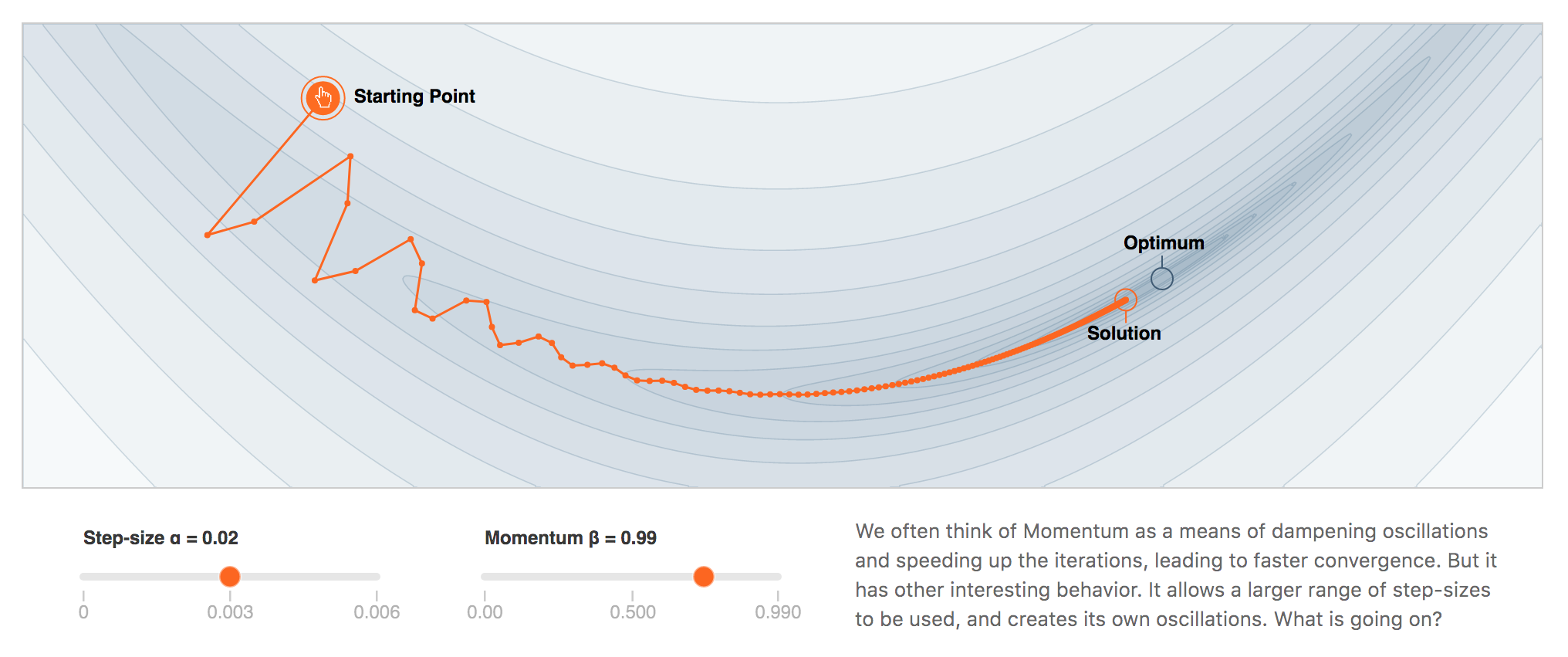
Distill wants to be a sandbox for what a scientific paper can be

By Anna Nowogrodzki

Sometimes it’s hard to understand someone else’s research through a static scientific paper. Across countless universities and companies, at whiteboards and cafeteria tables, you’ll find scientists in animated conversations explaining their research to one another, asking questions, playing around with each other’s data: in short, interacting. Across the internet in recent years, people have extended these explanations to include interactive graphics and code.

Now a web-only machine-learning journal called Distill aims to provide a formal home for these interactive graphical explanations, which in recent years have expanded to blogs and other online fora.

Continue reading

Put your email inbox on a low-spam diet

tumblr_nnzhjl7AAQ1uv17mmo1_1280Mark Clemons has published over 250 papers over the past two-plus decades, nearly all of them involving breast cancer. So imagine his surprise when Clemons, a medical oncologist at the University of Ottawa, Canada, received a flattering email inviting him to submit his work to, of all places, a journal focusing on yoga research.

Continue reading