Mark Clemons has published over 250 papers over the past two-plus decades, nearly all of them involving breast cancer. So imagine his surprise when Clemons, a medical oncologist at the University of Ottawa, Canada, received a flattering email inviting him to submit his work to, of all places, a journal focusing on yoga research.
Tag Archives: open access
How useful are your publications?
Communication: talk to peers and the general public
Effective communication will improve the value of scientific discoveries, says Eleni Wood
As scientists, our work is often driven by data collection and results. But a key step in the scientific process, and one that increases the value of our findings, is the effective communication of our investigative processes and results. Science communication is not only important within our fields for the advancement of our disciplines – communication to other audiences also influences the public perception and credibility of scientists and the work we do.
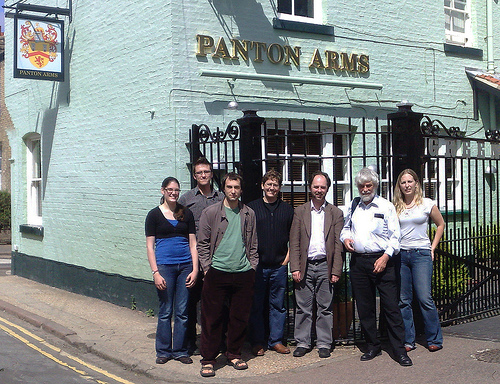
Promoting open science from a pub: the Panton Principles
Follow the Panton Principles to ensure your data is licensed and accessible for immediate reuse, says Atma Ivancevic.
In a world where scientific discovery is driven by impact factor and funding, the idea of open data may seem idealistic. But the open data movement has been growing since the early 2000s, spurred by the rise of big data and computational capabilities. For the sake of reproducibility in science, we need to encourage data sharing after publication.
A day in the life of a Scientific Reports publishing assistant
Jessica Lawler helps shed some light on the publishing business for Scientific Reports and Naturejobs.
Every day in this job, I learn something new. As a publishing assistant, I guide manuscripts through the peer review process at Scientific Reports. As such I handle manuscripts at multiple stages of the process. I like to think of it as following a manuscript’s journey from the lab up out into the world. Each day brings new challenges. Organisational skills are a must.
A day in the life of a Scientific Reports manuscript assistant
William Coleman helps shed some light on the publishing business for Scientific Reports and Naturejobs.
Scientific Reports is a rapidly growing online open access journal that publishes research from all areas of the natural and clinical sciences. As one of over twenty manuscript assistants at the journal, one of my main tasks is to quality check author submissions in our online manuscript tracking system before they’re sent to our editorial board and, potentially, to peer review.
Scientific communities: How to avoid getting scooped on social media
Being prepared before broadcasting is a sure way to avoid being scooped, says Jon Tennant at the 2015 London Naturejobs Career Expo.
Many scientists are nervous about sharing their scientific work before publishing. The fear of being scooped is there when it comes to social media, but it will be difficult for someone to scoop your work based on a 140-character sentence.
Sharing your science on social media is all about being selective. You can make data and methods open when you’re ready – there is no rush to get things out before you are prepared.
Further reading:
Scientific communities: Build your own.
Scientific communities: How to follow the right people on Twitter
Scientific communities: From Twitter to paper
Scientific communities: Membership at learned societies
Scientific communities: How to get your blog noticed
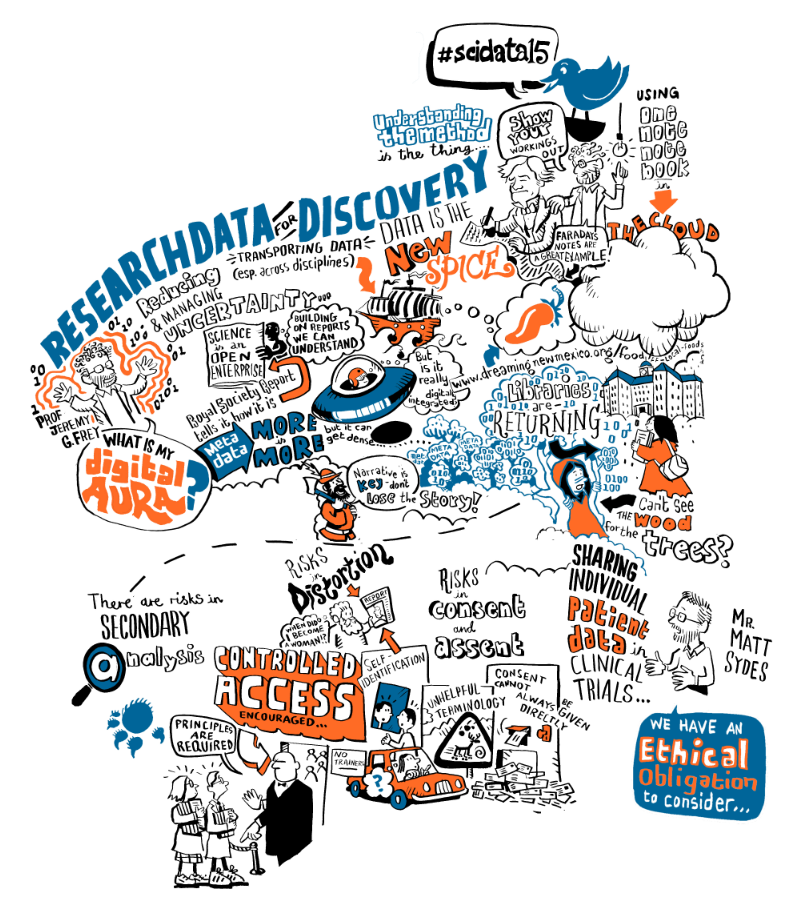
#SciData15: Research Data for Discovery: Prepare to Share
Speakers at #SciData15 advocated for a wider degree of awareness of the field of data science and the implementation of data sharing technologies.
Guest contributor Caroline Weight
“We must engage in the idea of sharing,” said conference chair Iain Hrynaszkiewicz as the 2015 Publishing Better Science through Better Data meeting kicked off at the headquarters of Nature Publishing Group (NPG) in London on 23rd October.
Hrynaszkiewicz, who develops new areas of open research publishing and data policy within NPG/Macmillan, noted that 30 funding bodies — including the Engineering and Physical Sciences Research Council and The Royal Society — have written policies that outline requirements for data-sharing. Examples include detailed methods and protocols, microscopy images and mathematical workings, as well as meta-datasets of, for example, genotypes and microarrays.
The meeting’s aims were to increase awareness of ways to effectively share data and to discuss how to improve the efficiency, implementation and overall impact of sharing among the scientific community. A recurring issue throughout the day was how to enforce sharing, and get the concept to become part of standard, everyday scientific practice –one that seeps into the lives and habits of working researchers. Continue reading
Data sharing: Contribute to the community
Data sharing can make a significant contribution to the scientific community, but it comes with challenges, says Caroline Weight.
Guest contributor Caroline Weight
We have all heard of it. We are all worried about it. We hear whispers of it in the corridors. We are advised to be careful what we say to ‘others’. We constantly check the literature. It matters to us. After all, it is our careers on the line.
‘Scooped’.
The process of publication is vigorous, competitive and tricky. It’s not uncommon for five years to pass between writing the grant application and publishing the work. Big labs with state-of-the-art facilities stand a better chance of getting their work out there first, given the extra manpower and often more-established protocols. This race for ownership of the data makes it difficult to share information and present new findings at meetings or conferences. Even at manuscript submission, there is often a chance to actively inhibit particular referees in case of conflicts of interest or personal competitors, to retain the novel concepts and data until they have been made public. Not until the publication has been accepted and is in print can you heave a sigh of relief and move on to the next project. Yet, sharing of data is essential to the progression of science in the modern world. Continue reading
Open research: Open up to open access
Six myths about open access were addressed in an open research workshop at the 2015 Naturejobs Career Expo in London.
Guest contributor Gaia Donati
How open-minded do you feel about open access publishing?
The Open Research workshop at the 2015 London Naturejobs Career Expo, led by Mithu Lucraft (head of Open Research Marketing at NPG) and Ros Pyne (Research and Development manager of the Open Research Group at Springer Nature, who manage the Open Research portal), explored several myths about open access publishing, now a well-established alternative route to disseminating scientific results.
Myth 1: Open access benefits readers, but not authors
Open access is great for readers, but the advantage for researchers may seem less obvious at first. A study of open access and subscription-only PNAS articles found that earlier, more frequent citations characterize the former category when compared with the latter. A more recent study of the citations for papers published in Nature Communications (before it became fully open access) seems to confirm these findings and extends the observations to downloads and social-media interest, with open access articles experiencing higher downloads. Interestingly, these also appear to be sustained over a longer period of time – “attention lasts longer,” said Lucraft. In this way, open access – together with similar initiatives such as open data – may well be a primary route to accelerate and facilitate science while ensuring reproducibility. Continue reading