Take a lesson on open data from scientific megaprojects, says Sara Osman.

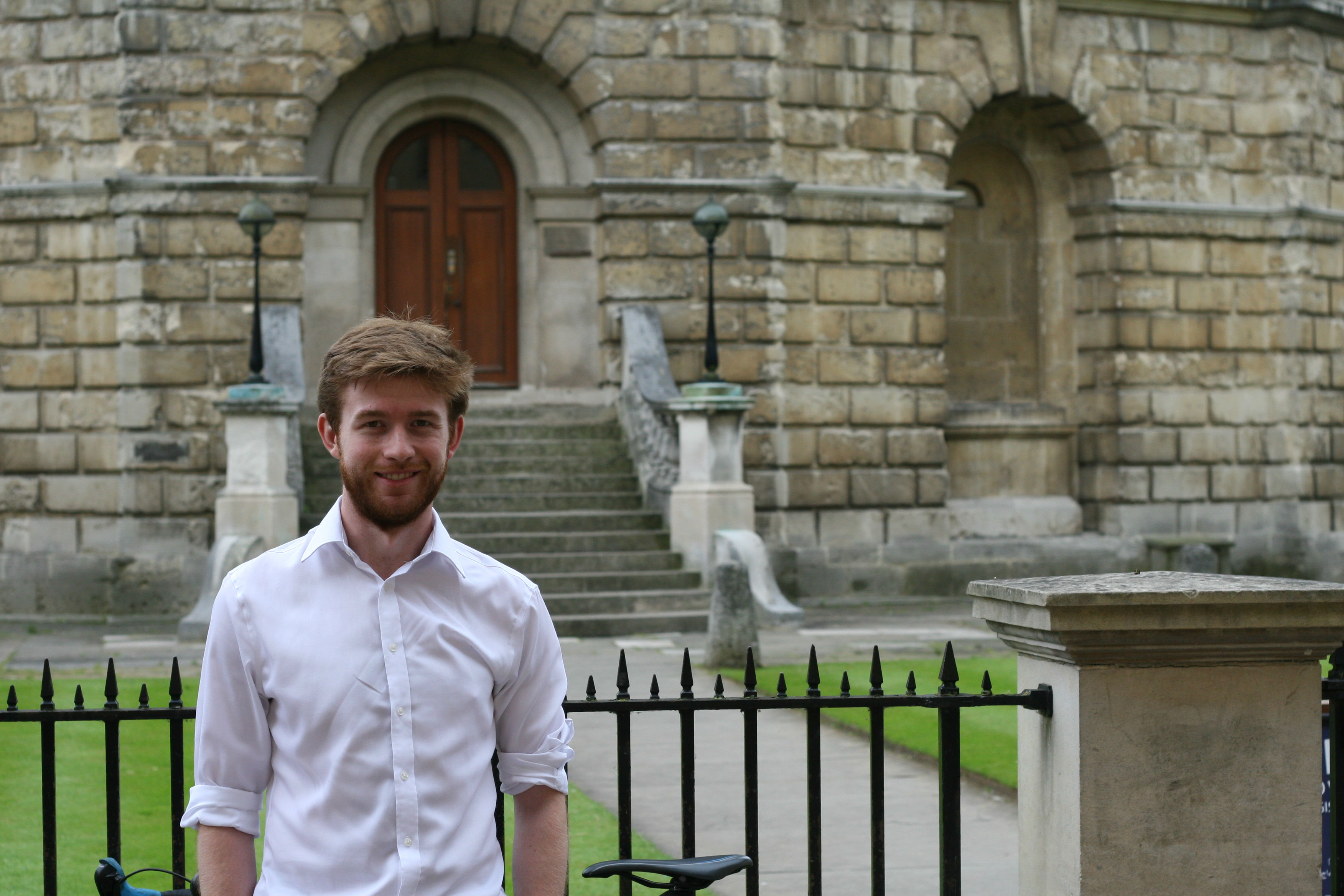
Better Science through Better Data writing competition winner Katie Ember
Every Monday in the University of Edinburgh’s School of Chemistry, the Campbell group gather in Room 233 for a lab meeting. If you’re hosting the meeting, you bring cake. Or you forget and everyone pretends they’re not feeling a bit hungry and disappointed. Then, two scientists in the group present that month’s work.
Every Friday in the Centre for Regenerative Medicine, a fifteen minute cycle from the School of Chemistry, the Forbes group file into the first floor meeting room. After battling with the “motion-activated” lights, we all talk through what we’ve achieved that week.
The reason I go to two lab meetings in one week is because I’m attempting to detect liver damage using laser light. It’s multidisciplinary and it’s hard: requiring input from biologists, physicists and transplant surgeons from different institutes. The end result is that I spend about four hours each week not doing science but discussing it. Whilst this may seem like a strange way to do research, I cannot overstate how important it is. Continue reading
Better Science through Better Data writing competition winner Ayushi Sood
Recently, an economist friend told me that “scientific inquiry is inherently cursed.” At first I was offended. But I had to agree after he elaborated further – science today suffers from something economists enigmatically call the “winner’s curse”. Continue reading
It has been shown that research articles receive more citations when they have their underlying data openly linked to them. With this in mind, it’s time to consider not just the ideological reasons for making research data open, but the selfish benefits of openly sharing data that all researchers can (and should) be taking advantage of.
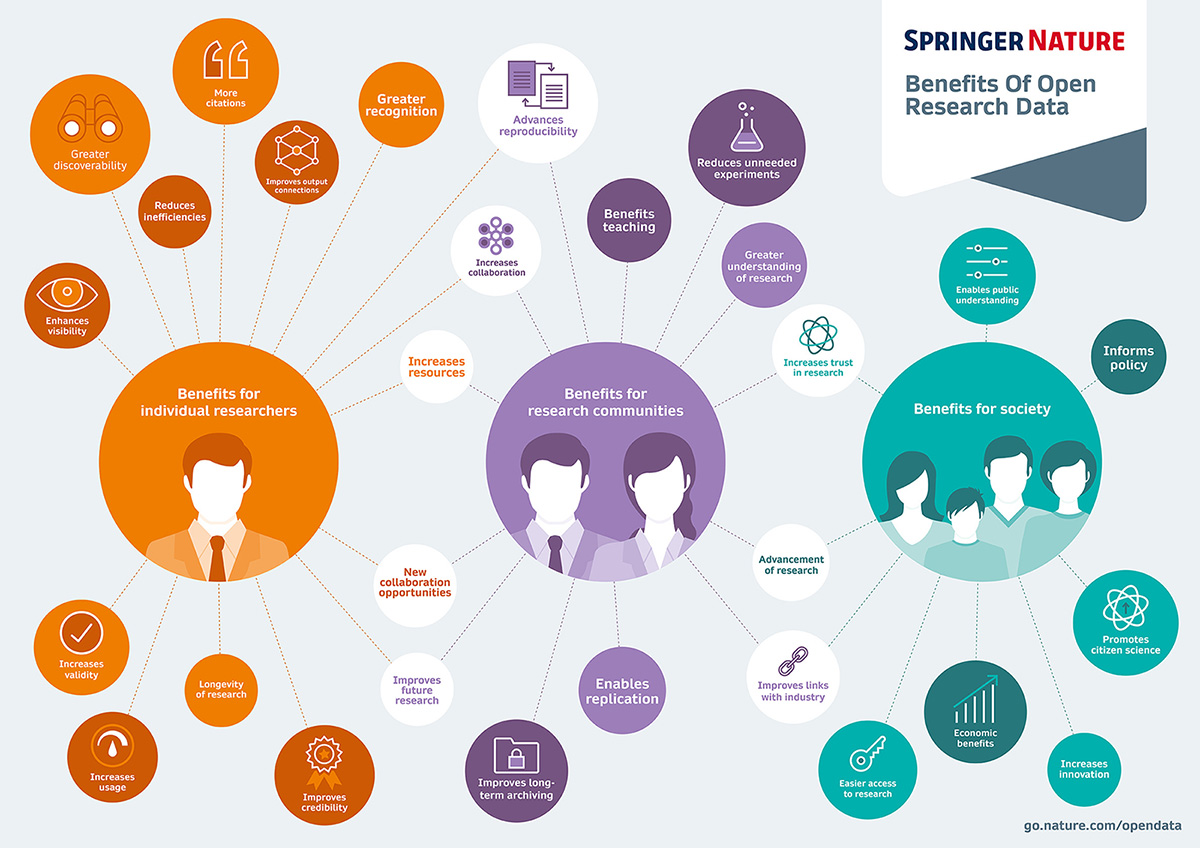
This infographic can be downloaded under a CC-BY licence here
And as an increasing number of funders mandate data sharing, and publishers start implementing more consistent data policies at their journals, it is worth seriously considering how and why you should make the research data you generate more openly available. Continue reading
Publishing Better Science through Beter Data writing competition Jonathan Page
A core tenet of science is reproducibility: the results of one scientist must be able to be reproduced by another, lest the findings be dismissed as a fluke or even fraudulent. In today’s data-driven realms of research, ‘reproducibility’ doesn’t simply mean publishing methods, many journals now require that datasets, and the code used to analyse them, be published too. This requirement ensures that both data, and methods, can be scrutinised. If other researchers can’t reach the same results, the study will need to be treated with caution. In doing this, scientists avoid damaging their reputation by publishing flawed studies, and journals avoid publishing bad science. It’s a win-win situation.
So why don’t scientists always work reproducibly?
Jonathan Page
PhD students and early career researchers have a lot on their to-do lists, everything from writing papers and applying for grants to staying on top of the latest findings in their field. The third keynote of the #scidata16 conference highlighted yet another important facet of a research career: data management. Kevin Ashley, based at the University of Edinburgh, gave a thought-provoking presentation on this topic. As director of the Digital Curation Centre in Edinburgh, Scotland, Mr. Ashley and his team provide advice, guidance and training for researchers, alongside consultancy services on all aspects of data management and data reuse. Continue reading
The Publishing Better Science through Better Data conference, or #scidata16 for short, took place at the Wellcome Collection in London at the end of October. This one-day event organised by the journal Scientific Data, Springer Nature and the Wellcome Trust explored the challenges facing early-career researchers as we enter the era of open data.
As a data novice, I arrived without really knowing what to expect. The types of experiments I perform generate only small datasets needing a simple statistical test, easily summarised in a graph in the manuscript. The original data can be safely left to gather dust in a shared drive. Continue reading
On June 6, 2012, I skipped class to watch the transit of Venus. I was studying in Adelaide, Australia, where the transit lasted from early morning until mid-afternoon and we had a wonderfully sunny day to view it. If I had known a bit more about the history of the transit, I may have been more thankful for that.
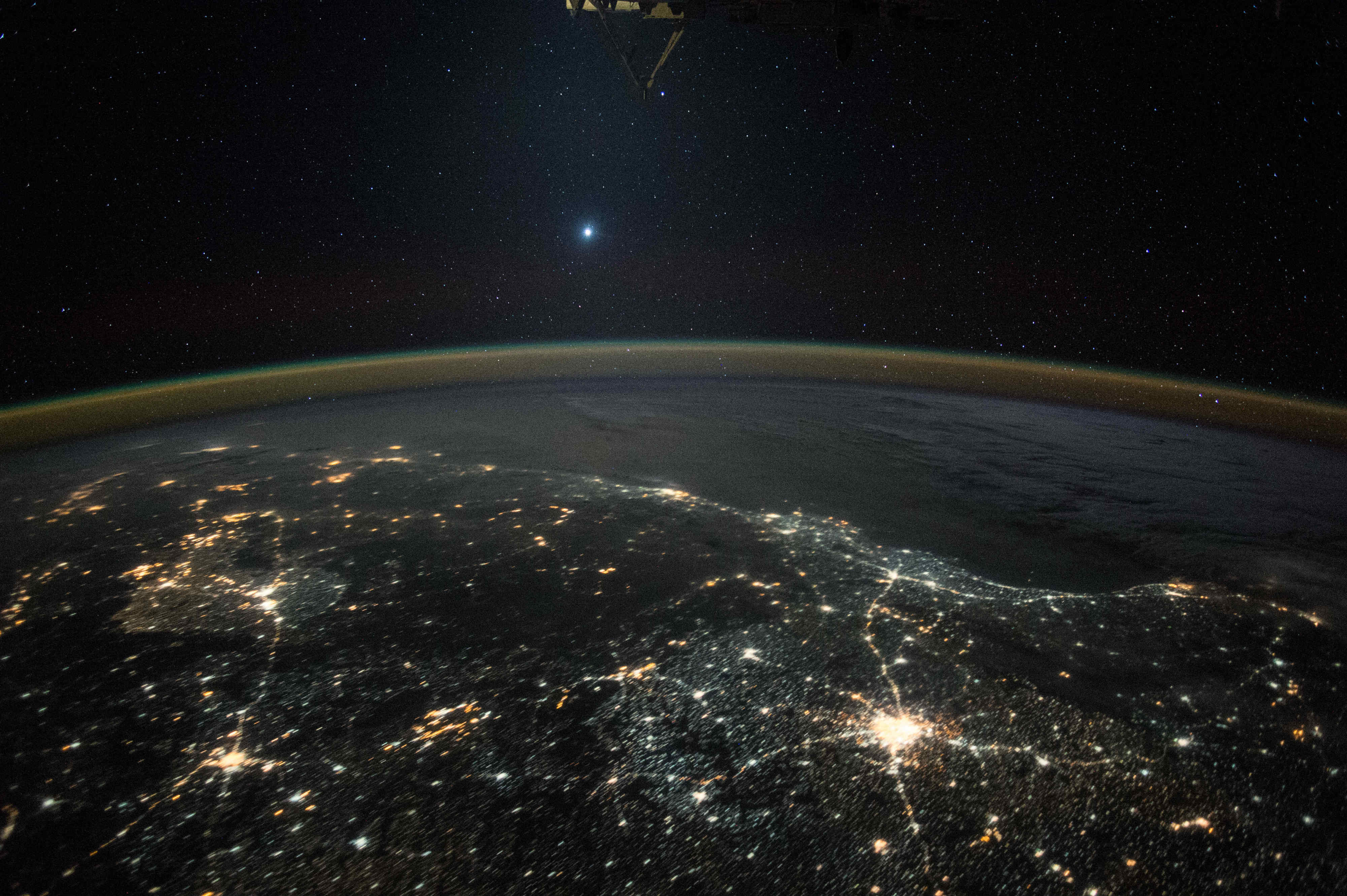
A view of Venus from over the Indian subcontinent. This photograph was taken by Japan Aerospace Exploration Agency (JAXA) astronaut Kimiya Yui from the International Space Station on December 5th, 2015
In the 1760s, astronomers made long and convoluted journeys across the globe just to observe Venus crossing the Sun. Scientists at the time wanted the transit recorded from as many continents as possible, so they could use the data to calculate the distance between the Earth and the Sun. It took years of effort and huge sums of money to orchestrate such a viewing. Continue reading
There has always been an emphasis on the generation of novel data in science. Being a scientist involves progressing from observation to hypothesis to experiment to output. In the past, a combination of scarce data to look at and low throughput machinery to make more has led to limited experimental outcomes.

Atma Ivancevic