Opening doors to open data at #scidata16

Want to embrace open data but don’t know where to start? The tools are out there, says Matthew Edmonds.

The Publishing Better Science through Better Data conference, or #scidata16 for short, took place at the Wellcome Collection in London at the end of October. This one-day event organised by the journal Scientific Data, Springer Nature and the Wellcome Trust explored the challenges facing early-career researchers as we enter the era of open data.

analytics-282739_1280

As a data novice, I arrived without really knowing what to expect. The types of experiments I perform generate only small datasets needing a simple statistical test, easily summarised in a graph in the manuscript. The original data can be safely left to gather dust in a shared drive. Continue reading

Return to academia: The price I’m willing to pay

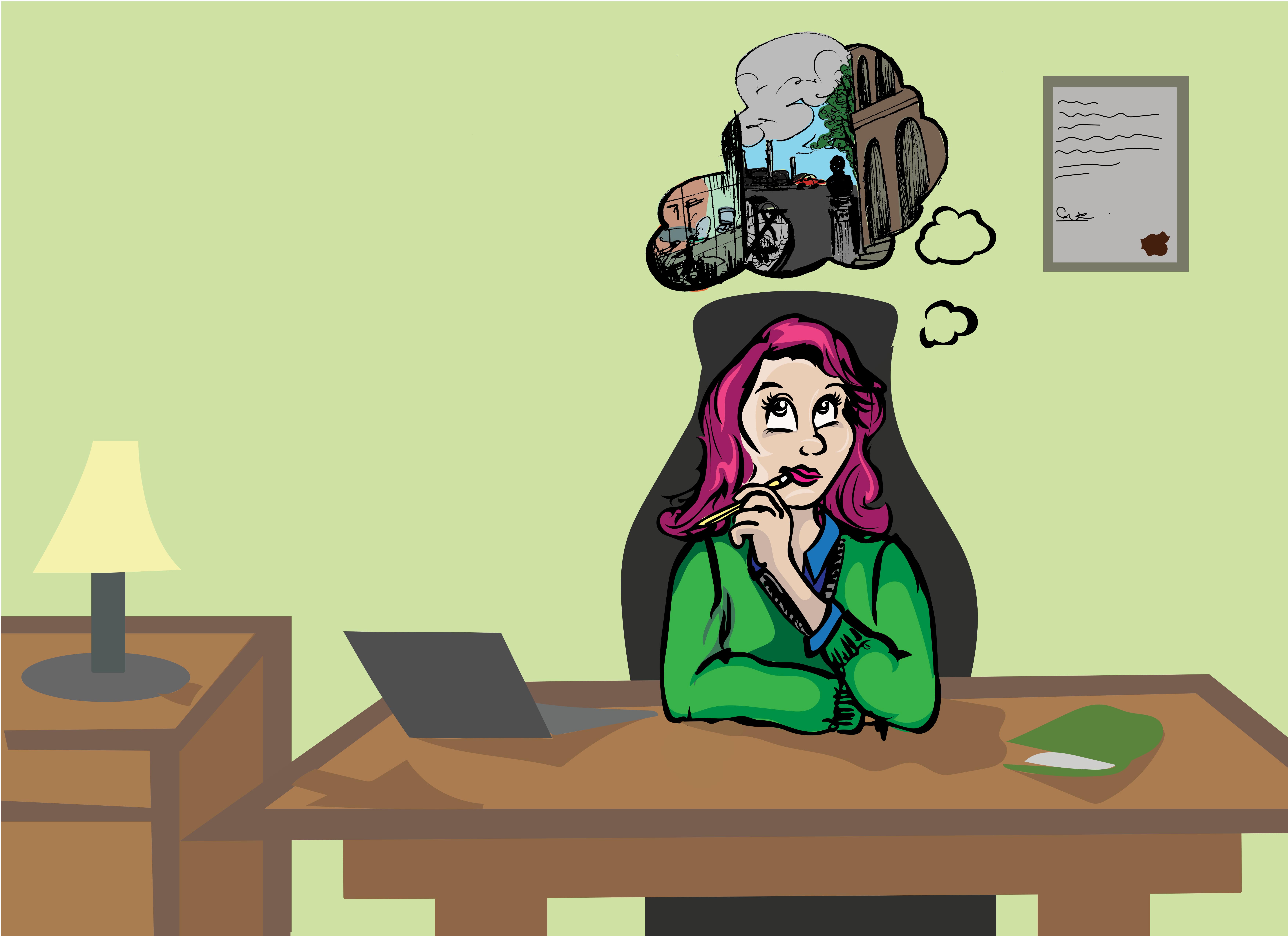
Does academia deserve its reputation as a bad employer? And if so, why do some people choose to return? Philipp Gramlich and Karin Bodewits spoke to four scientists moving from the “real world” back into the ivory tower.

Academia has had some bad press in recent years. Long years of temporary contracts, enforced mobility, and low salaries are some of the arguments used against academic careers. But is the grass really greener on the other side?

ScienceMums Colourize Illustration_Final_WITHOUT WINDOW

{credit}Karriereführer für Naturwissenschaftlerinnen, Karin Bodewits, Andrea Hauk and Philipp Gramlich, page 2. Copyright Wiley-VCH Verlag GmbH & Co. KGaA. Reproduced with permission.{/credit}

Continue reading

The hidden costs of a career in scientific research

Does a career in science select against those unable to afford frequent relocation, unpaid work and short-term contracts?

Nick Riddiford

That a career in science is demanding is unsurprising. But alongside long hours spent in the lab grappling with abstract concepts, the number of years of education it takes to enter the professional ranks and the increasingly unstable nature of such employment, exists a further demand: money. It’s no secret that science costs money — building the Large Hadron Collider (LHC) and sequencing the human genome cost around €3 billion each — but what is less obvious is that entry to a career in science often requires considerable personal financial sacrifice.

save-money-1362382_1920 Continue reading

Make a (sketch)note of Science!

Raise your hand if you doodle while taking notes.

Taking notes is a time consuming – and occasionally boring – process, but doodling and using symbols can make it easier, more fun – and could be better for your studies, says Marianna Ricci.

https://youtu.be/qp3kdN58SD0

Personally I’ve always liked to draw and I think of myself as a “visual person”: I’m sensitive to paintings and photos as well as nice color combinations or a cool pattern.

When I need to study something, the easiest way for me is to write it down and draw a diagram. Especially in my veterinary medicine studies, I used mathematical symbols and diagrams as well as colour codes and eye-catching drawings while taking notes and summarizing the lessons. Continue reading

How to be a science journalist

Dan Cressey, a reporter at Nature, speaks about getting a job as a science journalist at the Naturejobs Career Expo, London, 2016.

https://www.youtube.com/watch?v=iilmmDHxgPY

Continue reading

It’s time to reduce the number of PhD students, or rethink how doctoral programs work

Gwilym Croucher, University of Melbourne

There are not enough academic jobs vacant in Australia each year to employ all our PhD graduates.

This imbalance risks training an increasing numbers of doctoral students on a promise that cannot be fulfilled: that is future academic employment.

4925267732_492be0075f_o-smaller

We need to accept a hard truth that Australia needs to rethink the design of the PhD and the expectations around it, or radically reduce intake to doctoral programs. Continue reading

Science and social mobility

David Payne examines the links between socioeconomic status and a career in science.

“Congrats on the new job David, good to see a ‘Stabbo’ lad doing so well…”

So said Richard, a Facebook friend and former schoolmate in a reference to my status change last month, posted the night before I started working at Nature, and to our home town.

GettyImages-164210725-smaller

Stabbo — AKA Stapleford — lies on the Nottinghamshire/Derbyshire border. One of its local authority wards has the highest percentage of lone parent householders in the borough, some of the highest rates of overcrowding, domestic abuse, and alcohol related hospital admissions and emergency asthma admissions. The latest news I heard about my home town was that its only supermarket is set to close. Its replacement? A discount store. Continue reading

Away from Home: Marrying bioinformatics & benchwork

We’re bringing you the best stories in lab mobility from Nature India.

Today we feature Animesh Shukla, a biotechnologist from Meerut Institute of Engineering and Technology in Uttar Pradesh, India who went to Carnegie Mellon University and Indiana University of Bloomington in the USA for PhD. Animesh, who works as a scientist designing ELISA assay kits for Meso Scale Diagnostics now, says planning ahead of time for a postdoctoral career could open up several doors in the land of opportunities.

Animesh Shukla

The biology dream

My school teacher Jessy Kuruvilla sparked my interest in biology. She used to explain the subject in such an interesting way that I still remember many things she taught us. I don’t remember much of any other subject. In high school I was interested in both biology and physics (specifically fluid dynamics). I never used to score really high marks in these subjects but had very good understanding of the basics.

I used to catch and collect live and dead insects or small animals and used to look at them. Some of my friends used to make fun of me (they still do) but that is what friends are for! Continue reading

The importance of broadening science communication

Though well-equipped with scientific training and expertise, scientists need to be aware of the resources available to help them share their work with a public audience, learns Aliyah Weinstein.

Recently, more and more emphasis has been put on scientists to communicate their research to public audiences. National scientific organizations such as the American Society for Biochemistry and Molecular Biology and the American Society for Cell Biology encourage their members to reach beyond the bench, and many blogs help scientists describe their research to wider audiences. At the University of Pittsburgh, where I’m working on my PhD, graduate student and postdoc organizations on campus share their excitement about science with the public through partnerships with local museums and school districts.

books

{credit}PhotoDisc/Getty Images{/credit}

Continue reading

Let’s be wolves

A man is a wolf to another man, said the Romans and later Hobbes. Maybe they didn’t study Canis lupus as carefully as they should have, says Naturejobs journalism competition winner Sofia Otero.

In an article last year from The New York Times, Rick McIntyre, a biological technician at the Yellowstone Wolf Project, explains that wolves are civil to each other — the alpha male is confident, self-assured, non-aggressive to the pack. He’s a champion with nothing to prove; a leader with a calming effect.

Every lab is a pack of wolves, with a hierarchy determined by your position and the time you’ve belonged in the group. I think we can all learn something from them.

wolf-1341881_1920

The alpha wolf is tough at the right moment: he fights to protect the territory and the group. In the lab, a good principle investigator (PI) is the alpha male (or female — here the wolves could learn something from us) who defends the research: the scientific territory. Continue reading