Enter for a chance to work as a Nature journalist for the day!
We’re launching our annual journalism competition, to cover our flagship career fair in London on October 4th, 2017. Continue reading

We’re launching our annual journalism competition, to cover our flagship career fair in London on October 4th, 2017. Continue reading

The Deutsche Energie-Agentur (dena), or German Energy Agency, has launched ‘Start Up Energy Transition’, a global business competition open to start-ups and early-stage companies in the energy sector. Continue reading
https://www.youtube.com/watch?v=iilmmDHxgPY
For the past four years I’ve been working in science communication (SciComm), and academia. I’m now mid-way through my PhD — I’m studying on Alzheimer’s disease and I know I would be finding research a lot tougher if I were not involved with science communication.
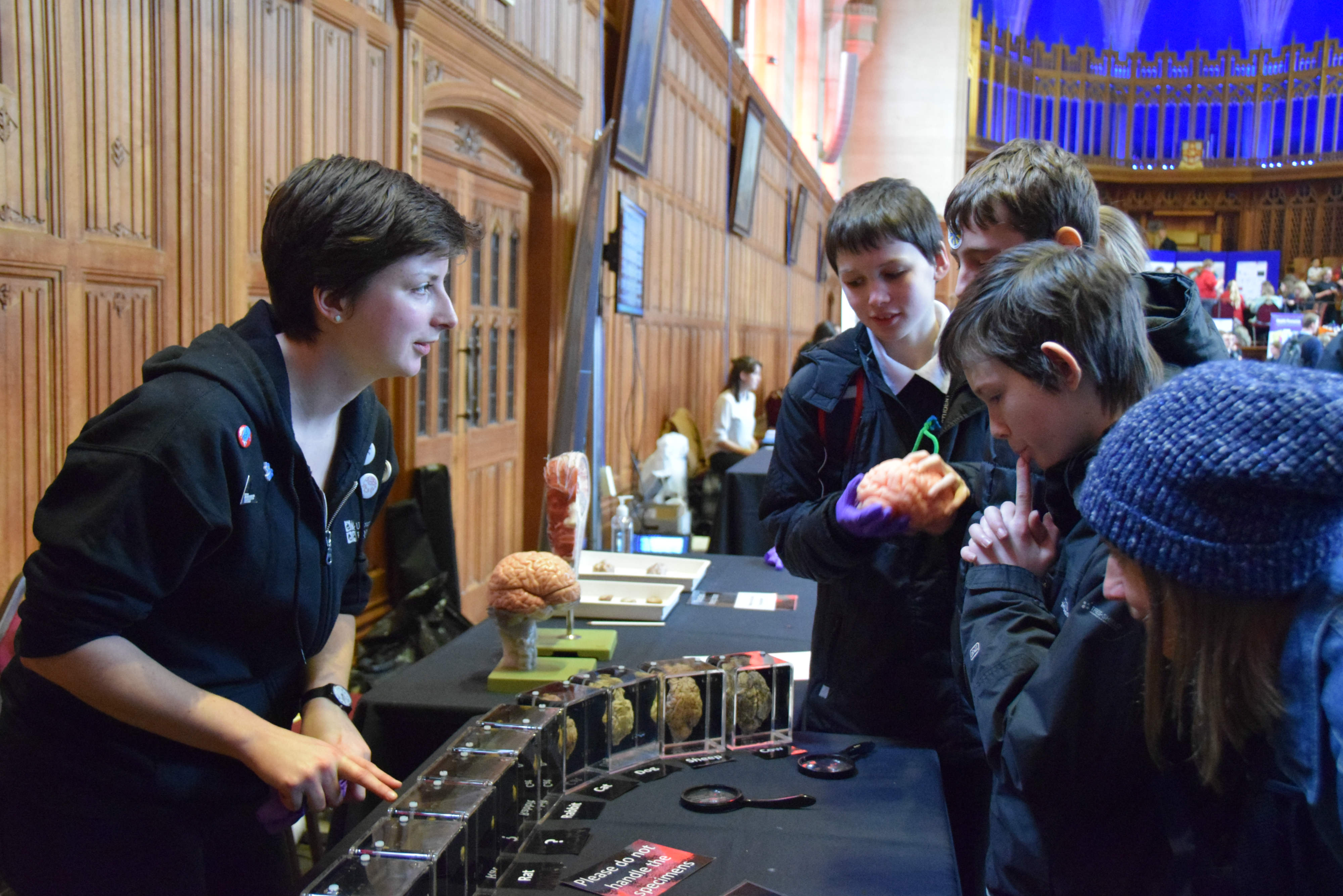
Rachel Harris doing some SciComm at Bristol Neuroscience Festival this year
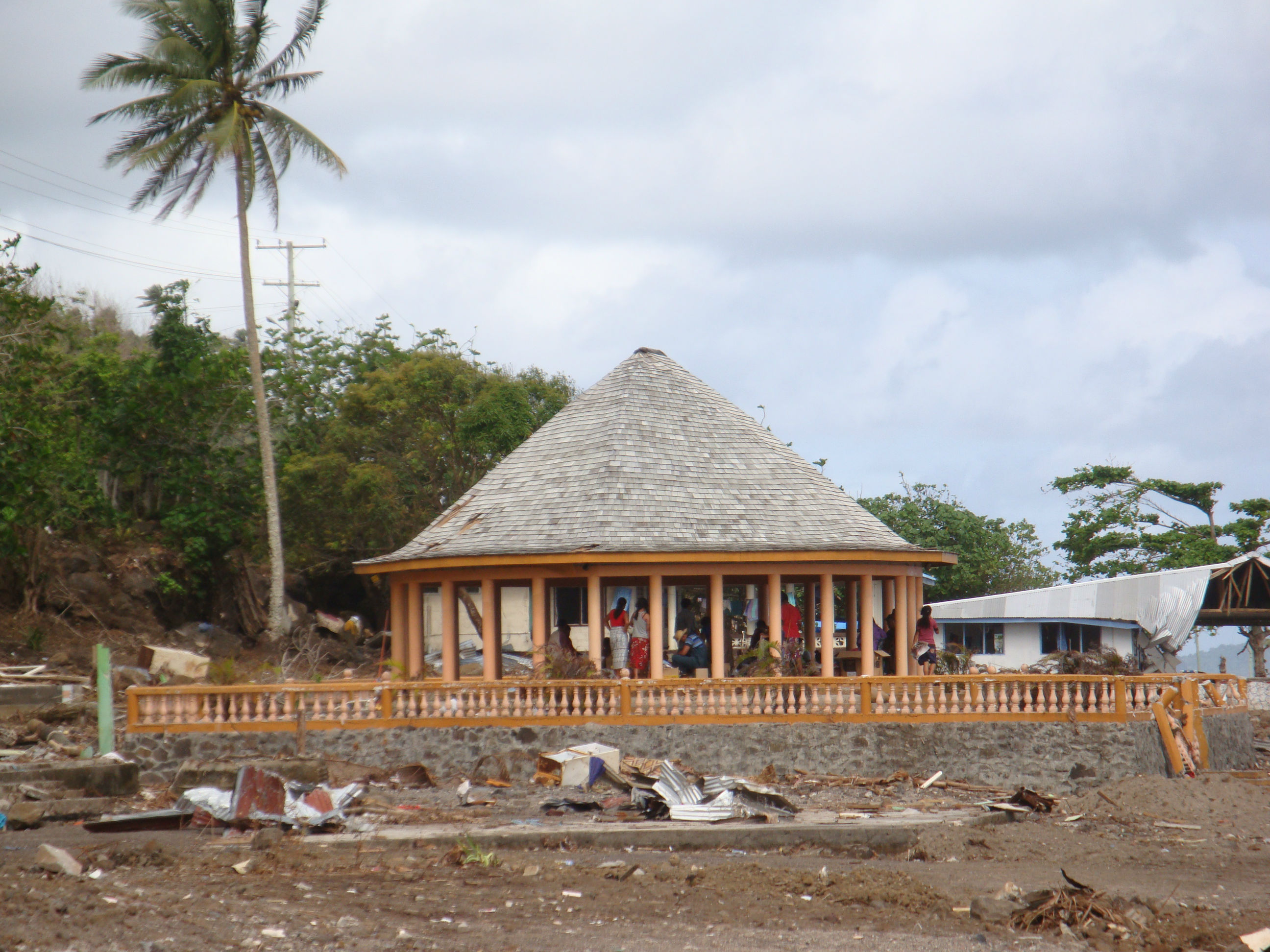
One of the authors interviews survivors a few days after the September 2009 South Pacific tsunami in the rubble of their communities in Samoa, as part of the UNESCO post-tsunami survey team reporting into the Prime Minister and King of Samoa. “It was a hard day for all of us,” says Dale Dominey-Howes.
Earth is destabilizing rapidly. Terrorism, conflict, genocide, human displacement, socio-economic disruption, rapid global environmental change, slow emergencies and natural disasters are more common than at any point in history. Consequently, opportunities exist for researchers to investigate the causes, consequences and potential management solutions arising from this instability. For this to happen, we need a well-trained workforce equipped with the skills and capabilities to work with ‘traumatic’ research content, people and places. Continue reading
 At the end of 2014, we set our Naturejobs podcast listeners, especially the PhD students, a challenge: Take control of your own careers.
Earlier this month I attended a one day careers conference in Edinburgh called Beyond the Ivory Towers, where 7 speakers took to the stage to share their transitions from academia into “other”. The “other” included law, entrepreneurship, research in industry, tech transfer, public engagement, clinical science, publishing, and more. What struck me about each of these speakers is that from the outside, it looked as though their careers had been perfectly planned from the day they started at a university. This was definitely not the case. Each speaker had their own challenges to face, from the expected (no more funding) to the unexpected (becoming allergic to rubber gloves).
Transitions are never easy, but there are things you can do to make them smoother. In this podcast I’m joined by two of the speakers, each one taking a different approach to tackling their transitions from academia into “other”
Elizabeth Fairley from EFB Services took an outward approach: find out what she needed to do to become successful in her chosen career in industry. This included going out and speaking to industry professionals who could give her insight into what her future career might look like and what she would need to do to make it.
Phill Jones from Digital Science took the inward approach: determine what skills I learned by self-reflection so that I can market them and sell them to industry. This included analysing what he had done whilst in academia, not just the technical stuff, and learning to convey it in an appropriate way.
Listen to the podcast to find out more!
Data, without a doubt, are the foundation of science. If you’re a researcher, your life is data: you spend your days generating it, analysing it, and writing papers about it. You share it with colleagues and collaborate on projects that will build on it and find new and exciting things. But policy makers, funders and universities are also involved in the conversation – each trying to solve the problem of managing the increasing influx of data whilst keeping the integrity of science high.
Last Friday, PhD students and postdoctoral researchers came to the Nature offices to learn about how research data affects a scientist’s ability to publish and get research funding. The event, Publishing Better Science through Better Data, consisted of a series of talks from editors, data curators, software developers and funding body representatives, all giving their perspective on how data affects scientific research and publishing.
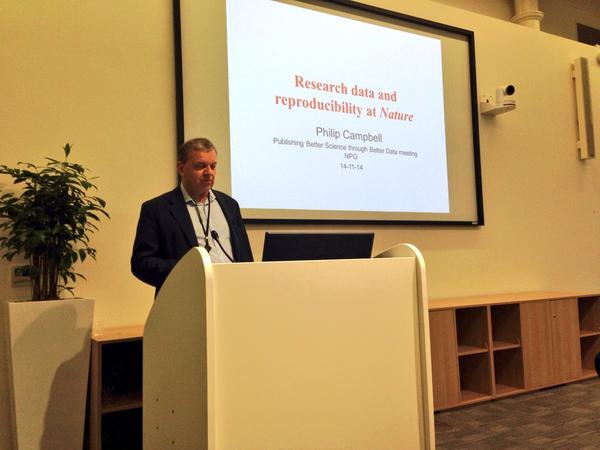
{credit}Image credit: Nandita Quaderi (@DrNandiQ){/credit}
The editor’s perspective
Philip Campbell, Editor-in-Chief of Nature and its sister journals provided an editor’s perspective and shared how Nature journal was handling the reproducibility problem: “It mostly consists of things that are bad or sloppy science, not fraud.” To minimize the amount of “sloppy science” being published in Nature, editors have put a check-list in place for scientists that they submit along with their papers, making the research process more transparent. “It’s improving the reliability of the design of experiments, which is what we want to see happening.” Continue reading