Most read on Naturejobs: May 2015

Building reputations, relocation, adjunct teaching and more have been the topics of choice in May 2015.

naturejobs-readsThis month the Naturejobs team have been working hard on the Boston Naturejobs Career Expo, which happened last week. It was a long, but great day and we want to thank everyone who got involved: Speakers, delegates, exhibitors, sponsors. THANK YOU!

For those that missed it, there will be reports on the event coming out on the Naturejobs blog next week, starting with a summary of the keynote speech by Professor Robert Langer on Monday June 1st.

But now I want to concentrate on May, and here’s a list of your Top Ten reads from Nature Careers and the Naturejobs blog:

1. To get respect in a field, scientists need to consider not just their work, but also their interactions with others, says Chris Woolston in Recognition: Build a reputation on Nature Careers.

2. Contract teaching positions are becoming the norm for many aspiring professors. Know how to make the best out of them, says Kendall Powell in Adjunct teaching: For the love of lecture on Nature Careers.

3. The postdoc series: Help for lost postdocs shows how self-reflection can help young researchers analyze their skills and plan for their futures. Continue reading

The faculty series: A big adventure

Becoming faculty is a goal for many scientists in academia, but the path is littered with hurdles, challenges and lessons to learn.

Naturejobs-podcastAccording to an ASCB infographic, less than 8% of biology PhD starters in the US will become faculty. Of course, there are many that start the PhD with no aim of becoming faculty, but many do have this goal. And for them, the competition can be fierce.

When the competition is tough, it’s worth arming yourself with as much information as possible. So, my goal over the coming months is to arm all potential faculty with as much information to get them started. This podcast launches the new series about becoming and being academic faculty on the Naturejobs blog. It’s a series of anecdotes from Dori Schafer and Brian Kelch, both faculty members at the University of Massachusetts Medical School.

Dr Schafer is new to the whole faculty job world (she started her faculty job in April 2015) and is still finding her way around as she moves into her laboratory and unpacks her microscope. Dr Lee has been a faculty member for a few years now, has settled in, but is still learning a lot of new things, especially about how he mentors his postdocs and PhD students. They, and other faculty, stresses just how difficult the job hunt can be. Not just because of the scarcity, but dealing with the emotional roller-coaster that accompanies it. From there they both give an insight into what it’s like actually setting up their labs, hiring staff and mentoring them throughout their careers.

Now I need your help: to develop the up-coming posts I need to hear your stories. So, if you’ve got any stories, experiences, lessons learned, Do’s and Don’ts that you would like to share with a wider audience, and that you think people can benefit from, please get in touch by leaving a comment below.

Update 03/06/2015: Sincere apologies to Brian Kelch, who was originally incorrectly named as Mike Lee in this Naturejobs podcast. The post and podcast have been edited to reflect the change of name. 


Check out the other posts in the faculty series:

An introduction

Applying for a job

Top 10 tips on negotiating start-up packages

Setting up your own lab

Nobody rides for free

Balancing the books

Becoming independent

Recruiting staff

Learning to collaborate

Applying for grants

A case study

Top 10 tips on managing your time as a PI

What does it take to be a mentor?

Conclusion


Transferable skills: Organizing a conference

Organizing events offers early career researchers an opportunity to develop transferable skills attractive to multiple industries, says Aliyah Weinstein.

Contributor Aliyah Weinstein

naturejobs-blog-aliyah-weinstein

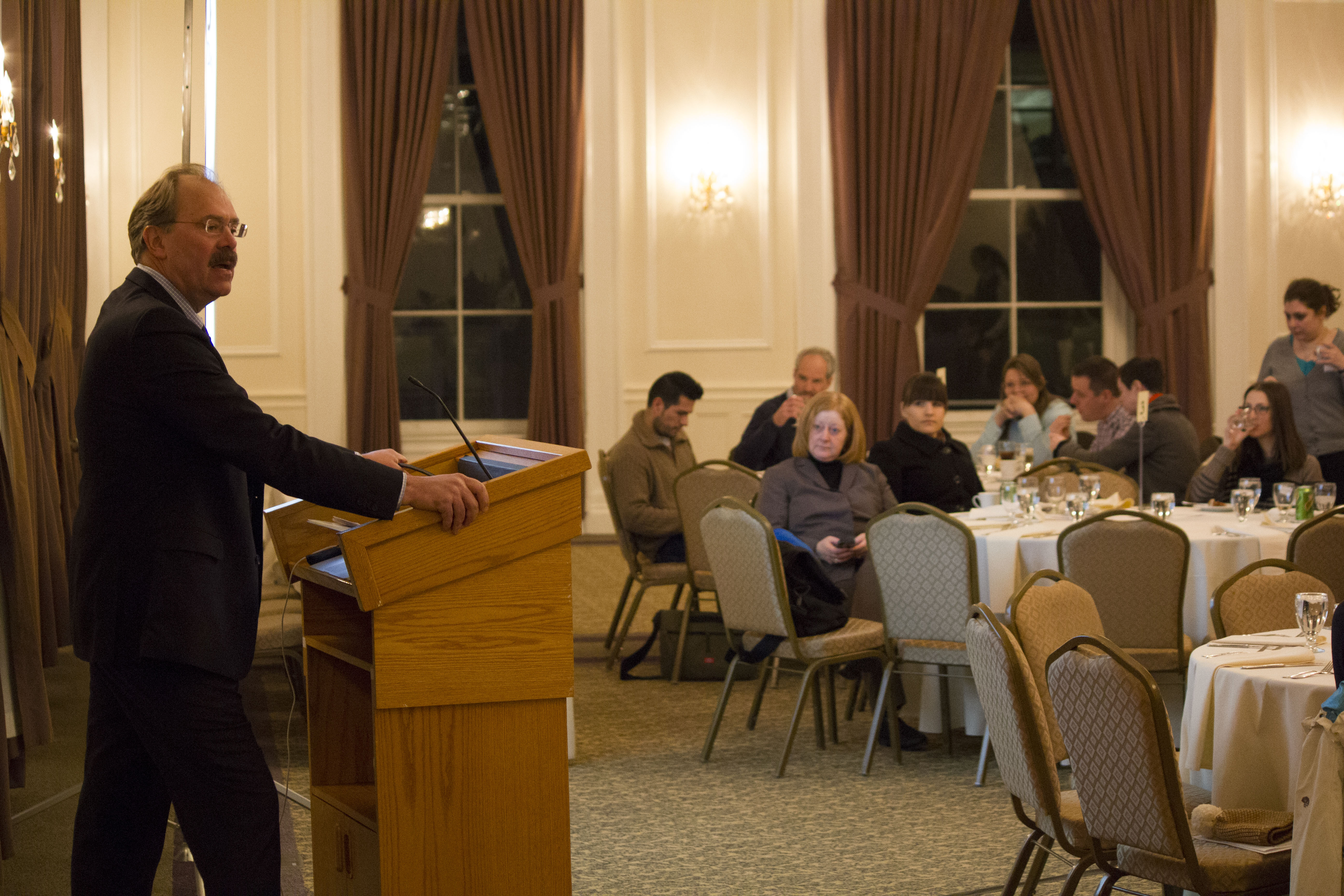
Dr. Wiley “Chip” Souba speaks at the Doctoral Directions conference, held March 5-6 at the University of Pittsburgh and co-organized by Alyce Anderson, Rachael Gordon, and Julie Boiko.{credit}Image credit: Jeremy Gale{/credit}

In an era when the career paths that PhD graduates will follow after graduation vary greatly, it is more important than ever that trainees are prepared to take on careers both inside and outside of the academy. The non-technical skills that are necessary to complete a PhD, including leadership, analytical skills, and time management, are useful in many career paths. However, it is often difficult for trainees to identify and nurture these skills while remaining focused on the technical skills required to complete their studies. Furthermore, the necessity for trainees to prepare themselves for a wide array of careers is unique to this generation of scientific trainees, and the mechanisms to prepare trainees to recognize and practice the skills needed to successfully navigate diverse career paths is lacking at many institutions.

One way that some students have found to take this task into their own hands is by organizing local scientific meetings. This provides not only the opportunity for trainees to present their work and connect with other members of the scientific community, but also to hone skills in networking, finance, and writing, among many professional skills that can translate to careers in and out of academia.

Networking

Conference planning provides opportunities for trainees to practice networking skills with more senior scientists. Alyce Anderson and Rachael Gordon, who for the past three years have been involved in organizing a professional development conference at the University of Pittsburgh, stress the importance of having an advisor involved in the conference planning committee. They recommend identifying a faculty member who has previously been involved in organizing meetings, to work with and learn from throughout the planning process. “Garner institutional support from people who work on professional development,” suggest Gordon and Anderson. Such faculty may support a conference by providing students access to their network of scientists outside of the home university as potential speakers, and guidance on the mechanics of putting together a successful meeting. Additionally, working with faculty is an opportunity for trainees to establish close relationships with them, opening the door to potential long-term benefits including further mentoring and letters of recommendation. Continue reading

The Boston Naturejobs Career Expo 2015

Entrepreneurship and taking control of your own careers are the themes for this years’ Boston Naturejobs Career Expo.

Naturejobs-career-expo-boston-2015The Naturejobs Career Expo in Boston is only 2 days away so it’s time for you to get your skates on and prepare yourself for the event. We’ve got a fantastic line-up of speakers this year, including Professor Robert Langer from MIT, entrepreneur Steve Blank and a whole host of other great influencers in panels and workshops.

Some important information:

Venue: Back Bay Events Center, 180 Berkeley St, Boston, MA 02116, United States

Date: May 20th 2015

Time: 9am – 6pm

Professor Langer and Steve Blank will both have an element of entrepreneurship in their talks. Langer’s entrepreneurial attitude has allowed him to see opportunities and ventures where others might not have (hence allowing him to take control of his own career! (He has over 1,080 patents worldwide, many of which have been licensed or sublicensed to over 300 pharmaceutical, chemical, biotechnology and medical device companies.)  Steve Blank has worked with hundred of scientists to see if they can get the right entrepreneurial attitude and get their ideas and products off the ground using a Lean method. I’ll be asking him why this attitude is so important, what the Lean method is and how scientists can adopt it.

I hope that throughout the day many of you that come will feel inspired by the speakers we have lined up for you, and that you too will come away looking to take control of your own careers. To make sure that you all get the most of the event and that you can start taking control of your own careers, here are a few tips on how to prepare for the event and navigate your way around whilst you’re there. Continue reading

Entrepreneurship: Discovering synergy

The entrepreneurial spirit is vital for science, says Diana Cai.

Contributor Diana Cai

entrepreneurship-naturejobs-blogFrom stories I have read (here, here, here, and here are just a few examples) and conversations I have heard, views of entrepreneurship within the scientific community at large have changed drastically since the mid-1970s. Before that time, entrepreneurship seemed to be spoken in a positive light by only a few scientists in hushed voices. To most in the community, entrepreneurship seemed to be incompatible with science. Science was associated with unbiased truth-seeking and healthy skepticism while entrepreneurship was associated with biased commercialization and aggressive sales. Since then, however, with 1) prominent academic scientists engaging in more entrepreneurial activities*, 2) the introduction of the Bayh-Dole Act in 1980 (allowing universities to take ownership of inventions) and 3) a decrease in federal funding for basic research (which encouraged scientists to turn to elsewhere for stable support) the negative attitudes towards entrepreneurism have largely dissipated. Scientists today have increasingly embraced entrepreneurship. More academic labs now than ever before are commercializing products and forming start-ups based on technologies developed or discoveries made in an academic lab. According to a 2011 Nature Methods editorial, between the establishment of the 1980 Bayh-Dole Act  and 2010, there have been more than 6,000 new companies formed from US universities.

While entrepreneurship is exciting, the entrepreneurial spirit is vital for science. The US Small Business Administration identifies an entrepreneur as “a person who organizes and manages a business undertaking, assuming the risk for the sake of profit”. These are traits that could easily describe a Principle Investigator, who, essentially, manages a lab of people who test ideas and budgets the resources of the lab for the different projects. However, these are only the most fundamental qualities of an entrepreneur. The most successful entrepreneurs have several more intangible qualities.

In a study of 2500 entrepreneurs, Gallup identified several characteristics that separate highly successful entrepreneurs from their less successful peers.  Among these characteristics are several that are most commonly associated with the entrepreneurial spirit: determination, risk taking, creativity and promotion.

Survival in science requires determination. It a characteristic that is probably found within almost all scientists as it is ingrained in us from the start. Most of us have had projects go awry, had confusing and perhaps directionless experimental outcomes, and experienced multiple rejections. But, we all know we need to find a way to overcome these obstacles, and in the end, we usually do. It is simply impossible to be in the field without being able to put up a fight and motivate oneself.

Beyond determination, risk taking and creativity are qualities that often set apart the best scientists. The most innovative work and amazing discoveries have often come from scientists who think unconventionally, take great risk, and do their research creatively. While performing safe research often leads to small, incremental progress, which is important and needed, well thought-out but risky projects done creatively are often what lead to the giant leap and catapult fields in new directions. There should be a balance between safe and risky research, but taking an entrepreneurial attitude reminds us it is important to be aware of this and not settle for the traditional methods and ways of thinking when more is possible.

Gallup also found that the most successful entrepreneurs are great promoters. Similarly, scientists need to not only be able to perform experiments and analyze data but also need to be able to sell their work so that society remains interested and excited about research, and thus willing and eager to support it. Additionally, no matter the experimental results, an enthusiastic presenter can still dazzle colleagues at conferences, publish in good journals and receive sizable funds to continue risky, creative science.  Hence, promotion in science, as in entrepreneurship, is necessary and rewarding.

Though scientists once viewed entrepreneurship with great skepticism and perhaps even repulsion, the science community has gradually come to embrace entrepreneurism and has become increasingly aware of the importance of an entrepreneurial attitude in science. If the recent years are any indication of the future, it is probably reasonable to assume that the boom in scientific entrepreneurism will continue for the foreseeable future, as scientists are increasingly looking for jobs outside academia and new companies are constantly formed from research done in academic labs.

Furthermore, while this article focuses mostly on the US, entrepreneurism seems to be regarded in a similar light by scientists in other developed countries. The embrace of entrepreneurism by scientists in developed countries has started spreading to emerging countries, with some of those countries enacting similar policies to the Bayh-Dole Act. While some of the emerging countries, most notably China ($), have seen much growth in scientific entrepreneurism in the past decade, it will be interesting to see if the trends continue in a similar manner and as rapidly as the development of scientific entrepreneurism in developed countries.

*ie: founding of Biogen by Walter Gilbert, Sir Kenneth Murray and Phillip Sharp, and founding of Genetics Institute by Thomas Maniatis and Mark Ptashne
diana-cai-naturejobs-blog

{credit}Image credit: Diana Cai{/credit}

Diana Cai is a winner of the 2015 Boston Naturejobs Career Expo journalism competition. She is also a graduate student in the Genetics and Genomics Program at Harvard, where her thesis research is in the realm of cancer biology. She was previously an undergraduate at Columbia, where she majored in biochemistry and performed research to better understand neural development. 


In the classroom: Creativity unleashed

A few building blocks is all it takes to stimulate scientific curiosity in students, says François Grey.

Nature-nanotechnologyMany will agree that academic hands-on projects are more effective than long lectures in enticing students’ interest. A practical approach is best suited in particular for interdisciplinary subjects such as nanotechnology, and can help breaking the ice between fellow students in a classroom, and foster learning. In our May issue of In the classroom, François Grey tells us how he has used a hands-on approach to engage students of the summer school LEGO2NANO, held annually at Tsinghua University, in learning about nanotechnology. He challenged student teams to come up, in a week time, with a prototype atomic force microscope that could be used in Chinese schools – with a maximum budget of US$1000.  Lego blocks were used among other cheap components, and students were inspired to develop their creative skills. On the back of the success of LEGO2NANO, François is also involved in the launch of a more permanent initiative, called Lifelong Learning Lab, aimed at fostering creativity in the classroom.

Read François Grey’s article, Creativity unleashed, for free on the Nature Nano website.

Work/life balance: New definitions

The scientific culture needs to redefine work/life balance so that each person can find their own route to it, says Susan Gelman.

Contributor Susan Gelman

Which way now?

Find your own way {credit}iStockphoto/Thinkstock{/credit}

Research science is an incentive-based career: journal publications, tenure, grant funding, fellowships, awards, etc. It is certainly not unique in this aspect, but its extreme competition does set it apart. When you commit to a research path you are not only committing to become proficient in a general subject area, but to become one of the most knowledgeable people in the world on a very specific topic, creating an environment of extreme pressure and induce tunnel vision. And so, there are many fears and anxieties that go hand-in-hand with being a scientist, including  getting ‘scooped,’ becoming the 8th year Ph.D. student, doing multi-year projects producing no valuable data. So as tempting as it can be to take a weekend off or leave the lab while it’s still light outside, we often remain in our windowless workspaces late into the night out of guilt. We worry that a scientific career won’t wait for us.

However a major problem is that science culture not only expects but also celebrates the dedicated lab rats. Many of us are secretly in awe of their work ethic, even if we don’t necessarily want it for ourselves. We hear whispers of legends renowned for spending 80 hours a week buried in the lab and wonder if we should be doing the same. And therein lies the rub: we can’t cry out for work/life balance and yet still yearn to be the ones always burning the midnight oil. Continue reading

Career paths: Should you follow in the footsteps of your idol?

Idols are a key source of enthusiasm, says Anthea Lacchia, not people you should try to emulate.

Contributor Anthea Lacchia

forest-path-naturejobs-blog

{credit}Image credit: PHOTOALTO{/credit}

When it comes to choosing a career, the options can feel infinite and yet non-existing, as though we are navigating through a dense forest, with endless paths stretching out in front of us.

As we scramble through the thick undergrowth, armed with hope and guided by experience and intuition, we ask ourselves: which path is the right one for me? How can I get to that coveted position? How did that person make it? Why can’t I be like them?

It can be tempting to emulate the career choices of our idols: after all, the decisions they made led them to where they are now. So following in their footsteps could be the way out of this forest.

So we trawl through online bios and CVs to see what it is that got them to their current role, increasingly feeling inadequate and underprepared for the careers we hope to follow. Continue reading

In the classroom: From nano to micro and back

Working in large collaborations can help you understand how nanotechnology is closely related to other fields.

Nature-nanotechnology

When studying nanotechnology it is common to learn that structures with nanoscale dimensions have unique physical and chemical properties, which differentiate them from particles of bigger sizes. But things are not always as disconnected as they may seem. While working on the synthesis of microbubbles to be used as multimodal contrast agent, Elizabeth Huynh discovered that nanoparticles formed by the destruction of her porphyrin particles of micrometre size by ultrasound would retain some of properties of the larger structures. Most importantly she came to her conclusions after intensive collaboration with colleagues with different expertise, showing her that nanotechnology cannot really work as isolated discipline.

Read Elizabeth Huynh’s article going from nano to micro and back on Nature Nanotechnology for free.

Work/life balance: An artificial construct

If work/life balance is unachievable, people should focus on acknowledging that life is a journey, not a goal, says Melissa Greven.

Contributor Melissa Greven

166620662_istock_thinkstock decision

{credit}iStockphoto/Thinkstock{/credit}

As a Ph.D. student who returned to science after a long absence (which included a brief career as an art historian and time as a stay at home mother, among other things), I take issue with this question.

It implies that scientists are somehow different than professionals in other disciplines, as though achieving this balance is more difficult for our lot. One may assume that scientists face unique demands, where bench work often lacks the regularity of a 9-5; however, scientists encompass a far greater population than just lab rats. It also might be said that scientists face the pressures of getting research done, be it discovering the next miracle drug or fossil fuel alternative, but how does this differ from a corporation preparing for the latest product launch? While an argument could be made about the necessity of the latest smartphone update, a non-bench/field scientist sitting behind a desk likely is not subject to additional public accountability than that faced by an employee of a tech company. The greater question is: can anyone achieve a work/life balance? Continue reading