Your best work might be just around the corner

A recent finding shows that a scientist’s career can peak at any age.

Ever wonder when you’ll publish that big paper that’ll win you the Nobel Prize (or at least a new research grant)? Turns out, it could be your next.

As Nature News reports, a new equation, developed by a team led by Albert-László Barabási at Northeastern University in Boston, Massachusetts, shows that papers published at any point in a scientist’s career have equal chance in becoming their most highly cited work. It might be sensible to keep that in mind the next time you’re struggling through centuries of data analysis, or when your thumb starts to bruise from more and more mindless pipetting.

You can watch a video explainer below, and find the paper here.


Suggested posts

How to get published in high-impact journals: Big research and better writing

Writing for international journals: tips and techniques

Nature Masterclasses: Writing for highly-selective journals
 

Away from home: Modeling biology

We’re bringing you the best stories in lab mobility from Nature India

Every Tuesday, our ‘Away from home’ blog series features one Indian postdoc working in a foreign lab recounting his/her experience of working there, the triumphs and challenges, the culture factor, tips for Indian postdocs headed abroad and what he/she misses most about India.

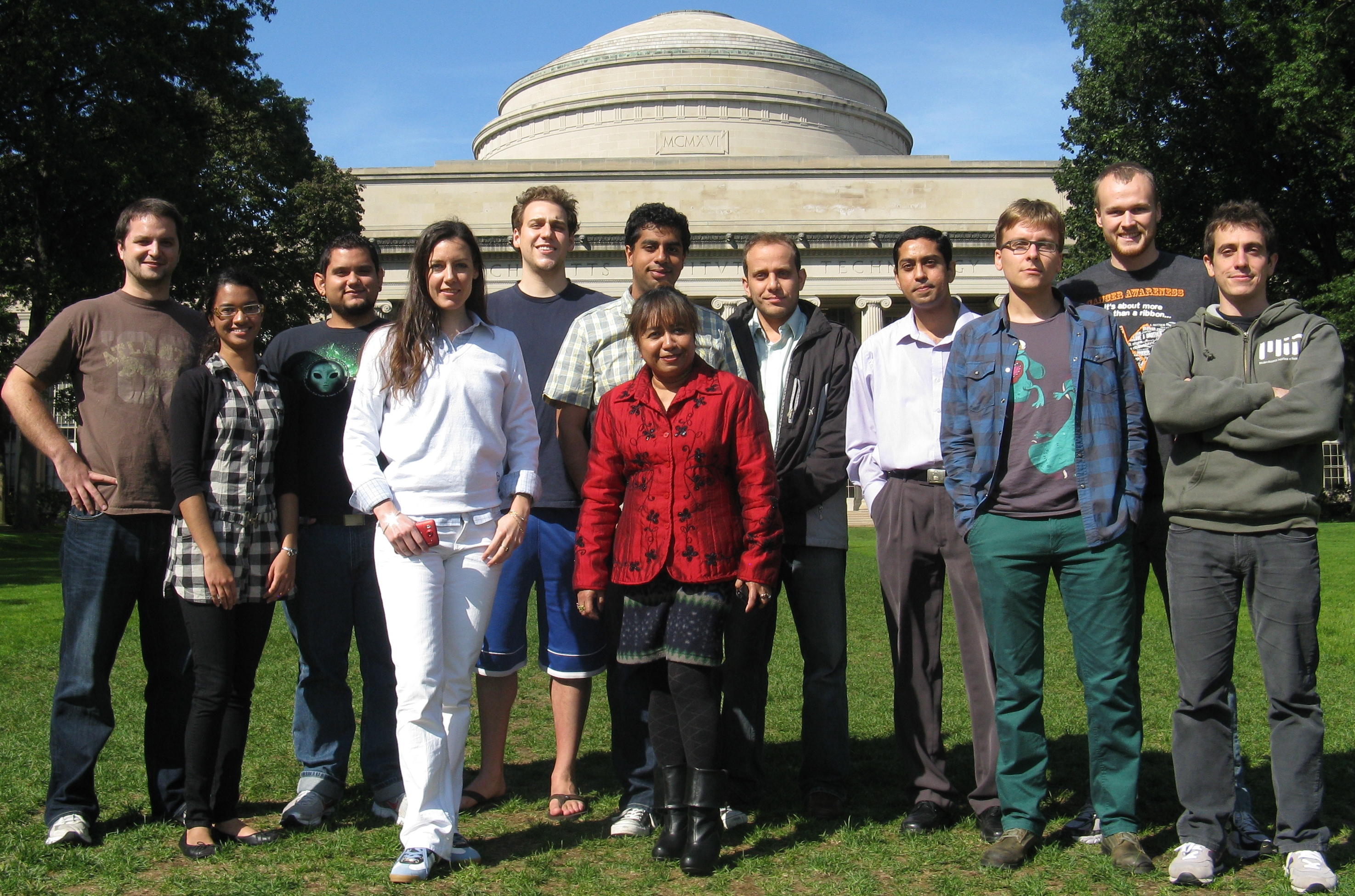
This week we feature synthetic and systems biologist Kayzad Nilgiriwala working as a postdoc at Massachusetts Institute of Technology (MIT), Cambridge, USA. Kayzad completed his Ph.D. (Microbiology) at Bhabha Atomic Research Centre (BARC), Mumbai, India and wants to import some strong points from the US research scene when he comes back home.

Kayzad Nilgiriwala with his new lab

Continue reading

Bonding in Boston: The importance of networking in science

Naturejobs journalism competition winner Ashish Nair finds new hope at our Boston career expo.

A long time ago in a land galaxy far far away, there was a great gathering where those weary of the well-trodden trail of tenureships and grants repaired themselves. The gathering in question was the Naturejobs career expo, a free one-day event organized for students and scientists alike. Featuring some truly inspiring speakers, it gave a much-needed boost to my hope for a career in science that can be both emotionally and financially (yes, $$$) satisfying.

Continue reading

Finding job satisfaction as a data scientist

Following your interests and making connections can launch a career.

Unlike most US students, Nathan Sanders declared his specialty as soon as he started undergraduate studies. He’d known for years that he wanted to study astronomy, but during his PhD at Harvard University he realized that the analysis itself enthralled him more than the applications for astronomy. He describes how he used his technical skills, and connections outside his academic program, to launch his career.

NSanders_portrait_2016-smaller Continue reading

The Boston #NJCE16 – Inspiration, skills, and passion

Four simple steps will help you find a career to be happy in, says Naturejobs journalism competition winner Judith M. Reichel

Find a job you love – and you will still have to go to work every day. There are plenty out there; some are great, some are a stepping stone, and some will simply pay the rent. The key is to identify your own strengths and passion, in order to find the perfect job for you.

happy legos-smaller

{credit} Sunny Ripert/Flickr {/credit}

Continue reading

Career paths: What do you need to think about before taking your next step?

Before choosing a new career path, take the time to get to know yourself, and you may be surprised at how well things fall into place.

 Naturejobs journalism competition winner Mary Gearing

Any career, scientific or otherwise, is the product of choices. In my own path in science, the first set of choices was clear: major in biology, conduct undergraduate research, enroll in a PhD program. This was a comforting, well-trodden path, but it left me unprepared to make the next big decision: my post-PhD direction. Now, as I near the end of my graduate studies, I’ve realized that this decision is much simpler than I thought. The most important tool for a career change is self-awareness – the willingness to analyze yourself as thoroughly as you would any key experiment.

Continue reading

Balance: Can scientists really have work/life balance?

Do we need to choose between life and science? No. If we learn to delegate and lose our perfectionism, we can have it all.

Naturejobs journalism competition winner Judith M. Reichel

Science is a balancing act. There are experiments to be run, grants to be written, manuscripts to be published, students taught, and conferences to attend. It’s not surprising then that the life of a scientist is a balancing act as well. But how can we balance it, and can we “have it all”?balance-716342_960_720

Continue reading

How to answer: Behavioral questions

Based on advice given by Sarah Cardozo Duncan at the Naturejobs career expo, Boston. Sarah has 20 years’ experience in recruitment and career development as career strategist based in Boston.

Naturejobs career expo journalism competition winner Ulrike Träger

You’re in the interview for your dream job. You give a great presentation on your work. You looked up the company, their work and the person interviewing you. All is going well. Until someone asks “please give us an example of when you had a conflict with your boss”. You start to sweat. You don’t know what to say. You stutter. You didn’t prepare for this type of question.

{credit}iStockphoto/Thinkstock{/credit}

Continue reading

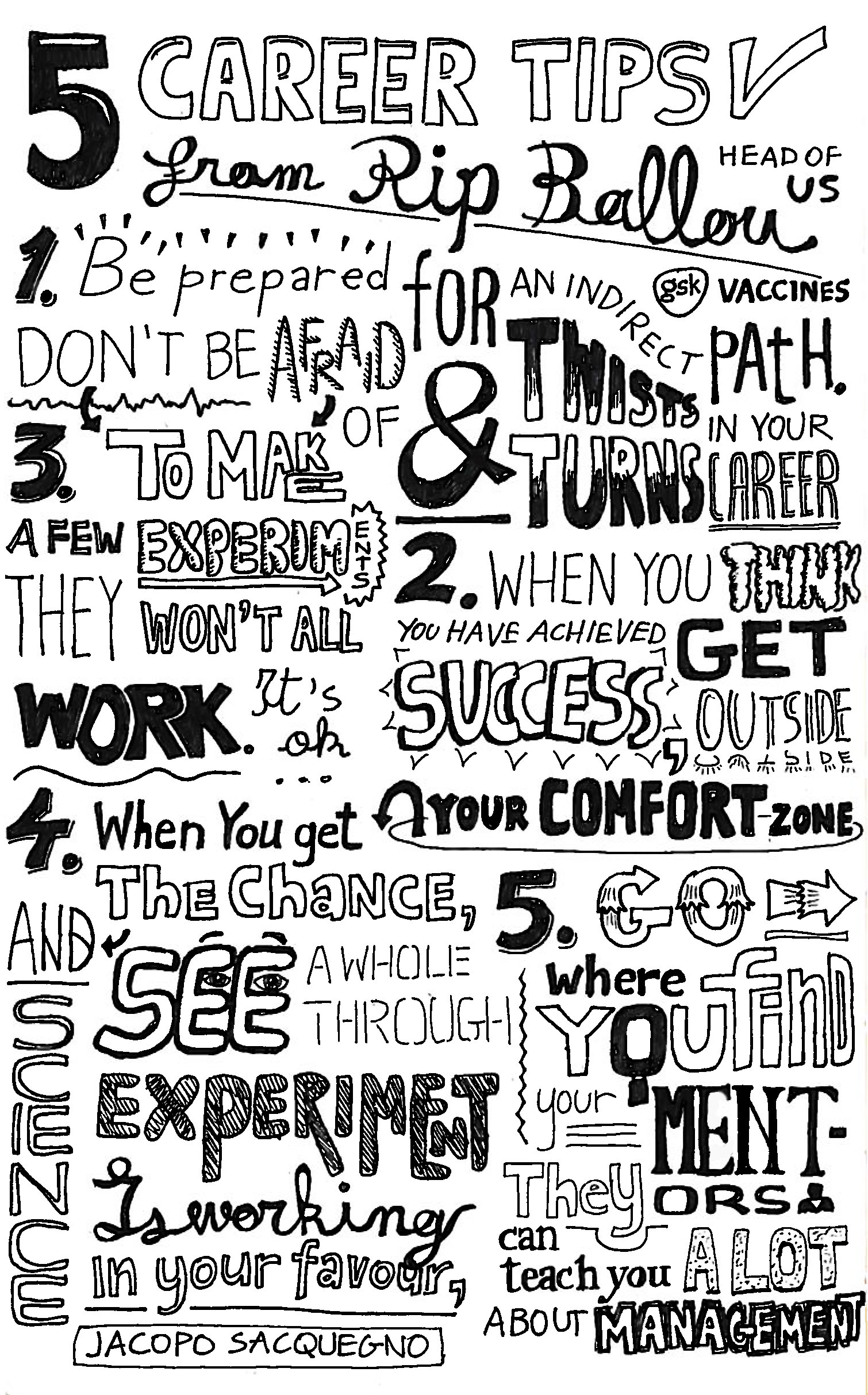
Five career tips from Ripley Ballou

We sat down with Rip at the Naturejobs career expo, Boston, to talk about his career and the advice he would give to other scientists starting theirs.

Rip’s had an interesting life; he started his career as a researcher at the US army’s Walter Reed Institute of Research, where he once exposed himself to malarial mosquitoes in a bid to see if his malarial vaccine worked. It didn’t, and that experience has motivated him in his career ever since. He’s now the head of US vaccines at GSK.

Here’s a word art graphic of five points from Rip’s talk, by Jacopo Sacquegno.

Sketch_5Tips_tweet_NJCE-smaller

{credit}jacopo sacquegno{/credit}

Continue reading

Highlights from the Naturejobs Career Expo

We run a quick summary of yesterday’s #NJCE16

What are the best ways to make yourself into the most appealing job candidate? How do you perfect your CV – or resume? And what should you do before, during and after a job interview?

These questions and many more were answered Wednesday at our Naturejobs Career Expo in Boston, Massachusetts. We had speakers from academia, industry, government and non-profits, who presented crucial information on navigating your career during a day of conference sessions and workshops. We’ll post lots more about these secrets in days and weeks to come, but here’s a sneak preview.

Continue reading