Reshaping the research landscape

A 12 April report from the US National Academies of Sciences, Engineering, and Medicine offers ideas for reshaping the landscape of life-science research across all career levels in the US biomedical research pipeline.

laboratory-2815640_1920

The proposal from the advisory body in Washington DC calls for more career counselling at the graduate and postdoctoral levels, better data on career outcomes at those levels, three-year caps on postdocs under principal investigators and new non-tenure track academic research positions, among other changes. To implement all the proposals would require a US$2 billion increase to the US National Institutes of Health (NIH)’s budget, as well as subsequent budget raises to prevent future funding bottlenecks.

Continue reading

Where are the female first and last authors?

Women remain under-represented in many areas of science, but they are especially scarce in the pages of high-impact journals, according to an analysis published online 2 March in bioRxiv.
scales

Researchers at the University of Washington in Seattle gathered names of first and last authors from papers published from 2005-2017 in 15 major science and neuroscience journals, including Nature, Science, PNAS, Nature Neuroscience and Neuropsychology Review. Nearly 10% of the names were excluded because they were relatively gender neutral, but the rest told a clear story: In these journals, authorship is a male-dominated enterprise.

For example, women accounted for roughly 25% of all first authors in Nature and Science and just over 35% of first authors in PNAS. Female first authors outnumbered men in only one journal, Neuropsychology Review, but just barely (53% vs 47%). Women made up an even smaller proportion of senior (or last) author spots, ranging from about 15% in Nature and Science to just under 40% in Neuropsychology Review.

The study found an inverse relationship between the prevalence of female authors and the impact factor of the journal—the higher the impact, the lower the chances that a woman was involved. Because publication in high-impact journals is so crucial for a scientific career, any gender gap could have serious consequences, says Ione Fine, a neuroscientist and co-author of the study. “If you aren’t published in high-impact journals, you don’t get awards or jobs,” she says. “It becomes a cascade of events.”

The scarcity of women in journals doesn’t simply reflect a lack of women doing high-quality science, Fine says. The study notes that roughly 30% of prestigious R01 grants from the US National Institutes of Health go to women. But in almost all of the journals studied, the percentage of women in senior author spots falls below that mark, a sign that the gender disparity in authorship exceeds disparities in other measures of academic excellence and productivity. “That’s the smoking gun that we have a real problem here,” she says.

Subtle biases by reviewers may make it harder for women to get published, Fine says. But she notes that women themselves may be contributing to the gender gap through a reluctance to submit to top-tier journals. “My feeling is that women are self-censoring because it’s just a more brutal process for them,” she says. “I know my male colleagues submit papers that I wouldn’t submit, and they seem to do just fine.”

Fine and colleagues call for all journals to keep statistics on papers submitted by women and minorities. They also suggest that journals could greatly reduce the possibility of bias by adopting mandatory double-blind reviews, a system in which the reviewer doesn’t know the identity—or the gender—of the study’s authors. Nature and other journals provide double-blind reviews on request, but Fine says that practice won’t protect women from bias. If an author requests double-blind review, she says, the reviewer is likely to assume that the request came from a female researcher, thus defeating the purpose.

In response, Nature Research, the parent organisation of Nature, issued a statement that read, in part: “Nature Research is committed to gender equality and our journals strive to support women in science.” The company says that it does not ask submitters to indicate gender, so it doesn’t systematically track gender statistics. It also says that it will “continue to assess the merits” of mandatory and voluntary double-blind reviews.

A 2017 Nature editorial noted that the journal has made slow progress in other areas of gender equality. For example, women accounted for just over 20% of reviewers in 2015, a small improvement over previous years. In 2013, 13% of reviewers were women. But Fine says that hiring more female reviewers won’t necessarily close the publication gap. “Women can be biased too,” she says.


Chris Woolston is a freelance writer in Billings, Montana.


Suggested reading:

Women in physical sciences

Fight the brain drain

Science is failing women


Abandon ship, or learn to swim: the gamble young scientists must make

For scientists, there’s nothing more frightening than a major grant rejection. With the scarcity of funding at the forefront of everyone’s thoughts, it’s time to talk about options, says Atma Ivancevic.

Job stability and a career in research are rarely put together. Science is a windy, grueling, uphill climb that might end abruptly at the edge of a cliff. Halloween is a particularly scary time for Australian scientists, as it signals the release of #NHMRC project grant results. Right now, many laboratories are facing difficult decisions due to rejected funding for next year. It’s not a surprise — we see it everywhere — yet it’s a shock that affects the entire scientific community. For early career researchers across the globe, it’s a timely reminder to carefully consider and plan for the future.

So, what are your options?


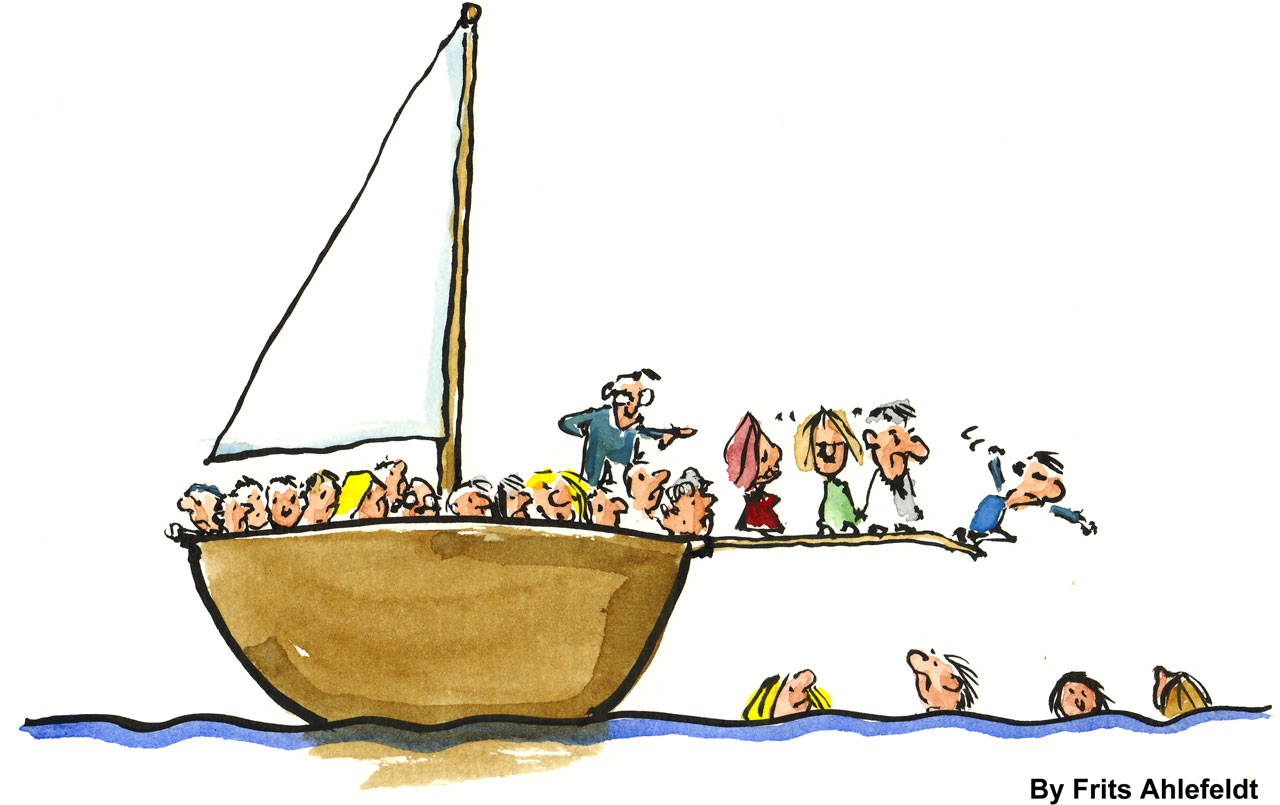
fritsahlefeldt

Continue reading

Human Pipettes: Scientific training and education in biomedical research

David Rubenson and Paul Salvaterra share their thoughts on a damaged and damaging research system

A recent cancer research symposium displayed a familiar asymmetry. 90% of the attendees were PhD students or postdocs sitting obsequiously in the rear and asking 10% of the questions. 10% of the attendees were front-sitting faculty providing 90% of the inquiries.

A simple case of youthful hesitancy and opaque presentations requiring years of experience to comprehend? But did individual Principal Investigators (PIs) meet with conference planners before advising their students to attend? Did conference planners consider the likely audience and ask speakers to modify their talks? And did faculty members attend the related trainee poster session?


Are junior scientists little more than human pipettes?

Are junior scientists little more than human pipettes?{credit}Paper Boat Creative/Getty{/credit}

Continue reading

ERC grants competition opens

The European Research Council (ERC) in Brussels, an independent funding body supported by the European Commission, has announced €1.86 billion (US$2.2 billion) in four types of 2018 grants for early- and mid-career principal investigators (PIs).

piggybankApplications for two grant schemes open on 3 August, including ‘Starting’ grants of up to €1.5 million for up to 5 years for PIs who earned their PhD within 2-7 years ago; and a new collaborative programme, the ‘Synergy’ grant, which will fund 2-4 PIs in a cross-disciplinary project. The Synergy scheme, which awards up to €10 million for 6 years, was piloted in 2012 and 2013. The deadline is 17 October for Starting grant applications and 14 November for Synergy applications.

Applications for ‘Proof of Concept’ grants will be accepted starting in September, and for ‘Consolidator’ grants starting in October.

The 2018 grant programme will collectively fund about 900 PIs and is estimated to support 6,000 PhD students, postdocs and other lab members. ERC’s grant-success rate is 10-15%.

To apply for a Starting grant, click here . For a Synergy grant application, click here.  Good luck!


Women in science: Fight the brain drain

The world needs science. Science needs women,” reads the L’Oreal-UNESCO women in science strapline. We agree.

Last week, Julia Etulain was sitting in a lobby of a hotel in Paris, far from her hometown of Buenos Aires, Argentina. She explained her research energetically, occasionally apologising for near-perfect, short-sentence, staccato English.

Julia Etulain {credit}Photo via ParaBuenosAires/thebubble{/credit}

Continue reading

On academic job insecurity and the ultimate tenure

Thoughts from Contract No. 17.

By Mila Petrova.

My latest mini-meltdown came after eight years in research employment, at the beginning of Contract No. 17. It came late. I’d lost a couple of thousand GBP from moving out hastily, lived for two months with my mum, moved far from the city of my university to use the affordable seaside lets in winter, and was about to live out of a suitcase in a youth hostel while my “permanent” accommodation became free. Three masters, PhD, top UK University and all. Most read paper of the month and a “will be delighted to hear about your ongoing work” letter from a senior parliamentary official in my inbox.

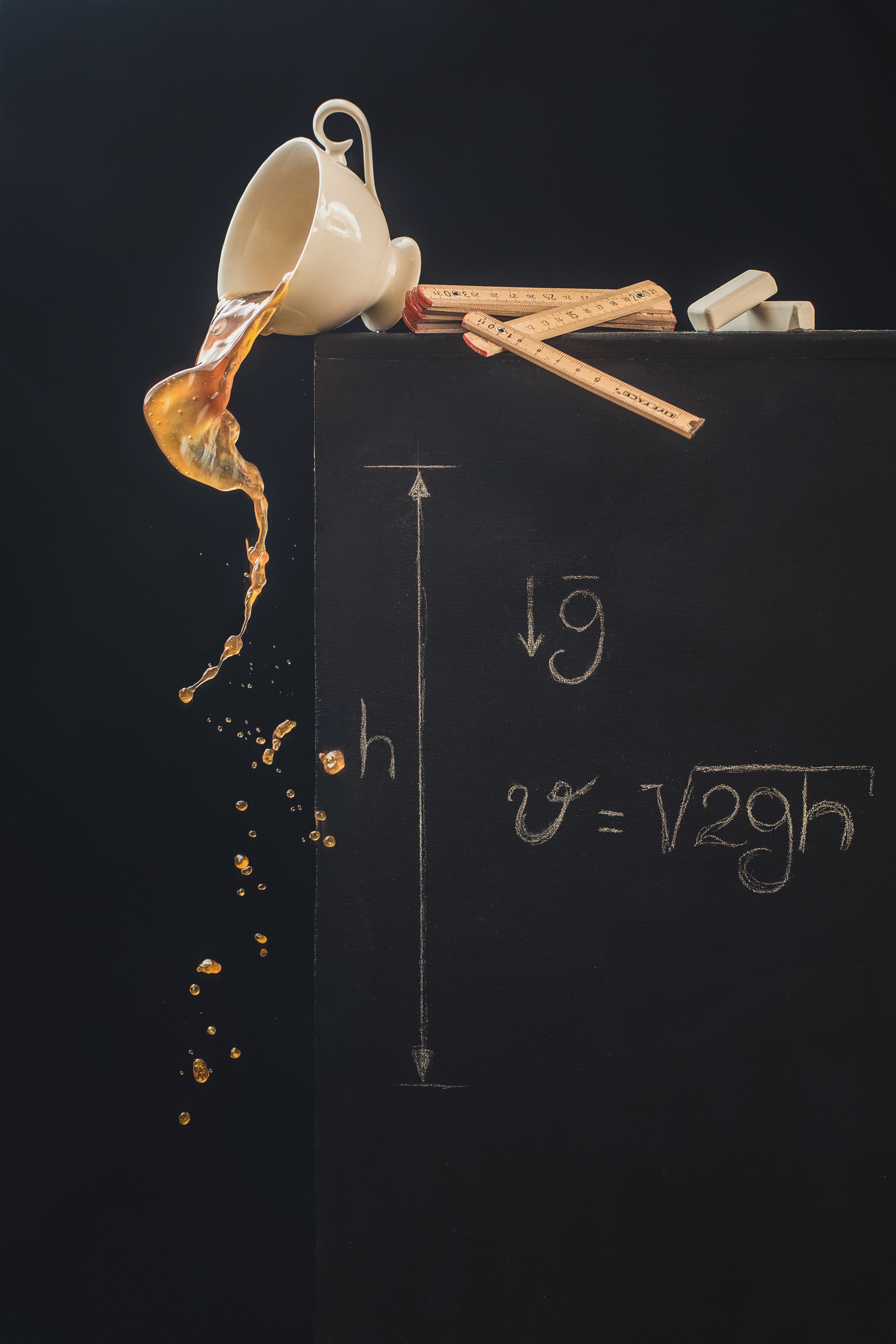
A coffee cup falling from chalkboard with formula of speed.

Continue reading

Your best work might be just around the corner

A recent finding shows that a scientist’s career can peak at any age.

Ever wonder when you’ll publish that big paper that’ll win you the Nobel Prize (or at least a new research grant)? Turns out, it could be your next.

As Nature News reports, a new equation, developed by a team led by Albert-László Barabási at Northeastern University in Boston, Massachusetts, shows that papers published at any point in a scientist’s career have equal chance in becoming their most highly cited work. It might be sensible to keep that in mind the next time you’re struggling through centuries of data analysis, or when your thumb starts to bruise from more and more mindless pipetting.

You can watch a video explainer below, and find the paper here.


Suggested posts

How to get published in high-impact journals: Big research and better writing

Writing for international journals: tips and techniques

Nature Masterclasses: Writing for highly-selective journals


Bonding in Boston: The importance of networking in science

Naturejobs journalism competition winner Ashish Nair finds new hope at our Boston career expo.

A long time ago in a land galaxy far far away, there was a great gathering where those weary of the well-trodden trail of tenureships and grants repaired themselves. The gathering in question was the Naturejobs career expo, a free one-day event organized for students and scientists alike. Featuring some truly inspiring speakers, it gave a much-needed boost to my hope for a career in science that can be both emotionally and financially (yes, $$$) satisfying.

Continue reading