The Naturejobs Career Expo – some secrets to scientific success

Naturejobs journalism competition winner Eileen Parkes

Over one thousand scientists attended the Naturejobs Career Expo last week in London. With professional CV checking, exhibitors from academic institutions and companies from around the world, and career-focused talks from Nobel Prize winner Professor Venki Ramakrishnan, science communication expert David Urry, popular blogger and senior lecturer Dr John Tregoning and many more, this was a resource-packed event for researchers.

Spending the day absorbing so much great careers advice left me feeling punch-drunk by the end.  Some themes cropped up repeatedly — distilled wisdom on scientific success.
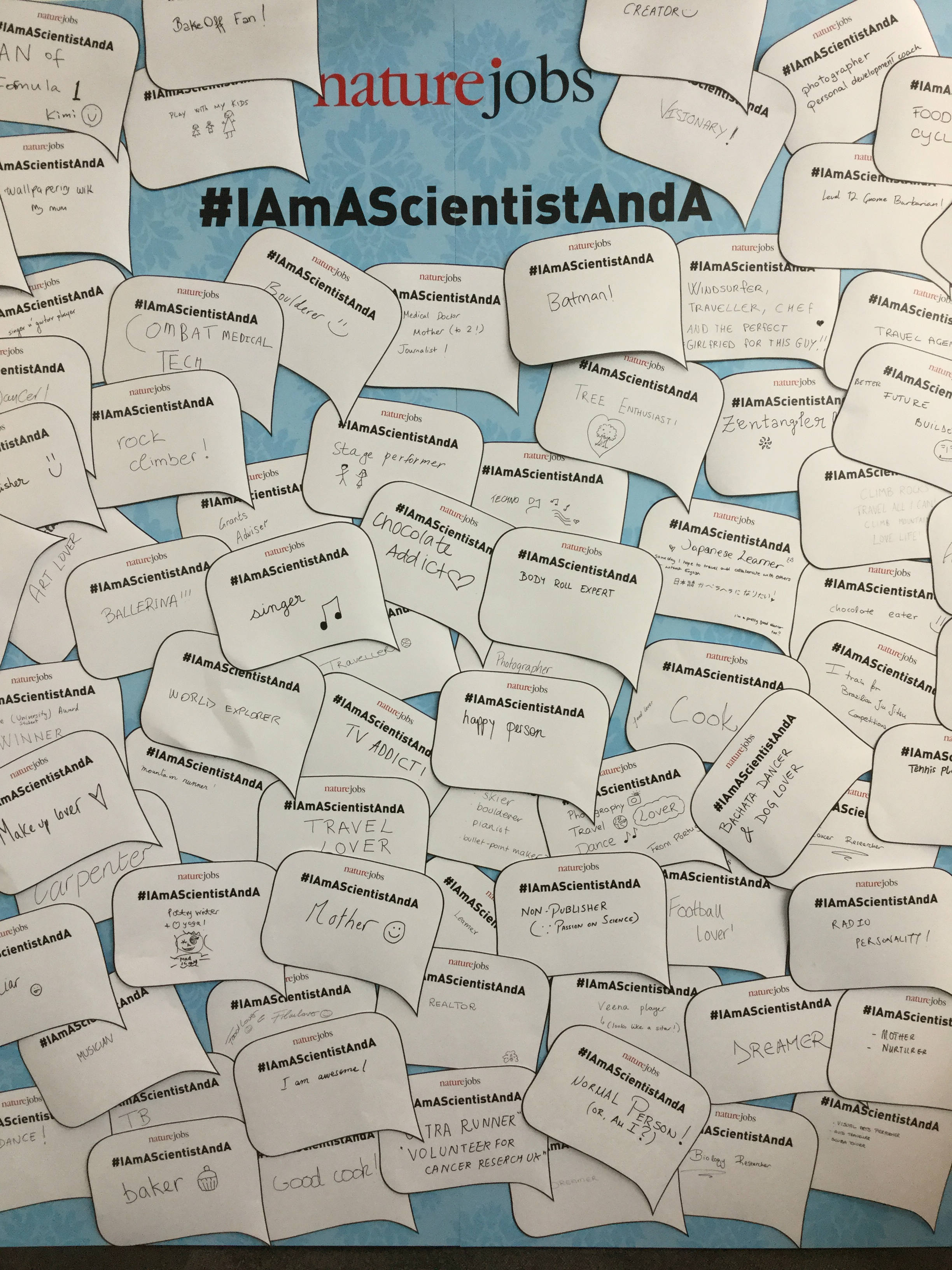
Some of the submissions to the Naturejobs Career Expo photoboth

Some of the submissions to the Naturejobs Career Expo photoboth

Continue reading

Do it for science – not for tenure

Career advice from a Nobel Laureate

By Judith Reichel

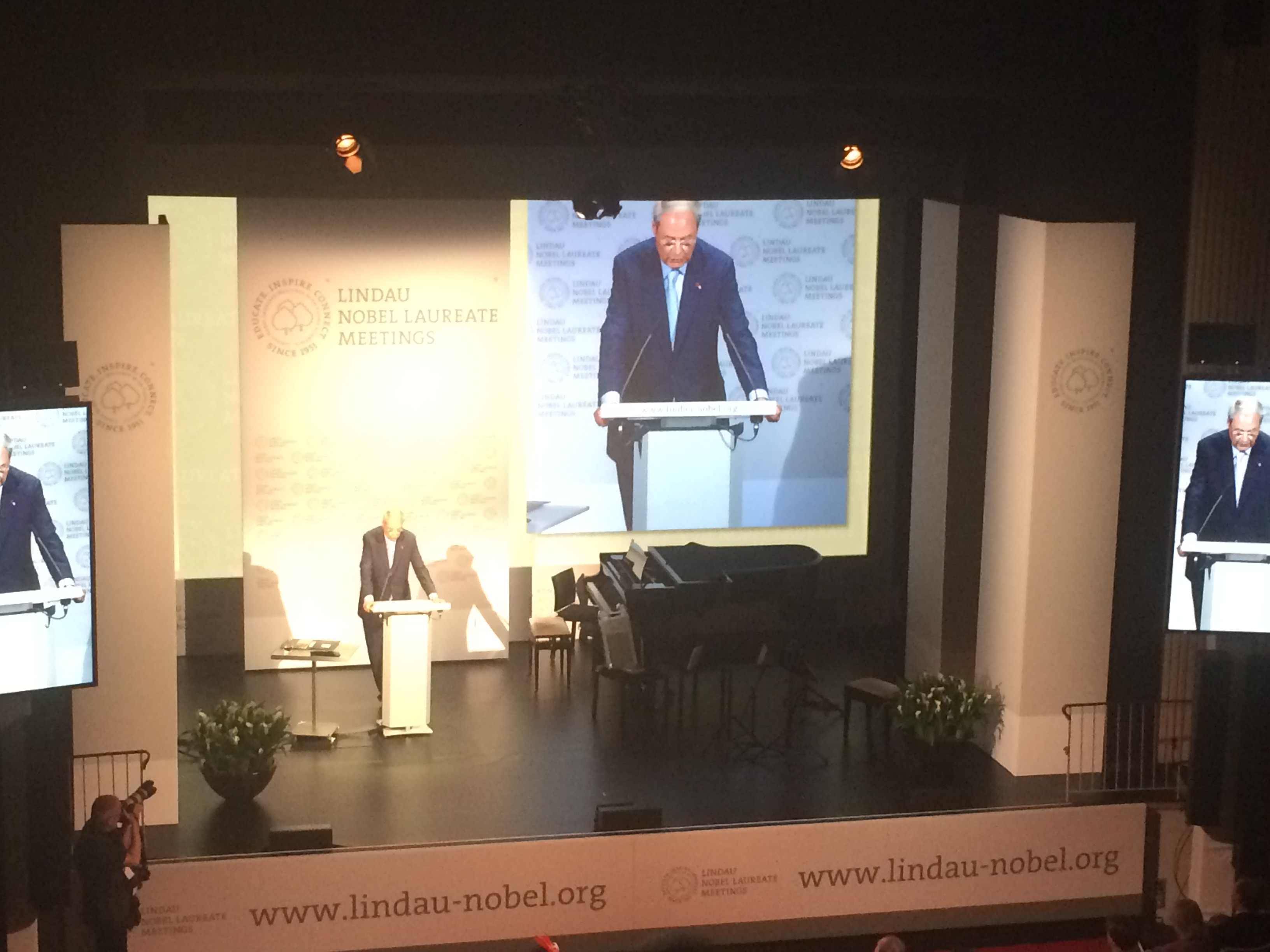
I recently had the pleasure of joining the 67th Lindau Nobel Laureate meeting at Lake Constance in the south of Germany. The weeklong meeting alternates its main focus between chemistry, physics, and medicine & physiology each year — the three categories of natural sciences the Nobel Prizes are awarded for. This year the focus was back on chemistry, and I was lucky enough to be invited by the organisers to cover the event on their blog.

Throughout the week I met handpicked junior researchers, talented fellow science communicators and journalists, and — above all — sat down with Nobel Laureates for one-on-one interviews.

One of them was Martin Chalfie, who won the 2008 prize in Chemistry with Osamu Shimomura and Roger Y. Tsien for their development of the now widely used Green Fluorescent Protein (GFP) tag. Inserting the gene sequence for GFP into a host organism produces the protein within a cell, which allows for the visualization of intricate biological processes.

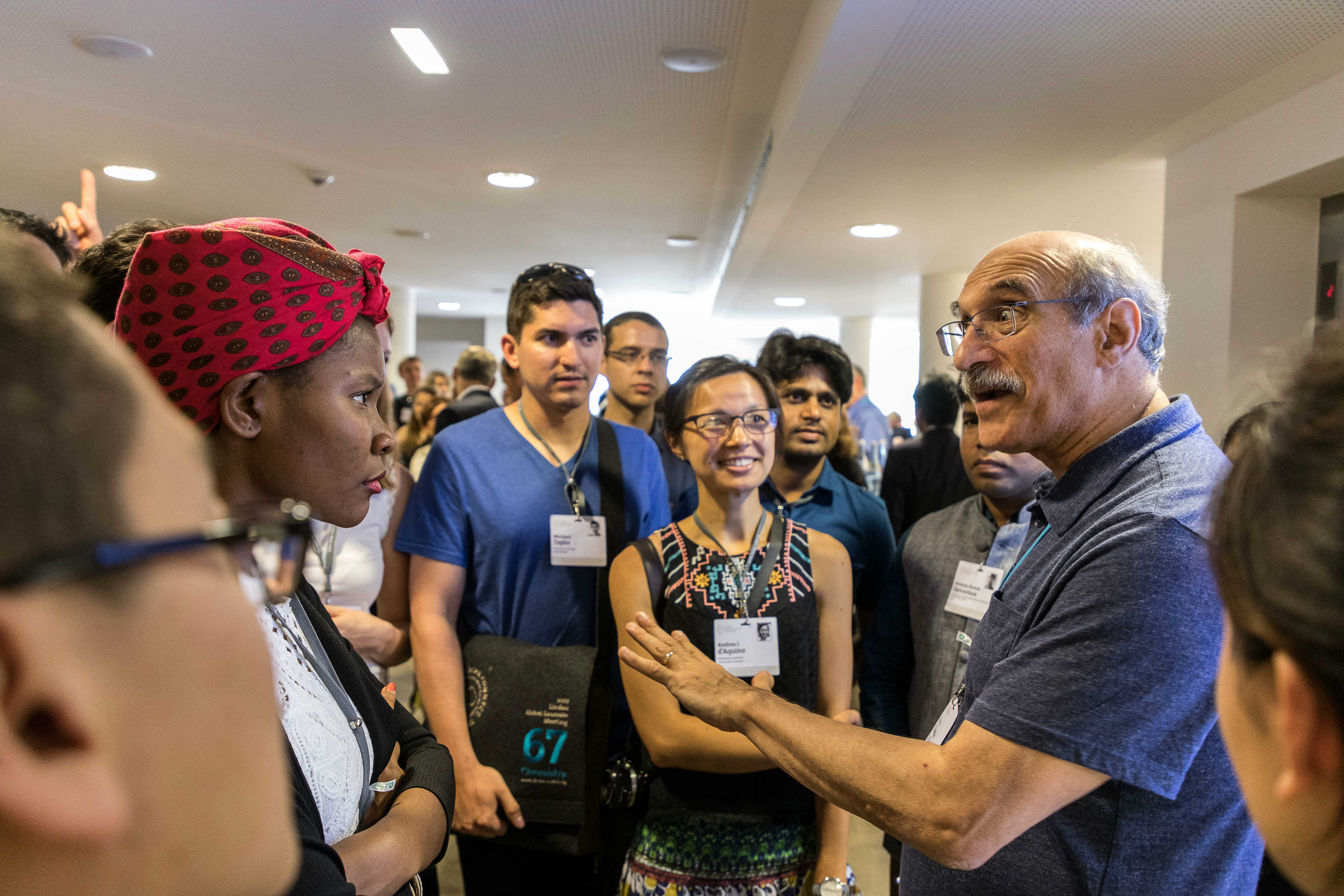
Chalfie talking to students at Lindau 2017

Chalfie talking to students at Lindau 2017{credit}Christian Flemming/Lindau Nobel Laureate Meetings Young Scientists in conversation with Martin Chalfie{/credit}

Continue reading

Your best work might be just around the corner

A recent finding shows that a scientist’s career can peak at any age.

Ever wonder when you’ll publish that big paper that’ll win you the Nobel Prize (or at least a new research grant)? Turns out, it could be your next.

As Nature News reports, a new equation, developed by a team led by Albert-László Barabási at Northeastern University in Boston, Massachusetts, shows that papers published at any point in a scientist’s career have equal chance in becoming their most highly cited work. It might be sensible to keep that in mind the next time you’re struggling through centuries of data analysis, or when your thumb starts to bruise from more and more mindless pipetting.

You can watch a video explainer below, and find the paper here.


Suggested posts

How to get published in high-impact journals: Big research and better writing

Writing for international journals: tips and techniques

Nature Masterclasses: Writing for highly-selective journals


Ageism “as bad as racism”

Ageism in the workplace is as bad as racism and over-50s applying for jobs are five times more likely to get interviews if they do not disclose their age, reports David Payne.

Andy Briggs, the UK government’s new adviser on older workers, told The Times this week that 27% of men of UK men aged 65 to 70 are in paid employment, compared to 15% in 2006. The figure for women is 18% and rising, and one in ten people aged over 70 are still working. And employers have an unconscious age bias.

Employers have an unconscious age bias

“Just as there are resources invested in younger workers in coaching and career development, and similarly when women return from career breaks, companies should invest in their older staff and give them midlife career counselling. It’s in business’s interest to do this,” he said. Continue reading

No such animal

Nobel Laureate Dan Shechtman describes the structure of quasi-crystals, the discovery of which won him the scorn of colleagues in the 1980’s and then the Nobel Prize in chemistry in 2011.


Suggested posts

Tick tock cold cold clock

Big box small box light-filled box

Aint no stopping them now

The precious, precious networking platinum that is Lindau

Alaina G. Levine is live from the Lindau Conference

Lindau is a special conference. Here, under the banner of Educate-Inspire-Connect, and above cobblestone streets, next to a city hall dating back to the 1400s, networking is very much encouraged, supported, facilitated and emphasised. And the networking here is precious, precious platinum.

marketing-man-person-communication (1)

Continue reading

Lindau: Return to Nerd Heaven: Physics is like the Godfather and this is good

Alaina G. Levine is live from the Lindau Conference

As I mentioned yesterday, even after I switched my major to mathematics from physics and astronomy, I couldn’t quite turn my back on this field. I’ve come to realise that there is a specific reason for this, and I think you’ll agree: Physics is like The Godfather – once you’re in, you can’t get out. Our knowledge of the universe, from the yotta to atto, is all tied to physics. Our entire existence is described by physics. You can’t get more powerful than that. So clearly, it’s is an entrancing field, and like the Godfather, there is literally no way to escape – you’ll die a member of La Famiglia de Fisica.

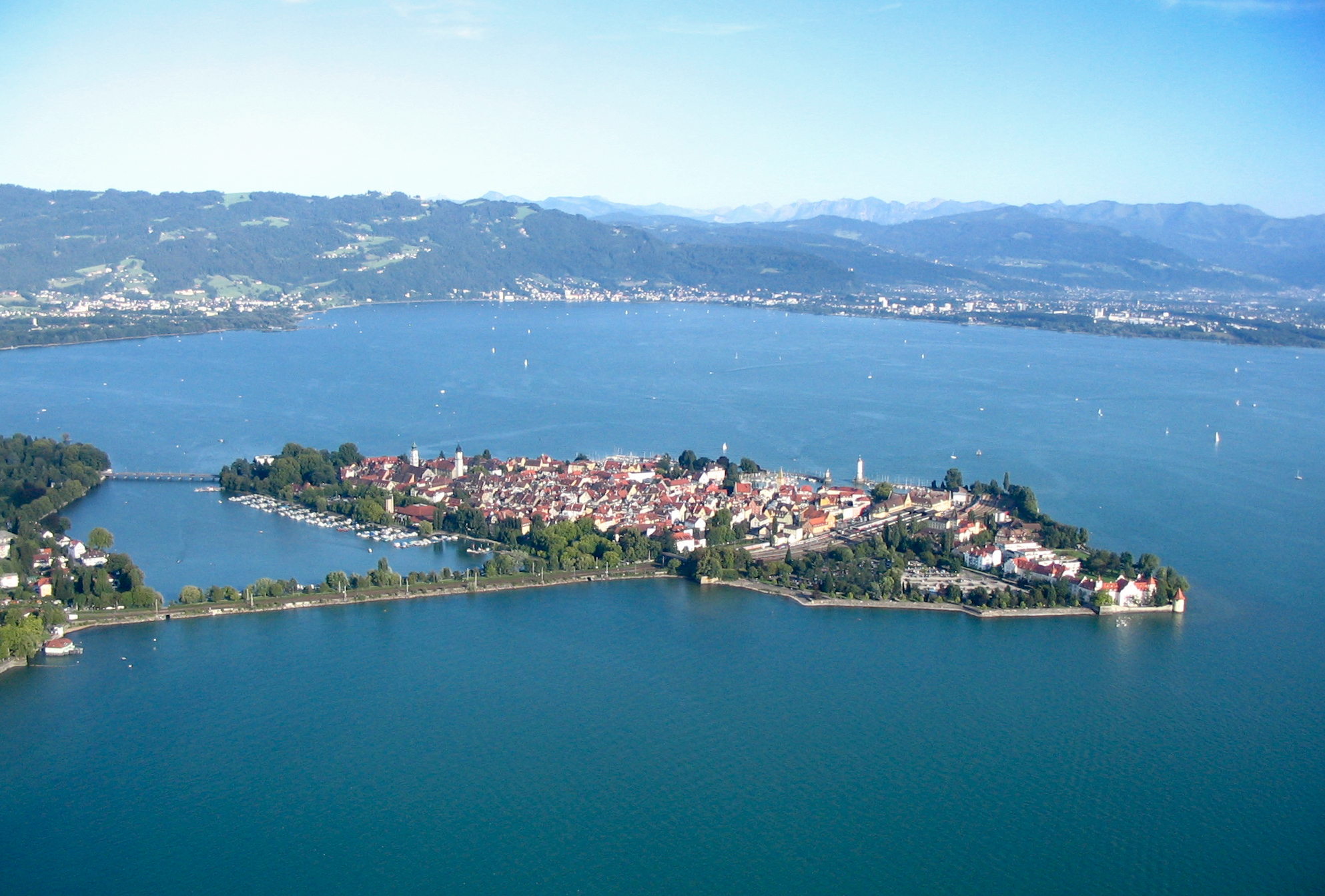
Lindau Island. Credit: CC-BY Edda Praefcke

Continue reading

Return to Nerd Heaven: Lindau

Alaina G. Levine is live from the Lindau conference

In 2012, I flew across the pond from the deserts of Arizona to the shores of Lake Constance on the German/Austrian/Swiss border. I wasn’t on holiday per se, but I might as well have been. When I arrived in the tiny hamlet of Lindau, Germany, I was met with two very sweet offerings: spaghetti ice cream and hundreds of nerds swarming the island town. I couldn’t have been happier.IMG_4306

Continue reading

#GYSS: Engaging in PhD research you truly care about

Nobel laureates spoke at the Global Young Scientist Summit 2016. Andy Tay was there for Naturejobs.

Guest contributor Andy Tay

Congratulations! After investing so much effort to write your personal statement and research proposal, you’ve been accepted into a PhD programme. It’s now time to decide which lab to commit to.

Like most other PhD students, you may be eager to perform and steer your PhD in your direction. However, as your salary, tuition and research expenses are likely to come from the grants of your professor, this financial need might trap you in a research project that you’re not interested in. While PhD students in countries like Singapore and Australia are paid generous scholarships, their counterparts in the U.S. and European institutions typically rely on their professors for income. In all cases, PhD students still require their research expenditure to be covered by grants.Nobel laureates


Is there no way out?

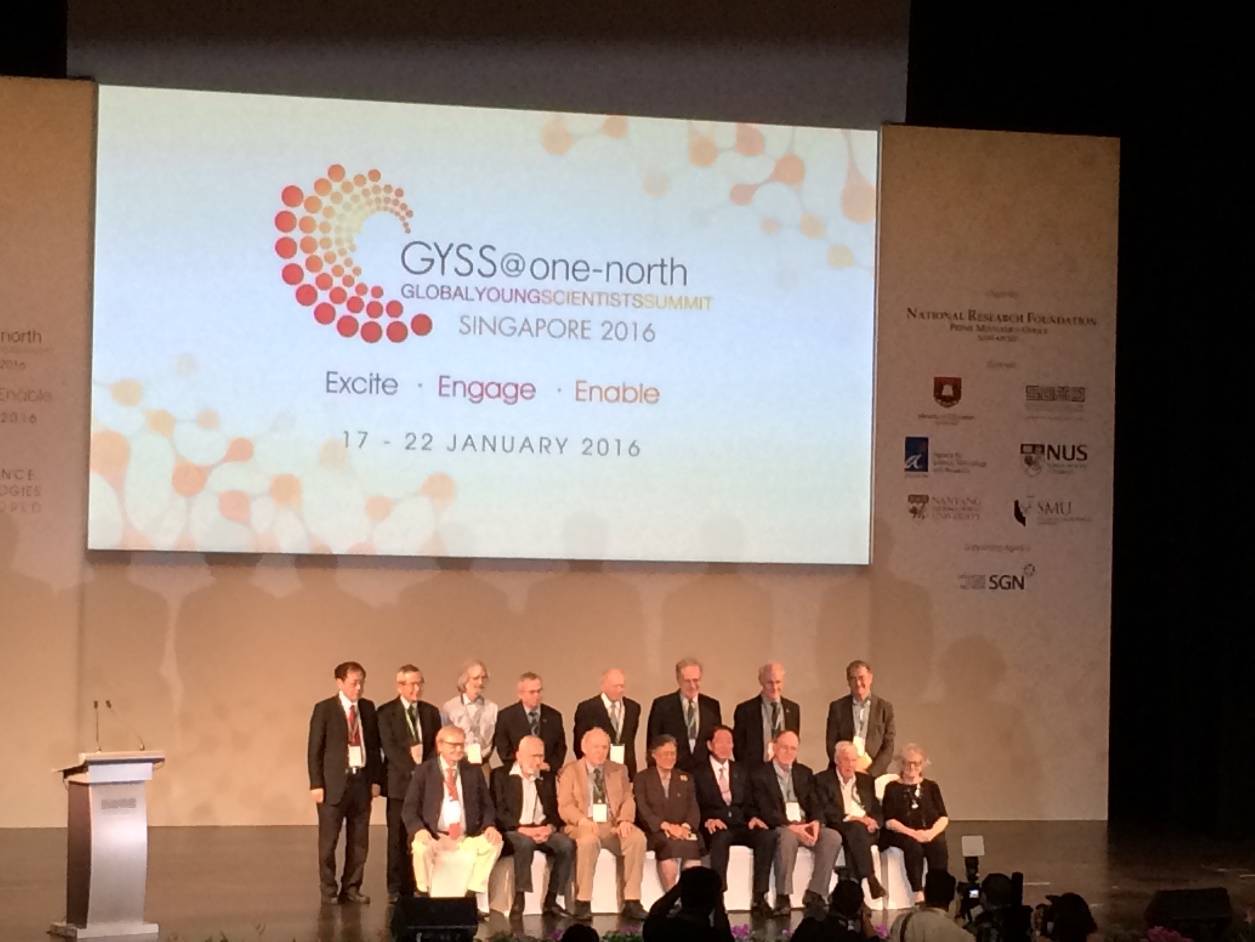
After hearing – along with many other topics – about the role of micro-organisms in cancer, and the use of light for quantum computing, students present in the Global Young Scientist Summit 2016 voiced their concerns on PhD education during group sessions and panel discussions with 13 Nobel laureates.

A common worry was the lack of autonomy on research projects and the impact that has on scientific curiosity. The Nobel laureates, fortunately, had experienced advice to give. Continue reading

Mentoring: Where laureates go for advice

Mentorship advice comes in many forms and from many sources, say Nobel laureates.

Contributor Michael Gatchell

mentors-mold-naturejobs-blog-small

{credit}iStock/Thinkstock{/credit}

Mentors are fundamental in molding young scientists into independent researchers. These relationships can take on many forms and evolve along the way, but they never stop being important for a scientist.

Relationships with mentors change as a young scientist’s career progresses and they gain experience. But it is naïve to think that you are less dependent on the advice from your peers as you grow. “I think you need more advice in a way, but different types,” says Martin Chalfie, 2008 Nobel laureate in chemistry. Venkatraman Ramakrishnan, 2009 Nobel laureate in chemistry, agrees that it is important to have somebody who you trust to discuss major decisions with. He maintained a close relationship with his postdoctoral mentor as his career progressed, “He was always very honest — I didn’t always agree with him — but I always found it useful to talk to him.” Continue reading