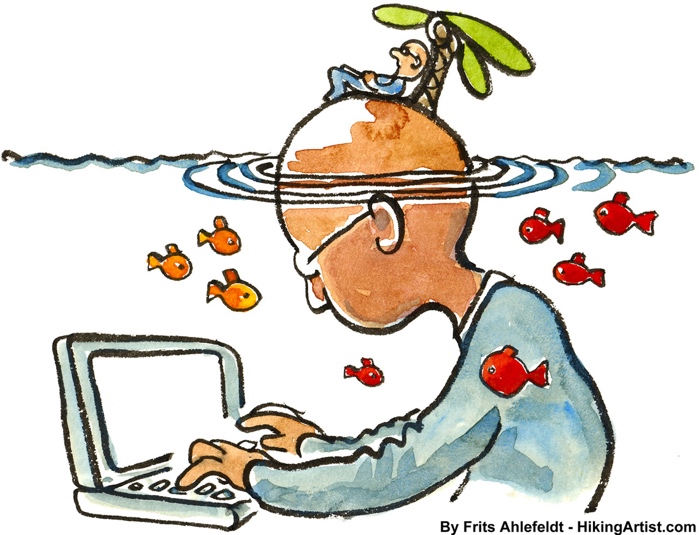
Done is better than perfect: overcoming PhD perfectionism

The most important thing a PhD will teach you is how and when to stop.

By Atma Ivancevic

Sometimes ‘OK’ is OK enough

I submitted my PhD thesis on the evolution of jumping genes in December 2016, four days before Christmas. It wasn’t perfect — in many ways, it wasn’t even good. By the end of my graduate studies, I had hoped to be a proficient programmer and an established scientist with multiple high impact papers. At the bare minimum, I expected to find evidence to support my hypothesis. Instead, my thesis was largely unpublished, my coding was preliminary, and my results were inconclusive. In my eyes, it was a failure. Continue reading
How to mentor undergraduates as a postgraduate, and why it’s important

Spending more time mentoring undergraduates as a postgrad is good for everyone, says Jenn Summers.

To-do lists work for some, but a more holistic approach to researcher development may bring larger rewards.{credit}By FOTO:Fortepan — ID 2278: Adományozó/Donor: Unknown. [Public domain or Public domain], via Wikimedia Commons{/credit}

There’s a difference between mentoring and doling out to-do lists. This is something I’ve learned over the past year, my first as a mentor. Mentoring undergrads became part of my job only recently – in the past, research came first. Most advisors value research outcomes over mentoring, and departments certainly place more value on publications. Before this past year, I was used to just a single undergrad working in my lab, and I thought of them as worker bees, not as future colleagues.

Put simply: I did not think about teaching in the lab.

Now, after guidance from recent research on mentoring, I realize that if graduate students like myself were more invested in mentoring, there would be many more small-but-important teaching opportunities.

Continue reading

How do you draw the line between volunteer work and unpaid labour?

A US university’s plan to recruit volunteer PhD-holders who are alumni to lecture classes, write grant proposals and serve on graduate thesis committees has raised concerns of possible exploitation of early-career researchers.

Ideas-naturejobs-blog

{credit}Topp_Yimgrimm/ThinkStock{/credit}


But questions remain about the plan’s actual intent and its potential impact on US universities’ current and future policies around existing faculty members.

In April, Michael Molino, an English professor and an associate dean at Southern Illinois University (SIU) in Carbondale, sent an email to department chairs that outlined a plan to seek “qualified alumni to join the SIU Graduate Faculty in a zero-time (adjunct) status.” The appointments would last for three years. The letter encourages department chairs to nominate “some of your finest former students who are passionate about supporting SIU.” Continue reading

How mentoring stopped me giving up

IMG_2721.jpgm smaller

Credit: Helena Lee

It took excellent mentors and a key realisation for Helena Lee to get back on track towards a career in clinical research.

The idea of solving scientific questions that have never been answered before has always excited me — especially if that knowledge might go on to help someone medically. Despite this, I have come very close to giving up on a career as a clinician scientist. Continue reading

Fewer women lead top universities

Female leadership at the world’s top 200 universities in an international ranking fell this year to 17%, according to a report – a reminder that gender equity in science remains a distant goal.

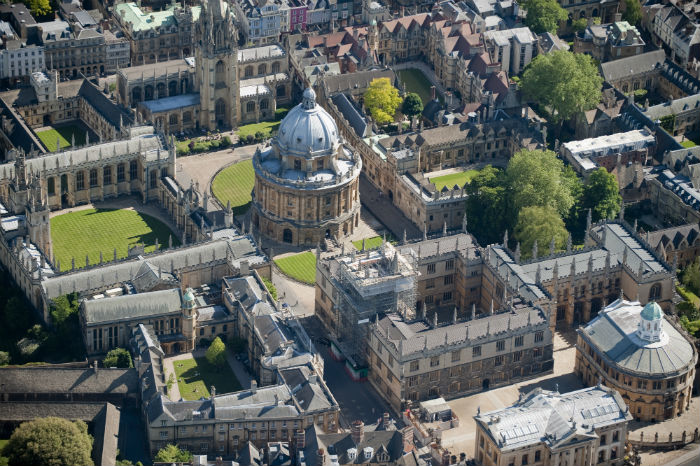
The University of Oxford has had a female vice chancellor, Louise Richardson, who took up the post in January 2016.

The University of Oxford has a female vice chancellor, Louise Richardson, who took up the post in January 2016. {credit}Getty{/credit}

Just 34 of leading universities named in this year’s annual Times Higher Education (THE) World University Rankings have female presidents, down 1% from the 36 that were led by women in 2017. Continue reading

Growing the next generation of scientists

Scientists have a duty to inspire the next generation of students. To do this, we need greater interaction with young people and the local community.

Naturejobs journalism competition winner Jessica Gorrill

The future of STEM (science, technology, engineering and mathematics) in the UK is on shaky ground. The numbers of entries at A-level for Biology, Physics and Chemistry dropped by 1%, 2.6% and 1.6% respectively in 2016, according to statistics collected by the Joint Council for Qualifications. This ends the steady increase seen since 2009. Whilst this drop may be attributed to the first year of new government reforms, it could be the beginning of a worrying trend of students neglecting careers in science.

Ideas-naturejobs-blog

{credit}Topp_Yimgrimm/ThinkStock{/credit}

Continue reading

Turning scientific scrutiny on science itself

A proactive approach could help researchers contribute to solving many of the problems they encounter in academia

Naturejobs journalism competition winner Jiska van der Reest

microscope-385364_1920

Continue reading

Finding mentorship

A quest for the perfect mentor might be doomed from the start – but that doesn’t mean you shouldn’t try

Naturejobs journalism competition winner Eileen Parkes

Having spent years trying to find the perfect mentor, I’ve learned there is more to mentorship than first appears.

Mentorship is given when someone with expertise and experience takes an aspiring scientist under their wing, to share their knowledge and advice, and to provide support and guidance in career development. It is distinct from coaching, or sponsorship, where the coach can give critical feedback or a sponsor may intervene directly in a protégé’s career. Importantly, mentorship is driven by the mentee, who should define their own needs for mentorship and career development.

blackbord design, with blue Light Bulb Continue reading

How to fix your separation anxiety

Navigate your career as a woman scientist at the right pace to avoid physical and psychological burnout, says Komal Atta

I write this as I wait outside my toddler’s summer preschool. It’s the same routine every day — I drop her, she wails, I leave. Later, the teacher reassures me that she’s completely fine as soon as I’m gone.

Lab coats and mouth mask at coat hook

This is classic separation anxiety. I am overcome by guilt. Continue reading

In sickness and in health: the importance of taking regular breaks

Time away from work is crucial for daily productivity and personal development, says Atma Ivancevic.

A few weeks ago, I took my first sick day for the year. I was mentally and physically exhausted: disheartened by delays and failures in the laboratory, and constantly bad-tempered from headaches and stress. I started staying up late. I stopped exercising and gave up my hobbies. I ignored my friends, partner and family, irritated by the distractions they presented. I prioritized work to the extent that I became miserable and unproductive, existing on bad coffee and fast food.

pic

I was not alone. Continue reading