Enter the Naturejobs #ScientistAtWork photo competition 2018

Send us a moment from your scientific day

By Jack Leeming

UPDATE: This competition is now closed. The winning entries will be published in the 26th April issue of Nature.

Last year, we launched the first Naturejobs #ScientistAtWork photo competition. It was a huge success — we received hundreds of entries from all over the world, and spoke to the five winners here.

We’re running the same competition again this year. We’re looking forward to seeing your entries. Winners will be announced and profiled alongside their images in the April 26th issue of Nature magazine, and will receive a year’s personal print and online subscription to Nature.

The competition will run from the 1st of March until midnight GMT on March 31st. Entrants must not be professional photographers.

All you need to do to enter is either:

  1. Email us your photo with a quick description and your contact details, or
  2. Post your image on Twitter with the #ScientistAtWork tag, or
  3. Post your image on Instagram with the #ScientistAtWork tag

You must be willing to grant us the rights to publish your image for the competition. You also must be contactable — we’ll be getting in touch to interview you about your photo if you are one of the five winners. We may also contact runners-up, as we did in 2017, to find out more about the story behind the image.

The winning entries will be decided by a panel of Nature journalists and art staff. We’re looking for images that capture moments in a scientific day — either in or out of the lab — in an original way. Heavily photoshopped images will not be considered (though colour correction and touching-up is fine). Finally, your photo must be high enough quality for print publishing in Nature (at least 220 mm at 300 dpi) to be considered.

That’s it! (More-or-less: please check out the terms and conditions below.) Best of luck to all of you and we look forward to flicking through your photos. Please feel free to send any questions to photocompetition@nature.com.


Jack Leeming is the editor of Naturejobs.


Continue reading

Naturejobs podcast: Flexibility and forward planning

#IAmAScientistAndA-smaller

London Naturejobs Career Expo speakers, exhibitors and attendees share how flexibility in a scientific career is beneficial.

“Science is a multifaceted and large enterprise, and there are lots and lots of very interesting ways to contribute to science” said Venki Ramakrishnan, president of the Royal Society, lab leader at the MRC Laboratory of Molecular Biology and joint winner of the 2009 Chemistry Nobel, at the 11th annual Naturejobs London Career Expo on Oct 4th 2017.

Ramakrishnan encourages scientists to think about the wide variety of options available to them; that having a PhD in science doesn’t mean you need to follow the tenure track career path. Continue reading

Turning scientific scrutiny on science itself

A proactive approach could help researchers contribute to solving many of the problems they encounter in academia

Naturejobs journalism competition winner Jiska van der Reest

microscope-385364_1920

Continue reading

Finding mentorship

A quest for the perfect mentor might be doomed from the start – but that doesn’t mean you shouldn’t try

Naturejobs journalism competition winner Eileen Parkes

Having spent years trying to find the perfect mentor, I’ve learned there is more to mentorship than first appears.

Mentorship is given when someone with expertise and experience takes an aspiring scientist under their wing, to share their knowledge and advice, and to provide support and guidance in career development. It is distinct from coaching, or sponsorship, where the coach can give critical feedback or a sponsor may intervene directly in a protégé’s career. Importantly, mentorship is driven by the mentee, who should define their own needs for mentorship and career development.

blackbord design, with blue Light Bulb Continue reading

Announcing the winners of the #ScientistAtWork photo competition

Thanks to everyone who took part in the inaugural Naturejobs photo competition

This week in Nature, we announce the winners of the Naturejobs #ScientistAtWork photo competition. Here are the photos that won. You can also check out Nature‘s podcast for a further interview with the final winner of the competition, Kseniia Ashastina. You can also check out Nature India‘s own excellent photo competition here.

10-smaller

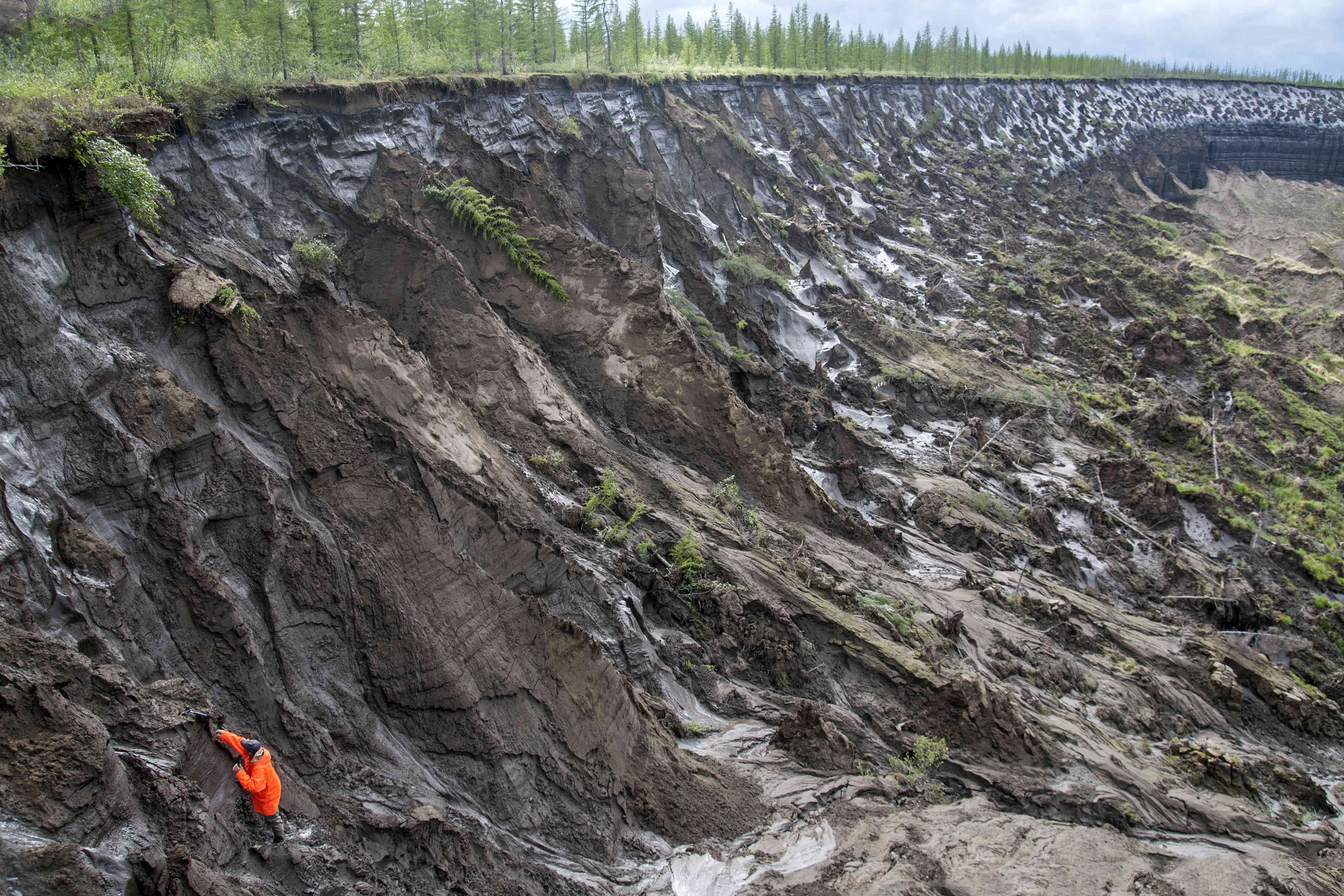
Kseniia Ashastina’s winning entry — a researcher collects samples from a permafrost outcrop {credit} Kseniia Ashastina {/credit}

Continue reading

Ten top science career tips for 2017

Top tens are very much a theme of the last issue of Nature for 2016. They include images of the year, 10 people who made a mark in science this year, and a review of the year in science. Naturejobs also gets into the “listicle” spirit by trawling through a year of articles to bring you our ten top career tips (and a few more thrown in for good measure) for the coming year.

1. Want to learn how to design an experiment or analyse data? Training is there if you look.

nj7622-703a-i1Scientific irreproducibility — the inability to repeat others’ experiments and reach the same conclusion — is a growing concern.

Much blame is placed on weak experimental and analytical practices that cause researchers to inadvertently favour exciting hypotheses.

Monya Baker reports.

In a separate post for Naturejobs, Monya runs through some of the statistical tools she discovered as part of her research. Continue reading

Most read on Naturejobs: February 2016

Two posts this week prove that the value of a PhD means a lot of different things to a lot of different people. Here’s your favourite content from February.

Dr. Peter Fiske explains how a PhD is useful not just for companies looking to recruit scientists, but for those looking to fill other business-oriented roles in the private sector. That doctorate could cover you even further than you thought.

naturejobs-reads

Continue reading

Where Are Tomorrow’s Jobs in the Natural Sciences?

Ben Thomas PhotoBen Thomas writes articles about a variety of topics for the Riley Guide, an online repository for career and education resources. As a freelancer, Ben also covers scientific research and technological breakthroughs as well as social issues involving the sciences. A regular contributor to several leading science news websites, Ben helps scientists and academics connect with the general public by explaining their latest discoveries and controversies in clear, down-to-earth terms. You can follow Ben on Google+.

If you’re on the path toward a degree in the natural sciences, chances are you’ve already heard more than your share of grim career predictions. Competition for academic tenure is tougher than ever, government jobs often only arrive at the ends of long waiting lists, and even well-paying work in the nonprofit and private sectors may mean making distant detours from your central scientific passions. Still, natural-science jobs in certain sectors do appear to be poised for slow but steady long-term growth in the near future. Here, two experts in scientific career planning explain how your expertise and love of the natural sciences can point the way toward a stable, impactful career path. Continue reading

Ten tips on getting recruited abroad

At the recent Naturejobs Career Expo in London, Michael Schneider from Imperial College London spoke about how to maximise your chances of getting recruited overseas. Schneider, currently director of Imperial’s British Heart Foundation Centre of Research Excellence, studied at Harvard, the University of Pennsylvania, and Duke, followed by research training at the US National Institutes of Health (NIH). In our final follow-up to the Expo we present a summary of his advice – if you have any tips to share, please add them below.

  1. If you’re at an early stage of your science career, be aware that a strong academic record is not enough to secure a position abroad. “Posts go to those with something more [than excellent qualifications],” says Schneider.
  2. Early research experience is the key discriminator – and it should be sustained or unusually intensive.
  3. If you’re still studying, find high-impact summer and winter research opportunities – examples that Schneider highlighted include the Erasmus student exchange programme in Europe and the Cold Spring Harbor Undergraduate Research Program (URP) in the United States.
  4. You’ll need to make personal contacts with overseas scientists – and email is generally the best way to make initial speculative enquiries with overseas labs.
  5. Don’t focus exclusively on the usual suspects – in the United States for example, Schneider says there are at least a dozen universities where mentors are as good as at prestigious institutes such as Harvard, MIT, University of California and Stanford – but there is less competition because they are less well-known.
  6. Try to have complete research ‘stories’ – and be aware that for this reason completing a three-year PhD can put you at a disadvantage against those whose PhDs typically last longer, such as in the United States.
  7. Fund yourself if possible.
  8. Carefully check the eligibility criteria of funding opportunities – for example the US NIH only offers postdoc fellowships to US citizens, with one exception, says Schneider – the Pathway to Independence Award (K99-R00) is open to overseas applicants.
  9. When considering a career move, vertical promotion – where you move up within the same institution – can be counter-productive, says Schneider: “Research funders typically prefer to see relocation as proof of independence.”
  10. When considering who to apply to, make sure you check where your potential superior publishes, and also where their trainees have gone afterwards.

38 tips on writing an academic CV

Many academic job vacancies have fairly basic application forms, so the main way you will get an interview is by having a very good academic CV, says Emma Baker, careers advisor for the graduate school at King’s College London. Baker outlined a number of tips for writing academic CVs at the 2011 Naturejobs Career Expo, held last week in London. Have a read and let us know what you think – if you have any to add, please leave a comment below.

Length

You may have heard that your CV shouldn’t be more than two pages long, but Baker says that doesn’t apply to academic CVs. “[Academia] seems to be the only field where you can make it as long as you want it to be,” she says. However, you’ll need to think carefully about the structure you use to make sure the length doesn’t put a potential employer off reading it.

Structure

The most important information should be on the first half of the first page, says Baker, and the very first thing should be your name, not the words ‘curriculum vitae’. Your contact details should be at the top of the first page and should include a professional-looking email address – avoid using an inappropriately worded personal account. Also be aware that your current work email address will most likely expire once you leave, so it may not be the best one to use. Baker adds that it’s no longer necessary to list your postal address on your CV, as most applications are done by email and the job application form probably asks for that information.

Baker says she sees a lot of CVs that start by saying something like: “I’m a passionate, hard-working individual with a PhD and I’m good at working in teams.” Avoid generic terms like this – you want to stand out from the crowd. Concentrate on your ‘unique selling points’.

Consider the use of appendices for lists of publications and other large sections.

Content: the basics

The three main sections that should form the bulk of your academic CV are:

  • Research
  • Teaching
  • Administration

Generally speaking, content in each section should be in reverse chronological order, with the most recent thing first.

Research

Baker recommends including the following in your section about research:

  • A description of your PhD or postdoc – this could be a brief overview with a more detailed account listed in the appendices
  • Consider writing a research statement about your current area of research or the area you want to move into
  • Your publications – you can include papers that aren’t published yet if you indicate what stage they are at

You may also want to include a concise list of the specific lab techniques that you have used.

In the research section, include details of any funding you have received – if you haven’t secured a research grant or fellowship yet, consider including travel or conference grants. “Academics want to know that you have the capability of attracting funding and going through the process involved in creating a funding bid,” says Baker. Give details of the process that you went through and the amount you received.

Don’t forget to include details of any conferences you’ve presented at, and make it clear whether you did a poster or oral presentation.

Teaching

Baker says people often overlook information about teaching on their CV and don’t give enough detail. Explain what level of teaching you have done, for example undergraduate or postgraduate, and what kind of teaching it was, for example a lecture or a seminar.

Administration

“However you look at going into an academic post, [admin] will probably form part of an academic career,” says Baker. Examples of admin experience you could mention include organising symposiums or mini-conferences.

Tailoring your content

The best way to customise the content of your CV for each job vacancy is to make it match the person specification. “Make sure you’ve got evidence for every single point on the person specification in your CV, because it should be the criteria that [the employer uses] when deciding who they want to interview,” says Baker.

Check the department’s website to see what kind of research they are currently involved in and what techniques you need to be aware of. Use your network of contacts to get information about the department to help tailor your CV.

Formatting

“Don’t be afraid to use bullet points,” says Baker. If you do use them, try to limit the number of bullet points to five per section, and order them so the most relevant point is at the top. If you have more than five points to include, consider breaking the section down into sub-sections.

Use a consistent style for headings and subheadings so it’s clear which content belongs together. Getting this wrong is “a really common mistake”, says Baker, and it’s one of the first things she looks at in a CV. Employers also place great importance on spelling and grammar, so make sure you ask someone to proofread your CV.

Finally, if you’re not sure which international format you should use for your CV, ask the employer. “Universities are global now, so a lot of them will be used to receiving CVs in different formats,” says Baker, adding that the difference between CVs across countries is becoming less pronounced.

Have your say

Do you have any comments or further advice to share? Let us know your thoughts below.