Most read on Naturejobs: June 2015

Public speaking, mobility and a bit of self-reflection have been the subject of your favourite reads on Naturejobs in June 2015.

naturejobs-readsWhat a busy month we’ve had. Again! The Naturejobs blog has published 15 new blog posts, which have been read by thousands of you.

For those that missed them when they first came out: here is a list of the top 10 most popular pieces from Naturejobs and Nature Careers this month. Happy reading!

Although it might not be immediately obvious when you first sign up to becoming a scientist, being a proficient public speaker is very important. You might have to present your work at a conference; you’ll definitely have to defend you PhD work in front of a group of peers. You’ll also have to persuade funders to give you money. In Public speaking: The elevator pitch I was inspired by an elevator pitch I had to give (not science related, unfortunately) to write a few tips on what makes a good pitch. Continue reading

Mobility: US VISA Options

Exemptions in the USA visa system make it easier for mobile scientists looking for work in the USA.

Contributor Susan Gelman

naturejobs-blog-visaThe H1-B is one of the least complicated visas one can have to work in the U.S. It is ubiquitous and fairly easily attainable for employees doing specialized work, at least at academic institutions.

Unfortunately, they are in high demand and granted in limited quantities in the corporate world. Each year, only 85,000 H1-B visas are allotted. By the first fiscal week of 2015, the U.S. government had received 230,000 petitions.

Fortunately there are loopholes (officially known as exemptions) to circumvent the quota, and an extremely important one is the academic exemption. This allows industry employers and universities to collaborate. Here the university can nominally hire an employee for part-time work, and the industry employer files for the visa. Some Boston-based universities are beginning to explore this option by renting out science centres for profit and in return allowing employers to piggyback off of university visa capabilities; other states are in the process of proposing similar models. Immigration attorney Richard Iandoli, who led the workshop, emphasized that while immigration policies are in desperate need of updating, these loopholes can be extremely useful. “The exemptions aren’t big enough, but they are significant enough.” Continue reading

Making it in academia: Before and after you apply

Landing that first, coveted academic position can be difficult. Here are some tips from the experts.

Contributor Anthea Lacchia

Landing that first, coveted academic position can be difficult.

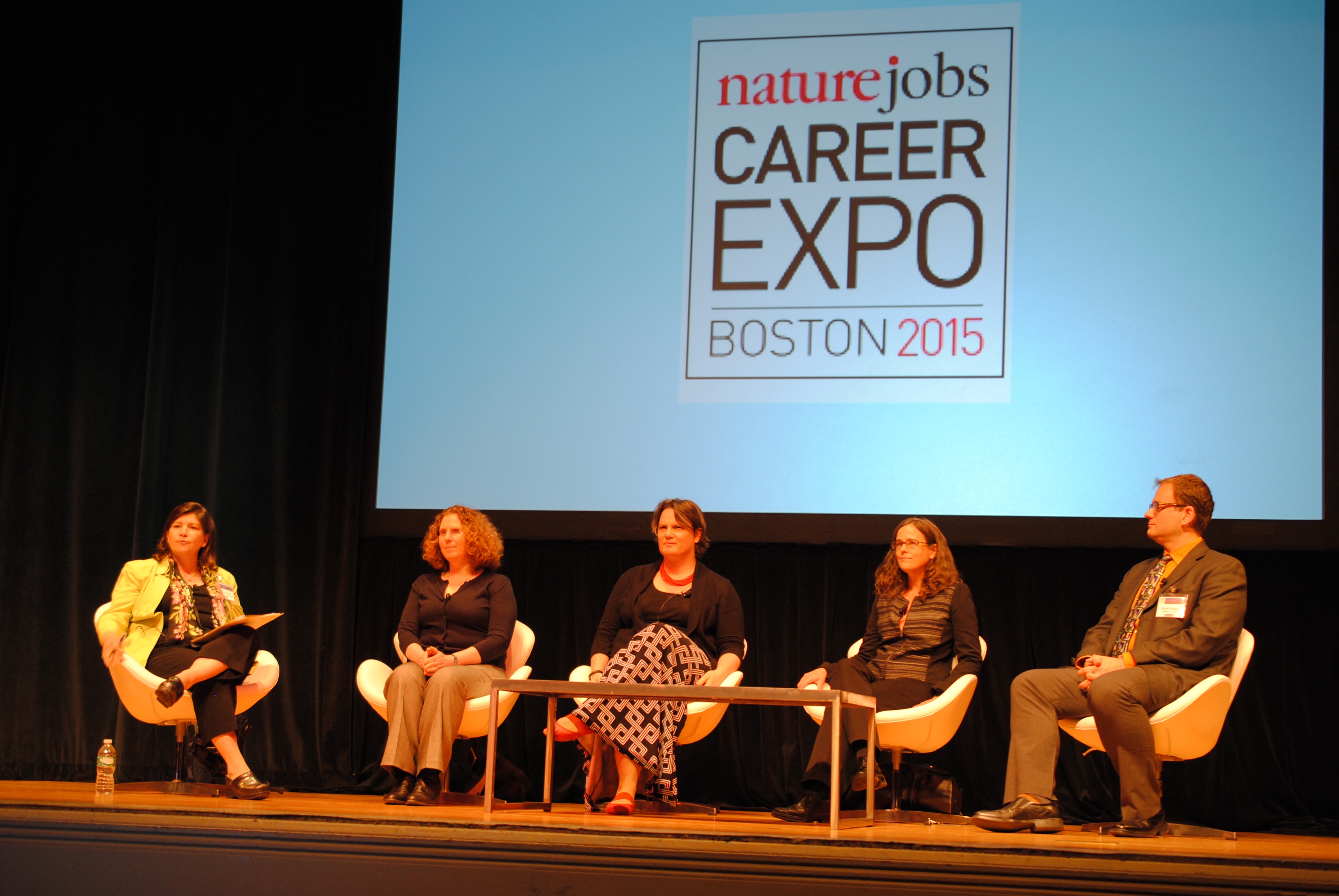
Ann Skoczenski, Esther Bullitt, Vanja Klepac-Ceraj, Kim McCall and Rich Gurney. {credit}Image credit: Anthea Lacchia{/credit}

The pursuit of science makes for an attractive career, but academic positions are hard to come by. What will really set your application apart? During the Boston NatureJobs Career Expo 2015, Esther Bullitt (Boston University School of Medicine), Rich Gurney (Simmons College), Vanja Klepac-Ceraj (Wellesley College), and Kim McCall (Boston University), shared their insights into how to get an academic job and how to keep it. The panel was chaired by Ann Skoczenski, career development programmer at Massachusetts General Hospital.

If there is one thing the panellists stressed it was the importance of tailoring each job application for the particular needs and priorities of the institution you’re seeking to join. “You have to be a good fit, so do your homework on what the department is about,” said Bullitt. “The science you do has to be complimentary to what they do,” she added, and cited her own experience hiring young researchers: “We had an excellent candidate we ended up not offering the job to because we thought he would be too isolated and wouldn’t have enough people to talk to about his work.” Continue reading

ERC funding: Maximize your chances

A brief insight into what the funding process is like for Starting and Consolidator grant applicants, once you click submit!

Naturejobs-podcastLast week I took the opportunity to go to Brussels to visit the ERC HQ. It’s a beautiful building in the centre of the city, and although surrounded by building works on the outside, it’s rather tranquil and green on the inside.

But, my job wasn’t to assess the interior design of ERC HQ. Instead, I was there to find out what happens to a starting or consolidator grant application once you hit submit.

In this podcast you will hear Professor Jean-Pierre Bourguignon, the ERC president, on why he’s so keen to help early career researchers. I also speak to Alejandro (Alex) Martin, who heads up the call co-ordination team, which  organises the whole evaluation process from the arrival to the final evaluation that creates the ranking list. This list determines who gets what funding. He gives a sneak peak into how the panels evaluate candidates and what they are keen to assess.

I got to meet Iva Tolić and Veerle Huvenne, two really interesting and enthusiastic scientists who wanted to share their ERC grant application stories. Veerle is in the final year of her Starting Grant, and Iva has just received the 5000th Consolidator Grant from the ERC

This podcast also acts as a sneak preview for our first FREE Naturejobs webcast, scheduled to happen on September 30th 2015. We’ve got 4 great speakers lined up for you, ready to share their insights and experiences on how to put together your application in order for you to maximize your chances of getting funded. So, keep your eyes on the blog!

Transferable skills: Helping PhDs and postdocs find careers

Thomas Magaldi explains how he found the career he wanted by starting with the job he got.

Contributor Monya Baker

Thomas-Magaldi-Naturejobs-Blog

Thomas Magaldi

After completing a PhD in genetics at Yale University and a postdoc in virology at the U.S. National Institutes of Health (NIH), Thomas Magaldi built a career designing professional development programmes for science students and trainees. He is now career services administrator at Sloan Kettering Institute in New York City. Here he describes how getting job offers meant finding ways to gain experience away from the bench.

What skills from your PhD and postdoc do you use in your job today?

Definitely presentation skills. That is one thing that I really learned from my PhD mentor; he was excellent at providing feedback. Everyone that comes out of his lab is an excellent communicator. I give presentations on networking and resume writing, and I love that part of the job. As a grad student, we look at that as a throwaway skill, but it is a crucial part of my success.

Also my problem solving ability. You’d be amazed at how often applying the scientific method is useful.

What skills can most PhDs bring to the workplace?

Persistence: that’s a skill all PhDs have in pushing through difficult problems.

Doing a thesis is like doing your own mini project. The ability to start and finish your own project is a useful skill in more than just academia. That is one of the most important skills employers look for, regardless of industry. Continue reading

Bioscience industry: Booms in Boston

For early-career scientists who are interested in an industry position, it’s a great time to start making some new friends.

Contributor Melissa Greven

NJCE15-Boston-industry-panel-KIKI-CHU

Heidi Ledford, Kevin Bitterman, Margaret Chu-Moyer, Masha Harelli, Joanne Kamens{credit}Image credit: Kiki Chu{/credit}

“It’s the best time for biotech in more than 20 years,” said Kevin Bitterman, a partner at the venture-capital firm Polaris Partners during a panel discussion on the bioscience industry in Boston, Massachusetts. This observation was echoed by his fellow panelists, who came from a variety of backgrounds ranging from pharmaceuticals to non-profit biotechnology firms to contract research organizations (CROs). A few years ago, a lack of investment was expected to lead to the downfall of the biotech sector. But the biotech market swings up and down as does any other and, as with the stock market, the best investments often can be made while the market is in a down phase. Today, the biotech sector is booming thanks largely to an influx of start-ups (in disease, drugs, scientific tools and medical devices) and significant capital backing of them. And that means it is an excellent time for early-career researchers to try to gain entry to the field.

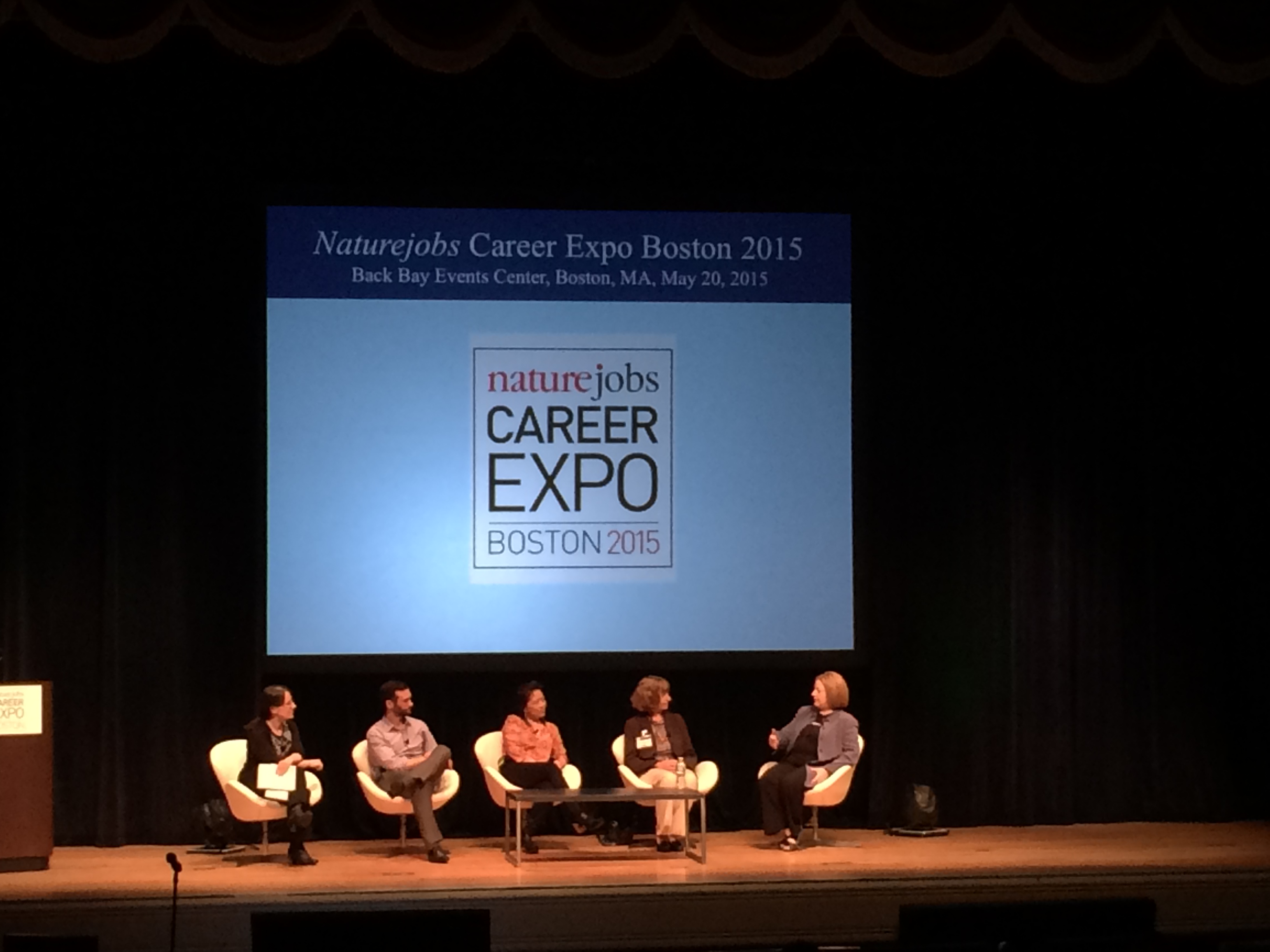
The panel discussion, where Bitterman was joined by Joanne Kamens (Addgene), Margaret Chu-Moyer (Amgen), Masha Hareli (ATR LLC) and was chaired by Heidi Ledford (Nature), was part of the Naturejobs Career Expo, a day-long science-careers conference on 20 May in Boston that was organized and presented by the Naturejobs department of Nature magazine. Continue reading

Science communication: Let me explain

Science communication is everywhere; gone are the days where scientists could remain solely in the ivory tower.

Contributor Susan Gelman

scicomm-panel-NJCE15-gary-mcdowell

From L-R: Seth Fletcher (chair), Alyson Kenward, Don Monroe, Wade Roush and Bethany Halford{credit}Image credit: Gary McDowell (@biophysicalfrog){/credit}

Listening in on a panel of highly accomplished science writers, I was hoping to hear some golden words of wisdom that would somehow crack open the secret doors to science communication. One of the problems is that science communication can be nebulous and many PhD and post-doctoral fellows are left unsure how to parlay research training into a communication career. It is becoming increasingly apparent that there is no magic answer and science communication remains as vague as ever. But luckily the lack of definition is a disguised benefit, which allows for a great deal of flexibility in the field.

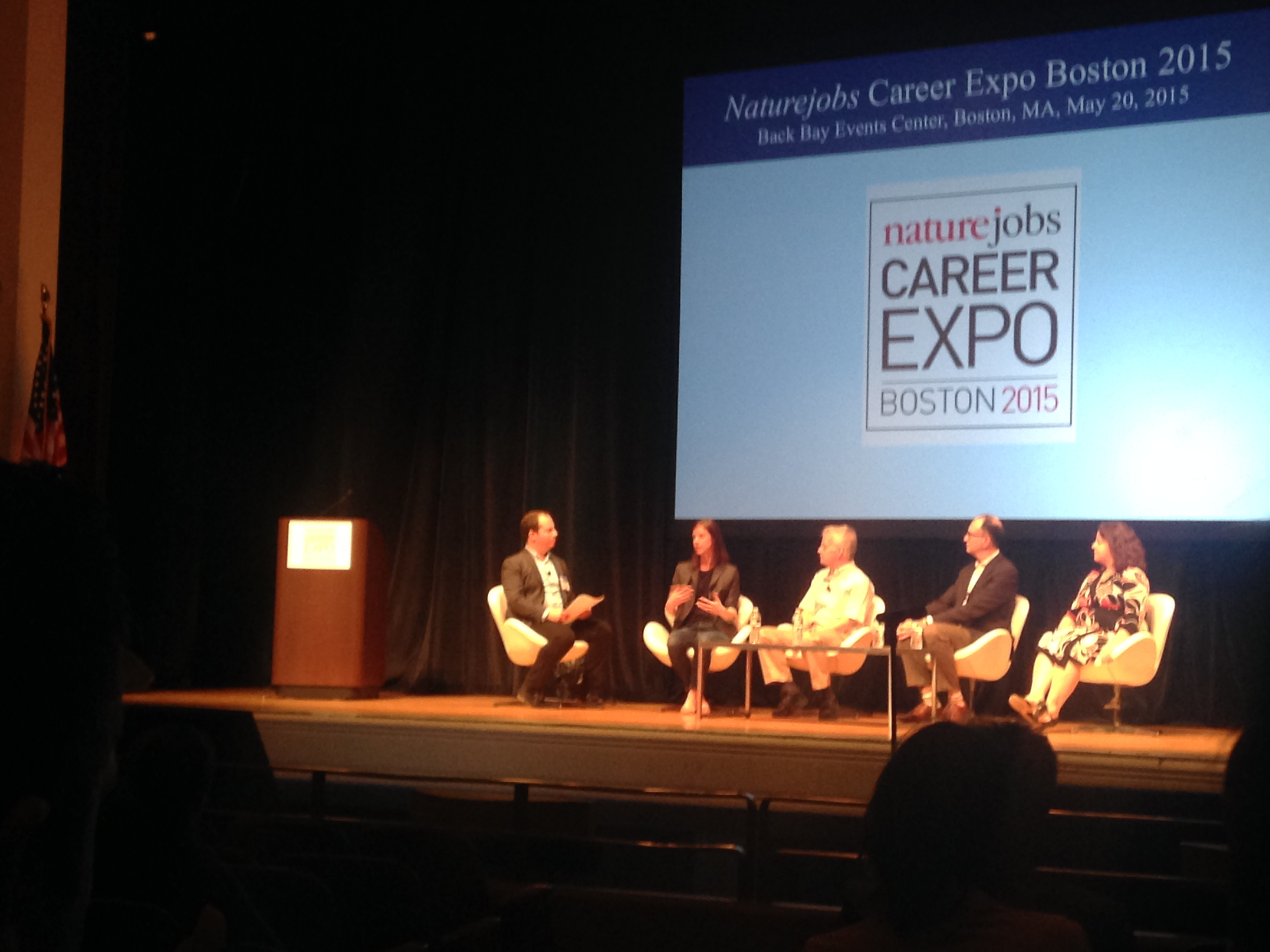
Scientific American senior editor Seth Fletcher moderated the panel. Panelists included Wade Roush (acting director of the Knight Science Journalism Fellowship), Alyson Kenward (research director at Climate Central), Don Monroe (freelance science and tech writer), and Beth Halford (senior editor at Chemical Engineering News). The panelists touched on options in communication such as technical writing, writing for a science audience, writing for the general public, and opportunities for working on infographics and videos. Yet despite the many possibilities classified under science communication, Kenward was careful to draw distinctions. “All science journalism is communication, but not all communication is journalism.” Continue reading

Ask the Expert: Meet Elizabeth Silva

Elizabeth Silva is the MIND programme manager at the University of California San Francisco (UCSF).

Say hello to our career expert for this month: Elizabeth Silva!

Elizabeth-Silva-naturejobs-blog

{credit}Image credit: Jordan Ward{/credit}

What is your scientific background?

I trained as a geneticist and developmental biologist in Canada, the UK and the US, working on a variety of biological problems using Drosophila as a model system. Most recently I was a postdoc at UCSF, working in innate immunity.

Why did you decide to leave academia (if at all)?

I currently manage a new and experimental career exploration programme at UCSF called Motivating INformed Decisions (MIND), but I first left the bench in 2011 to work as an editor at PLOS ONE. Continue reading

Job search: Finding your career fit

Tips on how to prepare and conduct an effective job search.

Contributor Ada Yee

Lauren-celano-NJCE15

{credit}Image credit: @DrTanyaSmith{/credit}

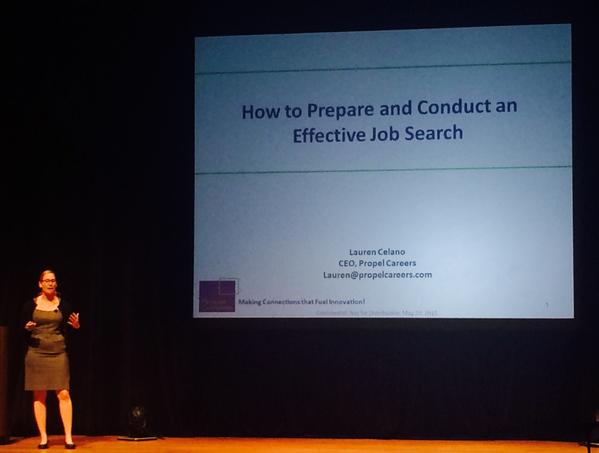
At the Boston Naturejobs Career Expo on 20 May, Lauren Celano, CEO of the career development firm Propel Careers, surveyed her audience: “How many of you are looking for interesting areas?” Most hands went up. “How many know what you want, and just need someone to hire you?” Just a few hands. Celano went on to coach the audience on the job hunt, starting from ground zero: how do you find a job—and then, an employer—that makes sense for you?

Identify the right career path for you

Celano highlighted growing opportunities across many fields, from industry-oriented positions in academia (core facility director, tech transfer, grant management) to non-profits seeking PhDs to do communications, licensing, or advocacy. With all these options, you should think about what suits you, she advised. “Fit really matters!” stressed Celano. “I see people taking a job because the title sounds cool, but maybe isn’t what they’re looking for, and they’re unhappy.” Continue reading