Writing for international journals: tips and techniques

Editor’s note: Further to its original publication, this post has been edited to reflect more accurately the content of the Nature Masterclass that was delivered at the 2015 Naturejobs Career Expo in Boston.

Papers are accepted based on novelty, importance and scientific merit. But once published, a well-crafted title and abstract can help your work be found.

Contributor Anthea Lacchia

Understanding what editors in top-tier journals are looking for in a paper is not always easy, especially for early-stage career researchers. Speaking to a packed room as part of a Nature Masterclass held at the Boston NatureJobs Career Expo 2015, Kyle Vogan, Senior Editor at Nature Genetics, shared some insights into his role before offering some practical advice to those in the process of writing up.

The talk was divided into two halves. The first explored what Nature editors are looking for and was focused on content. To increase chances of acceptance, scientists need to address important questions, design good experiments, generate solid data, analyse the data using appropriate statistical frameworks and interpret the findings correctly. No surprises here. And no substitutes for hard work.

The second half of the talk described how to write an effective title and abstract. With the volume of scientific literature growing rapidly, carefully crafted titles and abstracts can help published papers get noticed by readers amid the noise. Therefore it is important to make sure these signposts contain information on study design, sample size, experimental evidence and main conclusions. “Focusing just on the conclusions may not give the reader enough confidence to know whether to believe that the data actually support the claims,” Vogan said.

Titles: be simple and specific

The title should encapsulate the novelty of your paper and be understandable on first reading. Vogan recommended that titles follow the acronym DEF: they should be declarative, which means they should make a statement about something (e.g. with a subject, action verb and object); engaging, (which usually translates into not being overly technical; and focused (so, short).

Vogan offered a number of tips for drafting a title, including:

  • Use active rather than passive verbs.
  • Avoid words that don’t add to the story such as: “on this”, “study”, and “investigation”.
  • Be specific in delivering your message: the title of a Nature Medicine article published in 2012 was changed from “The effect of insulin on liver cells in the absence of 2 key signalling components” to “Insulin regulates liver metabolism in vivo in the absence of hepatic Akt and Foxo1” (title change by the Nature Masterclass team, not the journal). Not every reader may know what Akt and Foxo1 are, but the title is declarative and specific.
  • “But don’t be too specific” said Vogan. When possible, avoid acronyms and other jargon, which renders the title opaque to readers not already conversant in the field. However, Vogan noted that this should not be viewed as an absolute prohibition and that sometimes it is not possible to adequately convey the essence of the research without acronyms.
  • Be careful of being overly assertive in titles (e.g. by claiming a cause-and-effect relationship when the data only show a correlation).
  • Avoid question marks: titles should present outcomes, without teasing the reader. Furthermore, articles with interrogative titles tend to be rejected.
  • Focus on what is novel in the work.
  • Avoid complex, compound nouns. For example, the term “excess water-weight remover” would probably be removed from a title during the editorial process at a Nature journal, according Vogan.
  • Genus and species names can be included, but should be accompanied by the common name of the organism.
  • Avoid puns, since they are not usually very helpful, lead to fewer citations, and tend to make papers invisible to web searches. Besides, Vogan added, these attempts at humour tend to be funnier to the authors than to anyone else. As an example, he pointed to a paper published in the journal Bioinformatics with the title “Multiple alignment by aligning alignments“. “I don’t know what that actually means, except that they are trying to be cute,” Vogan said.

Although these are good rules to keep in mind, Vogan advised not obsessing too much over them. “Not every good title will strike every box,” he said. Usually it’s a trade-off between the main components of DEF. Some titles may be focused and engaging, but not very declarative; an example of this was drawn from a paper published in Nature Genetics this year titled “A Big Bang model of human colorectal tumor growth”.

Abstracts: Get to the point

Vogan presented what he called the “Nature summary template” for writing abstracts. They should start from a few general statements to give context, then they should describe the problem and main results, and they should end with a brief summary about what the results add to previous research.

Vogan offered some dos and don’ts for writing strong abstracts:

  • Do include keywords in order to make it more searchable.
  • Don’t try to include everything. Keep it focused.
  • Don’t include too much detail about methods.
  • Don’t use obscure abbreviations, acronyms and references to literature or to figures.

As the audience left the room they appeared excited to put what they had learned into practice: “I learned a lot,” said Ardeshir Kianercy, a mechanical engineer at Johns Hopkins.
Future of research: Career awareness

A workshop at the 2015 Naturejobs Career Expo in Boston explored how early career researchers could improve career awareness and preparedness.

Contributor Melissa Greven

Future-of-Research-workshop-Naturejobs-Career-Expo-Boston-2015

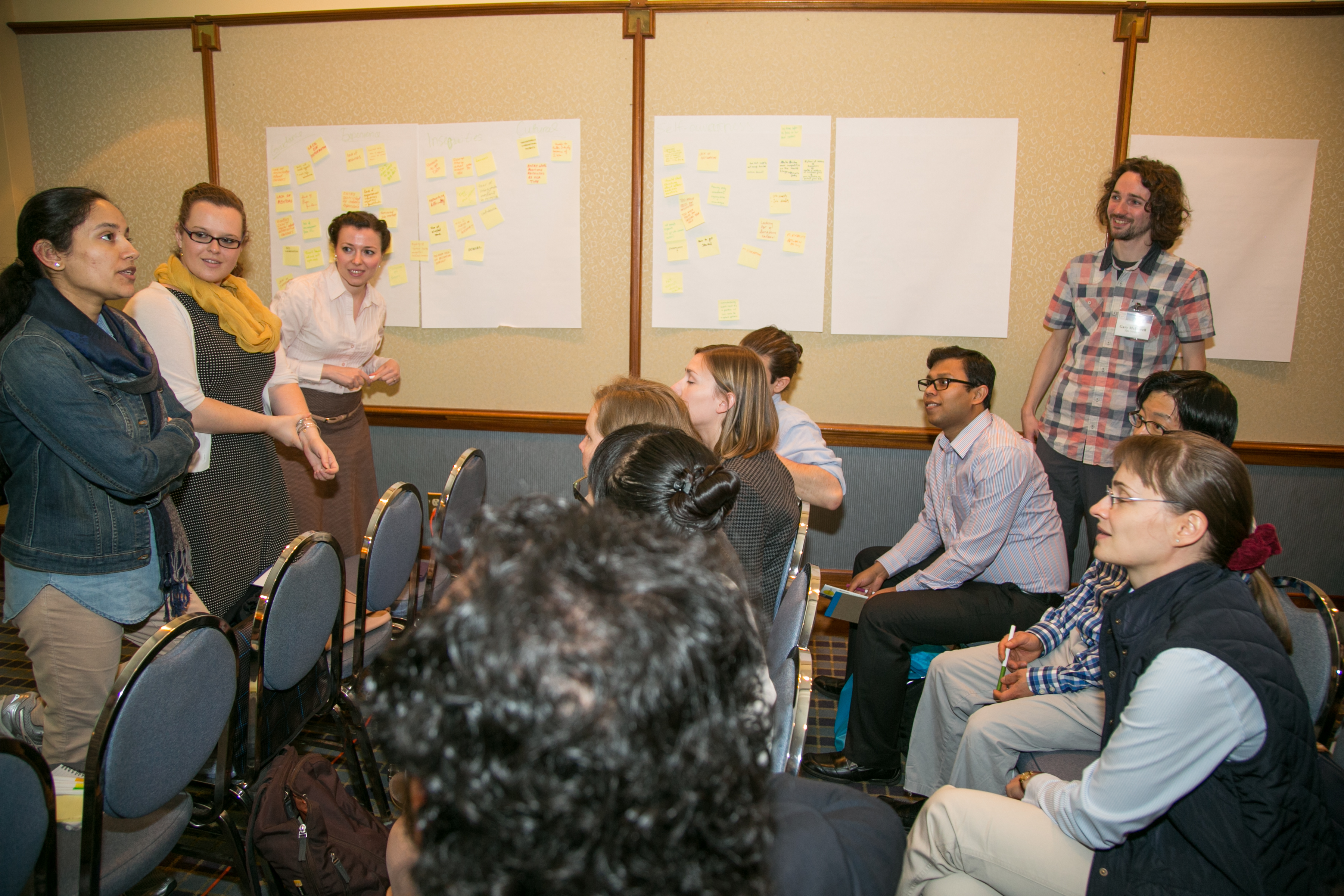
Future of Research workshop at the 2015 Naturejobs Career Expo in Boston.

Academia is the alternative career today for most young scientists. That message became clear during a discussion among graduate students and postdocs during the Future of Research’s (FOR) workshop on career awareness at Naturejobs Career Expo on 20 May in Boston, Massachusetts. The Expo was a day-long careers conference organized and presented by the Naturejobs department of Nature Publishing Group.

The workshop’s ambience was similar to that of a bar on a Friday night—it was noisy and standing-room only. Attendees were eager to address the problem that most early-career researchers face: what are the alternative career paths beyond academia, and how can they be reached?

It is not that early-career scientists consider academic research to be an undesirable profession. Instead, they are coming to understand how difficult it is to obtain an academic post. Graduate students are surrounded by academics who believe their students are guaranteed successes if they just stick to it and keep applying to positions, yet many faculty members, academic advisers and mentors still do not realize that the landscape has changed dramatically in the last decade or so. Data exist on the fact that the vast majority of graduate students who do an academic postdoc end up leaving academia entirely. What is not known is where they end up. Continue reading

Mobility: Moving within Europe

EURAXESS representatives shared online resources and funding opportunities for those seeking to do science abroad

Contributor Ada Yee

If you’re a student seeking experiences abroad, a newly-minted PhD wanting work in industry-leading countries, or an academic looking to settle in Europe, start by typing “EURAXESS” into your Web browser.  During the Naturejobs Career Expo 2015 in Boston, Massachusetts, we heard from representatives of EURAXESS, a European Commission[https://ec.europa.eu/index_en.htm] initiative designed to encourage researcher mobility and facilitate European research careers. The workshop showcased a range of funding opportunities and resources for researchers of all training levels and—although most attendees were European—all nationalities.

EURAXESS online resource community

For those just starting with their European job search, or for those navigating an overseas transition (including visa paperwork and finding a school for your kids), the session gave a guided tour of EURAXESS’s free-to-use online resource community.

Through the jobs section of the site, job seekers can access an online job portal and upload CVs for organizations’ perusal. So far, the site has collected more than 8,500 job ads, and about 8,000 organizations—including research institutions, universities, and companies—have registered to view CVs, noted Stephanie Jannin, one of EURAXESS’s North America regional representatives.

EURAXESS services also include centers dedicated to helping researchers and their families with the logistics of moving to Europe. Jannin described “a network of over 500 professionals working in over 200 offices across Europe.” Contact information for the centers is found in the services portion of EURAXESS’s site. Continue reading

Funding: Opportunities in Turkey

The Turkish government is heavily investing in its science and research, partnering with international groups to create funding opportunities for scientists.

Contributor Diana Cai

Naturejobs-money

{credit}ImageSource{/credit}

The Scientific and Technological Research Council of Turkey (TUBITAK) is on a mission to recruit talented scientists around the world and reverse the “brain drain,” or the emigration of well-educated people to other countries. Since the mid-1960s, after Turkey experienced its first military coup d’état in 1960, talented researchers have fled the country in search for more security and better opportunities. Over the past decade, the Turkish government has become vigilant of the trend, increasing research funds to help address the problem.

According to a press release issued by the Turkish Statistical Institute in November 2014, research and development expenditures grew from 0.48% of the country’s Gross Domestic Product (GDP) in 2003 to 0.95% in 2013. In 2013, the GDP of Turkey was $822.1 billion, with an average annual inflation-adjusted growth rate of 4.9% from 2003-2013. As a result, Turkey hopes to position itself as an attractive option for both Turkish nationals and foreign citizens wishing to conduct cutting-edge research. Continue reading

Mobility: US VISA Options

Exemptions in the USA visa system make it easier for mobile scientists looking for work in the USA.

Contributor Susan Gelman

naturejobs-blog-visaThe H1-B is one of the least complicated visas one can have to work in the U.S. It is ubiquitous and fairly easily attainable for employees doing specialized work, at least at academic institutions.

Unfortunately, they are in high demand and granted in limited quantities in the corporate world. Each year, only 85,000 H1-B visas are allotted. By the first fiscal week of 2015, the U.S. government had received 230,000 petitions.

Fortunately there are loopholes (officially known as exemptions) to circumvent the quota, and an extremely important one is the academic exemption. This allows industry employers and universities to collaborate. Here the university can nominally hire an employee for part-time work, and the industry employer files for the visa. Some Boston-based universities are beginning to explore this option by renting out science centres for profit and in return allowing employers to piggyback off of university visa capabilities; other states are in the process of proposing similar models. Immigration attorney Richard Iandoli, who led the workshop, emphasized that while immigration policies are in desperate need of updating, these loopholes can be extremely useful. “The exemptions aren’t big enough, but they are significant enough.” Continue reading

Making it in academia: Before and after you apply

Landing that first, coveted academic position can be difficult. Here are some tips from the experts.

Contributor Anthea Lacchia

Landing that first, coveted academic position can be difficult.

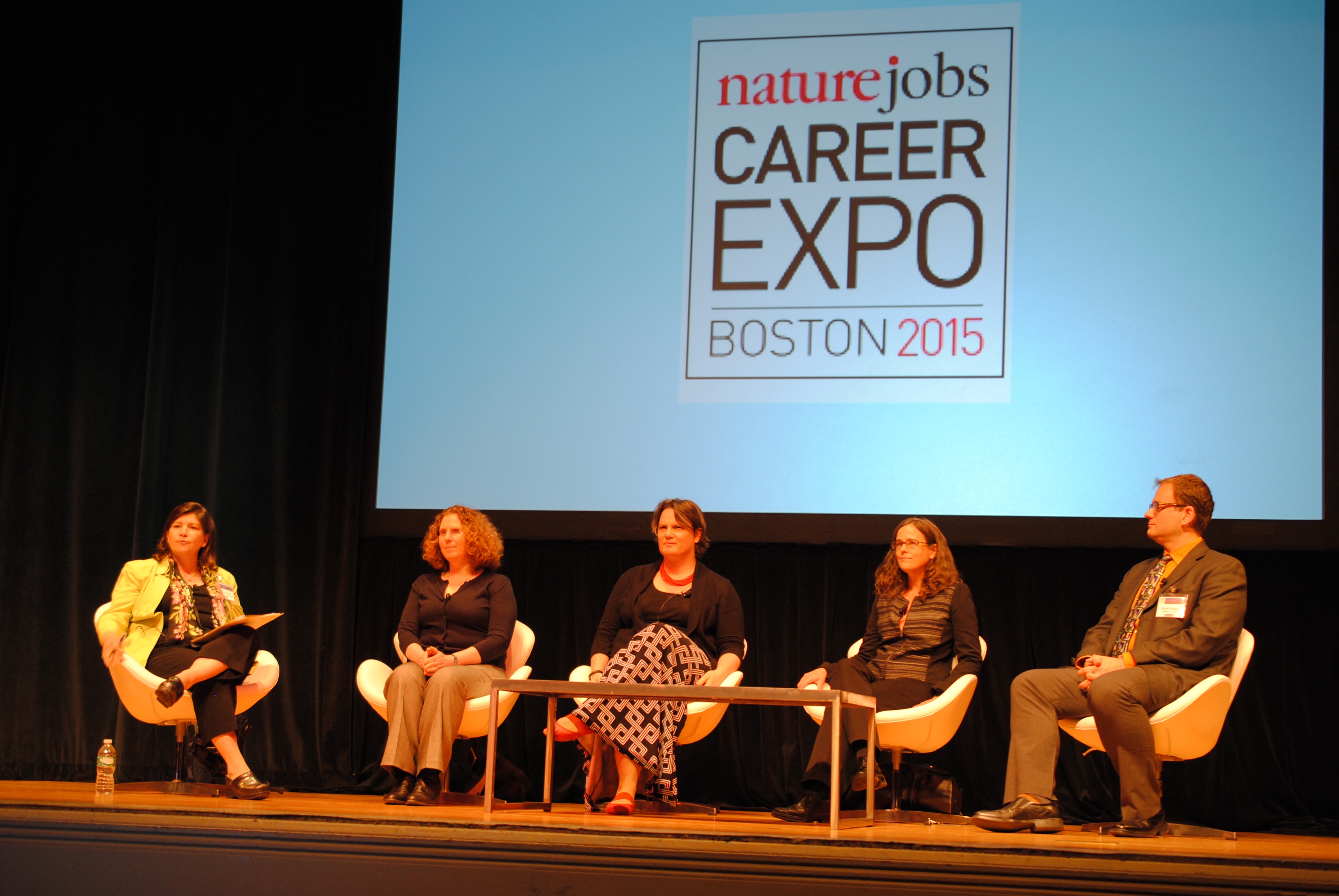
Ann Skoczenski, Esther Bullitt, Vanja Klepac-Ceraj, Kim McCall and Rich Gurney. {credit}Image credit: Anthea Lacchia{/credit}

The pursuit of science makes for an attractive career, but academic positions are hard to come by. What will really set your application apart? During the Boston NatureJobs Career Expo 2015, Esther Bullitt (Boston University School of Medicine), Rich Gurney (Simmons College), Vanja Klepac-Ceraj (Wellesley College), and Kim McCall (Boston University), shared their insights into how to get an academic job and how to keep it. The panel was chaired by Ann Skoczenski, career development programmer at Massachusetts General Hospital.

If there is one thing the panellists stressed it was the importance of tailoring each job application for the particular needs and priorities of the institution you’re seeking to join. “You have to be a good fit, so do your homework on what the department is about,” said Bullitt. “The science you do has to be complimentary to what they do,” she added, and cited her own experience hiring young researchers: “We had an excellent candidate we ended up not offering the job to because we thought he would be too isolated and wouldn’t have enough people to talk to about his work.” Continue reading

Transferable skills: Beyond the bench

Based on personal experience, Nina Dudnik highlighted the lessons learned and transferable skills gained when moving from academia to beyond the bench at the 2015 Naturejobs Career Expo in Boston.

Contributor Diana Cai 

 Nina-dudnik-naturejobs-blog

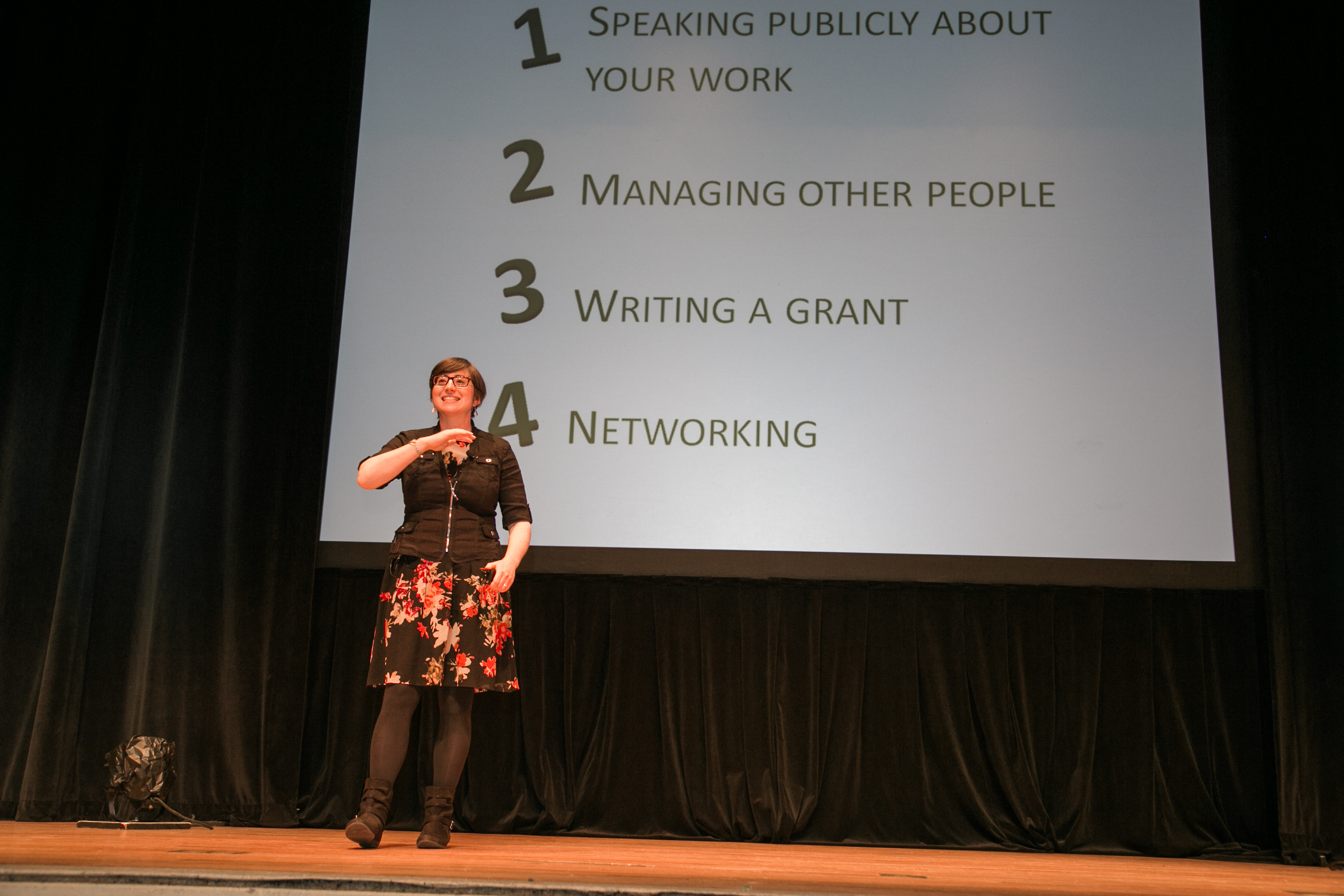
Nina Dudnik, CEO of Seeding Labs, shares her thoughts on transferable skills at the 2015 Naturejobs Career Expo in Boston.

As a teenager, Nina Dudnik, now CEO of not-for-profit Seeding Labs, was fascinated by agriculture and genetics. After graduating from Brown, she spent several years working with scientists in developing countries on agricultural development projects. This included spending a year in a rice research lab in Ivory Coast. There, Dudnik was struck not only by the innovative scientists she met but also by the sparseness of the lab. There was only one PCR machine, and scientists had to wash and reuse equipment like pipette tips. Other labs she visited in Africa were in similar conditions. When she returned to the US to begin a doctoral program at Harvard, a wealth of resources was available to her. Dudnik started using her spare time to collect unused lab equipment and send them to researchers in need of them. This was the beginning of her path to what is now Seeding Labs.

Reflecting on her journey, Dudnik scoffs at the idea that careers other than academia are considered “alternative”. Continue reading

Career paths: Challenging convention

Professor Robert Langer, the 2015 Naturejobs Career Expo keynote speaker in Boston, shares the challenges he faced when becoming an academic entrepreneur.

Contributor Diana Cai 

Robert-Langer-naturejobs-blog

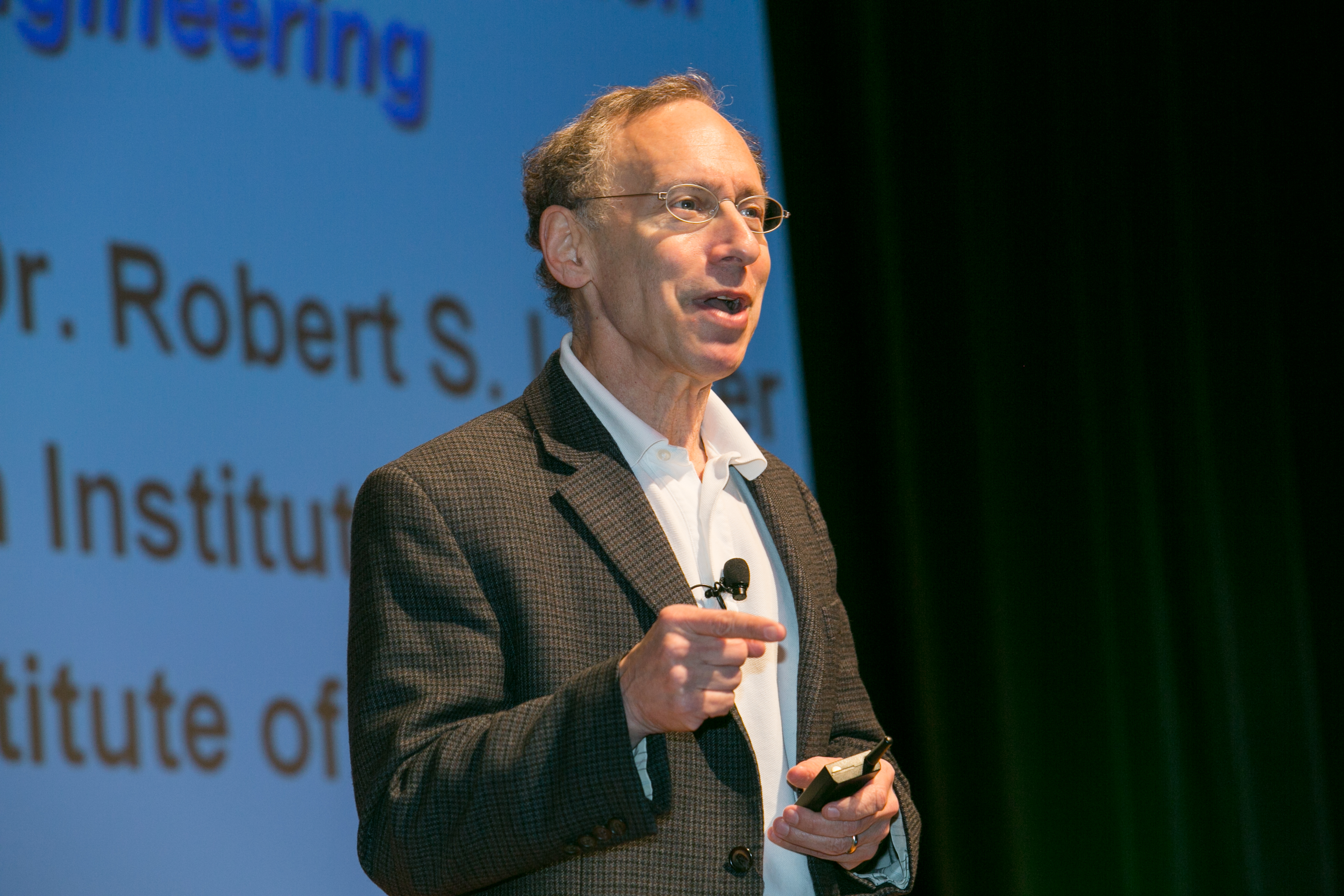
Robert Langer, David H. Koch Institute Professor at MIT and Keynote speaker at the 2015 Naturejobs Career Expo in Boston.

Robert Langer began by telling the audience about how, upon receiving his graduate degree in chemical engineering from MIT in 1974, he had job offers from 20 oil companies. “It’s not like I was that great or anything,” Langer says. He goes on to explain that the previous year had ended on a bad note for the oil market: the price of oil quadrupled in the span of four months, from $2.67 a barrel in October 1973 to $11.65 a barrel in January 1974. As a result, job opportunities for chemical engineers skyrocketed. He was ready to follow this path, until one of the engineers at a company said to him, “If you could just increase the yield of this one chemical by 0.1%, that would be wonderful!” Feeling uninspired and unable to contribute to society in that line of work, Langer decided to look for other options.

After applying to teaching positions at more than 40 colleges and failing to hear back from any of them, he asked himself, “How else can I use my chemical engineering education to help people? And I thought about medicine.” Langer eventually entered the laboratory of Judah Folkman, a professor at Harvard Medical School. Folkman was interested in angiogenesis, the process by which new blood vessels are formed. He had found that tumour growth is dependent on angiogenesis and postulated that inhibiting angiogenesis might be a way to halt tumour growth. Continue reading

Entrepreneurship: Discovering synergy

The entrepreneurial spirit is vital for science, says Diana Cai.

Contributor Diana Cai

entrepreneurship-naturejobs-blogFrom stories I have read (here, here, here, and here are just a few examples) and conversations I have heard, views of entrepreneurship within the scientific community at large have changed drastically since the mid-1970s. Before that time, entrepreneurship seemed to be spoken in a positive light by only a few scientists in hushed voices. To most in the community, entrepreneurship seemed to be incompatible with science. Science was associated with unbiased truth-seeking and healthy skepticism while entrepreneurship was associated with biased commercialization and aggressive sales. Since then, however, with 1) prominent academic scientists engaging in more entrepreneurial activities*, 2) the introduction of the Bayh-Dole Act in 1980 (allowing universities to take ownership of inventions) and 3) a decrease in federal funding for basic research (which encouraged scientists to turn to elsewhere for stable support) the negative attitudes towards entrepreneurism have largely dissipated. Scientists today have increasingly embraced entrepreneurship. More academic labs now than ever before are commercializing products and forming start-ups based on technologies developed or discoveries made in an academic lab. According to a 2011 Nature Methods editorial, between the establishment of the 1980 Bayh-Dole Act  and 2010, there have been more than 6,000 new companies formed from US universities.

While entrepreneurship is exciting, the entrepreneurial spirit is vital for science. The US Small Business Administration identifies an entrepreneur as “a person who organizes and manages a business undertaking, assuming the risk for the sake of profit”. These are traits that could easily describe a Principle Investigator, who, essentially, manages a lab of people who test ideas and budgets the resources of the lab for the different projects. However, these are only the most fundamental qualities of an entrepreneur. The most successful entrepreneurs have several more intangible qualities.

In a study of 2500 entrepreneurs, Gallup identified several characteristics that separate highly successful entrepreneurs from their less successful peers.  Among these characteristics are several that are most commonly associated with the entrepreneurial spirit: determination, risk taking, creativity and promotion.

Survival in science requires determination. It a characteristic that is probably found within almost all scientists as it is ingrained in us from the start. Most of us have had projects go awry, had confusing and perhaps directionless experimental outcomes, and experienced multiple rejections. But, we all know we need to find a way to overcome these obstacles, and in the end, we usually do. It is simply impossible to be in the field without being able to put up a fight and motivate oneself.

Beyond determination, risk taking and creativity are qualities that often set apart the best scientists. The most innovative work and amazing discoveries have often come from scientists who think unconventionally, take great risk, and do their research creatively. While performing safe research often leads to small, incremental progress, which is important and needed, well thought-out but risky projects done creatively are often what lead to the giant leap and catapult fields in new directions. There should be a balance between safe and risky research, but taking an entrepreneurial attitude reminds us it is important to be aware of this and not settle for the traditional methods and ways of thinking when more is possible.

Gallup also found that the most successful entrepreneurs are great promoters. Similarly, scientists need to not only be able to perform experiments and analyze data but also need to be able to sell their work so that society remains interested and excited about research, and thus willing and eager to support it. Additionally, no matter the experimental results, an enthusiastic presenter can still dazzle colleagues at conferences, publish in good journals and receive sizable funds to continue risky, creative science.  Hence, promotion in science, as in entrepreneurship, is necessary and rewarding.

Though scientists once viewed entrepreneurship with great skepticism and perhaps even repulsion, the science community has gradually come to embrace entrepreneurism and has become increasingly aware of the importance of an entrepreneurial attitude in science. If the recent years are any indication of the future, it is probably reasonable to assume that the boom in scientific entrepreneurism will continue for the foreseeable future, as scientists are increasingly looking for jobs outside academia and new companies are constantly formed from research done in academic labs.

Furthermore, while this article focuses mostly on the US, entrepreneurism seems to be regarded in a similar light by scientists in other developed countries. The embrace of entrepreneurism by scientists in developed countries has started spreading to emerging countries, with some of those countries enacting similar policies to the Bayh-Dole Act. While some of the emerging countries, most notably China ($), have seen much growth in scientific entrepreneurism in the past decade, it will be interesting to see if the trends continue in a similar manner and as rapidly as the development of scientific entrepreneurism in developed countries.

*ie: founding of Biogen by Walter Gilbert, Sir Kenneth Murray and Phillip Sharp, and founding of Genetics Institute by Thomas Maniatis and Mark Ptashne

diana-cai-naturejobs-blog

{credit}Image credit: Diana Cai{/credit}

Diana Cai is a winner of the 2015 Boston Naturejobs Career Expo journalism competition. She is also a graduate student in the Genetics and Genomics Program at Harvard, where her thesis research is in the realm of cancer biology. She was previously an undergraduate at Columbia, where she majored in biochemistry and performed research to better understand neural development. 


Work/life balance: New definitions

The scientific culture needs to redefine work/life balance so that each person can find their own route to it, says Susan Gelman.

Contributor Susan Gelman

Which way now?

Find your own way {credit}iStockphoto/Thinkstock{/credit}

Research science is an incentive-based career: journal publications, tenure, grant funding, fellowships, awards, etc. It is certainly not unique in this aspect, but its extreme competition does set it apart. When you commit to a research path you are not only committing to become proficient in a general subject area, but to become one of the most knowledgeable people in the world on a very specific topic, creating an environment of extreme pressure and induce tunnel vision. And so, there are many fears and anxieties that go hand-in-hand with being a scientist, including  getting ‘scooped,’ becoming the 8th year Ph.D. student, doing multi-year projects producing no valuable data. So as tempting as it can be to take a weekend off or leave the lab while it’s still light outside, we often remain in our windowless workspaces late into the night out of guilt. We worry that a scientific career won’t wait for us.

However a major problem is that science culture not only expects but also celebrates the dedicated lab rats. Many of us are secretly in awe of their work ethic, even if we don’t necessarily want it for ourselves. We hear whispers of legends renowned for spending 80 hours a week buried in the lab and wonder if we should be doing the same. And therein lies the rub: we can’t cry out for work/life balance and yet still yearn to be the ones always burning the midnight oil. Continue reading