Careers for scientists away from the bench

Which way now?

Which way now?{credit}iStockphoto/Thinkstock{/credit}

Many postdocs end up leaving the lab – so what other opportunities are out there?

Last week, Naturejobs was at the University of Helsinki post-doctoral association board career development workshop, talking about careers away from the bench. Only a small proportion of postdocs will continue into tenure positions, and whilst many are drawn to a career in industry, others decide to find roles which keep them connected to science yet away from research.

One theme that emerged during the conference was the idea that the traditional career path has changed – these days, your career trajectory will likely be dotted with dips and plateaus as you build skills or change directions. Changing jobs – even when related to your current field – can be daunting, but there are plenty of steps you can take to initiate that process whilst in your current role (more on that later). Here’s a whistle-stop overview of some of the options available and how to start preparing your skills for a career outside of research, with useful links at the end.

What kinds of jobs are there for scientists outside of research?

There is a plethora of roles, and for more information on what some of these involve, take a look at our Transitions blog post series, where Nature interviewed scientists who have already made these kinds of career changes. We’ll be picking the series up again later this year, so stay tuned for more, or get in touch with your own transitions stories. In the meantime, here’s are some of the most popular options: Continue reading

Windback Wednesdays: Guide to networking

windbackweds

{credit}Naturejobs{/credit}

Think networking is a dirty word? Think again.

Although the prospect terrifies the best of us, this month we will be sharing top tips from the Naturejobs archive to prove that if you tackle it in the right way, networking can feel natural and easy. And with the summer term coming to an end, there’s no time like the present to start forging connections for the year to come. Join us every Wednesday over the next month as we share blog posts and articles on Twitter and Facebook, before rounding up all the content back here on the blog at the end of the series.

To set the scene this week, here’s our backgrounder on how researchers network: https://blogs.nature.com/naturejobs/2012/04/17/how-researchers-network

You can also find the round-ups of our recent Windback Wednesdays series, including how to make more cash, and CV and interview tips, by following the links above the comments section at the bottom of this post.

If there are any specific topics you’d like to see covered in our Windback Wednesdays series, drop us a line and we’ll see what we can do.

Happy networking!

Columnist contest: final countdown

shutterstock_64421566

{credit}Tsha/Shutterstock{/credit}

A big thank you to everyone who entered our careers columnist contest this year. We were inundated with entries, which means the judging process has taken longer than expected.

The judges are now making their final decisions, and the winners will be announced next week, so stay tuned.

For all the updates on the contest, and our other news, make sure to follow us on Twitter @naturejobs, like us on Facebook, and sign up for our fortnightly newsletter here: Newsletter sign-up.

James Watson: Postdocs should travel, talk, and think big

Claire O’Connell, contributor

James D. Watson

James D. Watson{credit}Courtesy of Cold Spring Harbor Laboratory {/credit}

You could say Jim Watson had an ideal postdoc experience. Sixty years ago, when he was still in his 20s, he was a postdoc in the Cavendish Lab at the University of Cambridge when he played a central role in one of the biggest discoveries of the 20th century. Along with Francis Crick, he co-authored the Nature papers in 1953 that proposed the double-helical structure of DNA and outlined a potential mechanism for how that structure could allow DNA to self-replicate. The work earned him a Nobel Prize in Physiology or Medicine in 1962 and a place in the history books.

So what advice would Watson give to postdocs today? On a recent trip to Dublin, he took an hour out of a hectic schedule of speaking events to sit with a group of post-docs from Continue reading

Windback Wednesdays round-up: Science communication

windbackweds

{credit}Naturejobs{/credit}


Over the last four weeks, we’ve been tweeting tips and advice on science communication for scientists, in our latest #windbackweds series.

Here’s a roundup of all the posts, including how to master social media and perfect presentations, as well as science communication tips from the experts.


Don’t forget to fill out our poll on how you communicate your science:

Join us again in a fortnight when we kick of our next windback weds series, all about how to get your paper published. And let us know if there are any topics you’d like us to cover.

For all our news,  follow us on facebook, twitter, linkedin and google plus by clicking on the links below.

Twitter

Facebook

Linkedin

Google +


Cancer vaccine pioneer: the day I do not take it personally is the day I leave science

Harnessing the body’s own immune system should lead to less toxic cancer treatments, says a pioneer in the field of immuno-oncology
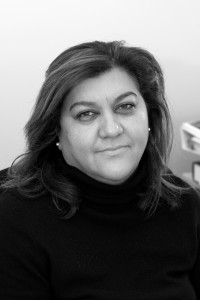
 

Dr Helen Sabzevari

Dr Helen Sabzevari

Dr Helen Sabzevari is Senior Vice President of Immuno-Oncology  at pharmaceutical company EMD-Serono. Sabzevari majored in immunology and immunobiology before going on to do a PhD in immunology, during which she became fascinated by the idea of activating the immune system against cancer. As a result, she went on to do her first postdoc in the fledgling field of cancer immunotherapy. Here she talks to Naturejobs about this growing field of research, and how immunotherapy is changing the treatments on offer for cancer patients.

What is cancer immunotherapy?

In one sense it is looking at how our immune system succumbs to the cancer in the first place, and that makes sense from the perspective that with cancer, the immune system is dealing with its own cells so it’s logical that it would not attack itself. But on the other hand it is fascinating to see how we might train the immune system to recognise cancer cells. For me this is really the dogma I want to address – that on one hand we need the immune system to recognise the serlf versus the non-self, but on the other hand, with cancer, we have to come up with ways to get our immune system to become aware of something that is wrong internally.

After your first postdoc, you switched fields for a while. Why?

It was very clear to me was at that point that in the field if immunology there was a disconnect between cancer immunotherapy on the one hand, and basic immunology and auto-immunity research on the other. Usually these two diseases are opposite sides of a coin – what leads to auto-immunity is over activation of the immune cells, whereas with cancer there is a quiescence of the immune system. My feeling was that it was very important to understand both sides, so I did a senior postdoc in the field of autoimmunity. At the time, some of my mentors did not consider that the best move because I had gained publications and focus in the field of immunotherapy. From my perspective it was completely the opposite – I wanted a holistic view of immunology, in order to come up with more innovative approaches for the immunotherapy of cancer.

During your career have you seen a shift in the way people are looking at treating cancer?

Absolutely. In the past two or three decades the treatment of cancer has been really focussed on radiation and chemotherapy. But the biggest issue there is the toxicity of these treatments. The whole concept of using immunotherapy is to understand how to activate the immune system, which is your own self defence mechanism, and come up with much more innovative therapies that can first lead to the stabilisation of the disease, and eventually work towards a curative aim. This has allowed us to think about approaches that are less toxic, and by reducing the toxicity, patients can maintain the treatment for longer periods of time with a much better quality of life.

What kinds of people are suited to a career in immunotherapy?

It’s unique, in that we need individuals with a good understanding of cancer biology and also a very solid understanding and training in immunology – they can connect this, see the bigger picture, and apply it. Continue reading