Shimi Rii, contributor
My hand was in mid-motion, about to close my laptop after what I thought was a successful committee meeting when I was asked a question that made my heart lurch. “Are you pursuing a postdoc after graduation?” asked one of my committee members.
I paused. “I’m not not interested in a postdoc, if it’s for a couple of years,” I finally stammered. I laughed nervously; could I be more non-committal?
My graduate advisor, surprised and suddenly concerned, retorted, “In that case, we should be brainstorming for potential advisors right now!”
Another committee member chimed in, channeling a scientific Obi Wan Kenobi. “You should cast your net widely, so to speak.”
I left the meeting feeling as if I had already disappointed my committee members. I felt stupefied as to what was supposed to happen after a PhD. I had returned to school determined to find a good job afterwards, and now I found myself staring at a twilight zone filled with possibilities as well as missed opportunities.
{credit}iStockphoto/Thinkstock{/credit}
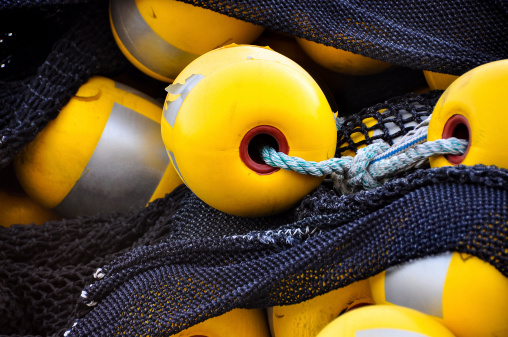
How wide to cast my net?
Obi Wan made a good point. But how wide was too wide? I had started laying down the groundwork for potential post-PhD avenues a while ago and was considering vastly different areas of pursuit:
1) Apply for a fellowship
Ever since I was a M.S. student, I dreamed of applying for the AAAS Mass Media Fellowship, running around in newsrooms and interacting with the community. A recent PhD graduate encouraged, “You would seal your path if you got this fellowship.”
Washington D.C.! By-lines! But my anxieties rushed in like a summertime fog. The fellowship is 10 weeks long, right over the summer, the most crucial time of my Last Year of the PhD. The rough timeline I gave my committee members mandated that my glute be super-glued to a chair, my hands only allowed to touch my coffee mug and keyboard. I have PhD Comics-worthy fears about walking into my advisor’s office and asking for a letter of recommendation for the application, and getting the stern, “this will delay your graduation” speech. Considering that one can apply within one year of graduation, perhaps it is more prudent to postpone this idea until the summer after finishing.
2) Become a high school science teacher
I am an avid science education advocate. In the past 3 years, I have been building up my teaching resume by mentoring students on their AP science projects, teaching summer school courses to middle and high school students promoting hands-on, project-based science education, and learning about national education standards by grant writing for a new sustainability-based charter school. Now would be the time to start inquiring about education jobs that will start in about a year.
However, as much as I delighted in the amazed looks of 15-year-olds seeing their first gel band after a Polymerase Chain Reaction, I am not 100% sure about wanting to leave the lab bench. The act of research itself – figuring out the problem, troubleshooting until getting it right, writing up the results – is what intrigued me from the start. I revel in conversing with fellow scientists about new findings, and look forward to the annual scientific conference (which is often a giant nerd party).
3) Pursue an industry job
I worked in the biofuels industry for two years before deciding to go back for a PhD. I had thought at that time that my natural path was to return to the same industry, older and wiser. Now, I wasn’t quite sure, and I was dismayed to realize that I had not put out any feelers for jobs nor had made any additional connections during this time. If this were really my passion, wouldn’t I have continued to steer my research in this direction? In order to venture outside of academia again, I should be researching companies, tailoring my CV, and attending tech company seminars to meet people. But now, I feel as if I’ve been back in school for too long; I don’t even know where to start.
4) Look for a postdoc
So I come full circle and I wonder whether I should actually pursue a postdoc: the traditional, expected path after a PhD. In truth, I’m a bit scared of not doing a postdoc. At a recent CV writing workshop, I was surprised to learn that I was one of the lonely few tailoring their CV for a non-academic position. It seemed like career suicide to rule out the path altogether.
As I consider jumping on the academic bandwagon, I think about how much of my life has been subconsciously put on hold until graduation: “I’ll upgrade my ’93 Honda Accord after I finish;” “I’ll take trips with my mom when I have more time;” “I’ll get pregnant when I’m not working with hazardous chemicals.” The list goes on and on. I’m starting to accept that the PhD should be a part of my life, not the other way around. With the pressure to publish, write grants, and continuously look for the next job, choosing a postdoc seems to me to be prolonging this procrastination of life. As many had written so eloquently, I am weary of being in a ‘personal kind of hell’ or singing the postdoc’s “torch song”.
Casting my net on the “right” side
And he said unto them, Cast the net on the right side of the ship, and ye shall find. They cast therefore, and now they were not able to draw it for the multitude of fishes.
– John 21:6 (KJV)
There are many proposed meanings for the famous Bible passage, but I am drawn to one: the story illustrates the idea of doing things in a new way, encouraging us to extend ourselves beyond the box. Instead of doing the same things in the same ways that we’ve always done, trying out new ideas allows us to discover a multitude of opportunities that may never have been encountered if we didn’t try.
I know that I don’t have to decide my exact career path right this minute, and I’ll probably continue to dodge the dreaded question for the next year. However, my committee member’s question made me realize that it’s important to be aware of my personal and professional goals as I consider where and how wide I will ultimately cast my net. Sometimes, though, it’s about being in the right place at the right time, and I hope that in the next year, I will know the exact strategy to increase the likelihood of drawing in the perfect fish.