Why you should come to the Naturejobs Career Expo in London on 19 September 2014

Naturejobs-podcast

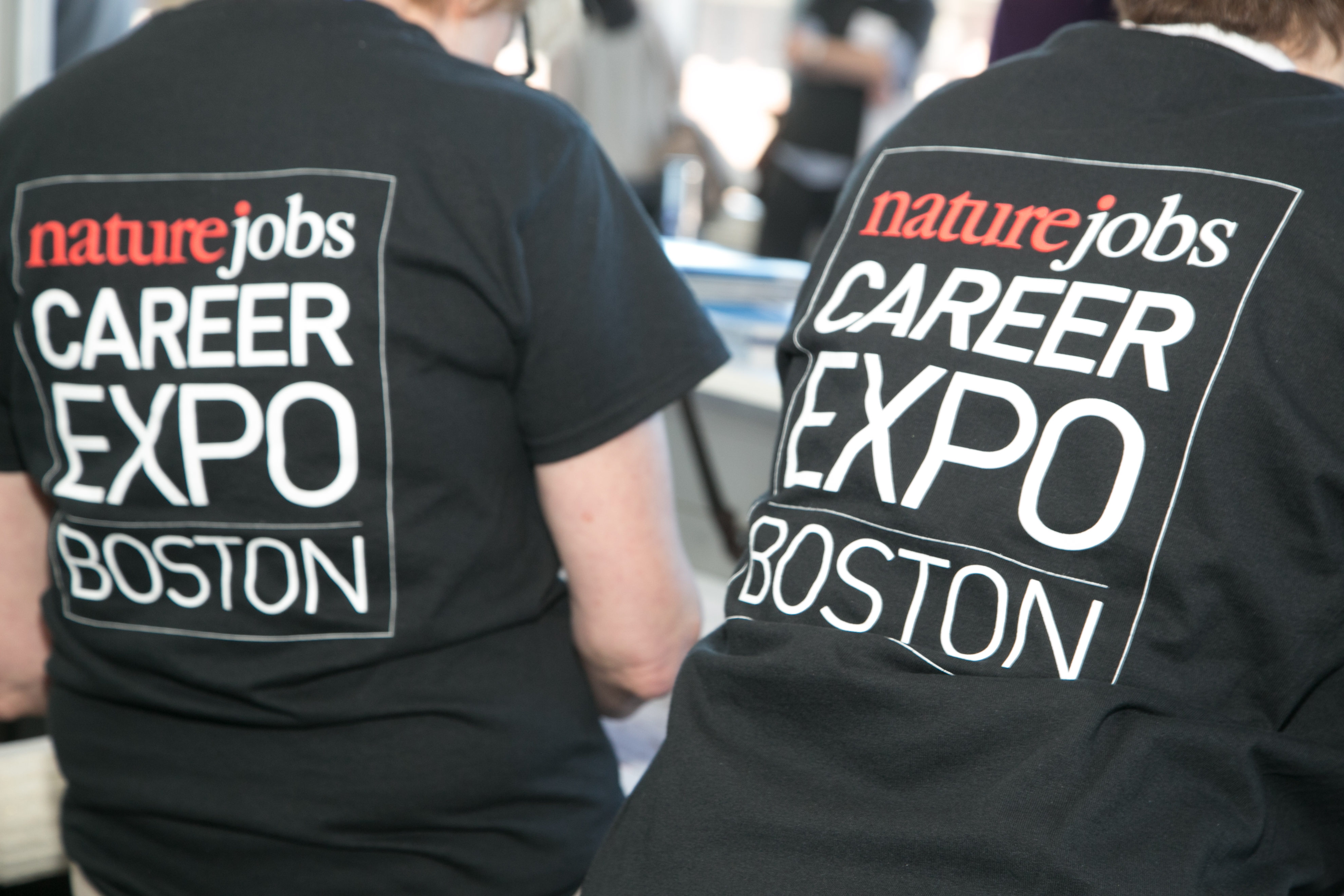
The Naturejobs team hosted their first Naturejobs Career Expo in the USA on May 20th 2014. Their chosen spot: Boston, MA, a state known for its biotechnology hubs and world renowned institutions: Harvard University and Massachusetts Institute of Technology.

In between welcoming the delegates and hosting panels, I put on my reporting hat and found out what the organisers, delegates, speakers and exhibitors had to say about the event.

The conference hosts sessions with experts and careers advisers from industry and academia, providing practical advice on transferable skills, career paths and CV writing. “The Naturejobs Career Expo is an extension of what we offer online,” says Nils Moeller, global head of sales and advertising at Naturejobs. The Naturejobs Career Expo also offers a career exhibition, where employers showcase their companies and offer advice (and potential job opportunities) to visiting delegates. Listen to the podcast to find out more.

You can read all about the Boston Expo conference sessions from the reports written by the Naturejobs Career Expo competition winners by looking in the #NJCEBoston category archive on the blog.

You can register for free for the 2014 London Naturejobs Career Expo, which will be on September 19th at the Business Design Centre in Islington. We’re also running the Naturejobs Career Expo journalism competition for our London event, but the deadline for entries is tomorrow (August 1st), so get them in quick!

We want to know: What do researchers do next?

what do researchers do next?In May this year, Vitae (a career development service for researchers)  and Naturejobs co-launched a survey: What do research staff do next? The goal of this survey, according to Dr Janet Metcalfe, Chair and Head of Vitae, is to: “create a range of career stories of former research staff that reveals their career journeys and explores what were the tipping points in their careers.”

There have been 1500 responses to this survey so far, but we’re hoping to have more input from those who have transitioned from academia into industry. This is an on-going survey, and the initial results will be announced at the Vitae Researcher Development International Conference in September this year.

Advice to transitioning scientists 

Imagine you are your younger self: an academic, unsure of your future prospects as funding bodies chop and change their budgets and the number of postdoc positions dwindle. You’ve decided you would like to leave academia. But what now? It can be a daunting position to be in, and one that would welcome some advice from someone who has been through this before.

Fast forward to your present self: Would you agree with the advice that others presented in the survey? What would you add?

“Try and identify which kind of skills you acquire while doing research, there are many such as management skills, analytical skills, organizational skills, etc. that will be useful in many jobs.”

“To nurture a strong ethic of self-care when making the transition, as sloughing off one’s academic identity is no small feat. Also, be patient; your first job is unlikely to be your dream job. Try to use your first job as a means of figuring out what you’d really like to do.”

“If your passion isn’t in bench research, do something else.  There is tons of stuff out there for life scientists that leverages your existing skills.”

“If you’re not ready to let HE go completely, look for support roles. Often the work is similar to research, and there is less focus on profit margins and overzealous management than in industry. Your employer is also more likely to support future professional training because they understand your need to learn and develop intellectually.”

“Go for it!  It may seem daunting but if you never try, you’ll never know. And if you decide that a career outside of research is not for you, there’s nothing to stop you from going back.”

Insight into transitions

By taking part in this survey, you’re providing an insight into the transition between the two. “Through the survey results we will also start to understand the motivations for researchers leaving higher education,” says Metcalfe, “and how their competencies and experiences are transferable into other employment options.” This insight could help careers advisers and others understand how to provide better advice to those wishing to move from academia to industry. Several of the researchers highlighted areas of difficulty during their transition when they were asked about their reasons for leaving academia.

“When I failed to secure further research funding or teaching posts, I fell back on my transferable skills and found myself immediately short-listed for two jobs I applied for.”

Some transitions are harder than others. A few of those who have shared their stories have mentioned that they chose to leave because they wanted to and a great opportunity came up.

“I had a good opportunity at the right time:  permanent and interesting employment that fitted with my desire to continue to do research for the benefit of society.”

Others weren’t so fortunate.

“Organisational restructuring led to a loss of my department and insufficient alternative posts to accommodate everyone.”

Whatever your story, whether you left academia to pursue your dream career, or because you had to leave, please share it and take part in the survey by following this link.

You can share this survey with colleagues, friends and family – anyone who has transitioned from academia into another career. You can also follow the action on Twitter by using the hashtag #PostAcStory, where you will find those who have blogged about their experience, including Dr Beeton (@Shackleford_LB) and you can watch the #PostAcStory Vitae Google Hangout.

You can also share this flyer to help spread the word.

Q&A with Gerjon Ikink: Using policy to change science

Gerjon Ikink

{credit}Courtesy of Gerjon Ikink{/credit}

Gerjon Ikink is currently in his fifth and final year of a PhD at the Netherlands Cancer Institute in Amsterdam, but is thinking about leaving research. He always wanted to be a scientist so that he could contribute to society by exploring the unknown in search of the truth, in this case research into the genetic pathways involved in breast cancer.

But a few years into his PhD, he found it difficult to imagine continuing down this career path. Although his interest in science hadn’t wavered, his feelings towards the infrastructure of the academic life had. Now he is planning on moving into the world of science and education policy, hoping to right the wrongs that are pulling him out of academia.

When did you become disillusioned by science?

When I was an undergraduate, science was all about looking for the answers to the big questions, looking for the truth and understanding how our world works. But during my PhD, and maybe a little before, I became disillusioned with this idea. Continue reading

Why peer mentoring is important

Contributor Shimi Rii

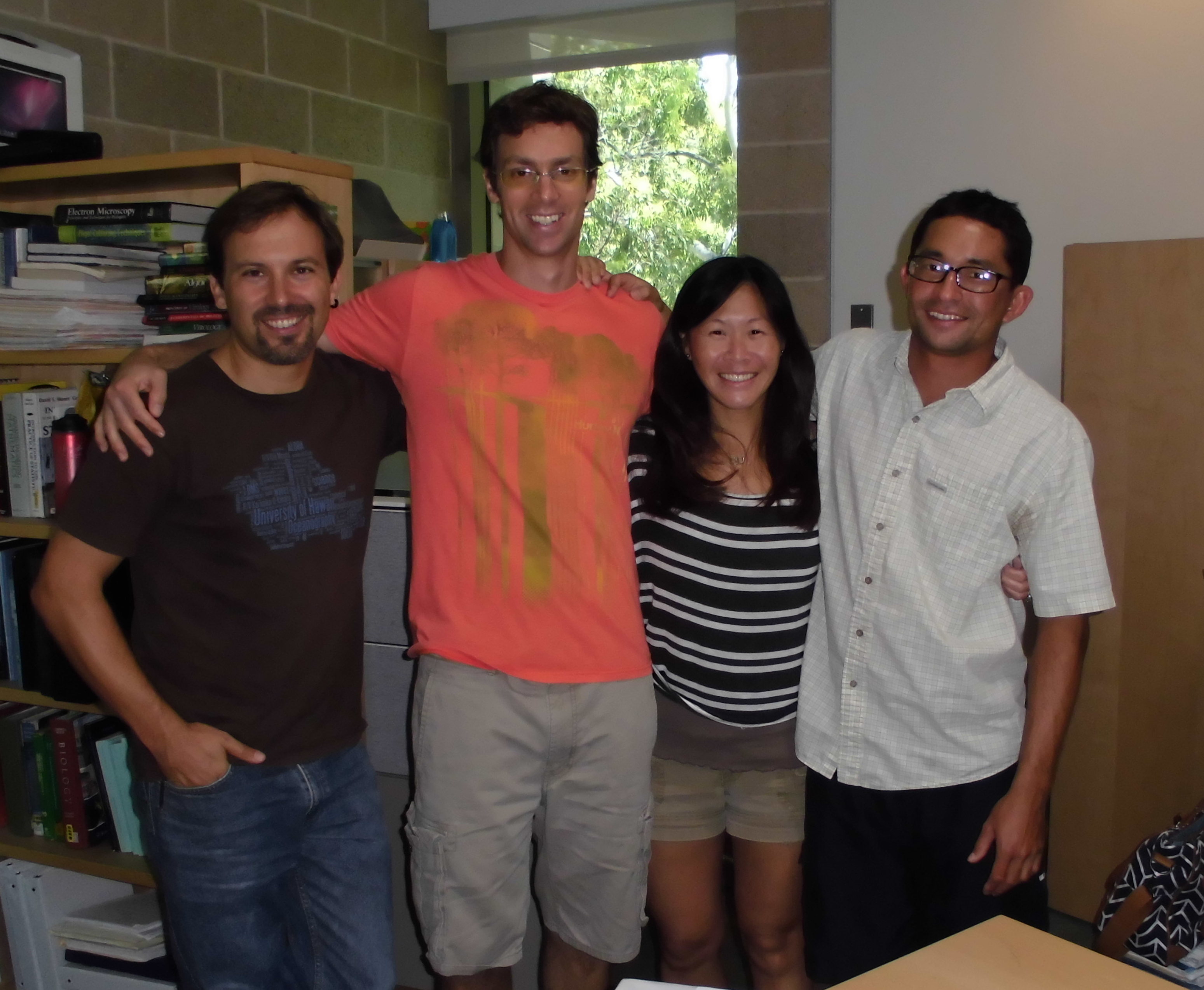
Shimi Rii's peer-mentoring group. From left to right: Donn Viviani, Chris Schvarcz, Shimi Rii, Brenner Wai

Shimi Rii’s peer-mentoring group. From left to right: Donn Viviani, Chris Schvarcz, Shimi Rii, Brenner Wai{credit}Credit: Dan Sadler {/credit}

Almost an hour had passed since my committee members had excused me from the room where I had just taken my PhD Qualifying Exam. It wasn’t a good sign. When my advisor finally appeared, I took one look into his eyes and the outcome was clear: I didn’t pass. As I left the building in a zombie-like state, my phone rang. It was a fellow PhD student who had taken her exam in the past year. She understood the complexity of my emotions at that moment, helped me analyse each question and answer as well as the psyches of each committee member, and she even cracked a few self-deprecating jokes to keep me from melting into a puddle of worthlessness.

Shortly after the failed exam, my advisor moved across the country and I contemplated quitting school. Thanks to many influential people in my life, I stayed, passed my second attempt at the exam, and was even awarded a fellowship. Now, when I’m asked about graduate school survival skills I emphatically claim, “go and find yourself a learning community.” Continue reading

When a PhD isn’t enough

Contributor Bianca Marcolino

165492777_decisions_istockphoto_thinkstock

{credit}Credit: Thinkstock{/credit}

“You need to beg, borrow and steal” was the advice I was given by a Pfizer medical director on how to enter the pharmaceutical industry after graduate school. The medical director also had a Ph.D., and I had met him through a common friend. He had transitioned from academia into industry, and was personally aware of the difficulty in making the switch. It is especially challenging if you’re looking for a scientific role away from the bench. Hence, the dramatic advice that you need to do whatever it takes, get as much outside experience as you can, to land the first job post-graduate school. Having a Ph.D. is one thing, knowing how to sell it in the non-academic market is another.

My undergraduate research helped me decide that I wanted to become an independent scientist. I went to graduate school to study biology, because I loved science and wanted the training that only designing and executing experiments can offer. Towards the end of my Ph.D., I had my mid-Ph.D. crisis. Am I ever going to defend? If I manage to survive, do I want to do a postdoc afterwards? These were the questions that plagued me and probably many other Ph.D. students. In the end I couldn’t see myself doing a postdoc, and wondered what do next. Were there any suitable jobs for a Ph.D. graduate without experience outside of academia?

After countless applications and hours spend steaming my interview blazers, I am now working as a medical writer for a healthcare agency. I enjoy applying my science background towards solutions for constantly changing projects.  Continue reading

Coping in the era of cyber-Darwinism

Contributor Simon Peyda

simon peyda

{credit}Credit: Elina Peyda{/credit}

The World Wide Web celebrated a quarter of a century this year. I am old enough to have witnessed the advent of internet and yet vividly remember 8-bit video games, floppy disks, VHS and cassette tapes. They are memories that those born into the social network and smartphone-centred world of today will not share. As a biomedical alumnus, I believe in Charles Darwin’s “Survival of the fittest” theory. Thus I have wondered; how does my generation survive in a labour market when competing with emerging information technological natives?

In a previous NatureJobs entry, Digital tattoos, Shimi Rii made a crucial observation how “we suffer from a lack of web presence”.  “We”, I assume, excludes the youngest generation.  Thus, we must up our IT skills to avoid extinction. In addition, Get Social… for selfish reasons! hit the nail on the head. I have a real life example of this that I wanted to share.

As an experiment, I documented the journey through my studies at Karolinska Institute’s Master degree programme in Biomedicine all the way to graduation day. It began in March two years ago when I submitted my application papers. At the time, I had questions that could be boiled down to “What is the Karolinska experience like?” If I had uncertainties, as a native student, surely there would be others and even international applicants wondering what awaited them, too? I set out an aim to connect curriculum with actual experience through daily blogging. Continue reading

Academia, industry or non-profit? An interview with Carrie Leonard

Contributor Shimi Rii

Carrie-Leonard

{credit}Courtesy of Carrie Leonard{/credit}

After 10 years in an academic setting, first as a PhD student, then postdoctoral fellow and finally assistant research professor, Carrie Leonard accepted a job at BAE Systems, Inc., a global defence, security and aerospace company, where she spent more than 12 years. Based in Honolulu, Hawaii, she started as a manager of Applied Sciences and Algorithms and Ethics Officer, becoming a lead on Advanced Concepts in her last 2 years. I first met Carrie in 2003, when we collaborated on a multi-institutional oceanic eddy project. Over time, Carrie became not only my role model (she was the only female PhD that I knew in a leadership industry position at that time) but also a mentor, providing me guidance and multiple career perspectives. A few months ago, I ran into Carrie at the Joint Aquatic Sciences Meeting held at the Oregon Convention Center. As we caught up over beers, she told me about her new position as Director of Science at The Freshwater Trust, a non-profit organization with a mission to preserve and restore Oregon’s freshwater ecosystems. Having now worked in three very different work environments – academia, industry and non-profit – Carrie was full of insight and advice.

What motivated your transition from academia to industry?

I went to work for industry because I could not land a tenure-track academic position. I had a self-funded research faculty position, but was dependent entirely upon my own grant funding. I knew that I was just a few grant rejection letters away from not having a job, and as the main source of income for my family, this situation was not financially acceptable. At this time, I found out about a small technology start-up that was doing ocean remote sensing for the US Navy, and I made the leap into the unknown. What drew me in was continuing to do research in my area of expertise, but with greater job stability, better pay and benefits. The specific employer and workplace was not the driver, but the ability to continue to pay my mortgage and to do research certainly was. Continue reading

London Naturejobs Career Expo 2014 journalism competition

Naturejobs-Career-Expo-Boston

Following the success of the Boston Naturejobs Career Expo journalism competition (you can read all the articles from the competition in the #NJCEBoston category), we have decided to repeat it for the London Expo, which takes place on 19th September  2014 at the Business Design Centre in Islington.

We are looking for five budding science writers to help us with our coverage of the Naturejobs Career Expo conference sessions and workshops. The conference will explore career paths in industry, academia and science communication,  entrepreneurship, structuring a CV and transferable skills, amongst other things. The five winners will have the opportunity to attend the Expo and write up at least two of the sessions or workshops for our readers, sharing the advice and expertise of the speakers with those who cannot attend in person. Winners will work closely with our editors, and their articles will be published on the Naturejobs blog.

Continue reading

How to become a science adviser for films and TV shows

Naturejobs-podcastThis week, Nature Careers ran a great feature about scientists who act as advisers for Hollywood blockbusters and hit TV shows: Media consulting: Entertaining science. The article touches on the experience several scientists have had with some big names: David Saltzberg and The Big Bang Theory, James Kakalios and The Amazing Spiderman, and Donna Nelson and Breaking Bad.

I decided to dig a little deeper into Donna’s story, and that of Dr David Kirby, a science communication professor at the University of Manchester, to find out a little more about the cultural differences between the lab and the media.


Continue reading

PhD applications: Your science or your story?

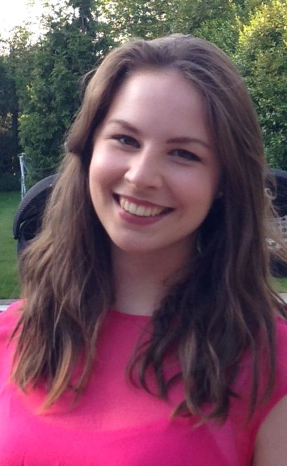
Contributor Aimee Eckert

Aimee-Eckert

{credit}Courtesy of Aimee Eckert{/credit}

When I started my first year of A-Levels, my father sat my younger sister and I down and told us he was terminally ill. Despite surviving previous tumours of the throat and lymph, cruelly and almost mockingly, a melanoma scattered its metastases and took residence in his brain. I cannot remember much of that conversation apart from that he might ‘have a year left.’  After the most courageous fight imaginable, he passed away at home eight months later in May, aged only 43 years old.

Biology has always been a passion for me, as during school I was astounded by how the individual units of our bodies – our cells – work, and what goes wrong in the event of disease. My family’s experience was a key factor in cementing my decision to study cell biology at university and pursue a scientific career. However, due to the prevalence of cancer (in the UK, 1 in 3 people will be diagnosed with it) my story is far from unique; throughout my undergraduate and now postgraduate study, I continue to meet people who have had extremely similar experiences. This has reinforced the fact that I am not alone and it is a powerful source of inspiration when lab work gets stressful.

When it was time for me to apply for PhD positions, questions that needed to be answered on the application forms and personal statements included ‘why do you want to do a PhD?’ and ‘why are you interested in this area of research?’ For me, thinking about my father helped me describe my motivation and discipline and to write a strong application. I was concerned as to whether it was appropriate to briefly mention my experience of cancer in PhD applications. I imagined unpleasant images of my application going straight into the ‘No’ pile if I did. In the end, I decided that what had happened to my family was relevant: it had contributed to my development as a scientist and that the laboratories I was applying to should know about it. Continue reading