Postdoctoral training in Sweden: too short to grow

hourglassMembers of the Karolinska Institute’s Postdoc Association fear an amendment to Sweden’s Research Bill could create career instability.

In November 2016 the Swedish government announced plans to introduce a tenure track system to make academic careers more secure, to improve mobility and to make research more competitive.

But in July last year an amendment to the Research Bill stipulated that PhD graduates had a maximum of five years (two years less than now) to get an Assistant Professorship (Biträdande Lektor in Swedish). Universities must comply by 1 April 2018.


Continue reading

Rescued pets from field sites, plus other scientific career tales on video

Cats and dogs that live on or around field sites can become cherished companions, but what is the best way for researchers to help them? In this week’s Nature careers feature meet Fred and other animals who stole the heart of scientists in the field. To whet your appetite before reading Traci Watson’s article, we’ve produced this little video. Continue reading

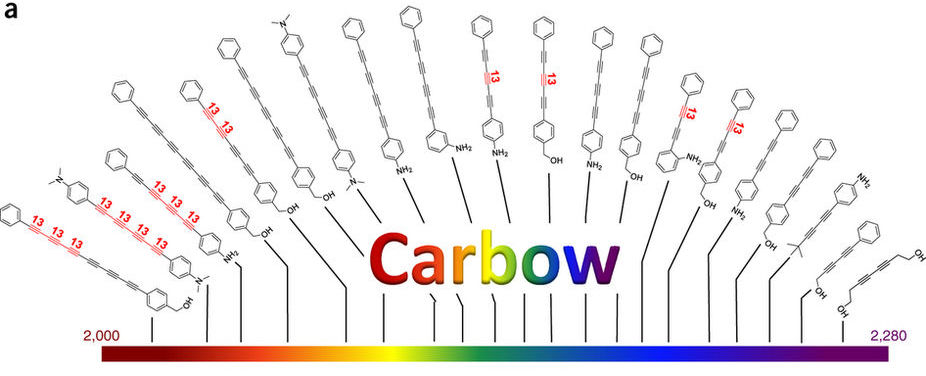
TechBlog: ‘Carbon rainbow’ enables highly multiplexed microscopy

nmeth.4578-F3Fluorescence microscopy has transformed the life sciences. By attaching fluorescent dyes or proteins to cellular structures, researchers can image fine cellular morphology; track molecular localization, motion, and dynamics; and more. But fluorescence microscopy also presents significant obstacles. One of those is multiplexing.

Continue reading

Building a Scientific Community – DIY for Young PIs

Through developing a new type of conference, we built a new scientific community – a place to openly share ideas, enjoy the support of our peers through both professional and personal bonds, and promote our trainees. Here’s how.

By Gabriel Leprivier, Thomas G. P. Grünewald, Maya Bar, Oded Rechavi, Barak Rotblat

Becoming a new PI is an exciting experience with its own set of challenges. To maximize our scientific and social impact, we asked how we could make conferences better for attendees. Could we come up with a conference format which would form a community, with an emphasis on mutual respect, trust and a spirit of collaboration?

Continue reading

Still more gender differences are identified

Gender gaps in science continue to exist, and a pair of recent studies highlights yet another set of differences between female and male researchers.

nj7677-549a-i1

One study suggests that the concept of “brilliance” in science might discourage some women from following certain career paths or education opportunities. Another found that women are more likely than men to offer “honorary authorships” to scientists who may not or do not deserve it—a courtesy that might obscure the magnitude of their own contributions. Continue reading

Cristina Lo Celso: Career-changing encounters

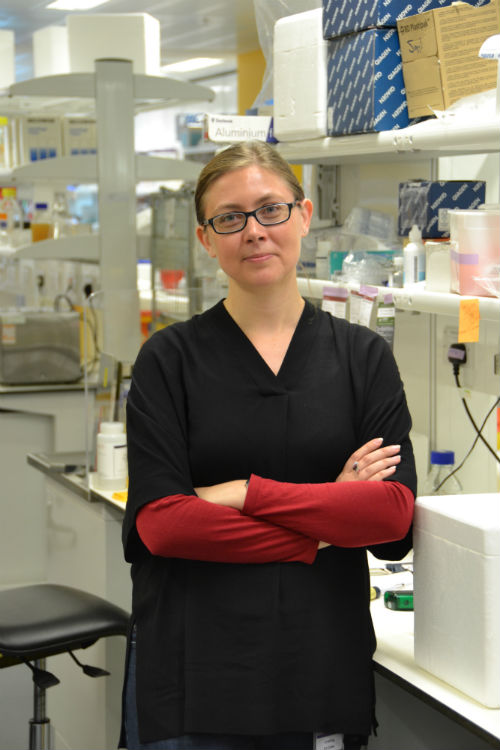
cristinaCristina Lo Celso is the first woman to receive the UK Academy of Medical Sciences Foulkes Foundation Medal since the award was launched in 2007.  While a postdoc at Harvard University Lo Celso developed microscopy techniques that allowed blood stem cells to be viewed inside their natural environment for the first time. She describes her career to date, how she chose science over medicine, and her mentors.

Why did you choose a career in academic research rather than medicine? 

I did consider medicine.  Antonio Lo Celso, my paternal grandfather, was a surgeon in Sicily before retiring to Turin, where I grew up. He got me interested in human health and how the body works. But when I was about 15 I read Dominique Lapierre’s 1991 book Beyond LoveIt’s about clinicians and scientists and patients during the early stages of the HIV epidemic and it made me realise that research can make a massive difference. Continue reading

US postdocs need more support from their institutions, says advocacy group

Compensation, benefits and parental leave, among other issues, continue to be problems for US postdocs, according to the US National Postdoctoral Association (NPA).

nj7677-549a-i1

US academic institutions continue to enhance postdoctoral researcher experiences, but there is room for significant improvement, according to a 3 January report  from the NPA in Rockville, Maryland. Continue reading