Fluorescence microscopy has transformed the life sciences. By attaching fluorescent dyes or proteins to cellular structures, researchers can image fine cellular morphology; track molecular localization, motion, and dynamics; and more. But fluorescence microscopy also presents significant obstacles. One of those is multiplexing.
Wandering the convention center among 30,000-plus researchers, students and vendors at the Society for Neuroscience annual meeting in San Diego last November, I struggled to wrap my head around a feature I was writing for this week’s Nature, on managing big brain data. Mice, molecular biology and cell sorting reigned supreme in my former life as a bench scientist. Neurons, brain imaging, terabytes — not so much. So when it came time to find an entry into the vast universe of the brain, I latched onto something that seemed small and manageable: the fruit fly.
Ann-Shyn Chiang of National Tsing Hua University, Taiwan, told the SFN crowd his team has spent a decade imaging 60,000 neurons in the Drosophila brain. The pictures produced 3D maps detailed enough to show which neurons control precise behaviors, such as shaking the head side to side (see video). But here’s the part that blew my mind: They aren’t even halfway done (flies have 135,000 brain neurons), and mapping the human brain with similar methods would take 17 million years!
Head shake behavior elicited by a 593.5-nm laser. Credit Po-Yen Hsiao and Ann-Shyn Chiang.
Training and mentoring opportunities for junior researchers in particle physics, cell biology, mechanobiology and materials science will be created in connection with four partnerships that are funded by the US National Science Foundation (NSF) in Arlington, Virginia.
NSF on 26 September announced US$94 million to support four new Science and Technology Centers (STCs). Each awardee will receive up to $24 million over a 5-year period, with the possibility of a continuation for 5 more years. In addition to these latest awards, NSF supports eight active STCs across the United States. Each STC involves partnerships across universities, federal labs, industry and other organizations.

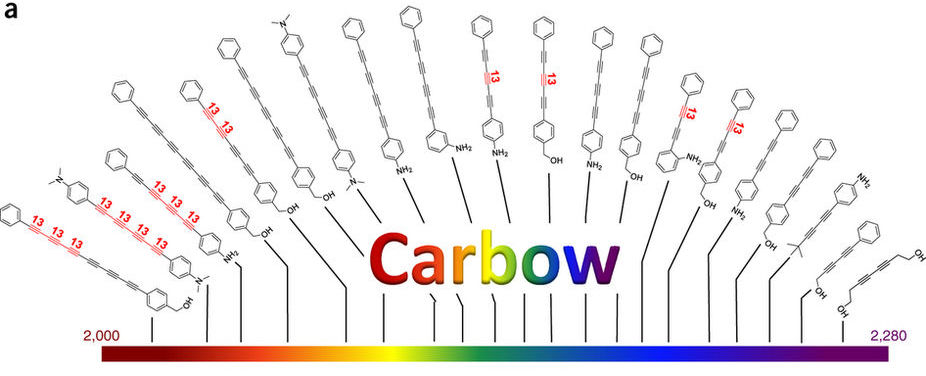 Fluorescence microscopy has transformed the life sciences. By attaching fluorescent dyes or proteins to cellular structures, researchers can image fine cellular morphology; track molecular localization, motion, and dynamics; and more. But fluorescence microscopy also presents significant obstacles. One of those is multiplexing.