How colleagues can influence career decisions

We like to think that our career decisions are made by us, rather than by somebody else. But what if the people around us influence the decisions we make, asks Jessica Gorrill.

Naturejobs colleagues

{credit}Paul Young{/credit}


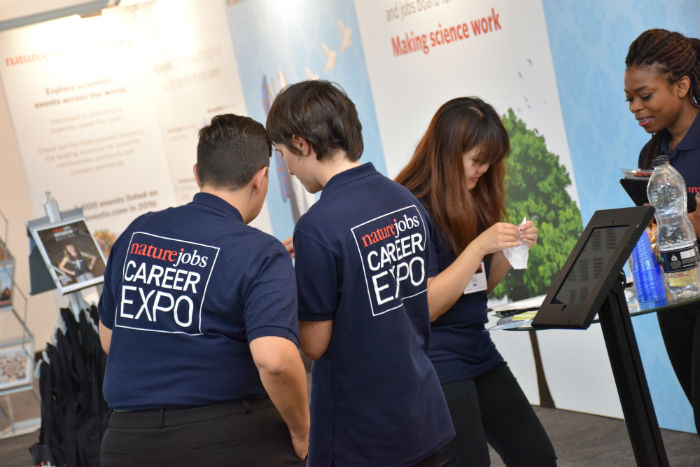
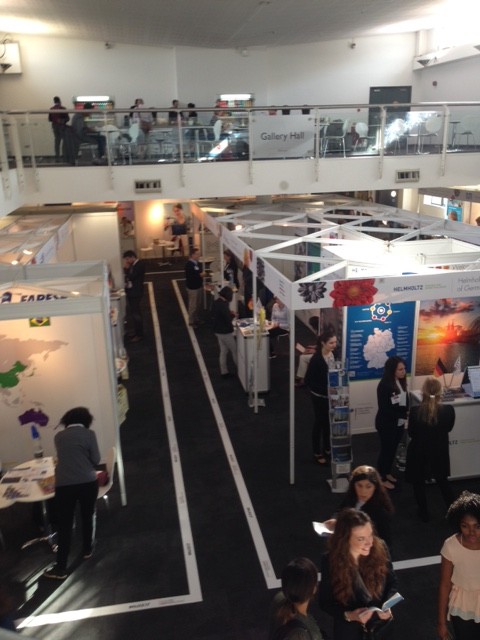
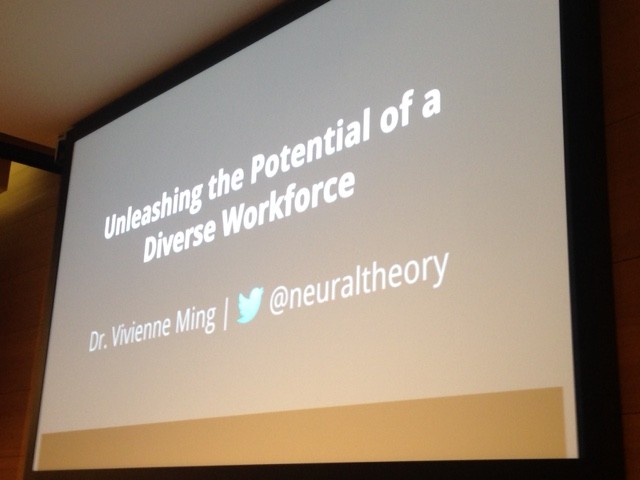
A recurring theme from the recent Naturejobs Career Expo 2017 was the importance of interpersonal relationships and how these can shape the course of our careers.  Continue reading

Of message and meaning

London Career Expo 2017Jiska van der Reest encountered a heady mix of meme-mastery and compelling honesty at the Naturejobs Career Expo. But there was a simple underlying message: scientific success is about effective communication.

For me, the Naturejobs Career Expo in London was a happy mix of career development advice, networking, aspirational talks, and a bird’s-eye view of the various opportunities that exist for scientists in a variety of fields. With so much going on, I was surprised to walk away with what seems to be a very simple realisation: that the main skill that will make the difference between being a good scientist and having a successful scientific career is your ability to effectively communicate. Continue reading

Surviving academia as an early career researcher: an unreliable guide

Being an early career researcher is exciting but terrifying. Use this guide to make the most of your PhD or postdoc experience, says Atma Ivancevic.

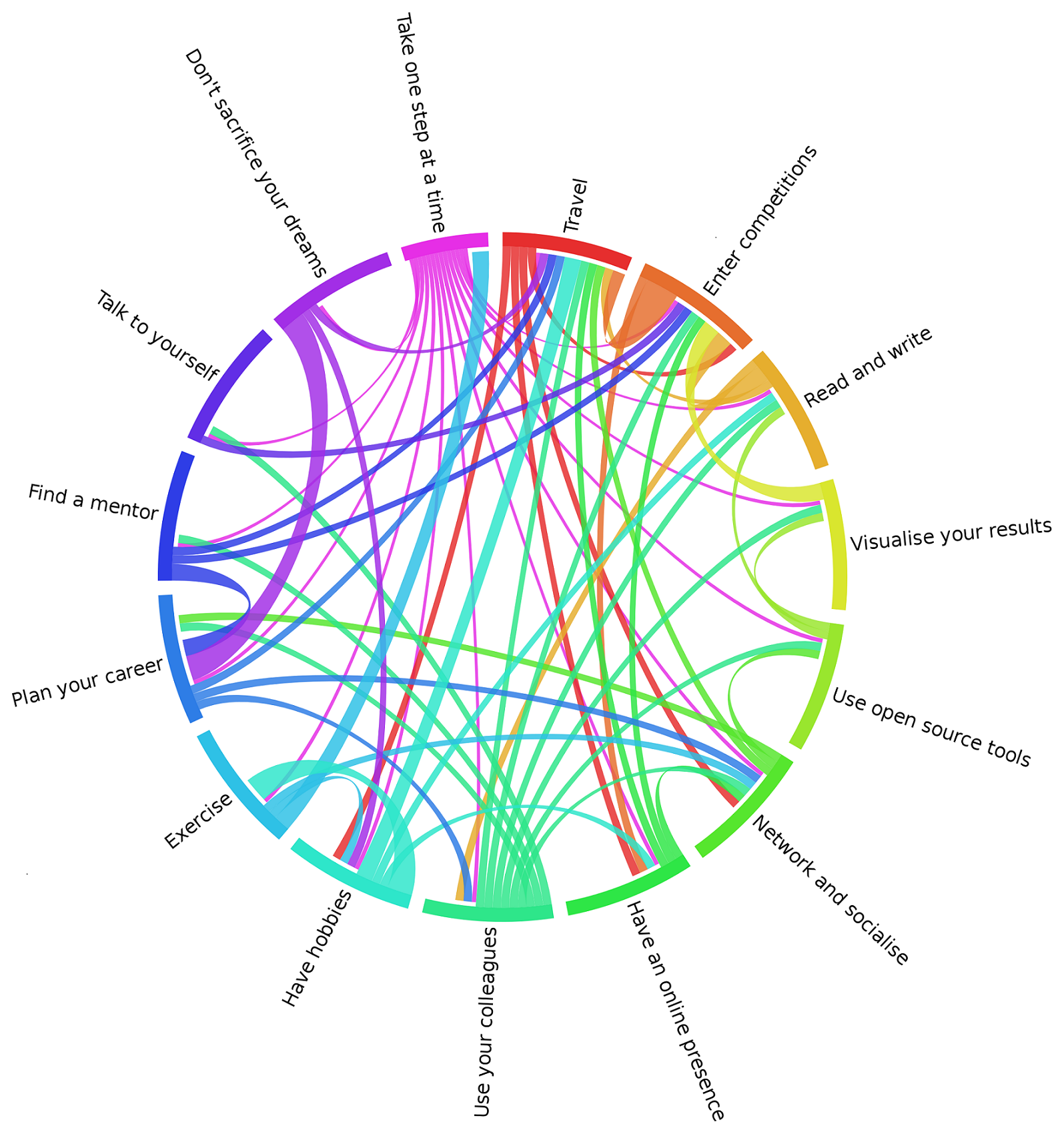
In today’s cut-throat world of grants and publications, being an early career researcher (ECR) can feel more than a little daunting. As an ECR myself, I can’t guarantee that this will help you make it to the other side unscathed. But I’m still here, and if you’re reading this, you probably are too. Outlined below are the things I’ve learnt during the ups and downs of post-PhD life.


circos-table-myxvjxw-smaller

Continue reading

How will open data advance scientific discovery?

SciData writing competition winner Sarah Lemprière explains how making the world’s deluge of data open will help science

As a global population we are generating more data than ever before. The International Data Corporation (IDC) estimates that by 2020 over 80 million gigabytes of data will be produced every minute. Each second, the world will generate enough data for a 50-year-long Netflix binge. Scientific investigation is a big part of that: every day huge amounts of data are generated on everything from the behaviour of supernovae to the 3D structure of proteins in the brain. When the world’s largest radio telescope comes online in 2020, it alone will produce 180,000 gigabytes of data a minute.

Previously, most of this scientific data would never be made public — the need to produce a compelling story for a journal article means that many datasets showing ‘negative’ results will never be published.

Continue reading

Harassment and assault: ‘Disheartening’ trends

By Paul Smaglik

The belief that rules of workplace conduct don’t apply away from a university setting helps to perpetuate a culture that gives rise to sexual assault and harassment of female scientists conducting field research, says a co-author of a report published this month in American Anthropologist.

pathway-1081989_1920 Continue reading

Growing the next generation of scientists

Scientists have a duty to inspire the next generation of students. To do this, we need greater interaction with young people and the local community.

Naturejobs journalism competition winner Jessica Gorrill

The future of STEM (science, technology, engineering and mathematics) in the UK is on shaky ground. The numbers of entries at A-level for Biology, Physics and Chemistry dropped by 1%, 2.6% and 1.6% respectively in 2016, according to statistics collected by the Joint Council for Qualifications. This ends the steady increase seen since 2009. Whilst this drop may be attributed to the first year of new government reforms, it could be the beginning of a worrying trend of students neglecting careers in science.

Ideas-naturejobs-blog

{credit}Topp_Yimgrimm/ThinkStock{/credit}

Continue reading

TechBlog: Interactive figures address data reproducibility

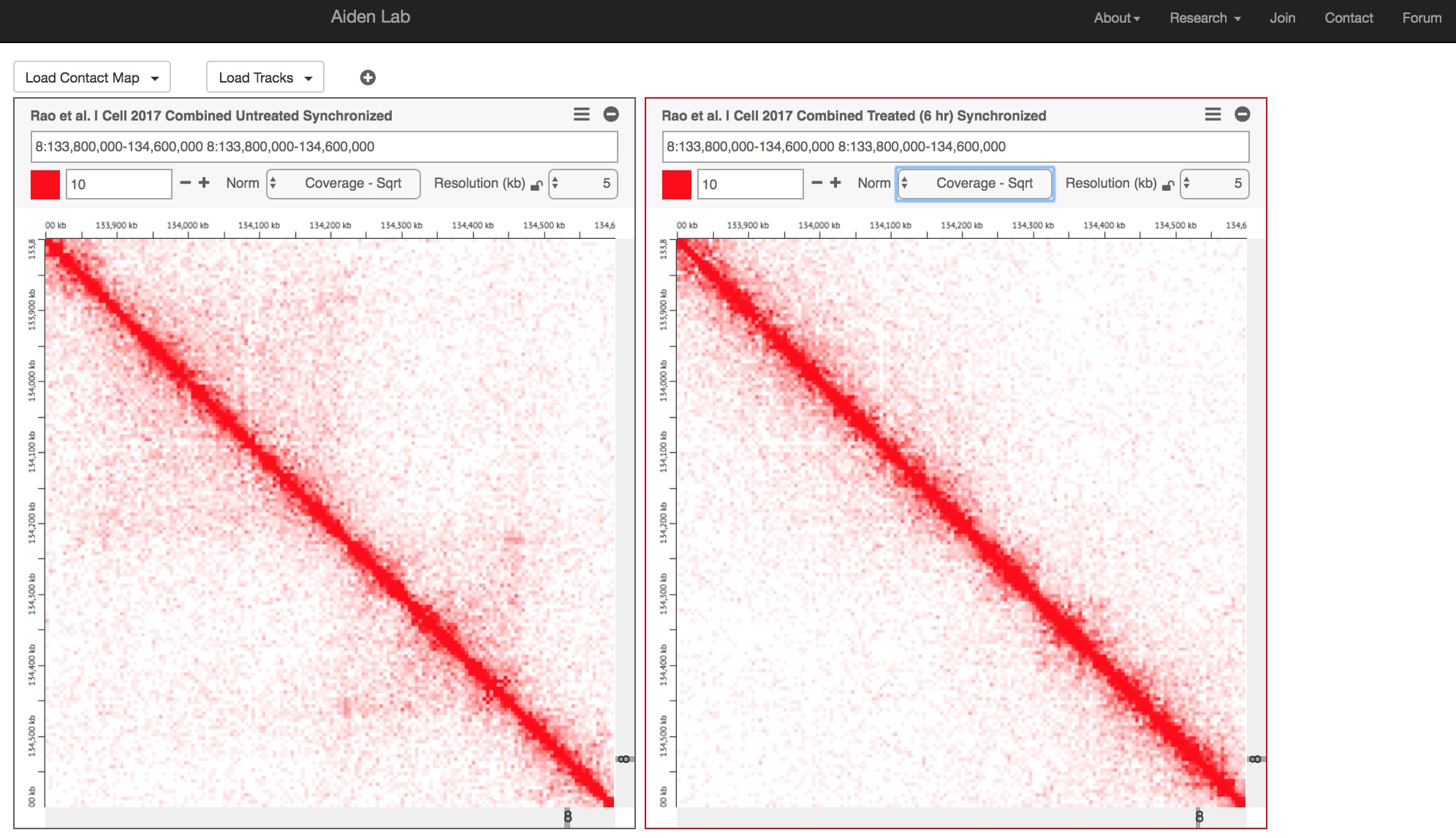
Juicebox.js

Juicebox.js{credit}Screenshot/Jeffrey Perkel{/credit}

Data reproducibility and transparency mean different things to different people, but one aspect involves allowing scientists to view and manipulate the data or code underlying published figures, both to double-check others’ work and to repeat those analyses using custom data. Over the past year, for instance, the open-access journal F1000Research has implemented integrations with Code Ocean and Plotly for viewing and manipulating programming code and figures, respectively. Now, a new publication showcases interactive figures for 3D genome analysis, too.

Continue reading

Building skills through a gig

Some researchers are providing short-term services such as writing science news articles and consulting on industry products to bolster their skills outside the lab. These side gigs can be valuable for career development, says Josh Henkin. (See related story here.)

GettyImages-95692019-smaller

{credit}Noel Hendrickson/Getty{/credit}

Continue reading

The power of data shared

In a world of interdisciplinary research, we need to make data freely available, says Katie Ember

Better Science through Better Data writing competition winner Katie Ember

Every Monday in the University of Edinburgh’s School of Chemistry, the Campbell group gather in Room 233 for a lab meeting. If you’re hosting the meeting, you bring cake. Or you forget and everyone pretends they’re not feeling a bit hungry and disappointed. Then, two scientists in the group present that month’s work.

Every Friday in the Centre for Regenerative Medicine, a fifteen minute cycle from the School of Chemistry, the Forbes group file into the first floor meeting room. After battling with the “motion-activated” lights, we all talk through what we’ve achieved that week.

Teamwork

The reason I go to two lab meetings in one week is because I’m attempting to detect liver damage using laser light. It’s multidisciplinary and it’s hard: requiring input from biologists, physicists and transplant surgeons from different institutes. The end result is that I spend about four hours each week not doing science but discussing it. Whilst this may seem like a strange way to do research, I cannot overstate how important it is. Continue reading