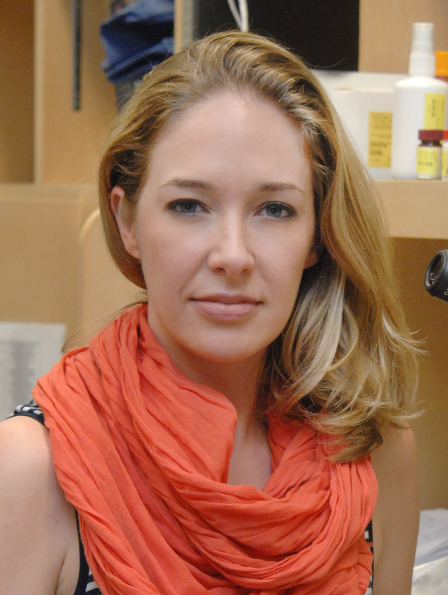
Shimi Rii, contributor
When I walked up to the Graduate Division window to turn in my M.S. thesis back in 2006, I was 100% positive that I was walking away from school for good. In 2009, I returned to the same window to hand in my application for a PhD.
What changed?
Post M.S., I was working as a biochemical research specialist for a biotech company, growing 60,000 liters of microalgae as feedstock for biofuel. I felt satisfied that what I got my degree in was actually applicable to real life energy solutions. Gone were the days trying to explain the significance of phytoplankton in oceanic cyclones at a Christmas party. Instead, I felt like a superstar trying to save the world. Not to mention that I could finally shop at Banana Republic, an activity that seemed as far-fetched to grad students as going to the moon.
However, life as a technician was challenging and interesting, but not entirely rewarding for me (disclaimer: the situation I’m about to describe is dependent on the person and their job). I felt dismayed to hand off my carefully calculated experiment results to Dr. Supervisor, who presented my findings at board meetings, decided on the next moves, and then handed me a list of to-dos. Despite its relevance to society, I couldn’t talk about my work (especially the super-secret algae stuff). I felt insignificant. Looking five, even 10 years down the line, I didn’t see much change in my responsibilities. In my company, the line between a M.S. and a PhD was like a one-way mirror in an interrogation room.
My feelings of inadequacy were also exacerbated by the fact that those with B.S. degrees were getting paid comparable if not higher salaries than me. They were certainly qualified for their jobs, and my responsibilities were not much more than theirs. But I was proud of the work I put in to acquire my M.S., and I wanted a clear distinction of the value that was placed on my graduate degree, whether it was through monetary value or responsibilities. My 29-year-old brain whirled in anxiety: I have an aging mother and a special needs sister. How was I supposed to take care of them on a $40K salary? What about my future children? I never thought that I’d feel so trapped being a technician.
{credit}iStockphoto?Thinkstock{/credit}
Perhaps in a different company with a different management team, I would have been given more ownership of my projects. For many, technician roles are perfectly fulfilling.
Regardless, I was faced with a choice – to switch jobs, or fields, or go back to school. And with that decision, I had to evaluate the Million Dollar Question: What qualifications do our degrees guarantee? What skills or abilities does a M.S. or PhD in basic sciences indicate that graduates have? This is what I came up with:
Basic Skills with a M.S. degree:
- Can work independently as well as in groups
- Ability to complete projects
- Basic scientific report writing skills
- Basic oral presentation skills
- Problem-solving skills
- Organizational skills
Making the list for a PhD graduate produces pretty much the same list https://www.nature.com/naturejobs/science/articles/10.1038/nj7343-381a. The main difference, I believe, is this: completing a Ph.D. takes persistence (an average of 5-7 years persistence). PhD students can expect a different level of standards from their advisors, and not only do they have to complete 3 to 4 chapters for their thesis, they have to come up with the ideas for them too, which takes initiative. Finally, being able to tie together different aspects of the chapters requires a broader knowledge of the field. Though dissertations are often highly specific, the ability to place their research in a wider context makes a PhD graduate a “professional” in their field to some degree.
This, I realized, was what employers were looking for in the differences between the two degrees. This was the final reason I went back to school: I wanted the covetable Ph.D. skillset.
People often ask me if I wish I went straight into a PhD. The answer is, not at all. Without my strong conviction to get my M.S. and go into the workforce, I wouldn’t have had the experiences I’ve had, such as dealing with a management team and working in the field of profit-minded science. I also might not have had a strong passion for my PhD project, which is an important requirement for anyone going into a doctorate program. My favorite thing about being back in school, however, is the number of opportunities available to me again as a student, such as outreach, teaching, and of course, science communication.
Ultimately, I’m still not sure where I will end up after my PhD, and sometimes I fear that I will have fewer job options with a PhD as I may come across over-qualified. But in the end, I think the journey – with opportunities and the people you meet along the way – may be more important than the letters after your name.
Shimi Rii is a fourth year PhD candidate at the University of Hawai’i, in the School of Ocean and Earth Science and Technology and is one of the winners of the Nature careers columnist competition. Keep an eye out for Shimi’s work here on the blog and in the Careers pages of Nature magazine.