Why scientists should communicate hope whilst avoiding hype

How we communicate our research is important in maintaining public trust in science

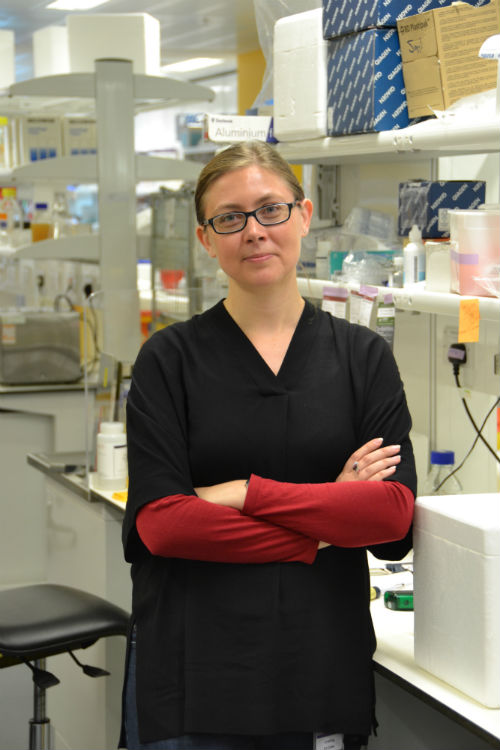
By Eileen Parkes

“Exciting new line of attack for aggressive breast cancer”

I read that headline recently. “Fantastic” I thought, quickly followed by, “How have I missed this?”. My disappointment as I read the article (the new treatment had only been shown to work in cells in the lab, not in humans) turned to anger as I thought what someone with breast cancer might think whilst reading this. Someone who had coped with bad news and difficult treatments, hoping for a cure only to be disappointed again and again by overblown headlines.

Continue reading

How could universities and funders improve the situation for postdoctoral scientists?

What the research system needs to be doing to improve the world that postdocs face

By David Bogle

I’ve already written about how PhDs can prepare for and decide whether or not they should pursue a postdoc. Here, I will discuss what more universities and funding agencies should be doing as stakeholders in training and employing researchers.

Universities must be doing more to ensure the postgraduate experience is a positive one

Employers, both at universities and elsewhere, need a range of sophisticated research skills at their institutions. Early career researchers have already shown themselves to be incredibly talented; and society needs them to drive innovation in the economy. This is all the more important in the context of an ongoing war for talent. Researchers must have the opportunity to develop as ‘creative critical autonomous intellectual risk takers’ for the sake of society. Continue reading

What should you get from being a postdoc?

And what should you look for when finding a postdoc position?

By David Bogle

You are coming towards the end of your PhD – so what next? There are many options open to you; one obvious one is to apply for a postdoc position. You should think carefully about what you want to do and not just pursue this through inertia. I have supervised many engineering PhDs and some postdocs in my 32 years as an academic. As Head of University College London’s Doctoral School, I oversee the environment and policy for 6000 doctoral candidates and 3200 postdocs.

Many can find good reasons to do a postdoc. {credit} Guy H/ Flickr CC-BY-2.0 {credit}

Continue reading

Taking the stage: #ScientistAtWork photo competition 2018

Garry Cooper

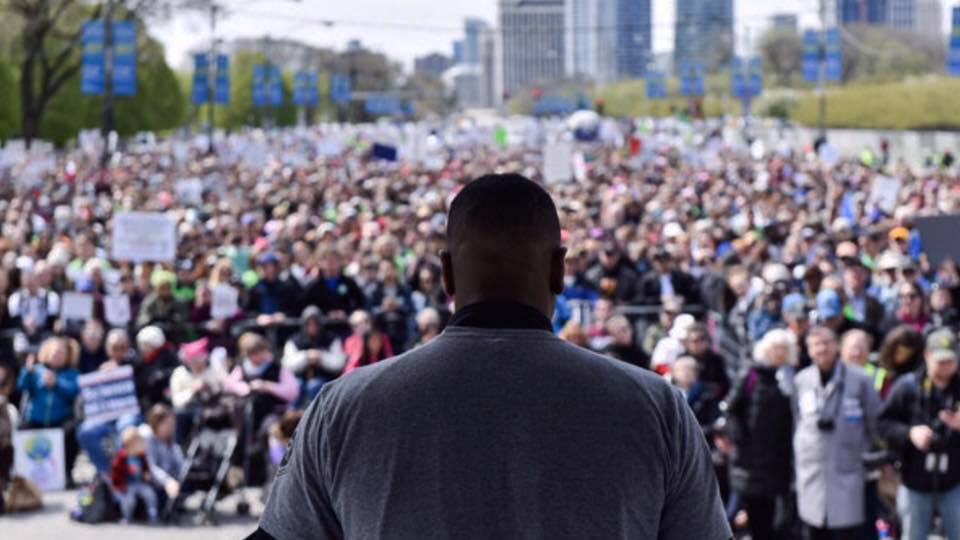
This picture of Garry Cooper was taken at as he spoke to a crowd of almost 60,000 scientists and supporters, during the March for Science on April 22 2017. It was submitted to Naturejobs as part of the #ScientistAtWork 2018 photo competition. Cooper tells Rebecca Wild about the story behind the picture.

Entries to the #ScientistAtWork competition close on 31 March. You can find out more at this link.

Continue reading

March for Science 2018 gears up

Organisers of the second annual March for Science , scheduled for 14 April in Washington DC, are hoping to recapture the energy and enthusiasm that prompted more than 1 million researchers and others to march together last year across 600 cities around the world in support of evidence-based policy and upholding science for the greater good.
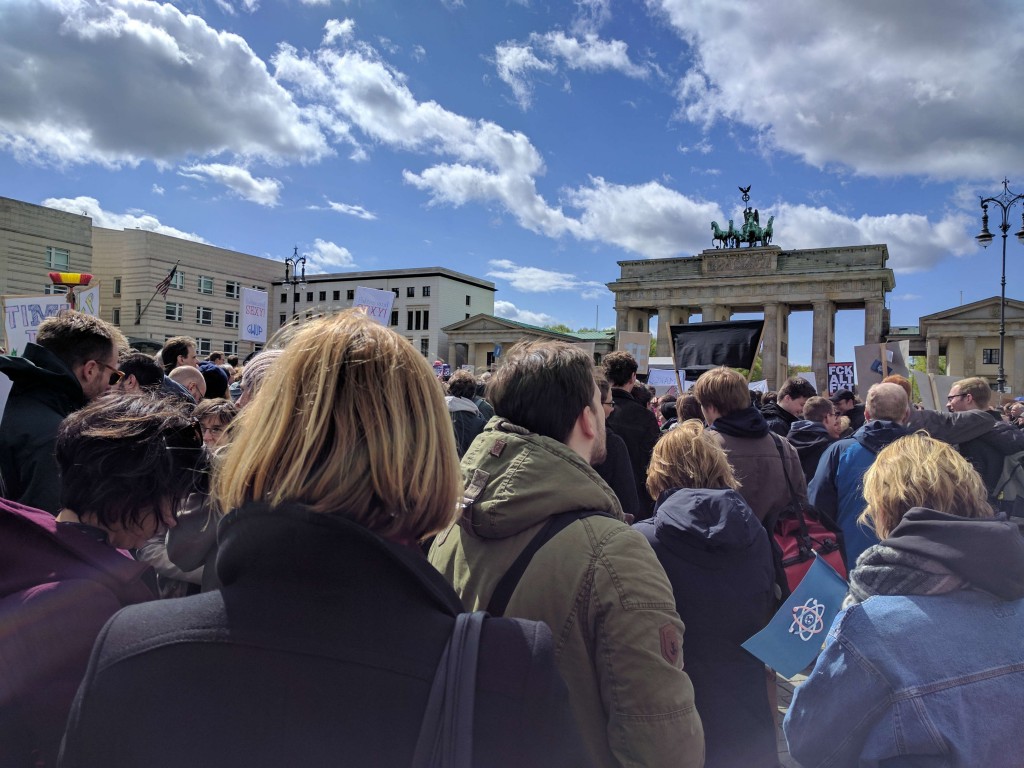
MarchforScience-Judith-2-smaller

Caroline Weinberg, an organizer for the upcoming march in Washington DC, expects smaller crowds than last year, although she admits her prediction may again be off the mark. “Last we expected 40,000 people, and we got around 100,000,” she says. She adds that most of the marchers in the nation’s capital city were concerned citizens, not practicing researchers.

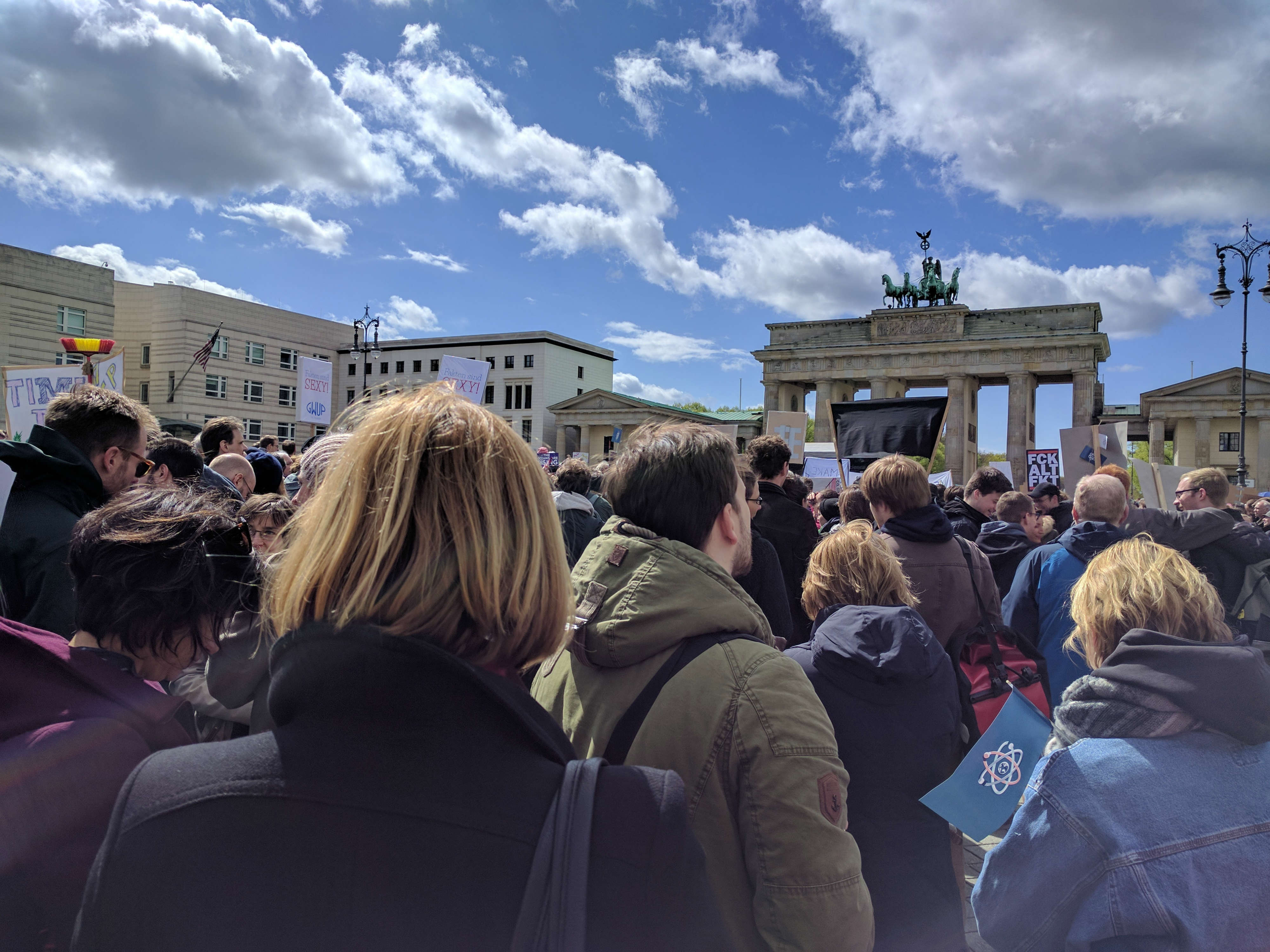
In Washington DC and elsewhere, organisers envision events with fewer marchers, placards and chants but more advocacy-related activities. Weinberg and others aim to offer hands-on projects for those taking to the streets in Washington DC. In Berlin, Germany, organisers are planning a “local hero” programme where scientists will give public talks at bars, cafes and other venues. March-related activities in Portland, Oregon, will include speeches by local politicians and a science expo with at least 30 presenters, including a juggler who demonstrates the principles of physics.

The election and inauguration of Donald Trump for US president helped to spur marchers last year, and Weinberg says that she suspects that some scientists this year may be motivated to speak out against Trump’s recent budget proposal, which called for drastic cuts to the US Centers for Disease Control and Prevention spending plan . But she adds that the march and other forms of science activism shouldn’t depend on crises to draw interest and participation. “Our challenge is to build up a huge crowd and send a message that galvanizes everyone but to also make it sustainable,” she says. “We can’t allow our advocacy to be tethered to those moments.”

Roughly 15,000 people attended last year’s march in Portland, but that kind of enthusiasm will be hard to replicate, says Denesa Oberbeck, a behavioral neuroscientist at the Oregon Health & Science University in Portland and a member of the steering committee for this year’s march. “There’s some fatigue and some burnout, but we need to keep fighting,” she says. “We have to maintain an activist stance.”

Kristine Wadosky, a cancer researcher at Roswell Park Cancer Institute in Buffalo, New York, marched in Washington DC last year carrying a sign that read “Curing cancer is non-partisan.”  This year, she plans to join the march in Chicago, Illinois, where she will give a talk on advanced prostate cancer for the annual meeting of the American Association for Cancer Research. She says that she’s just as energized about science advocacy as ever before, and she thinks that many other young scientists feel the same way.

This time, Wadosky says, she won’t need a sign to send her message, which isn’t especially complicated. “I just want to go to show that I’m a scientists, and I exist,” she says.


Chris Woolston is a freelance writer in Billings, Montana.


Suggested reading:

Growing pains
In support of the March
Reflections on a movement

STEM jobs and gender stereotyping pictured at Davos

Donald Trump’s “America first but not alone” speech at last month’s World Economic Forum meeting in Davos may have hogged the headlines, but the meeting of world leaders was also chosen to launch the largest ever global survey of primary schoolchildren’s career aspirations.

Continue reading

Cristina Lo Celso: Career-changing encounters

cristinaCristina Lo Celso is the first woman to receive the UK Academy of Medical Sciences Foulkes Foundation Medal since the award was launched in 2007.  While a postdoc at Harvard University Lo Celso developed microscopy techniques that allowed blood stem cells to be viewed inside their natural environment for the first time. She describes her career to date, how she chose science over medicine, and her mentors.

Why did you choose a career in academic research rather than medicine? 

I did consider medicine.  Antonio Lo Celso, my paternal grandfather, was a surgeon in Sicily before retiring to Turin, where I grew up. He got me interested in human health and how the body works. But when I was about 15 I read Dominique Lapierre’s 1991 book Beyond LoveIt’s about clinicians and scientists and patients during the early stages of the HIV epidemic and it made me realise that research can make a massive difference. Continue reading

The urgent need to recognize and value academic labor

Two Harvard professors share their thoughts on the latest from the US Republican Party’s tuition waiver tax plan.

Crowdfunding-smaller

Recently the House of Representatives essentially voted to destroy graduate education in the United States. By taxing tuition waivers as income — and therefore treating their taxable income as two to three times the amount graduate students are actually paid — the Republican tax bill would effectively put graduate study outside of the reach of all but the independently wealthy. While the Senate version of the tax bill does not include this provision, it is far from certain what the final bill after the reconciliation process will look like.

Continue reading

Changes to the U.S. tax code will harm graduate student mobility and career prospects

Increased financial burden for students will harm science in the long run, says Aliyah Weinstein.

piggybank

A recent editorial in Nature described the harm that newly proposed changes to the United States tax code will have on graduate student finances. If passed, these regulations — ostensibly designed to simplify tax calculations — will eliminate benefits previously given to students. Of particular harm to graduate students and the scientific world would be the elimination of the tax-free status of tuition waivers.

Continue reading

Why scientists should communicate science – getting to the heart of the matter

Communicating science effectively needs more than facts, says Eileen Parkes.

communication

{credit}iStockphoto/Thinkstock{/credit}

Continue reading