Taking the stage: #ScientistAtWork photo competition 2018

Garry Cooper

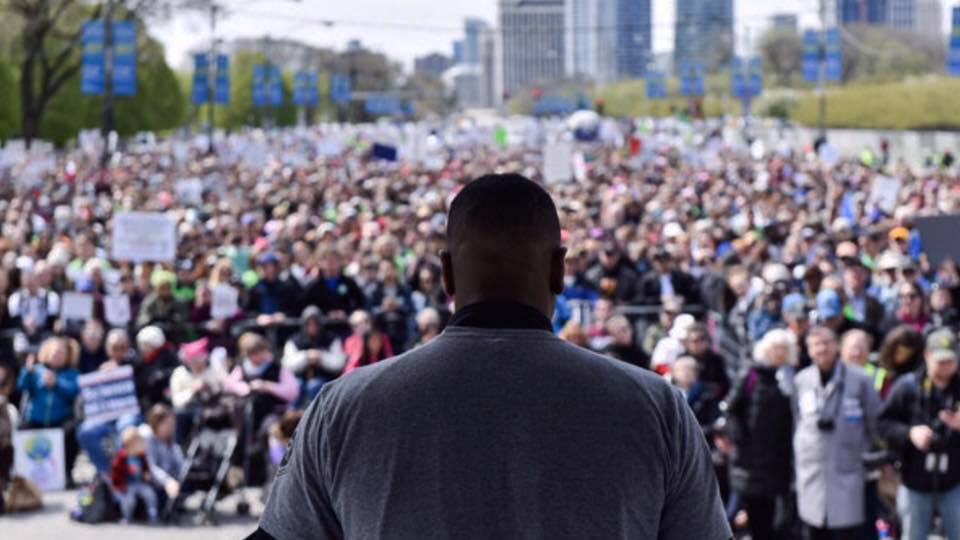
This picture of Garry Cooper was taken at as he spoke to a crowd of almost 60,000 scientists and supporters, during the March for Science on April 22 2017. It was submitted to Naturejobs as part of the #ScientistAtWork 2018 photo competition. Cooper tells Rebecca Wild about the story behind the picture.

Entries to the #ScientistAtWork competition close on 31 March. You can find out more at this link.

Continue reading

March for Science 2018 gears up

Organisers of the second annual March for Science , scheduled for 14 April in Washington DC, are hoping to recapture the energy and enthusiasm that prompted more than 1 million researchers and others to march together last year across 600 cities around the world in support of evidence-based policy and upholding science for the greater good.
MarchforScience-Judith-2-smaller

Caroline Weinberg, an organizer for the upcoming march in Washington DC, expects smaller crowds than last year, although she admits her prediction may again be off the mark. “Last we expected 40,000 people, and we got around 100,000,” she says. She adds that most of the marchers in the nation’s capital city were concerned citizens, not practicing researchers.

In Washington DC and elsewhere, organisers envision events with fewer marchers, placards and chants but more advocacy-related activities. Weinberg and others aim to offer hands-on projects for those taking to the streets in Washington DC. In Berlin, Germany, organisers are planning a “local hero” programme where scientists will give public talks at bars, cafes and other venues. March-related activities in Portland, Oregon, will include speeches by local politicians and a science expo with at least 30 presenters, including a juggler who demonstrates the principles of physics.

The election and inauguration of Donald Trump for US president helped to spur marchers last year, and Weinberg says that she suspects that some scientists this year may be motivated to speak out against Trump’s recent budget proposal, which called for drastic cuts to the US Centers for Disease Control and Prevention spending plan . But she adds that the march and other forms of science activism shouldn’t depend on crises to draw interest and participation. “Our challenge is to build up a huge crowd and send a message that galvanizes everyone but to also make it sustainable,” she says. “We can’t allow our advocacy to be tethered to those moments.”

Roughly 15,000 people attended last year’s march in Portland, but that kind of enthusiasm will be hard to replicate, says Denesa Oberbeck, a behavioral neuroscientist at the Oregon Health & Science University in Portland and a member of the steering committee for this year’s march. “There’s some fatigue and some burnout, but we need to keep fighting,” she says. “We have to maintain an activist stance.”

Kristine Wadosky, a cancer researcher at Roswell Park Cancer Institute in Buffalo, New York, marched in Washington DC last year carrying a sign that read “Curing cancer is non-partisan.”  This year, she plans to join the march in Chicago, Illinois, where she will give a talk on advanced prostate cancer for the annual meeting of the American Association for Cancer Research. She says that she’s just as energized about science advocacy as ever before, and she thinks that many other young scientists feel the same way.

This time, Wadosky says, she won’t need a sign to send her message, which isn’t especially complicated. “I just want to go to show that I’m a scientists, and I exist,” she says.


Chris Woolston is a freelance writer in Billings, Montana.


Suggested reading:

Growing pains
In support of the March
Reflections on a movement

Out of the lab and onto the streets

Nicole Forrester recounts and reflects on her experience at the March for Science in Washington D.C.

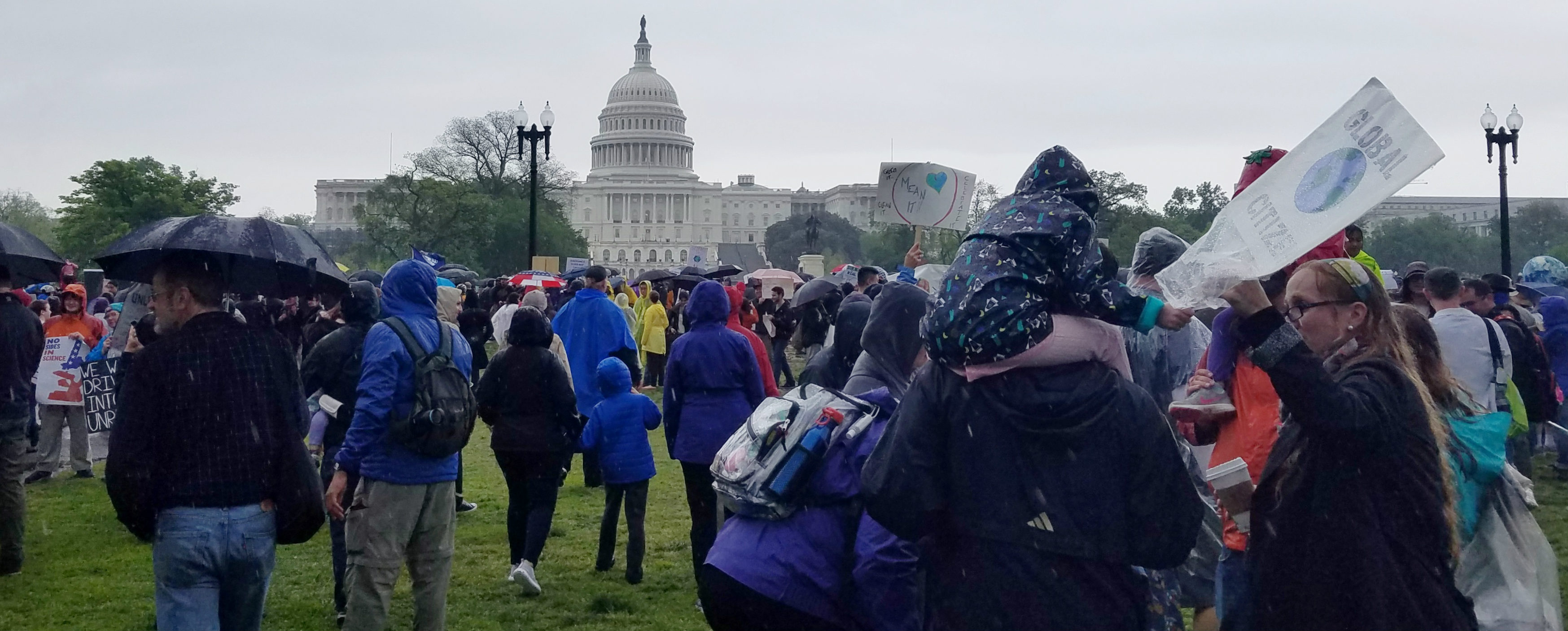
April 22 began with a drizzly ride on rented bikes through the streets of southeast D.C. to the Washington monument. I was accompanied by Dylan Jones, an outdoor recreation and environmental writer from West Virginia. “I typically opt for escaping civilization on Earth Day,” Jones said, “but today I decided to go straight into the heart of it.” We weaved through roads littered with people in rain shells and lab coats, carrying vibrant signs and rainbow umbrellas.

Capitol-smaller-cropped

Continue reading

Boffins, Brexit, Trump and a Time Lord: How the media saw the March for Science

The media seized on “nerdy signs,” celebrity appearances and interviews with working scientists and commentators to demonstrate that the March for Science had firmly engaged the public, says David Payne.

London march for science

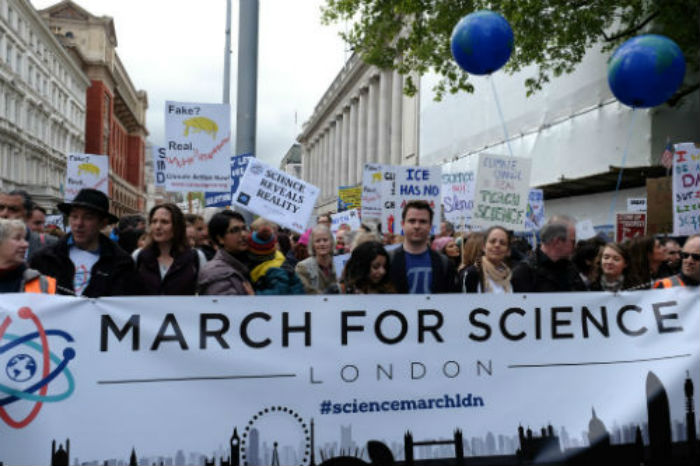
London March for Science: 22 April 2017 Credit: Getty/Nur Photo

A sighting of Doctor Who actor Peter Capaldi “marching alongside physicists, astronomers and biologists” at the London march on 22 April proved irresistible to Daily Mail headline writers, who wrote: ‘”What do we want? Evidence-based policy. When do we want it? After peer review: Boffins’ VERY academic chant as Doctor Who joins thousands protesting against Brexit during global March for Science.” Continue reading

Why I marched for science – a transatlantic perspective

The March for Science turned a spotlight on the importance of research. But it won’t have a lasting effect unless we improve science communication, says Judith Reichel.

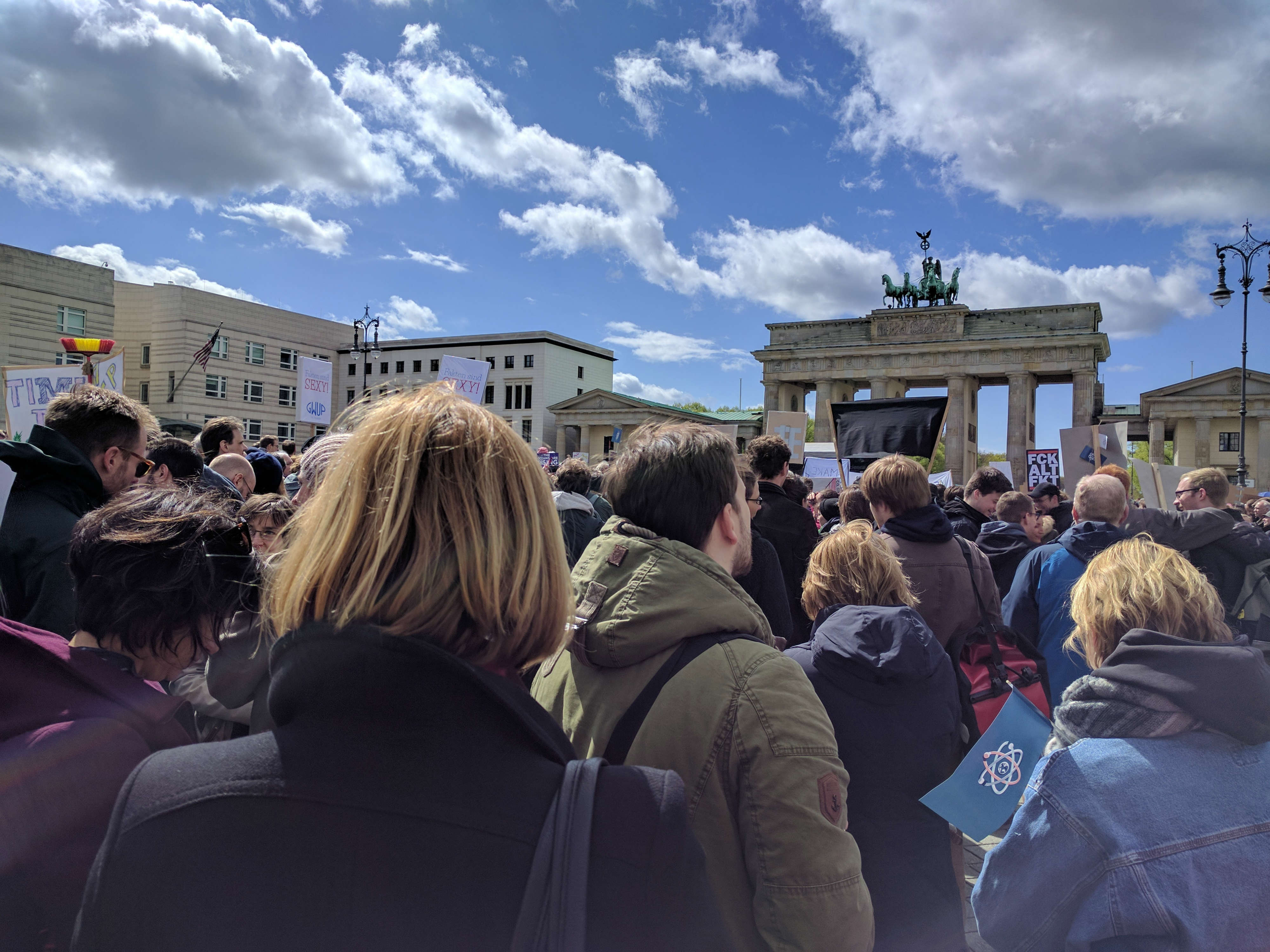
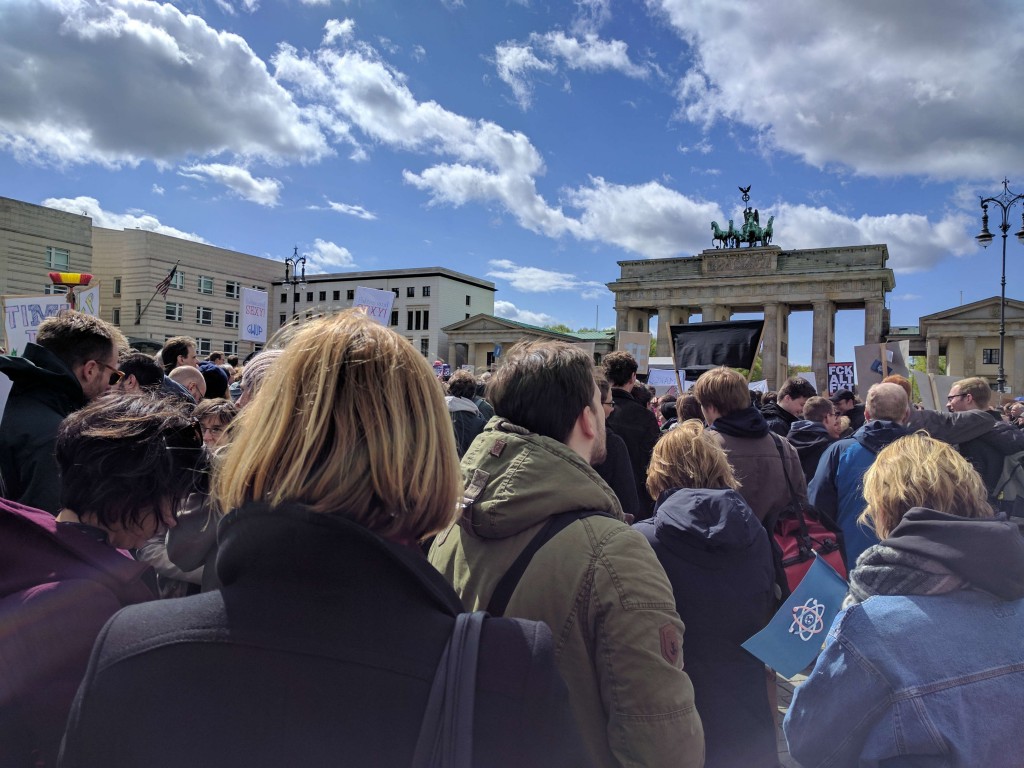
On Saturday, April 22nd, myself and an estimated 11,000 other science supporters marched in Berlin. The event was part of the global “March for Science” that took place in over 600 cities worldwide. While the March here and everywhere else was a great success in putting a spotlight on the importance of research and the danger of building on false facts, I’m worried it won’t have a lasting effect on the public perception of science if we don’t improve our science communication.

MarchforScience-Judith-1-smaller

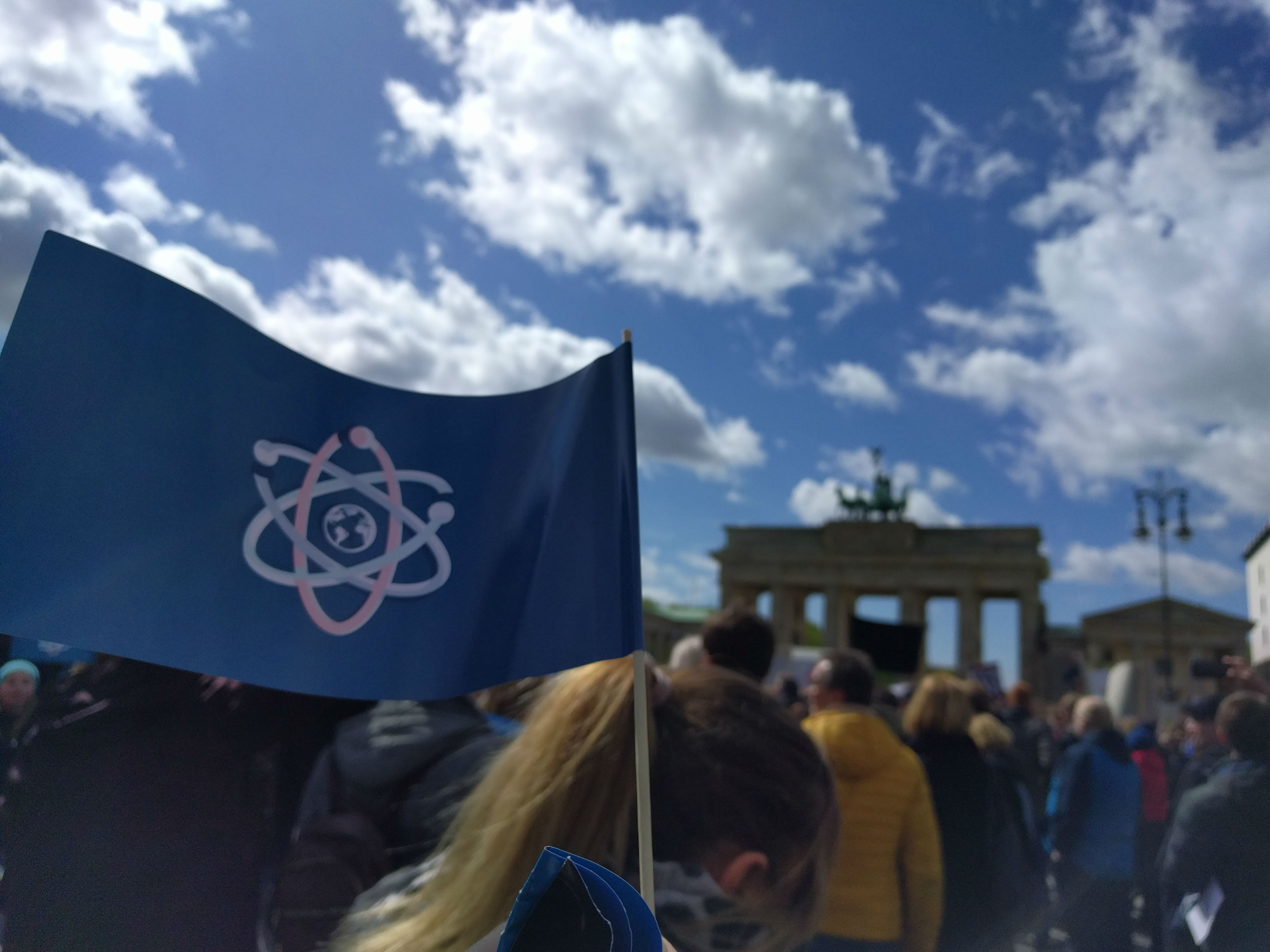
The March for Science passes the Brandenburg gate in Berlin, Germany

Continue reading

Stepping up for hope

What did the March for Science do?

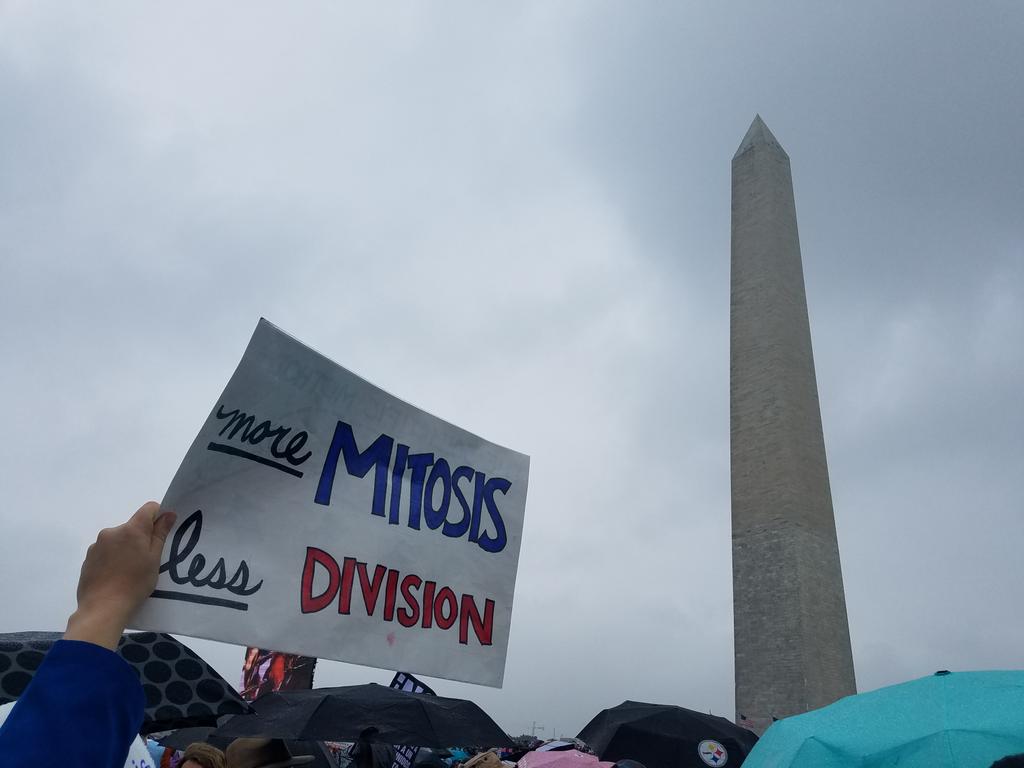
Scientists across the United States are just now returning to their labs after a weekend of marching, waving signs and, in many cases, wringing out rain-soaked lab coats. The steady rain that fell Saturday, 22 April, on the March for Science in Washington DC didn’t dampen participants’ enthusiasm for standing up for “science that upholds the common good and for political leaders and policy makers to enact evidence-based policies in the public interest,” to quote the March for Science website’s mission statement.

march

{credit}Kate Carbone{/credit}


But now that the march is over, scientists have to face some important questions: What message did they deliver, what comes next and what does it all mean for their careers? Continue reading

Why I will not be marching for science

Virginia Schutte says the March for Science won’t meet her goals or those set out by the organizers. Here, she shares some alternatives.

When I was in graduate school, I learned to create classes using backward design. Backward design encourages setting goals and then planning a course of action to meet those goals. This strategy can be applied to almost anything in life. “What do I want for dinner?,” for example, can transform into “I need dinner to be quick” or “let’s get rid of what’s about to go bad in the fridge.”

crowd-1294991_1280 Continue reading

Hope in the Dark and the March for Science

Rebecca Solnit’s recently republished book Hope in the Dark should inspire the organisers of the global March for Science and other protest movements. It’s important to acknowledge and celebrate incremental change, she argues.


YOGYAKARTA, INDONESIA - MARCH 08: Indonesian women perform dance during celebrates International Women's Day on March 8, 2017 in Yogyakarta, Indonesia. International Women's Day was first marked in 1911 and celebrated each year on 08 March with thousands of events around the world by women's networks. (Photo by Ulet Ifansasti/Getty Images)

Women in Yogyakarta, Indonesia, mark International Women’s Day on 8 March 2017 (Photo by Ulet Ifansasti/Getty Images)

When Rebecca Solnit was born in 1961 some Ivy League universities did not admit women, a few Southern US colleges and universities only admitted whites, and some elite institutions still banned Jews. The Berlin Wall was erected that summer and the Cold War was at its height. Continue reading

Join the March for Science in London (and other UK cities)

The most effective way to protect science is to encourage the public to value and invest in it. This is why we’re marching through London on 22 April 2017, says Story Sylwester.

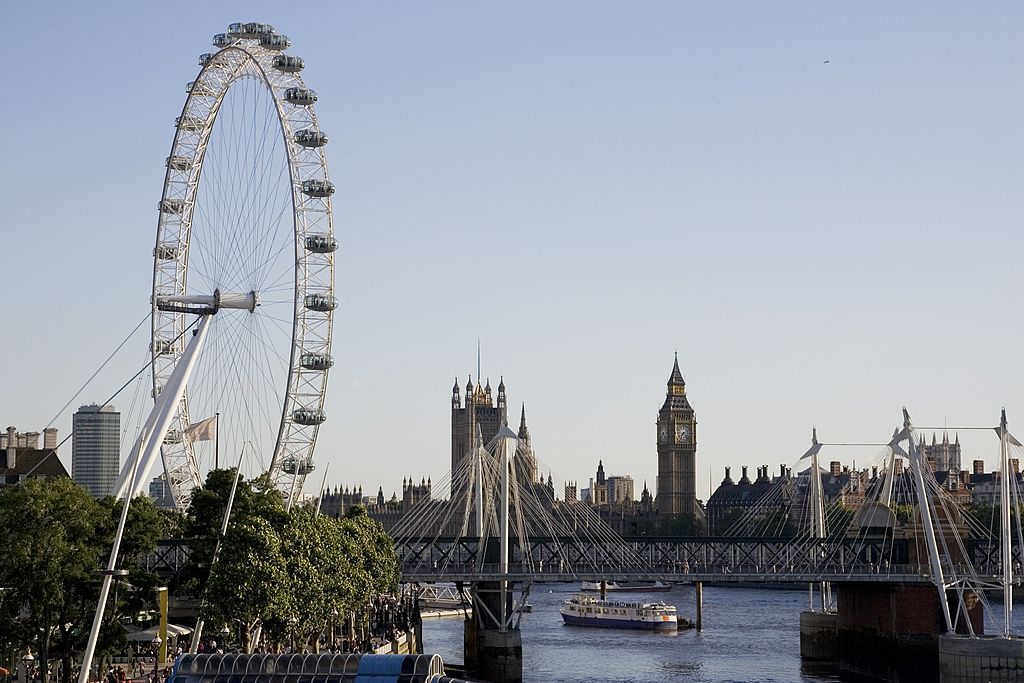
London skyline. Credit: Tim Graham/Getty Images

London skyline. Credit: Tim Graham/Getty Images

As the nature of scientific inquiry developed over centuries from the “solitary genius” model of Sir Isaac Newton to the international collaboration modelled by the Rosetta space exploration mission, UK scientists have been leaders in the development of scientific thinking and methodology. Yet, in an age where science has resulted in new technologies, improved quality of life, and improved understanding of the world around us, it faces some of its toughest challenges. Continue reading