How to reach out

analytics-282739_1280

As discussion of science engagement increases, notably absent is an accompanying conversation about how to appropriately prepare and find opportunities for outreach. Here’s how to get started.

Guest contributor Maria Wheeler-Dubas

The average American does not personally know a scientist, which leaves their opinions of science open to the mercy of pop culture and political pundits. In spite of this concern, one thing that has been greatly encouraging to see in the scientific community is the rise in discussion of STEM outreach. More and more scientists are recognizing science engagement as a way to break stereotypes, have a broader impact with their work, and manage sceptics of tax-funded grants—which is fantastic. However, an important part of the discussion that has been missing is how to go about getting involved in meaningful outreach. How can a research scientist maximize the use of what little time for outreach they might have?  Here is what I’ve learnt as Science Outreach Coordinator. Continue reading

The discomfort is worth it: share more

Making sure to communicate with the public is hard and takes time. Scientists should keep doing it, says Jessica Eise.

When David Eagleman, a neuroscientist at Stanford, wrote the New York Times bestseller Incognito, I read it voraciously. The world of the mind opened to me. My subconscious brain took on an entirely new meaning to me. Eagleman’s research felt salient, relevant, and crucial to our understanding and progress as a species.

Knowledge-sharing

{credit}Asonlobo/Wikipedia; CC-BY-SA-4.0{/credit}

Continue reading

Out of the lab and onto the streets

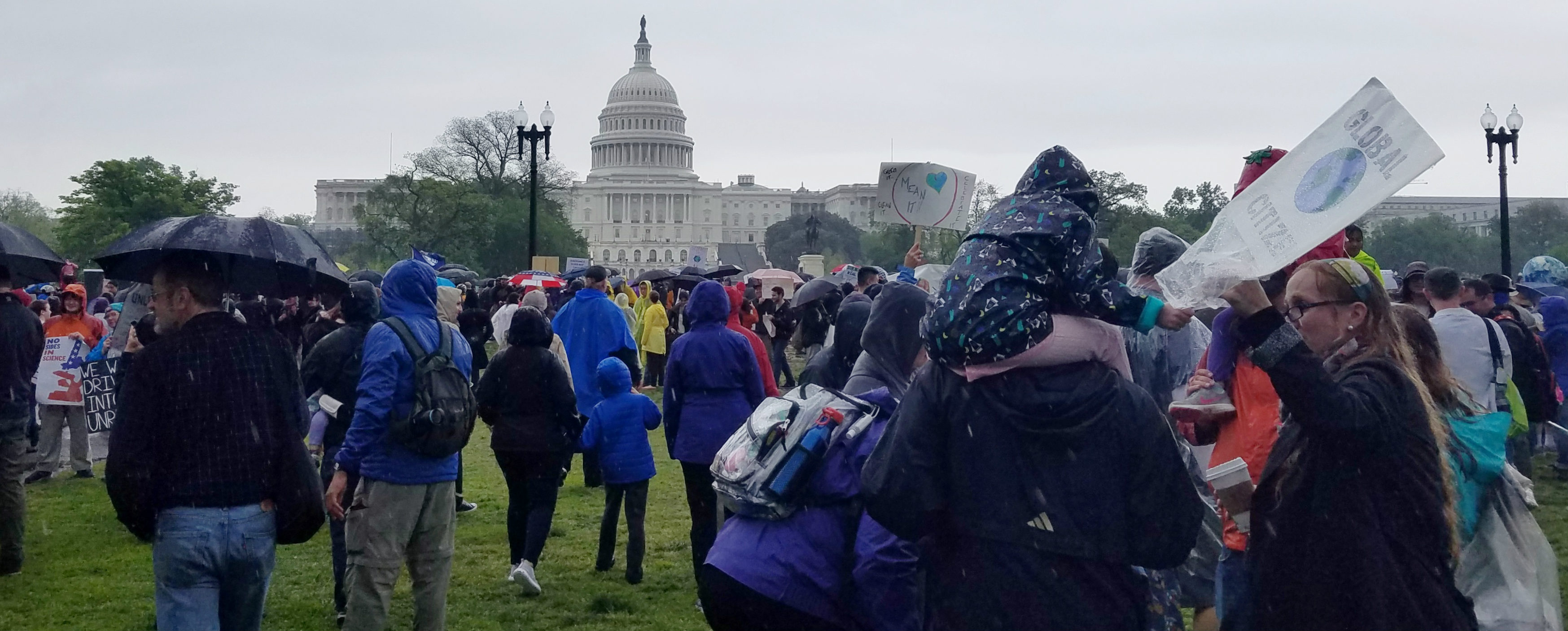
Nicole Forrester recounts and reflects on her experience at the March for Science in Washington D.C.

April 22 began with a drizzly ride on rented bikes through the streets of southeast D.C. to the Washington monument. I was accompanied by Dylan Jones, an outdoor recreation and environmental writer from West Virginia. “I typically opt for escaping civilization on Earth Day,” Jones said, “but today I decided to go straight into the heart of it.” We weaved through roads littered with people in rain shells and lab coats, carrying vibrant signs and rainbow umbrellas.

Capitol-smaller-cropped

Continue reading

The next generation of science outreach

Increased communication and outreach efforts require changes in the structure and culture of academic science, says Nicole Forrester.

In the wake of the US presidential election in November 2017, the scientific community has recognized that it has fallen short in communicating the value of science and research. As a result, scientists are now calling for increased public outreach and communication efforts. While this awareness is important, the path forward is not entirely clear.

pexels-photo-77984-smaller Continue reading

Exploring science communication

Science communication comes in many forms. Discover your favourite, says Andy Tay

There’s a few reasons why scientists may be discouraged from science communication. Here, I’m hoping to break down some of those barriers, and introduce channels and platforms where scientists can practise. First, here are some of the reasons stopping more scientists from practising science communication, as well as my rebuttals.

GettyImages-200525300-001-smaller2 Continue reading

Securing workplace rights for scientists in the age of Trump

Unions could be the best way to protect scientific jobs in uncertain times, says union president Anke Schennink.

In the wake of Donald Trump’s election, the scientific community is on edge. The future of federal science funding remains unclear, campus inclusivity is under threat, immigration policy is in disarray, and entire academic fields – such as climate change research – fear the worst.

2017-03-24 SF Barg Action pic

UC Postdocs in solidarity at UCSF on a day of bargaining.

Continue reading

Why I will not be marching for science

Virginia Schutte says the March for Science won’t meet her goals or those set out by the organizers. Here, she shares some alternatives.

When I was in graduate school, I learned to create classes using backward design. Backward design encourages setting goals and then planning a course of action to meet those goals. This strategy can be applied to almost anything in life. “What do I want for dinner?,” for example, can transform into “I need dinner to be quick” or “let’s get rid of what’s about to go bad in the fridge.”

crowd-1294991_1280 Continue reading

Science communication: What it takes

Science achieves little if it stays in the lab. Here’s what you need to get it out to the world, says Jessica Eise

Communicating about science is a noble profession, and one that’s becoming increasingly and ever more popular. Yet it isn’t the right fit for everyone. I got started in this field about five years ago, and was surprised by many of the things I needed that no one had ever mentioned. Here’s what no one ever tells you you’ll need.

analytics-282739_1280

Passion for science

If you don’t care about science, you’re going to burn out fast. Science is hard, so science communication is hard, too. You’re going to have to delve into complicated issues quickly. I’ve worked on projects ranging from solar panel taxes to integrated imaging, from public perceptions of pork to international trade databases. You really have to care about good science communication to get a message across. The only thing worse than no science communicator is a science communicator who hates their job.

I didn’t have an immediate interest in food and agricultural topics when I started my job. But I audited a course on food security, read tons on the subject and sat down with my colleagues to figure out why these topics are so critically important. It made all the difference. Continue reading

The importance of broadening science communication

Though well-equipped with scientific training and expertise, scientists need to be aware of the resources available to help them share their work with a public audience, learns Aliyah Weinstein.

Recently, more and more emphasis has been put on scientists to communicate their research to public audiences. National scientific organizations such as the American Society for Biochemistry and Molecular Biology and the American Society for Cell Biology encourage their members to reach beyond the bench, and many blogs help scientists describe their research to wider audiences. At the University of Pittsburgh, where I’m working on my PhD, graduate student and postdoc organizations on campus share their excitement about science with the public through partnerships with local museums and school districts.

books

{credit}PhotoDisc/Getty Images{/credit}

Continue reading