The real climate debate

Young scientists on the ground at Lindau share their thoughts on scientists’ place in the climate change debate

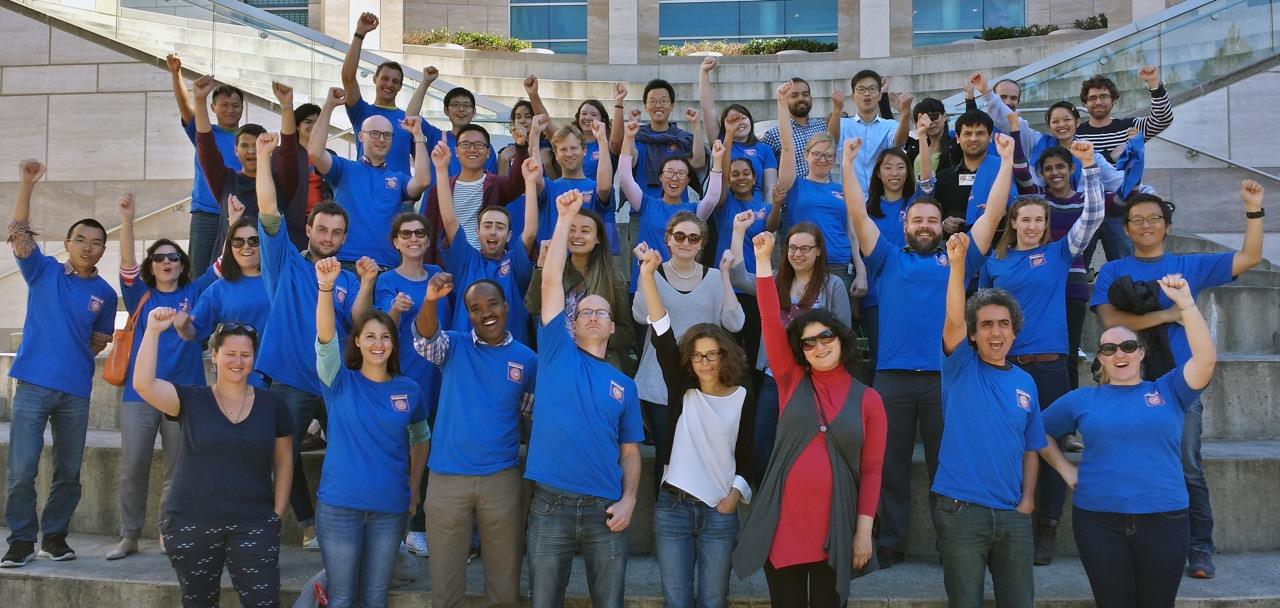
In the scientific community, the big question is not whether action on climate change is required, but what form it should take and the part that scientists should play, says the recent Nature Outlook on Climate Change. Three early-career researchers share their thoughts on the current state on climate action worldwide and the place of science in society.

You can find the full Nature Outlook on Climate change here.

Julie Fenton

Julia Nimke/Lindau Nobel Laureate Meetings

Graduate student, Pennsylvania State University, USA

It’s hard for scientists to make definitive statements about the ‘truth’. Just as we don’t believe exactly the same things as we did 50 years ago, we expect our understanding of the things we’re learning now will change over time.

It doesn’t mean our current understanding should be dismissed as incomplete, but it can be a challenge to communicate this concept to non-scientists. It’s become evident that my communication skills are something I have to invest time in. It’s too easy to forget that we have a broader responsibility to the public. In my experience, public engagement is not a routine part of academic training. Every scientist can start by talking with people they know in their everyday lives. That’s not hard. Continue reading


Lindau cubed: Nerd heaven redux and the importance of standing up for science

Alaina G Levine blogs from “Nerd Heaven,” aka The Lindau Nobel Laureate Meeting.

The 67th Lindau Nobel Laureate Meeting

The 67th Lindau Nobel Laureate Meeting{credit} Julia Nimke/Lindau Nobel Laureate Meetings Opening Ceremony{/credit}

What exactly is this Nerd Heaven, as I love to refer to it? It’s a conference where you’ll find only just a legion of Nobel Laureates (around 30) mingling with 400 or so young scientists from like 80 countries across the non-flat Earth. The official name for this geeky conference is the Lindau Nobel Laureates Meeting and it is an annual affair that takes place in Lindau, Germany. Each year it focuses on a different subject and this year its concentration is on chemistry. Continue reading

Marketing yourself, politics and post-truth

Successful marketing can land you your dream job, but does this really mean you are the best person for the role?

Achieving your dream job is always going to be a bit of a challenge. You may have a great degree, and maybe relevant experience, but getting your potential employer to believe you are absolutely the right person for the job means marketing yourself correctly. This can be tricky, particularly if you are starting off new in a field with no established reputation behind you.

Continue reading

Securing workplace rights for scientists in the age of Trump

Unions could be the best way to protect scientific jobs in uncertain times, says union president Anke Schennink.

In the wake of Donald Trump’s election, the scientific community is on edge. The future of federal science funding remains unclear, campus inclusivity is under threat, immigration policy is in disarray, and entire academic fields – such as climate change research – fear the worst.

2017-03-24 SF Barg Action pic

UC Postdocs in solidarity at UCSF on a day of bargaining.

Continue reading

Development and debate about the March for Science

The March for Science’s date has been set for April 22nd. Nicole Forrester speaks to scientists planning to take part.

It’s fair to say the scientific community is spending a lot of time talking about the March for Science, due to take place on April 22, 2017. While organizers are preparing for events in Washington, D.C. and satellite locations around the world, scientists are evaluating their roles in politics and public outreach. I reached out to scientists and science supporters to discuss the march and the impact of recent political decisions on science, scientific policy, and our careers as scientists.

According to their website, the March for Science was founded as “a celebration of our passion for science and a call to support and safeguard the scientific community.” For many scientists, though, it’s about supporting the scientific process itself and advocating for its importance. Joel Sachs, an Associate Professor of Biology at the University of California, Riverside, says, “Science is just a way of learning about the world and is incredibly important to make predictions about what’s going to happen in the future — in terms of our climate, disease, and how to manage crops and livestock.

{credit} Bill McKibben/ Twitter: https://twitter.com/billmckibben/status/808791393569243140?lang=en{/credit}

Continue reading

The postdoc series: What comes next?

A postdoc sets you up for a variety of careers, including academia, editing, working in industry, core laboratories and more.

cross-roads

{credit}Ratch/Shutterstock{/credit}

The obvious path for many people doing a postdoc is to look for a more permanent academic position as a tenure-track professor. But it isn’t the only one! There are plenty of other things a postdoc can do. Here are just a few examples.

For those who have the want, determination, and, let’s face it, a bit of luck, working as an academic professor can be worth the battle. Dr Esther Bullitt is currently going through her application to become a tenure-track professor. “There were biological questions that I wanted to pursue, and having the independence to do so was absolutely compelling,” she says. One of the challenges that she faces in her application is to make sure that she stands out from the rest of the crowd. “There are many excellent scientists working on many interesting questions, so you need to demonstrate a broad set of skills that go beyond a great project and a well-developed plan for the science.” To be promoted to professor, Bullitt says that postdocs need a well-documented track record in: funding; publishing your research; being nationally and internationally recognized as an expert in your field; giving invited seminars; teaching; university committee work. “Probably in about that order,” she adds. Continue reading

What motivates you as a scientist?

To tie in with the latest Nature Outlook, Lenses on Biology, the Nature Communities team asked five biological scientists at different stages of their education or careers to tell their personal stories in a guest blog post. Each scientist studies, works or has an interest in one of the five research fields featured in Lenses on Biology ― cancer, stem cells, synthetic biology, ocean health and climate change ― and they share what motivates them in their chosen subject. You can read their stories below, and discuss your own motivations here or on the posts in question.