Why learning to mentor and teach is more important for US faculty members than publishing papers

An influential ally aims to reform the experience of US PhD students in science, technology, engineering and math (STEM) by advocating for a system that rewards faculty members for mentoring and advising students rather than for their own publications.


By Chris Woolston

In a 29 May report , Graduate STEM Education for the 20th Century, the National Academies of Science, Engineering and Medicine (NASEM) in Washington DC calls for providing faculty members with incentives for developing skills such as teaching and mentoring while de-emphasizing the importance of publications. The report recommends that institutions change their promotion and tenure policies and practices to recognise and reward faculty members’ contributions to graduate mentoring and education.

Continue reading

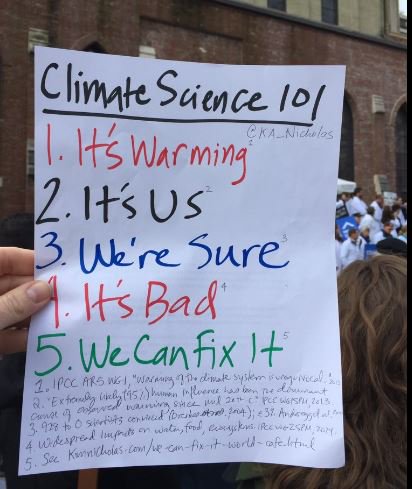
Development and debate about the March for Science

The March for Science’s date has been set for April 22nd. Nicole Forrester speaks to scientists planning to take part.

It’s fair to say the scientific community is spending a lot of time talking about the March for Science, due to take place on April 22, 2017. While organizers are preparing for events in Washington, D.C. and satellite locations around the world, scientists are evaluating their roles in politics and public outreach. I reached out to scientists and science supporters to discuss the march and the impact of recent political decisions on science, scientific policy, and our careers as scientists.

According to their website, the March for Science was founded as “a celebration of our passion for science and a call to support and safeguard the scientific community.” For many scientists, though, it’s about supporting the scientific process itself and advocating for its importance. Joel Sachs, an Associate Professor of Biology at the University of California, Riverside, says, “Science is just a way of learning about the world and is incredibly important to make predictions about what’s going to happen in the future — in terms of our climate, disease, and how to manage crops and livestock.

{credit} Bill McKibben/ Twitter: https://twitter.com/billmckibben/status/808791393569243140?lang=en{/credit}

Continue reading

Train ’em up and kick ’em out

Plans for non-EU graduate students to leave the UK, once their courses and visas have expired, have been halted.

In December 2014, Theresa May, the UK home secretary, proposed plans for “zero net student immigration” in the UK, arguing that this would be part of a fair immigration policy. The plans (initially set out in the Conservative Party Manifesto of 2010) stated that any non-EU student at a UK university would be required to leave the UK, immediately upon completion of their degree. Any universities and institutions failing to enforce this policy would be penalised. 

These plans have been halted, for now, due to resistance from the Chancellor of the Exchequer George Osborne, with support from the former UK universities minister, David Willets, and inventor Sir James Dyson. They argue that the benefit to the UK economy, of attracting talented researchers from around the world, outweighs the negatives of increasing immigration.

The current rules stipulate that students have 4 months after graduation to apply for a graduate job that pays £24,000 per year. This looks set to remain the case for the time being, but it is unclear whether May’s plans have been buried completely or if they’ve just been delayed. Clearly this is a complex set of issues at a time when governments, on one hand, are being forced to control immigration to control public spending, and on the other hand recognise the need to import talent that not only supports the higher education “industry”, whose research-based innovation could drive economic growth.

We’re interested to hear from the Naturejobs readers about the potential impacts of this policy. So, please vote in our poll to let us know if you think this policy should go through and in the comments, please provide your reasons and answers to the questions below:

  • Are you a non-EU student in the UK? What was your experience of applying for a job here? Would a proposal like this make you think twice?
  • Are you a non-EU student thinking of coming to study in the UK? How would this proposal affect you?
  • Are you an existing UK or EU student studying in the UK? What do you think about this proposal?

Thanks!