Why learning to mentor and teach is more important for US faculty members than publishing papers

An influential ally aims to reform the experience of US PhD students in science, technology, engineering and math (STEM) by advocating for a system that rewards faculty members for mentoring and advising students rather than for their own publications.


By Chris Woolston

In a 29 May report , Graduate STEM Education for the 20th Century, the National Academies of Science, Engineering and Medicine (NASEM) in Washington DC calls for providing faculty members with incentives for developing skills such as teaching and mentoring while de-emphasizing the importance of publications. The report recommends that institutions change their promotion and tenure policies and practices to recognise and reward faculty members’ contributions to graduate mentoring and education.


Continue reading

Joining a new college: prepare your superpowers

Empower yourself with a creative mindset and start-up skills to adapt in a new college, says Nadia Al-Banna.

running a Growth

Congratulations on your faculty position at a newly established college! You think you know what the job entails: teaching, research, and some administrative service. As you read job advice, you wonder why so many pieces include the phrase “survival tips.” “Surviving” was your most-commonly-used word during your PhD and postdoc. Surely, there‘s no more surviving to be had in a brand new college?

Continue reading

The next generation of science outreach

Increased communication and outreach efforts require changes in the structure and culture of academic science, says Nicole Forrester.

In the wake of the US presidential election in November 2017, the scientific community has recognized that it has fallen short in communicating the value of science and research. As a result, scientists are now calling for increased public outreach and communication efforts. While this awareness is important, the path forward is not entirely clear.

pexels-photo-77984-smaller Continue reading

Science competitions earn you fame, glory and transferable skills

Competitions aimed at early career researchers fill the gap between a PhD and a ‘real world’ education, says Réka Nagy.

My PhD journey is coming to its end and I am considering a non-academic career. Looking at job descriptions, I know I tick the box marked ‘strong analytical and problem-solving skills.’ However, there are other boxes to consider: ‘Strong time and project management skills.’ ‘A team player with a proven track record of collaborations.’ ‘The ability to communicate clearly and concisely to a wide range of stakeholders.’

I worked in a ten-person research group but I did most of my work on my own – does that really make me a team player? And what does “a wide range of stakeholders” mean, anyway? I don’t have the time or money to pursue further training to gain these skills, and I feel like the four years I spent getting my PhD in Human Genetics were a waste.

13158201924_305223a6e9_o

{credit}David Luders/Flickr https://www.flickr.com/photos/42988571@N08/13158201924{/credit}

Continue reading

Networking: a very short cheat sheet

We all know the value of networking. Here’s a very quick rundown of best practises, from Amali H. Thrimawithana

Networking plays a vital role in any scientist’s career development, being one of the main ingredients in building a professional profile. It feels especially essential in my own field of informatics and data science, where techniques and technology are rapidly evolving and cross-discipline collaborations are rampant.

Networking helps us stay up to date with developments, provides a space to learn, enhances communication skills, creates new opportunities, and helps to build a professional profile.

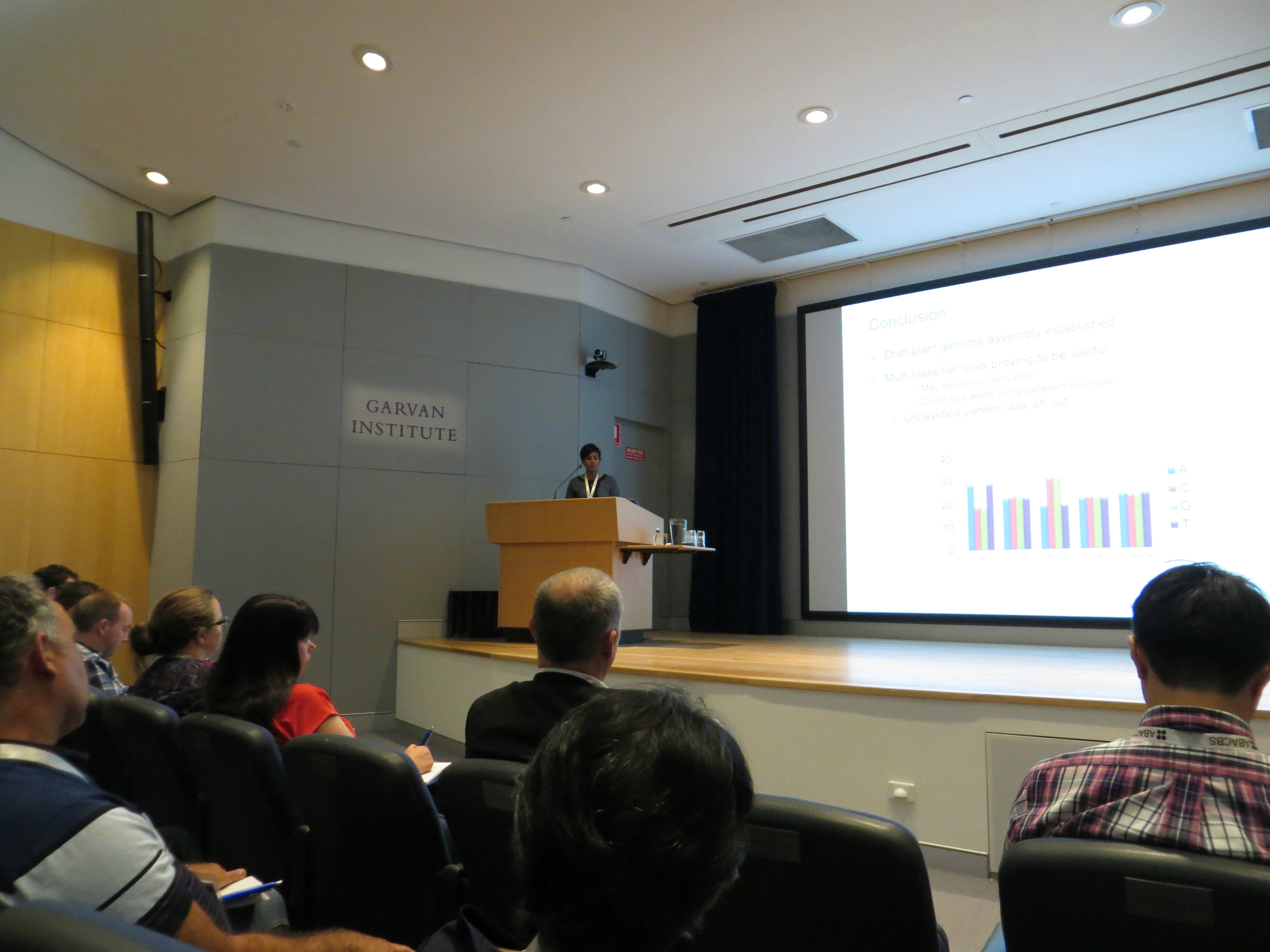
IMG_3286-smaller

Conferences provide you with a literal stage to gain connections

Continue reading

Ten tips for finding an effective mentor

The meandering path to a career in science offers challenges that can be difficult to confront alone. Finding an effective mentor who offers advice and inspiration can help you navigate the maze successfully, say Andrew Gaudet and Laura Fonken.

Laura Fonken

Laura Fonken

Gaudet image

Andrew Gaudet


Continue reading

The competition that likes to say YES!

Enterprising early career researchers get some high-level mentoring to handle the rough and tumble of the boardroom. David Payne meets finalists in the 21st annual Young Entrepreneurs Scheme (YES)

Epitome is a Singapore biotech start-up whose product pipeline is based on engineered tail proteins to tackle bacterial diseases. It wants a slice of the US’s $6bn acne market. Epitome’s founders are seeking raise $10m to build a factory where its cosmetic products can be manufactured. Investors will be rewarded with a seat on its board.

The launch team describe the company at a presentation attended by other young entrepreneurs. They brace themselves for some tough questions from a judging panel. One judge asks how a factory can be built for $10m Another challenges the team’s plan to launch an acne treatment as a cosmetic product, which means they won’t mention acne on the label (the team adopted this approach to make the US regulatory process more straightforward).

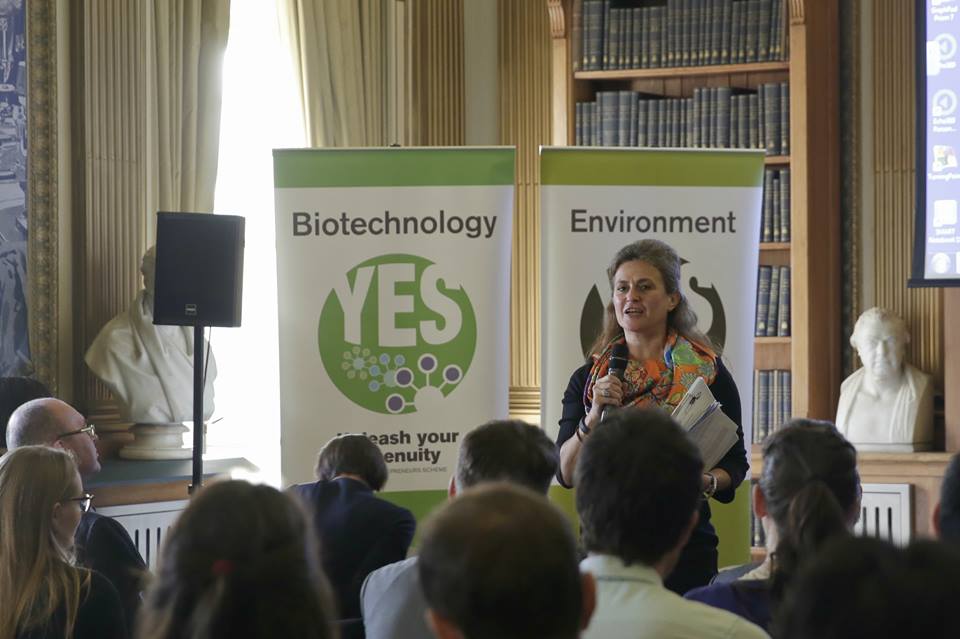
15390900_1695305427446706_286911818743892859_n

‎Elena Lurieluke, Head of Global Life Sciences Open Innovation, Corporate R&D at P&G, addresses fellow YES judges and finalists.

Continue reading

How is the rise of data-intensive research changing what it means to be a scientist?

Data-intensive research requires a new breed of scientist: interdisciplinary analysts who enjoy swimming in data, says Atma Ivancevic.

There has always been an emphasis on the generation of novel data in science. Being a scientist involves progressing from observation to hypothesis to experiment to output. In the past, a combination of scarce data to look at and low throughput machinery to make more has led to limited experimental outcomes.

2016-09-12-Atma Ivancevic 04-smaller-cropped

Atma Ivancevic

Continue reading

Career paths: What do you need to think about before taking your next step?

Before choosing a new career path, take the time to get to know yourself, and you may be surprised at how well things fall into place.

 Naturejobs journalism competition winner Mary Gearing

Any career, scientific or otherwise, is the product of choices. In my own path in science, the first set of choices was clear: major in biology, conduct undergraduate research, enroll in a PhD program. This was a comforting, well-trodden path, but it left me unprepared to make the next big decision: my post-PhD direction. Now, as I near the end of my graduate studies, I’ve realized that this decision is much simpler than I thought. The most important tool for a career change is self-awareness – the willingness to analyze yourself as thoroughly as you would any key experiment.

Continue reading