How could universities and funders improve the situation for postdoctoral scientists?

What the research system needs to be doing to improve the world that postdocs face

By David Bogle

I’ve already written about how PhDs can prepare for and decide whether or not they should pursue a postdoc. Here, I will discuss what more universities and funding agencies should be doing as stakeholders in training and employing researchers.

Universities must be doing more to ensure the postgraduate experience is a positive one

Employers, both at universities and elsewhere, need a range of sophisticated research skills at their institutions. Early career researchers have already shown themselves to be incredibly talented; and society needs them to drive innovation in the economy. This is all the more important in the context of an ongoing war for talent. Researchers must have the opportunity to develop as ‘creative critical autonomous intellectual risk takers’ for the sake of society. Continue reading

Want to find investors for your research idea? Change the way you pitch

A fundraising pitch involves vastly different style and substance than a scientific talk. Entrepreneurial scientists and engineers need to understand and manage the differences.

In a funding pitch, complexity is your enemy — no matter how significant the science

By David Rubenson, Wendie Johnston and Ned Perkins.

Many scientists hope to translate their discoveries into something useful and financially profitable. A biologist, for example, might hope to create a new line of health care products. Many use special grants or family resources to establish small companies. However, given the enormous challenges in the healthcare market, virtually every nascent enterprise needs outside funding; whether from wealthy “angel investors,” venture capital, or investment from large pharmaceutical and device developers. Continue reading

More to science: working as a Research Funding Manager

This piece was originally published on the BioMed Central blog network, part of Springer Nature.

Pixabay

There’s more to science than being a scientist! Next in our ‘Science > Careers’ series Anne Helme explains more about the path that led to her role as Research Funding Manager at Cancer Research UK.

Where are the female first and last authors?

Women remain under-represented in many areas of science, but they are especially scarce in the pages of high-impact journals, according to an analysis published online 2 March in bioRxiv.

scales

Researchers at the University of Washington in Seattle gathered names of first and last authors from papers published from 2005-2017 in 15 major science and neuroscience journals, including Nature, Science, PNAS, Nature Neuroscience and Neuropsychology Review. Nearly 10% of the names were excluded because they were relatively gender neutral, but the rest told a clear story: In these journals, authorship is a male-dominated enterprise.

For example, women accounted for roughly 25% of all first authors in Nature and Science and just over 35% of first authors in PNAS. Female first authors outnumbered men in only one journal, Neuropsychology Review, but just barely (53% vs 47%). Women made up an even smaller proportion of senior (or last) author spots, ranging from about 15% in Nature and Science to just under 40% in Neuropsychology Review.

The study found an inverse relationship between the prevalence of female authors and the impact factor of the journal—the higher the impact, the lower the chances that a woman was involved. Because publication in high-impact journals is so crucial for a scientific career, any gender gap could have serious consequences, says Ione Fine, a neuroscientist and co-author of the study. “If you aren’t published in high-impact journals, you don’t get awards or jobs,” she says. “It becomes a cascade of events.”

The scarcity of women in journals doesn’t simply reflect a lack of women doing high-quality science, Fine says. The study notes that roughly 30% of prestigious R01 grants from the US National Institutes of Health go to women. But in almost all of the journals studied, the percentage of women in senior author spots falls below that mark, a sign that the gender disparity in authorship exceeds disparities in other measures of academic excellence and productivity. “That’s the smoking gun that we have a real problem here,” she says.

Subtle biases by reviewers may make it harder for women to get published, Fine says. But she notes that women themselves may be contributing to the gender gap through a reluctance to submit to top-tier journals. “My feeling is that women are self-censoring because it’s just a more brutal process for them,” she says. “I know my male colleagues submit papers that I wouldn’t submit, and they seem to do just fine.”

Fine and colleagues call for all journals to keep statistics on papers submitted by women and minorities. They also suggest that journals could greatly reduce the possibility of bias by adopting mandatory double-blind reviews, a system in which the reviewer doesn’t know the identity—or the gender—of the study’s authors. Nature and other journals provide double-blind reviews on request, but Fine says that practice won’t protect women from bias. If an author requests double-blind review, she says, the reviewer is likely to assume that the request came from a female researcher, thus defeating the purpose.

In response, Nature Research, the parent organisation of Nature, issued a statement that read, in part: “Nature Research is committed to gender equality and our journals strive to support women in science.” The company says that it does not ask submitters to indicate gender, so it doesn’t systematically track gender statistics. It also says that it will “continue to assess the merits” of mandatory and voluntary double-blind reviews.

A 2017 Nature editorial noted that the journal has made slow progress in other areas of gender equality. For example, women accounted for just over 20% of reviewers in 2015, a small improvement over previous years. In 2013, 13% of reviewers were women. But Fine says that hiring more female reviewers won’t necessarily close the publication gap. “Women can be biased too,” she says.


Chris Woolston is a freelance writer in Billings, Montana.


Suggested reading:

Women in physical sciences

Fight the brain drain

Science is failing women


Coming to the US for a postdoc? – If I had known, part II

Is moving to the US for a postdoc worth it? Elena Blanco-Suárez shares her tips on how to make the best decision for you.

pexels-photo-490466

Like many other European researchers, I moved to the US for my postdoc.  While some stay in the US, and others return to Europe after their postdocs, I’m almost certain that anyone who has followed this path will have encountered a few shocks along the way. Choosing the right fit for your postdoctoral training is just as important as choosing the right lab for your PhD. Based on my experiences, here is a list of the things that I think are worth checking in advance to avoid thinking “I wish I had known” too often.

Continue reading

The urgent need to recognize and value academic labor

Two Harvard professors share their thoughts on the latest from the US Republican Party’s tuition waiver tax plan.

Crowdfunding-smaller

Recently the House of Representatives essentially voted to destroy graduate education in the United States. By taxing tuition waivers as income — and therefore treating their taxable income as two to three times the amount graduate students are actually paid — the Republican tax bill would effectively put graduate study outside of the reach of all but the independently wealthy. While the Senate version of the tax bill does not include this provision, it is far from certain what the final bill after the reconciliation process will look like.

Continue reading

Changes to the U.S. tax code will harm graduate student mobility and career prospects

Increased financial burden for students will harm science in the long run, says Aliyah Weinstein.

piggybank

A recent editorial in Nature described the harm that newly proposed changes to the United States tax code will have on graduate student finances. If passed, these regulations — ostensibly designed to simplify tax calculations — will eliminate benefits previously given to students. Of particular harm to graduate students and the scientific world would be the elimination of the tax-free status of tuition waivers.

Continue reading

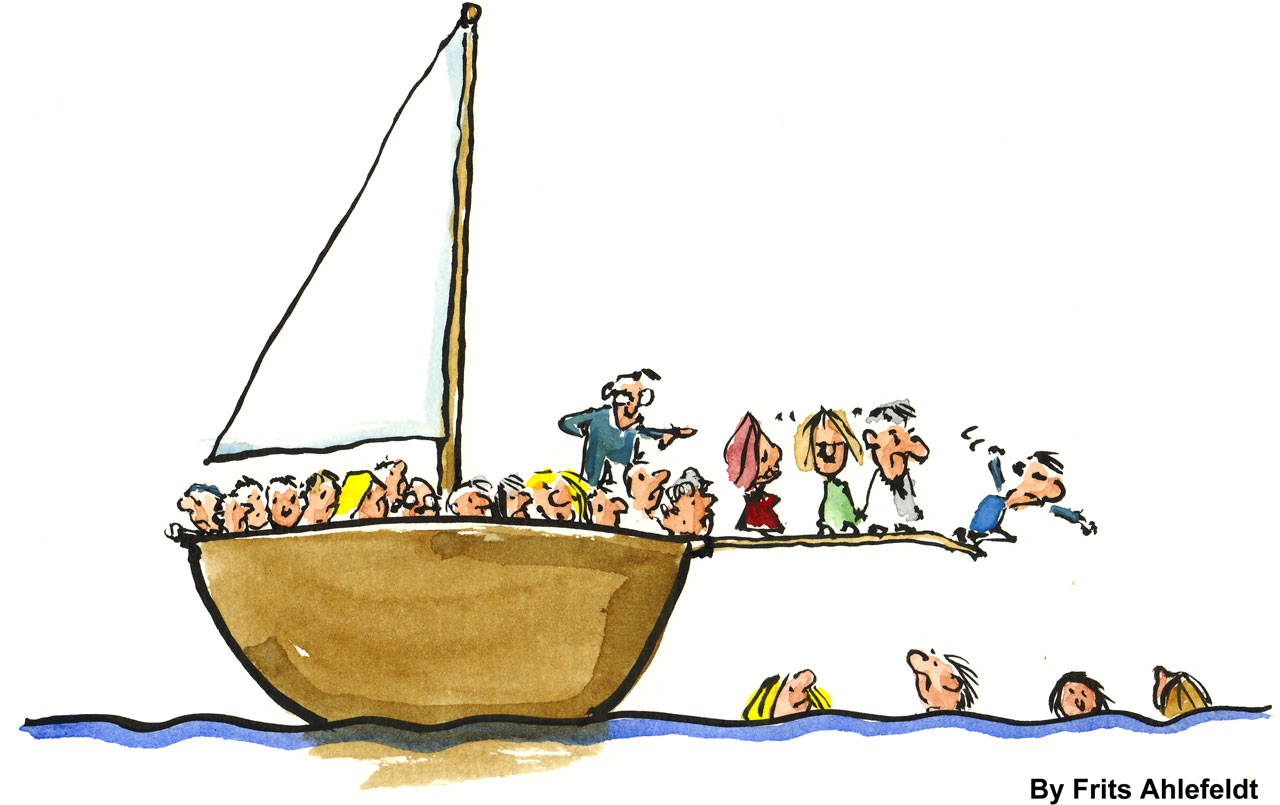
Abandon ship, or learn to swim: the gamble young scientists must make

For scientists, there’s nothing more frightening than a major grant rejection. With the scarcity of funding at the forefront of everyone’s thoughts, it’s time to talk about options, says Atma Ivancevic.

Job stability and a career in research are rarely put together. Science is a windy, grueling, uphill climb that might end abruptly at the edge of a cliff. Halloween is a particularly scary time for Australian scientists, as it signals the release of #NHMRC project grant results. Right now, many laboratories are facing difficult decisions due to rejected funding for next year. It’s not a surprise — we see it everywhere — yet it’s a shock that affects the entire scientific community. For early career researchers across the globe, it’s a timely reminder to carefully consider and plan for the future.

So, what are your options?


fritsahlefeldt

Continue reading

ERC grants competition opens

The European Research Council (ERC) in Brussels, an independent funding body supported by the European Commission, has announced €1.86 billion (US$2.2 billion) in four types of 2018 grants for early- and mid-career principal investigators (PIs).

piggybankApplications for two grant schemes open on 3 August, including ‘Starting’ grants of up to €1.5 million for up to 5 years for PIs who earned their PhD within 2-7 years ago; and a new collaborative programme, the ‘Synergy’ grant, which will fund 2-4 PIs in a cross-disciplinary project. The Synergy scheme, which awards up to €10 million for 6 years, was piloted in 2012 and 2013. The deadline is 17 October for Starting grant applications and 14 November for Synergy applications.

Applications for ‘Proof of Concept’ grants will be accepted starting in September, and for ‘Consolidator’ grants starting in October.

The 2018 grant programme will collectively fund about 900 PIs and is estimated to support 6,000 PhD students, postdocs and other lab members. ERC’s grant-success rate is 10-15%.

To apply for a Starting grant, click here . For a Synergy grant application, click here.  Good luck!