Picks of the month: October 2014

Here are the top ten most read Naturejobs blog posts from October 2014. Happy Friday!

 

Life-after-the-lab

Illustration by Señor Salme

Life after the lab. An extra little nugget to Ewen Callaway’s feature article about the science stars that got away. This piece is about Jasveen Chugh, a life sciences and health care consultant at PA Consulting.

The postdoc decision. The results from a previous Naturejobs poll show that scientists chose to do a postdoc because 1) it’s the next step in their careers and 2) because they love science.

How to recognise your transferable skills. Anna Price and a panel of academics-turned-other-careers at the Naturejobs Career Expo in London this September demonstrated that all scientists in academia have transferable skills, but the trick lies in recognising and applying them.

How to build a career in the biomedical sciences. Professor Jim Smith, director of the National Institute of Medical Research in the UK, gave a keynote speech at the Naturejobs Career Expo in London this September.

How to succeed at a career in industry. Passion and hard-work are a winning combination here, say panellists at the Naturejobs Career Expo in London this year.

Working in industry: An academic-style postdoc. There’s a new postdoctoral fellowship on the block: the industrial one. Here’s an example from Roche.

Companies on campus: The blossoming relationship between academia and industry. This Naturejobs podcast explores the benefits and challenges of having companies on campus, and features a short snippet from the Nature podcast about cross-disciplinary research.
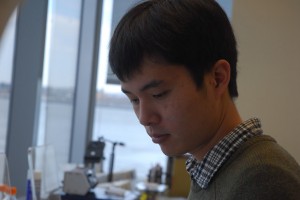
 

Justin-Jee

{credit}Image courtesy: Justin Jee{/credit}

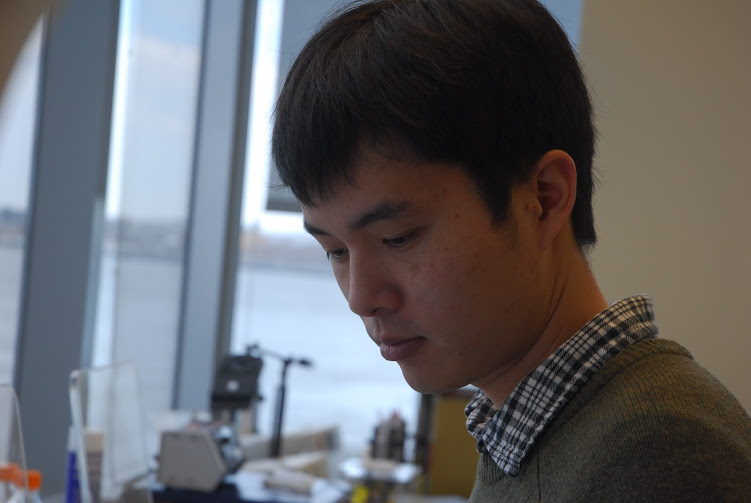
I knew I wanted to be a scientist when… is the story of how Justin Jee decided he wanted to become a scientist. He’s still working on it, after all, life’s an experiment.

Research in Singapore: Bring the ideas and the family. Research in Singapore is getting a lot of attention and financial backing.

Ask the expert on Naturejobs: Meet Sarah Blackford. Vote in the Naturejobs poll for the question that you would like Sarah Blackford from the Society of Experimental Biology to answer!
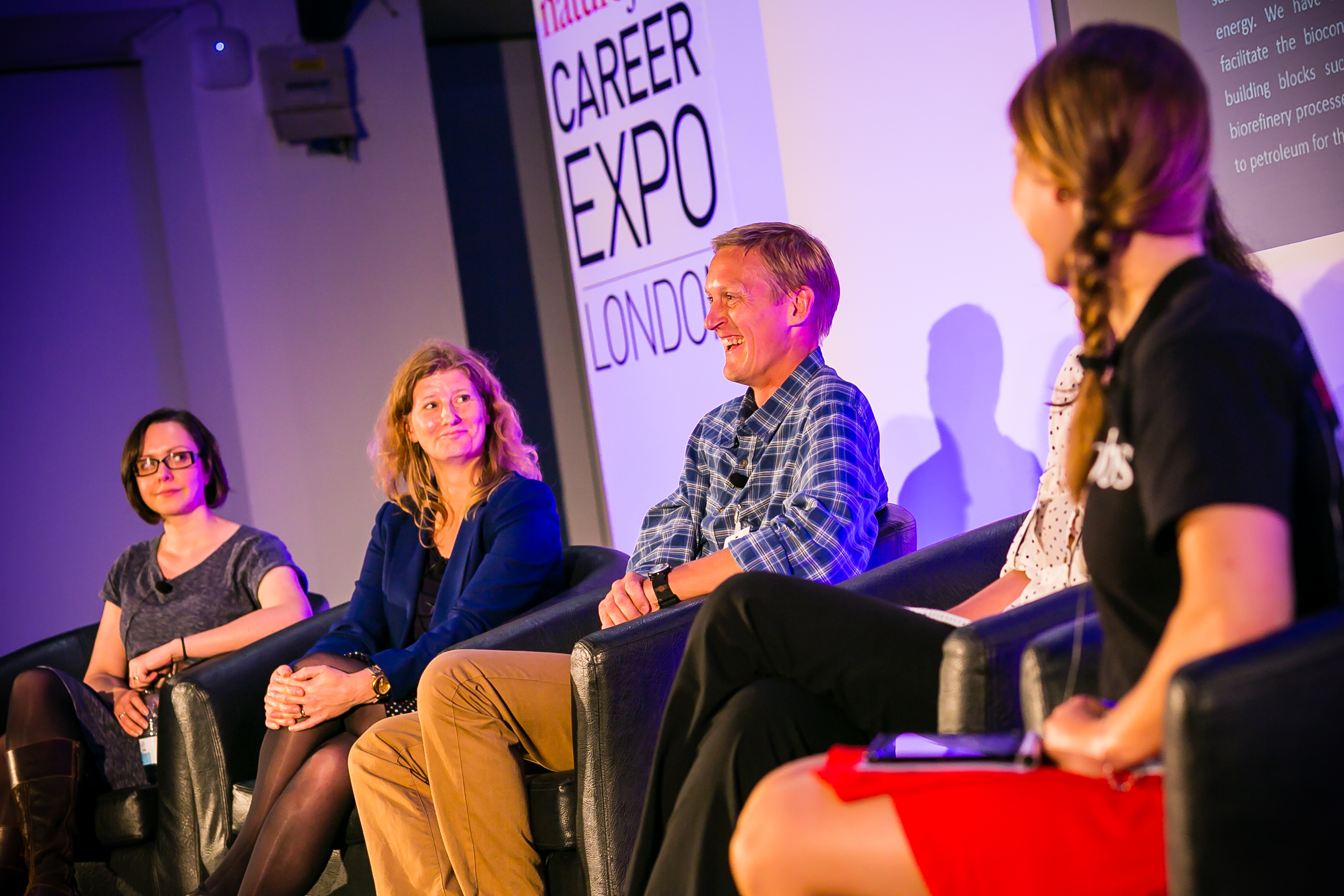
How to navigate an academic career

careers-in-academia-naturejobs

L-R: Louise Horsfall, Lorraine Kerr, Jim Usherwood, Julie Gould

Find the right path and reach your potential: There are multiple ways

Contributor Esther Cooke

As a PhD student or postdoc, in thrall to lab work or immersed in writing papers and grant applications, it can be easy to forget that pursuing an academic career is seldom solely about the research. The Career paths in academia workshop at the Naturejobs Career Expo 2014 gave early-career researchers an insight into the variety of roles available in academia. Four scientists gave an overview of their careers, and discussed the pleasures and pitfalls of their day-to-day jobs, before passing on some advice on how to succeed in the academic world.

Exploring the options

Not all academic careers need include research. Dr Anita Hall has a teaching-only position as a senior fellow at Imperial College London, having first progressed up the academic research ladder from PhD student to lecturer. Her responsibilities include course design, teaching, assessment and giving careers advice. Despite feeling drained at times, Hall appreciates the rewarding nature of teaching, and says that, in terms of work/life balance, “teaching is much more liberating” than research. At the opposite end of the spectrum, Dr Jim Usherwood of The Royal Veterinary College is heavily involved in research. Although passionate about his work, Usherwood describes a vicious cycle of writing papers to get funding and vice versa. Continue reading

Working in industry: An academic-style postdoc in a pharmaceutical setting

Roche

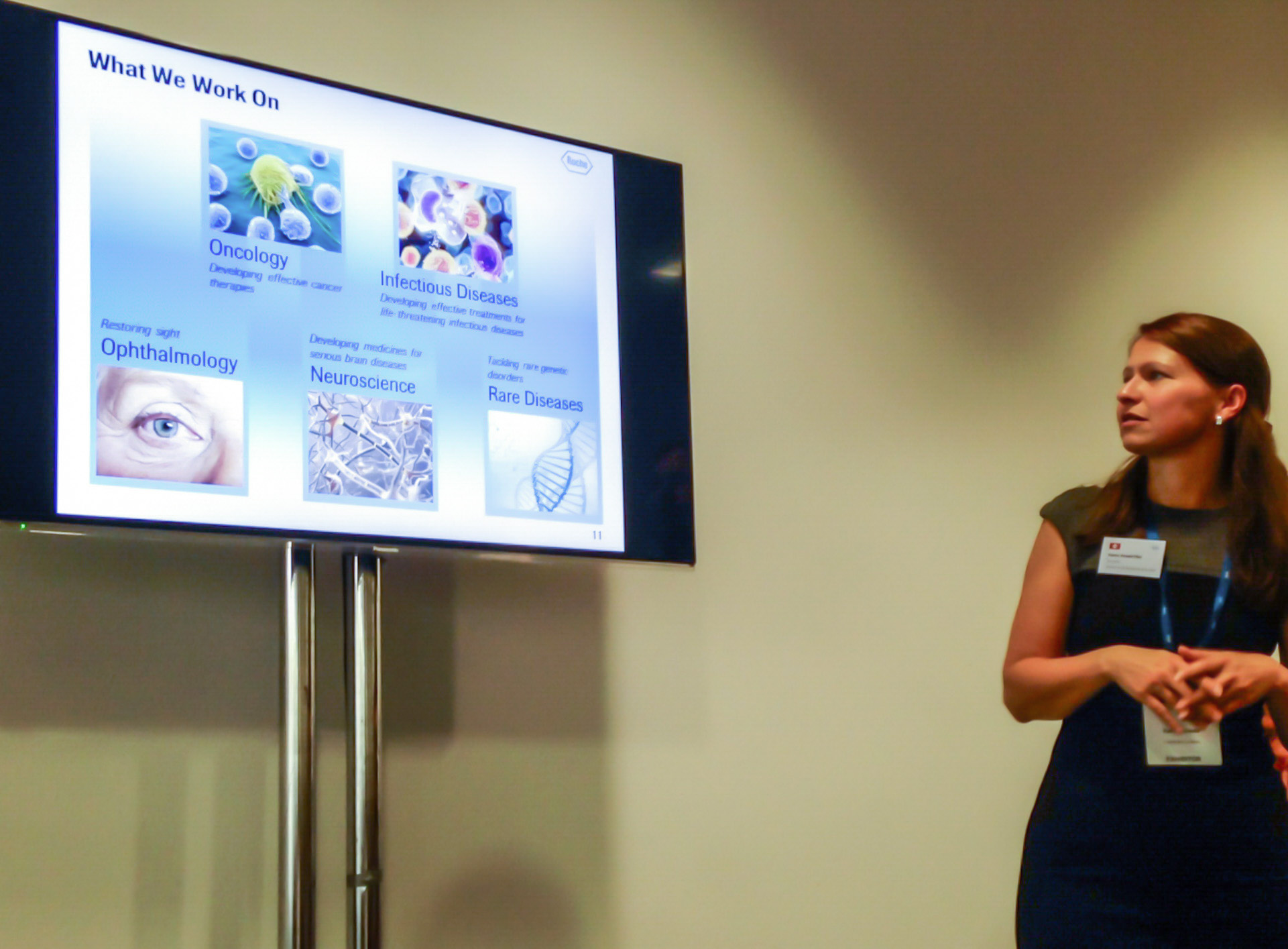
Dr Katrin Arnold
{credit}Credit: Esther Cooke{/credit}

Big pharma are starting to introduce academic-style postdoc fellowships, strengthening relationships between industry and academia.

Contributor Esther Cooke

Rightly or wrongly, postdoc positions within industry tend to have a less than stellar reputation. Rumours abound of a disregard for publishing papers, a lack of freedom to develop ideas and difficulty returning to academia. However, pharmaceutical companies, including Roche, AstraZeneca, Pfizer, Merck and NIBR, are starting to introduce academic-style postdoc fellowships, recognising the need to build relationships with universities. But what are the advantages of conducting research in industry, and how do these fellowships marry the two environments together? Moreover, will a postdoc in industry make it difficult to return to academia down the line?

At the recent Naturejobs Career Expo in London, Dr Katrin Arnold, a recruitment manager for the Pharma Research & Early Development (pRED) sector at Roche, spoke about postodoc opportunities in industry and addressed some of these questions. Roche is a large multinational company specializing in pharmaceuticals and diagnostics. Based at six research sites worldwide, Roche’s pRED organization employs approximately 2,500 scientists and clinicians, including close to 100 postdocs. The predominant area of research is neuroscience, with a focus on neurodegeneration, neurodevelopment and psychiatry. Other research areas include oncology, infectious diseases, ophthalmology and rare diseases. Continue reading

Entrepreneurship: A wide open career path

Entrepreneurship is not an endeavour reserved for the talented, it’s a set of skills anyone can learn.

Contributor Annalise Smith

entrepreneurship

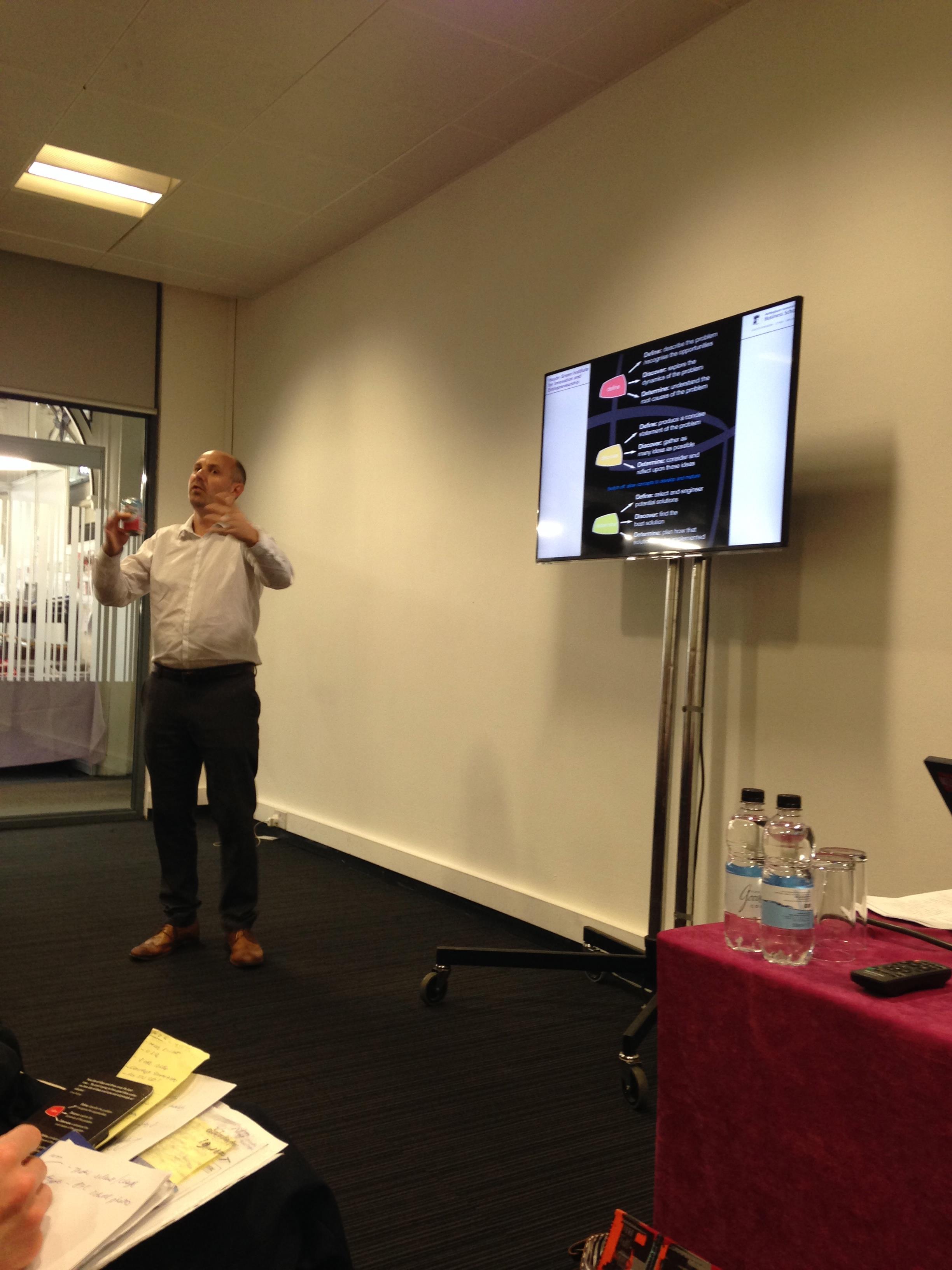
Professor Simon Mosey{credit}Credit: Annalise Smith{/credit}

Entrepreneurship is often viewed as an endeavor reserved only for the very select few who were born with a rare combination of talents. Not so, said Simon Mosey, Professor of Entrepreneurship and Innovation at Nottingham University Business School, speaking at the Entrepreneurship for Scientists and Engineers Workshop at the Naturejobs Career Expo in London on September 19.  “Entrepreneurship is a set of skills that anyone can learn,” he declared.

Mosey similarly punctured what he said were two other myths about entrepreneurship: that entrepreneurs can see into the future and that entrepreneurs do it all themselves. These myths suggest that stars such as Steve Jobs and Mark Zuckerberg have skills that others lack. Mosey called these notions “nonsense.” Success in entrepreneurship is “not an individual pursuit” he explained. Behind Job’s and Zuckerberg’s success “is a large team of clever individuals working together in a group to realize the common vision.”

Mosey outlined a series of steps for pursuing an entrepreneurial opportunity.

Stage I: Problem Definition

It all starts with a problem, but identifying a problem that needs solving. Mosey outlined how to approach this in three steps: 1) Describe the problem and recognize the opportunities. 2) Explore the dynamics of the problem and 3) Understand the root causes of the problem. This will provide a solid foundation to then move on to using science or technology to do something about it. Continue reading

How to identify and leverage experiential opportunities to bolster your credentials

Jim Gould, a Naturejobs Expert, answers the question: How do I identify and leverage experiential opportunities to bolster my credentials?

Contributor Jim Gould

No matter what you ultimately do in your career, you have to gain and master many skills not directly related to your scientific training. However, if you are focused and efficient, there are ways to build your professional credentials with relevant experiences. Once I had decided that one day run a postdoc office, I realized I would need more experience in four areas: leadership, teaching and service, programme management and writing. I was determined to systematically gain these experiences and take time to reflect on past achievements.

This blog post, for example, is a calculated move. I combined my expertise and experience with my interest for online writing to ask the editor if there was anything I could contribute to Naturejobs Blog.

Through trial and error I developed a process that allowed me to identify and leverage many of the experiences that helped land my current job and position me well for the future. Based on these personal experiences, I want to share a practical approach to identifying and leveraging your own experiential opportunities to bolster your credentials. Continue reading

I knew I wanted to be a scientist when…

Justin-Jee

{credit}Image courtesy: Justin Jee{/credit}When

When did you realise you wanted to be a scientist? Justin Jee gives you his story

ELEMENTARY: 1993

I knew I wanted to be a scientist when I was five. My dad worked for NASA’s Jet Propulsion Lab and brought home pictures of Jupiter and Saturn taken from space. They were printed on poster paper with a glossy finish, and I would take them out at school and show them to everyone.

I knew I wanted to be a scientist when, in eighth grade, I entered the California State Science Fair. My project: modelling the acoustics of musical instruments using sine and cosine functions. My dad taught me the least squares method, higher harmonics, and Matlab. My homeroom teacher told me my project had too much math.

I knew I wanted to be a scientist when I learned about Mandelbrot fractals and artificial intelligence from my fellow entrants in the California State Science Fair.

It felt like I would never be a scientist when the winners of the California State Science Fair were announced, and I was not one of them. Continue reading

Research in Singapore: Bring the ideas and the family

Contact-Singapore

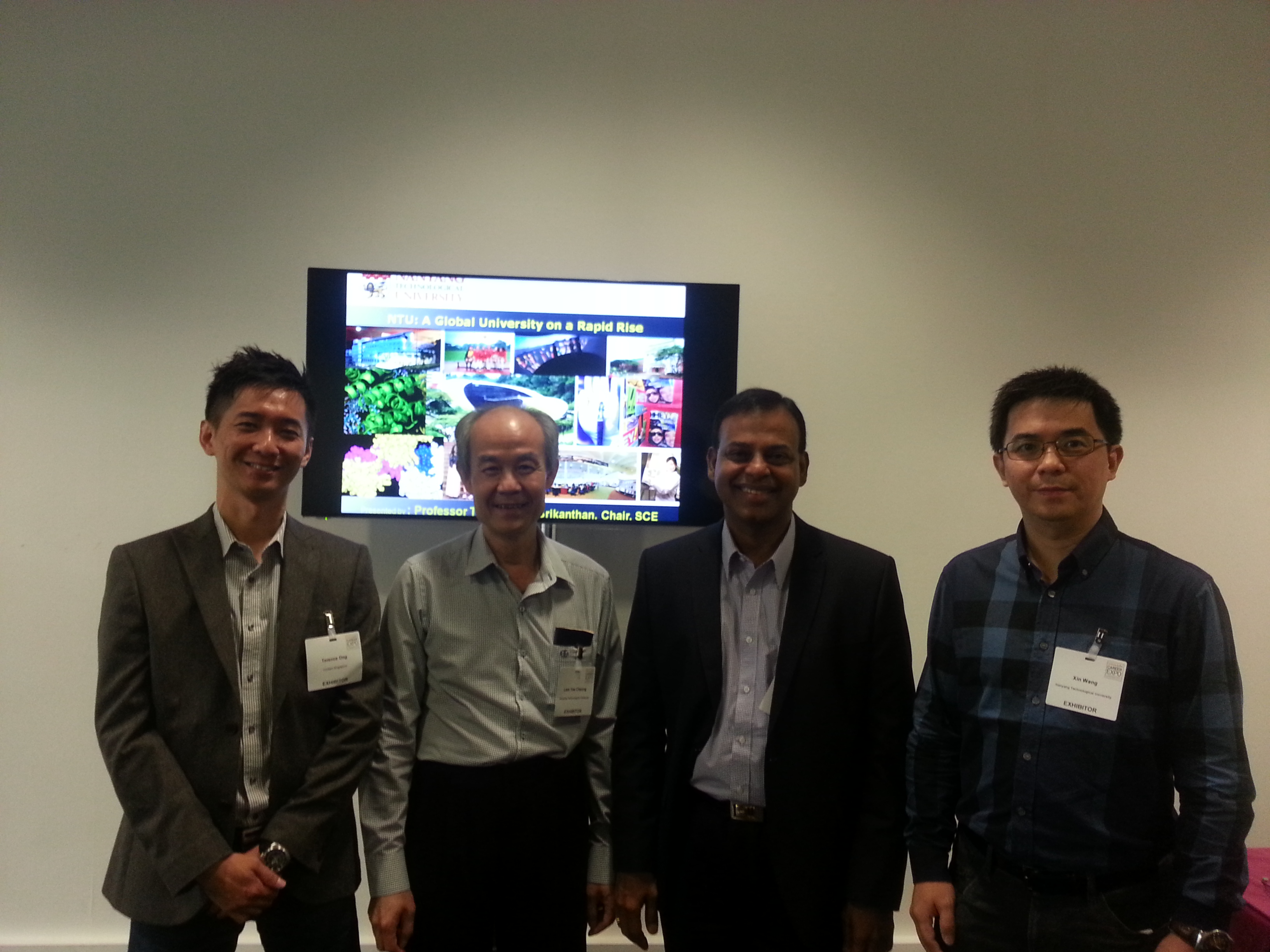
L-R: Terence Ong, Prof. Lam, Prof. Sri, Prof. Wang.{credit}Credit: Lisa Restelli{/credit}

Relocating to Singapore has benefits for scientists and their families.

Contributor Lisa Restelli

Scientists are expected to lead rather mobile lives. However, relocating to a new country, especially post PhD, can be quite demanding as by that point you might have a family to consider. Trailing, non-scientist spouses can have a hard time settling into a new life abroad, often not knowing the language of their host country, sometimes not permitted to work, and with the nagging worry that their children will have a hard time adapting to the new school system.

 At the Naturejobs London Expo, on Friday 19 September 2014, I attended the “Contact Singapore” workshop about science opportunities in the Southeast Asia city-state, and was pleasantly surprised to discover that it may not be so tough. With its stable political climate, its growing economy and its diverse population, the Republic of Singapore appears to be a great environment in which to foster discovery (more information at Contact Singapore), while at the same time offering attractive work and life opportunities to non-scientist immigrants.

Once they had us interested in Singapore, delegates presented some of the potential scientific opportunities in the College of Engineering at Nanyang Technological University, which recently placed first in an international ranking of young universities. Continue reading

Companies on campus: The blossoming relationship between academia and industry

Naturejobs-podcastHaving companies based on campus can have career benefits for everyone, says Jana Capson-Watts.

Industry and academia have had a long, and often rocky relationship. Each referring to the other as “The Dark Side”. But it’s continuously improving, and now they’re moving in together: Companies are on campus.

In this podcast I speak to Jana Capson-Watts, associate director at The BioFrontiers Institute, a company based on campus at the University of Colorado, Boulder. She is also a co-author of a comment article in this week’s Nature University Special. And at the end, there’s a short piece from Geoff Marsh and the Nature podcast about cross-disciplinary research at universities.

The relationship between academia and industry started in the early 11th Century, when Europe first started establishing universities. Since then they have developed into the beacons of society, becoming a space for learning and discovery, for study and understanding, for scholarship. It’s walls have housed some of the most intelligent brains in the world and have seen some extraordinary things. But one thing was for sure: before the early 20th century, not much thought was given to collaborating with technology and industry.  Continue reading

Ask the expert on Naturejobs: Meet Sarah Blackford

This new series on the Naturejobs blog, called Ask the expert, is an opportunity for you, our readers, to chose what questions our experts answer. We’re still easing them in slowly, so this time they’ll still be given some questions.

Sarah-Blackford

{credit}Image courtesy: Sarah Blackford{/credit}

Meet our expert for this month: Sarah Blackford, Head of Education & Public Affairs at the Society for Experimental Biology.

What is your scientific background?

My scientific background is way back in the past, when I worked for three years at York University investigating calcium uptake in plants. Practical lab work was not for me; my specialities were more aligned with presenting data, designing posters, negotiating for equipment from other research groups and organising departmental socials. My communication and creative skills led me on to a 5-year career in scientific publishing as assistant editor at the Journal of Experimental Botany.

Why did you decide to take on the role you have now?

Whist working as assistant editor, I was based at Southampton University, where I took the opportunity to spend some of my spare time volunteering at the Careers Service. I enjoyed helping students and researching employers and careers information. When my job relocated to Lancaster University, I was offered a post as a Careers Adviser there and, subsequently, at Leeds University. After three years, I returned to Lancaster to set up the Society for Experimental Biology’s Education & Public Affairs office. My current role involves doing a variety of tasks such as science communication, management and supporting the career development of early career researchers and PhD students.

How do you want to help scientists in their careers?

I have had over 10 years’ experience in my role as academic and science career specialist, and have formalised this with a master’s in career education and guidance (Warwick University), as well as publishing a book entitled Career planning for research bioscientists. Therefore, I hope to be able to offer a breadth of support for scientists, encompassing most aspects of their career development and management, from personal and professional through to practical and transitional.

Tell us something interesting about yourself.

Working for the Society for Experimental Biology means I’m not restricted to supporting researchers in only one institution, so mobility is a big part of my work. This year I’ve delivered workshops and one-to-one career guidance in 20 different institutions and at three international conferences in 8 countries. Being a tea lover, I always take time out to try out  one or two local cafés and tea shops when I’m in town. So far, top of my list are Gottingen, Germany and Portland, Oregon!

Sarah’s got such a vast experience in bioscience careers, so here are some bioscience questions for her. Vote in the poll to decide which one she will answer in November!

Lindau: Winning the war

At this summer’s 64th Lindau Nobel Laureate Meeting, 37 laureates spent a week with 600 young scientists from almost 80 countries to share their ideas, experiences and knowledge. Discussions revolved around global health, the latest findings in cancer and Aids research, challenges in immunology, and future approaches to medical research. All of the lectures can be viewed on Lindau’s Mediatheque website.

We’ve already heard about the future directions of HIVageing research and the side-effects of pharmaceuticals. This week Lorna explores the war on cancer.

Winning the war

In 1971, the then president of the United States, Richard Nixon, declared ‘war’ on cancer. Since then, billions of dollars have been poured into cancer research worldwide, but a cure for the disease is still a long way off. In this Nature Video, reporter Lorna Stewart marks the scientific milestones of the past four decades. She explores cancer genetics with Nobel laureate Michael Bishop, vaccines with fellow laureate Harald zur Hausen, and two young researchers tell Lorna about some of cancer research’s greatest success stories.

Nature Outlook also produced a supplement based on the Lindau meetings.