#GYSS: Engaging in PhD research you truly care about

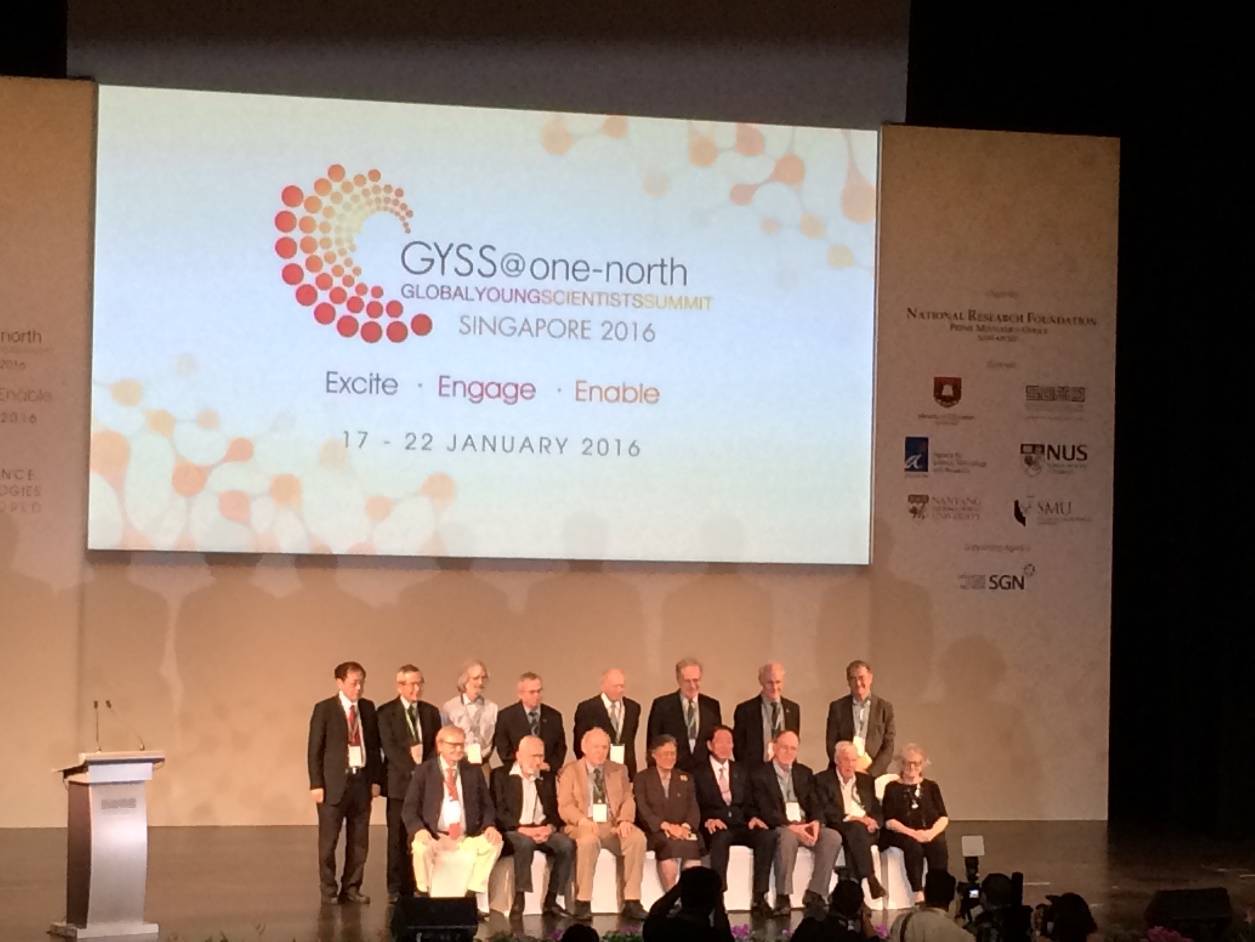
Nobel laureates spoke at the Global Young Scientist Summit 2016. Andy Tay was there for Naturejobs.

Guest contributor Andy Tay

Congratulations! After investing so much effort to write your personal statement and research proposal, you’ve been accepted into a PhD programme. It’s now time to decide which lab to commit to.

Like most other PhD students, you may be eager to perform and steer your PhD in your direction. However, as your salary, tuition and research expenses are likely to come from the grants of your professor, this financial need might trap you in a research project that you’re not interested in. While PhD students in countries like Singapore and Australia are paid generous scholarships, their counterparts in the U.S. and European institutions typically rely on their professors for income. In all cases, PhD students still require their research expenditure to be covered by grants.Nobel laureates
 

Is there no way out?

After hearing – along with many other topics – about the role of micro-organisms in cancer, and the use of light for quantum computing, students present in the Global Young Scientist Summit 2016 voiced their concerns on PhD education during group sessions and panel discussions with 13 Nobel laureates.

A common worry was the lack of autonomy on research projects and the impact that has on scientific curiosity. The Nobel laureates, fortunately, had experienced advice to give. Continue reading

Naturejobs Career Guide: Asia-Pacific

Scientists looking for new experiences in research should explore options in the Asia-Pacific region as funding floods in.

Naturejobs-career-guide-asia-pacificFor anyone considering a career in science, the Asia-Pacific region might offer some interesting careers. Opportunities for scientific jobseekers in Asia-Pacific abound, especially as research and development (R&D) spending as a proportion of gross domestic product (GDP) has risen in all six countries since 2000. But moving overseas is a big decision. This first Naturejobs Career Guide provides practical advice, first-hand accounts and useful facts and figures for those considering a change.

China‘s rise as a global powerhouse in science and technology is reason enough to think about a move to Asia. For example, the government has committed large sums to high-profile projects such as thorium-based nuclear power plants, as well as basic research spending, which has historically received less funding than in other developed countries. It has also launched a series of major R&D-based projects such as a space station and the China brain project, dedicated to research into artificial intelligence and neurological diseases.

A little to the east, South Korea is second only to Israel in the proportion of its GDP it spends on R&D, and Japan is not far behind. The country is focussed on recruiting overseas researchers and encouraging basic science, and is using research to drive development.

Singapore has built up its research and innovation capacities rapidly since the turn of the century by luring foreign talent with offers of large salaries. Between 2011 and 2015, 16.1 billion Singapore dollars (US $12billion) was invested in science and research by the island city-state, a 20% increase on the previous five-year period. A majority of this funding is ear-marked for collaborative projects between academic institutions and industry, hoping to drive innovation and translational science.

Australia and New Zealand are playing to their strengths by focusing limited resources on the fields in which they excel. New Zealand is renowned for its Earth science and agricultural research. It has a multi-cultural environment and is proud of its collaborativeness. The Australian government, on the other hand, is focussing it’s spending efforts on large physics and astronomy projects, as well as medical research.

For each of the six countries in the Asia-Pacific region, Naturejobs has collected first hand accounts of what it’s like to move, live and work there are a researcher.

Research in Singapore: Bring the ideas and the family

Contact-Singapore

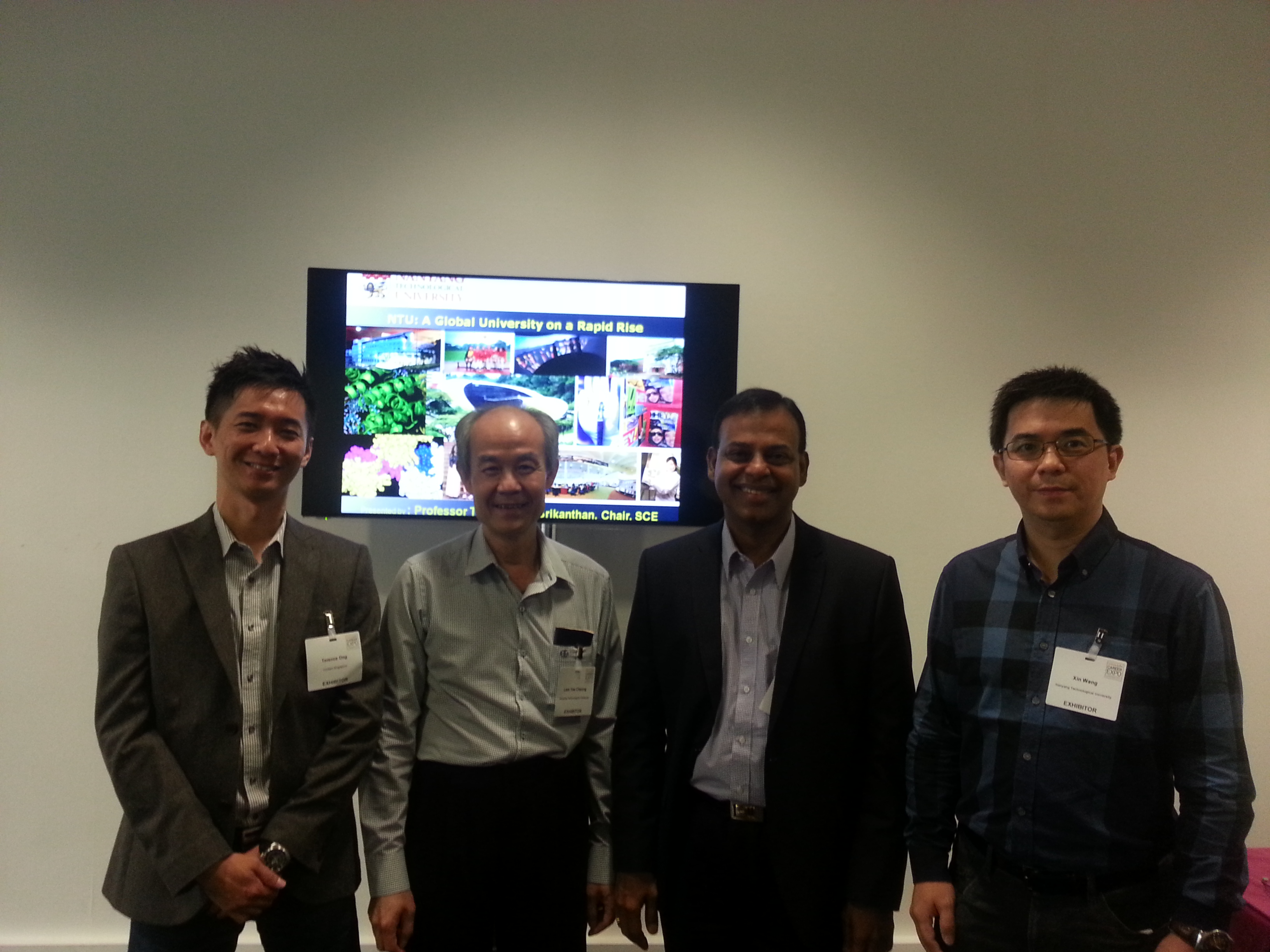
L-R: Terence Ong, Prof. Lam, Prof. Sri, Prof. Wang.{credit}Credit: Lisa Restelli{/credit}

Relocating to Singapore has benefits for scientists and their families.

Contributor Lisa Restelli

Scientists are expected to lead rather mobile lives. However, relocating to a new country, especially post PhD, can be quite demanding as by that point you might have a family to consider. Trailing, non-scientist spouses can have a hard time settling into a new life abroad, often not knowing the language of their host country, sometimes not permitted to work, and with the nagging worry that their children will have a hard time adapting to the new school system.

 At the Naturejobs London Expo, on Friday 19 September 2014, I attended the “Contact Singapore” workshop about science opportunities in the Southeast Asia city-state, and was pleasantly surprised to discover that it may not be so tough. With its stable political climate, its growing economy and its diverse population, the Republic of Singapore appears to be a great environment in which to foster discovery (more information at Contact Singapore), while at the same time offering attractive work and life opportunities to non-scientist immigrants.

Once they had us interested in Singapore, delegates presented some of the potential scientific opportunities in the College of Engineering at Nanyang Technological University, which recently placed first in an international ranking of young universities. Continue reading

Contact Singapore: Translational and clinical science career opportunities in Singapore

Contributor Aliyah Weinstein

Research in Singapore

This article originally incorrectly stated Swaine Chen’s position as a tenure-track assistant professor there. In fact, he is a tenure-track assistant professor with NUS and an Adjunct Senior Research Scientist with GIS. The text has now been corrected.

Imagine going to the lab every day in a country with a tropical climate, whose main working language is English and whose government strongly supports scientific research. Singapore is ranked first in the world for ease of doing business, and in 2012 was voted as Asia’s Most Livable City. 

Of particular interest to academic researchers: from 2011-2015, the government there has pledged S$16.1 billion (US$12.8 billion) to boost Singaporean research initiatives, and build more basic and clinical research space there.

That’s according to Contact Singapore an alliance of the Singapore Economic Development Board and the Ministry of Manpower and host of a session at the NatureJobs Career Expo Boston that was designed to draw the attention of attendees to Singapore’s research institutions.

Singapore has three medical schools:  the National University Health System (NUHS); SingHealth/Duke-NUS, affiliated with Duke University in North Carolina; and the Lee Kong Chian School of Medicine, affiliated with Imperial College in the UK. Additionally, the Genome Institute of Singapore (GIS) is a research institute with government backing. Each institute has broad but individual research interests, and are accepting applications from interested researchers to fill their expanding laboratory space. Continue reading

Q&A: Internships abroad: why it’s worth taking the plunge

Embarking on an internship abroad can feel daunting, but it could open up a world of opportunity.

Thinking of an internship this summer? Why not consider one abroad? There are several programmes that offer placements to science students or graduates looking to gain relevant work experience in an exciting location. Not only is it a great opportunity to travel, meet new people and learn a new language, the ability to push yourself out of your comfort zone will impress future employers and give you a lot to talk about in interviews.

Here, Jordan Kodner, currently a senior at the University of Pennsylvania, tells us about his summer placement with Contact Singapore, who offer summer placements lasting 3-6 months starting in July (application deadline is the 28th Feb).

Why did you decide to apply?

I had heard a number of positive and interesting things about Singapore in the past, and I needed something to do for the summer. I figured an internship in Singapore would be a win-win for me.


What did the application process involve?

The first part off the application just asked for which position I’d be interested in, my school and major, my resume, and other basic identifying information. A few weeks later, I received an email inquiring about my transcripts.


 Where was your placement and what did it involve?

I worked at the Spin and Energy Lab at the National University of Singapore Electrical and Computer Engineering Department. There, I researched microcontrollers that would be suitable for ultra-low power applications.


What do you feel that you achieved in the three months you were in Singapore?

I learned something about a field that I had very little prior experience in. I’m not an electrical engineer, so working in that area in a lab on the opposite side of the world was a bit of a challenge, but I feel like I succeeded.


What was the highlight of the experience? Continue reading