Return to Nerd Heaven: Lindau

Alaina G. Levine is live from the Lindau conference

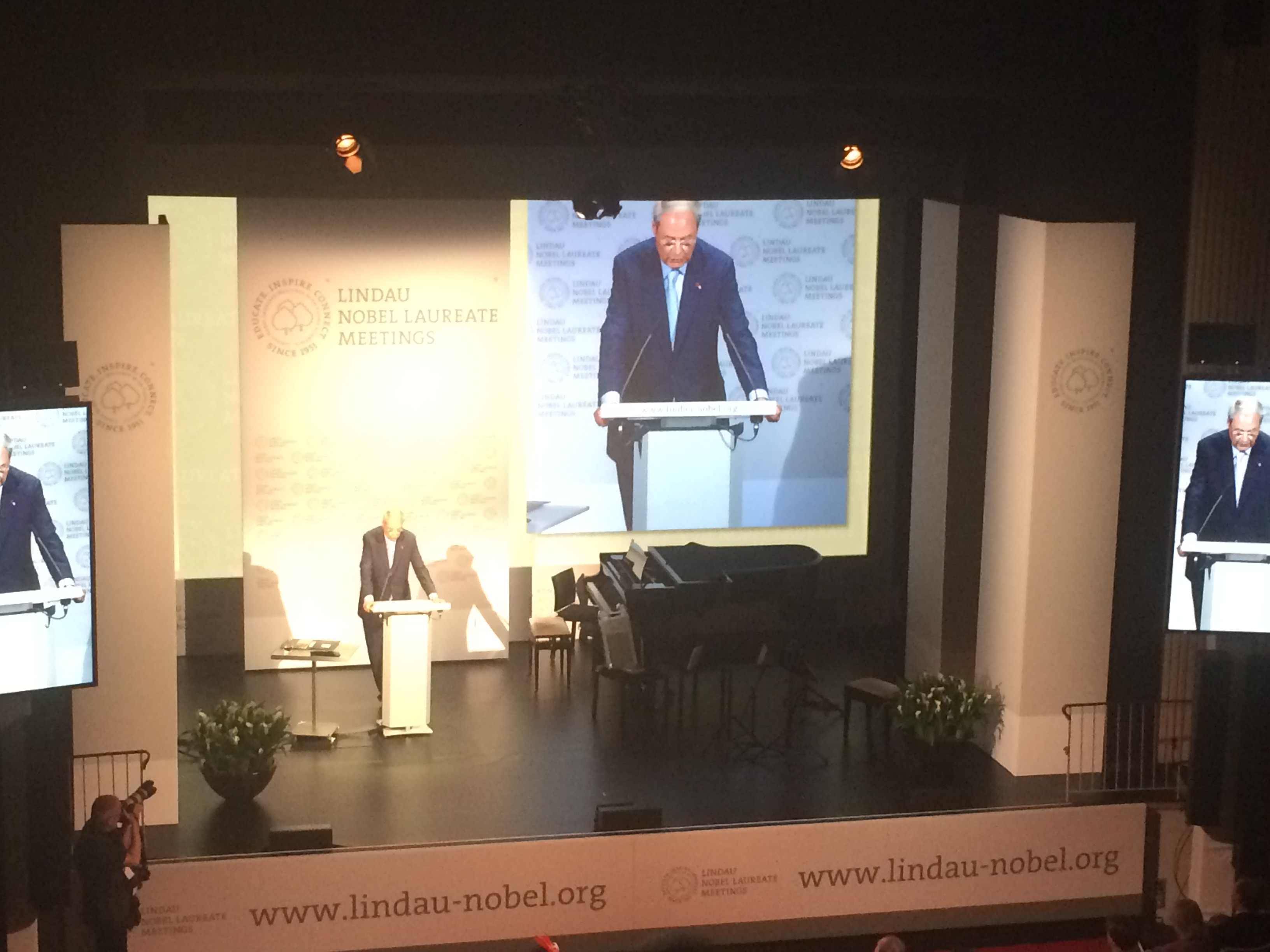
In 2012, I flew across the pond from the deserts of Arizona to the shores of Lake Constance on the German/Austrian/Swiss border. I wasn’t on holiday per se, but I might as well have been. When I arrived in the tiny hamlet of Lindau, Germany, I was met with two very sweet offerings: spaghetti ice cream and hundreds of nerds swarming the island town. I couldn’t have been happier.IMG_4306

Continue reading

#GYSS: Engaging in PhD research you truly care about

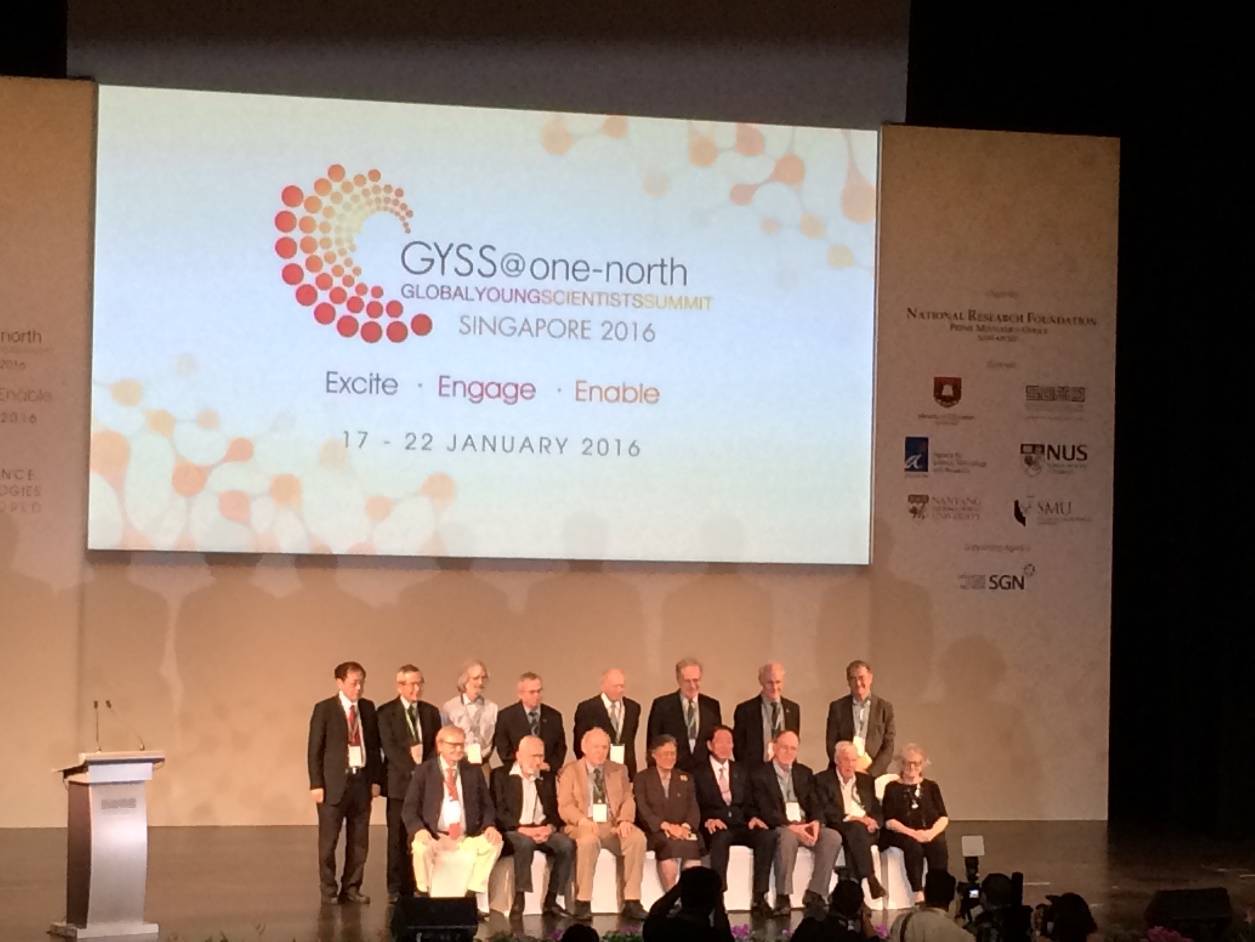
Nobel laureates spoke at the Global Young Scientist Summit 2016. Andy Tay was there for Naturejobs.

Guest contributor Andy Tay

Congratulations! After investing so much effort to write your personal statement and research proposal, you’ve been accepted into a PhD programme. It’s now time to decide which lab to commit to.

Like most other PhD students, you may be eager to perform and steer your PhD in your direction. However, as your salary, tuition and research expenses are likely to come from the grants of your professor, this financial need might trap you in a research project that you’re not interested in. While PhD students in countries like Singapore and Australia are paid generous scholarships, their counterparts in the U.S. and European institutions typically rely on their professors for income. In all cases, PhD students still require their research expenditure to be covered by grants.Nobel laureates


Is there no way out?

After hearing – along with many other topics – about the role of micro-organisms in cancer, and the use of light for quantum computing, students present in the Global Young Scientist Summit 2016 voiced their concerns on PhD education during group sessions and panel discussions with 13 Nobel laureates.

A common worry was the lack of autonomy on research projects and the impact that has on scientific curiosity. The Nobel laureates, fortunately, had experienced advice to give. Continue reading

A science masterclass

Young researchers discuss science and careers with Nobel laureates at the 2015 Lindau Nobel meeting.

Image credit: Sam Falconer

Every year, Nobel laureates and young researchers come together in Lindau, Germany. It’s a unique opportunity to glean some advice for a successful career in science. The 2015 meeting cast a spotlight on super-resolution microscopy, as discussed in depth in the Nature Outlook: Science Masterclass, as well as fields as diverse as memory formation and the Higgs boson.

The first meeting was held in 1951, just two years before Francis Crick and James Watson revealed their structure of DNA. Since then, Nobel laureates from all walks of science have graced the small island with their presence, and 2015 was no different.

Elizabeth Blackburn, who shared the 2009 Nobel Prize in Physiology or Medicine with Carol Greider and Jack Szostak for their work on telomeres, was one of only three female laureates to attend the meeting. Other attendees included Richard Roberts (shared the 1993 Nobel Prize in Physiology or Medicine with Phillip Sharp for their discoveries of split genes), Francois Englert (shared the 2013 Nobel Prize in Physics with Peter Higgs for the theoretical discovery of a mechanism that gives mass to subatomic particles), Bruce Beutler (shared one half of the 2011 Nobel Prize in Physiology or Medicine with Jules Hoffmann for their work on the activation of innate immunity) and Susumu Tonegawa (winner of the Nobel Prize in Physiology or Medicine in 1987 for unlocking the genetic secrets behind antibodies’ diverse structures).

This particular Nature Outlook was supplemented with a series of videos highlighting some of the scientists’ work. On the blog, we’ve shown Saul Perlmutter’s work on the expanding universe, Stefan Hell’s work on breaking the diffraction barrier, Robert Wilson’s work on the cosmic microwave background and an insight into Elizabeth Blackburns interest in telomeres.

But of particular interest to the Naturejobs blog are three short videos that discuss certain elements of careers in science. Equal opportunities: Women in science, explores laureate Ada Yonath’s career, and why the gender gap in science persists. Young scientists also came together to discuss whose responsibility it is to disseminate science and finally, what does an early career scientist’s future look like, given the uncertainty in the job market?

Further reading/listening from the Naturejobs blog:

Podcast with Martin Chalfie, Venki Ramakrishnan and Arieh Warshel, on what it takes to be hired into their labs.

Podcast: Academia to industry, and back again, with Eric Betzig

Mentoring: A perspective from Nobel laureates

Mentoring: Before they were laureates

Mentoring: Where do laureates go for advice?

Lessons from a laureate

Mentoring: Where laureates go for advice

Mentorship advice comes in many forms and from many sources, say Nobel laureates.

Contributor Michael Gatchell

mentors-mold-naturejobs-blog-small

{credit}iStock/Thinkstock{/credit}

Mentors are fundamental in molding young scientists into independent researchers. These relationships can take on many forms and evolve along the way, but they never stop being important for a scientist.

Relationships with mentors change as a young scientist’s career progresses and they gain experience. But it is naïve to think that you are less dependent on the advice from your peers as you grow. “I think you need more advice in a way, but different types,” says Martin Chalfie, 2008 Nobel laureate in chemistry. Venkatraman Ramakrishnan, 2009 Nobel laureate in chemistry, agrees that it is important to have somebody who you trust to discuss major decisions with. He maintained a close relationship with his postdoctoral mentor as his career progressed, “He was always very honest — I didn’t always agree with him — but I always found it useful to talk to him.” Continue reading