Reshaping the research landscape

A 12 April report from the US National Academies of Sciences, Engineering, and Medicine offers ideas for reshaping the landscape of life-science research across all career levels in the US biomedical research pipeline.

laboratory-2815640_1920

The proposal from the advisory body in Washington DC calls for more career counselling at the graduate and postdoctoral levels, better data on career outcomes at those levels, three-year caps on postdocs under principal investigators and new non-tenure track academic research positions, among other changes. To implement all the proposals would require a US$2 billion increase to the US National Institutes of Health (NIH)’s budget, as well as subsequent budget raises to prevent future funding bottlenecks.

Continue reading

To improve reproducibility, listen to graduate students and postdocs

The National Institutes of Health (NIH) should implement a national exit interview portal to collect feedback from mentees on their experiences.

Funding agencies should not penalize poor performers; instead they should reward good mentorship, says Ahmed Alkhateeb

Continue reading

Seeking out stronger science: An incomplete, non-systematic list of resources

Our reporter Monya Baker runs through some of the statistical tools she found when writing her latest story.

As I reported in a Nature feature published this week, I found more online courses that were being developed than were actually in place. Resources to help scientists do more robust research are set to expand quickly. For example, the National Institute of General Medical Sciences has a competitive program that awards funds to institutions to enhance graduate student training; of 15 such supplements awarded in 2015, a dozen involved data analysis, statistics, or experimental rigor. You can find more here, and that is only a fraction of what is available. Some courses are still being developed and piloted to select students; others are being offered only to those in a particular department or training grant. If you find one that interests you, it can’t hurt to ask.

data-science-industry

{credit}PW Illustration/Getty{/credit}

Continue reading

Back to the thesis

We share Nature’s back to the thesis videos, and some of our favorite #threewordthesis tweets

Last week, Nature visited a few prominent scientists to take them back to their theses.

First up was Francis Collins, director of the NIH, with Semiclassical theory of vibrationally inelastic scattering, with application to H+ and H2 (1974). This is how it went.

Continue reading

#GYSS: Engaging in PhD research you truly care about

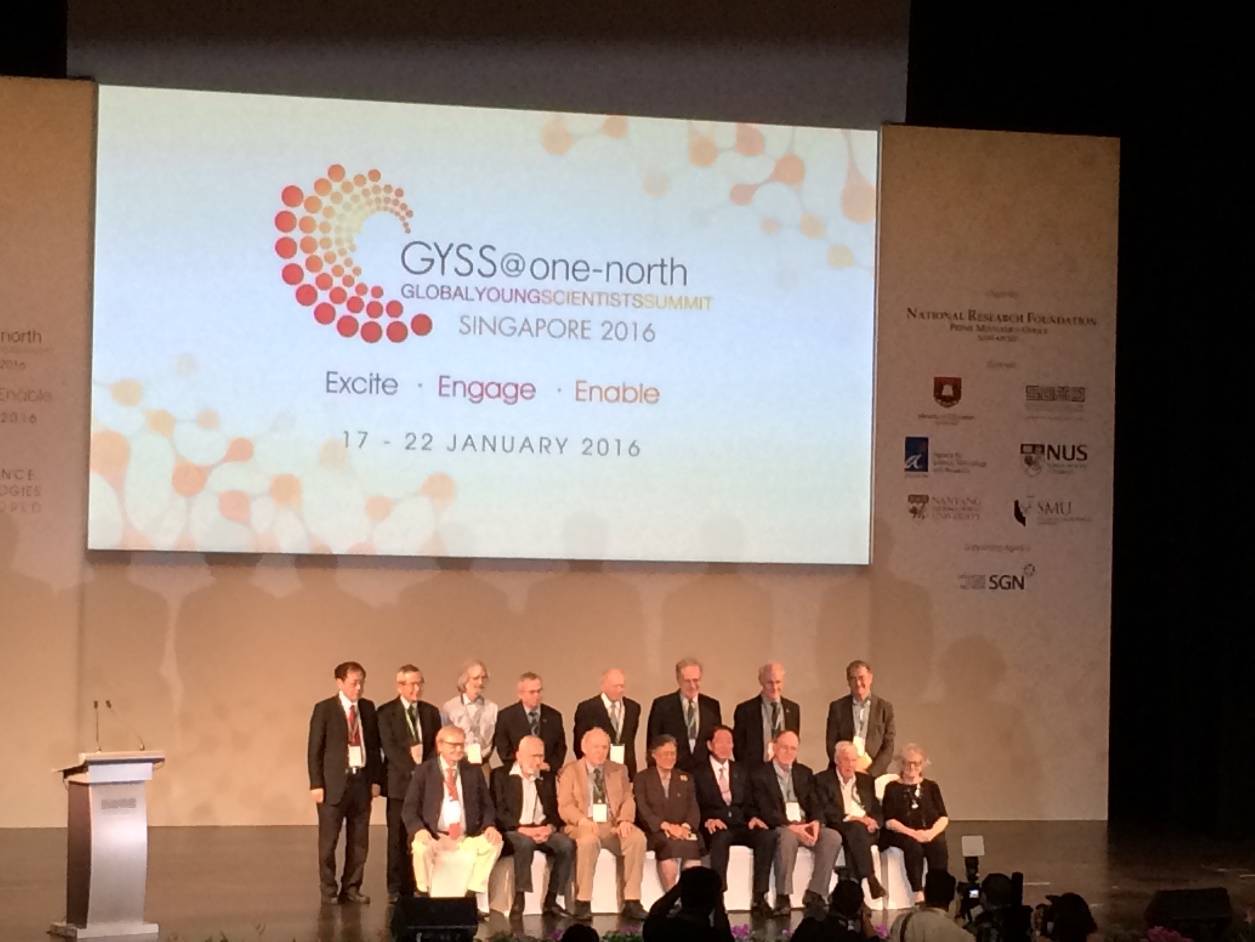
Nobel laureates spoke at the Global Young Scientist Summit 2016. Andy Tay was there for Naturejobs.

Guest contributor Andy Tay

Congratulations! After investing so much effort to write your personal statement and research proposal, you’ve been accepted into a PhD programme. It’s now time to decide which lab to commit to.

Like most other PhD students, you may be eager to perform and steer your PhD in your direction. However, as your salary, tuition and research expenses are likely to come from the grants of your professor, this financial need might trap you in a research project that you’re not interested in. While PhD students in countries like Singapore and Australia are paid generous scholarships, their counterparts in the U.S. and European institutions typically rely on their professors for income. In all cases, PhD students still require their research expenditure to be covered by grants.Nobel laureates


Is there no way out?

After hearing – along with many other topics – about the role of micro-organisms in cancer, and the use of light for quantum computing, students present in the Global Young Scientist Summit 2016 voiced their concerns on PhD education during group sessions and panel discussions with 13 Nobel laureates.

A common worry was the lack of autonomy on research projects and the impact that has on scientific curiosity. The Nobel laureates, fortunately, had experienced advice to give. Continue reading

The postdoc series: Finding funding

Becoming an independent researcher in academia is crucial to achieving future success.

Naturejobs-money

{credit}ImageSource{/credit}

When you start your first postdoc, you often find yourself dependent on your supervisor: the one that provides the funding so that you can do their your research. But as you build up your experience, it’s important to start demonstrating your own independence as a researcher. Doing this whilst working for someone else is not an easy task.

It might sound obvious, but “just being a clone of your PhD supervisor may be a bad strategy,” says Jim Usherwood, Wellcome Trust Senior Research Fellow and Reader at the Structure & Motion Laboratory at the Royal Veterinary College in London. You might look up to them and admire their work, but in the end funding agencies will look for innovative applications that demonstrate how you will be doing new research.

But, it’s more difficult than it looks to build up independence without treading on a PI’s toes, especially when you’re hired to work on their research. “I do know there are disciplines where the PI needs/demands postdocs to stay in their field of expertise and put all their time in to the PI’s project,” he says. If that field is expanding and going to continue to expand, then this could be an advantage: at some point a new institution would hire a younger/cheaper duplicate of the PI. “But if not, then you may be competing to step into dead-man’s shoes… and there could be generations ahead of and behind you waiting to take that step.”

Usherwood suggests the following should be done early on in an academic postdoctoral career to build up some autonomy:

  • Start supervising undergraduate student projects to give you extra time and resources on slightly different projects.
  • Find out what other areas of interest the PI might have. They might not currently be working on them but they could be willing to discuss opportunities.
  • Don’t be protective about your ideas. “It’s much better to chat about them and find what has been done before; if the occasional idea gets adopted/swiped along the way, have a new one and believe that there will be important people in the field appreciating your input anyway.”

Once you’ve started developing some of these skills during the first postdoc, it’s time to think about where you could find your own funding. Continue reading

Career transitions: Increased support

Naturejobs-podcastResearch institutions, funding bodies and non-profits create resources to support researchers with their careers in academia and outside.

This month’s podcast I explore some of the February 2014 Nature Careers and Naturejobs articles with Monya Baker, and I speak to three people about three projects that are looking to increase support available for early career researchers and their career transitions.

MIND (Motivating INformed Decisions) at the University of California in San Franciso,is an experimental career programme supported by the BEST grant from the National Institute of Health. BEST stands for Broadening Experiences in Scientific Training, and is designed to increase trainee and mentor awareness of career pathways available in the biomedical workforce. MIND takes a two pronged approach by working with the students as well as working with the staff at the university to find out what support they need. Jennie Dorman, one of the lead researchers on the MIND project, shares what they are doing with students and faculty. Continue reading

Enough doom and gloom part 2: Curiosity is the currency of science

Science funding sources have varied over the decades, and will continue to do so as the sociological and political influences change, says Scott Chimileski.

Contributor Scott Chimileski

Twenty-first century science is global, rapidly communicated and irreversibly intertwined with virtually every aspect of society. This immensity creates the impression that our current scientific culture has been established for a very long time. However, the National Science Foundation (NSF), NASA and the Department of Energy (DOE), pillars of basic science that we recognize them to be, were all established after many of today’s senior investigators were born. In addition to appreciating the cyclical nature of funding (see part one), it is critical to consider how and why funding sources have changed throughout the history of science.

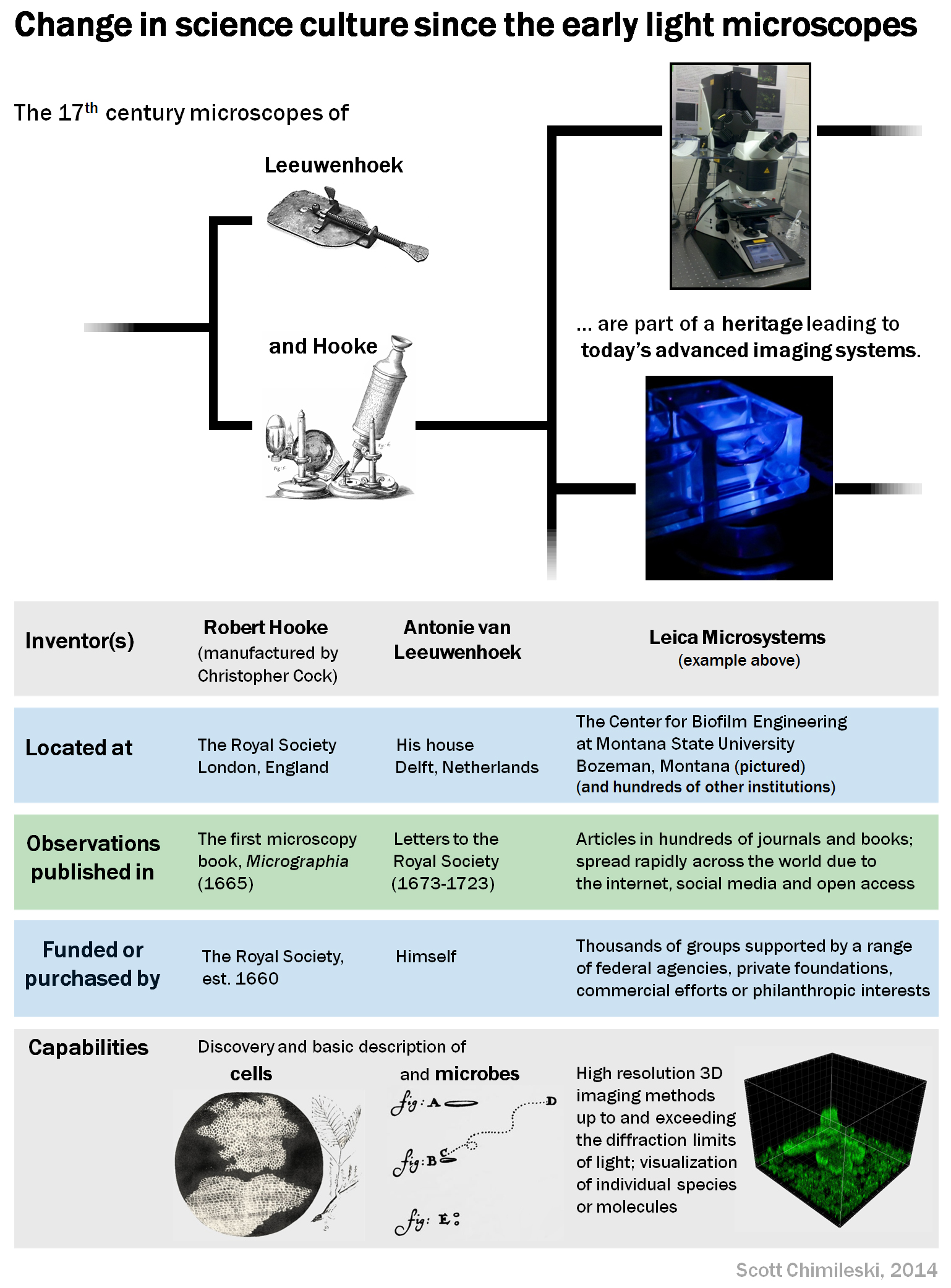
From the scientific revolution at the end of Renaissance through the 19th century, science was largely self-funded or driven by the patronage of other independently wealthy individuals. Many famous forefathers of science had side jobs. Antonie van Leeuwenhoek, whose observations of bacteria in the 17th century inspire microbiologists to this day, was a house manager. Little is known of how he made his microscopes, let alone exactly how he paid for supplies. His contemporary Robert Hooke, another pioneer of microbiology, was an architect and city surveyor. Johannes Kepler wrote horoscopes. And, Galileo Galilei – celebrated for early observations of Saturn’s shape and the Milky Way Galaxy – pitched his telescopes to the military of the Republic of Venice as naval instruments, and to the House of Medici in Florence as a means for naming distant moons after members of this powerful dynasty.

science-funding-inventors Continue reading

Enough doom and gloom part 1: Science funding is cyclical

Contributor Scott Chimileski

A few months away from finishing a PhD, my social media feeds are filled with negativity about postdocs, jobs and funding. Article after article, elaborate infographics – there are even special calculators now that predict your chances of becoming a principal investigator.

labpredictor-scott-chimileski

{credit}Image credit: Scott Chimileski{/credit}

It is certainly true: the competition for a position as a science professor and to earn funding as a researcher is increasing. Raising consciousness around these issues is important, and these articles, driven by genuine concern, do help. However, I think it has gone too far. I see it affecting my peers on Facebook: “Wee!! Sadly this motivated me to get out of bed, someday I could make $40k!” accompanied by a link to the article “Too Few Jobs for America’s Young Scientists.” This same sort of sentiment is echoed on Twitter.

It’s human nature to focus on bad news; but it is long overdue to have a critical look at all the doom and gloom. Before we panic – before we decide there are too many PhD students and dream-up ways to intervene – let’s consider the history surrounding these issues, allow a little optimism in, and explore the positive. In this three part series, I want to help uplift my fellow young scientists. Continue reading

Careers in Nature – 1 August 2014

NatureEvery fortnight we’ll be collating all the careers related content across Nature, just in time for some weekend reading.

Career paths have twists and turns. They’re never straight forward, however much time you spend planning them. One single email changed the careers of Anthony Barnosky and his wife, Elizabeth Hadly. They had co-authored a paper in Nature about climate change (Barnosky, A. D. et al. Nature 486, 52–58 (2012)), and the media attention it created caught the eye of Jerry Brown, the governor in California. He wanted them to turn their paper into a consensus statement – a document that could be used in political circles, and could be understood by political leaders, policy makers and the public. Read more from Virginia Gewin on this story of politics and science.

The Scripps Research Institute president, Michael Marletta, has resigned from his post after the faculty rebelled against him. The reason for the rebellion is that Marletta had started making plans to join the research institute with the Los Angeles based University of Southern California. Read more about the Scripps president’s resignation on the Nature News blog. Continue reading