Lowering the stakes on exams could help close the gender gap in STEM classes

Women tend to underperform in introductory STEM (Science, Technology, Engineering and Mathematics) courses, but tweaking how courses are graded could help change that.

By Diana Crow

In many undergrad STEM courses, high-stakes exams — such as mid-terms and finals — determine as much as 60-70% of the student’s overall grade. However, this emphasis on tests may be inadvertently putting some students at a disadvantage.

An emphasis on high-stakes exams at undergraduate level may be a contributor to the gender gap

Continue reading

How to mentor undergraduates as a postgraduate, and why it’s important

Spending more time mentoring undergraduates as a postgrad is good for everyone, says Jenn Summers.

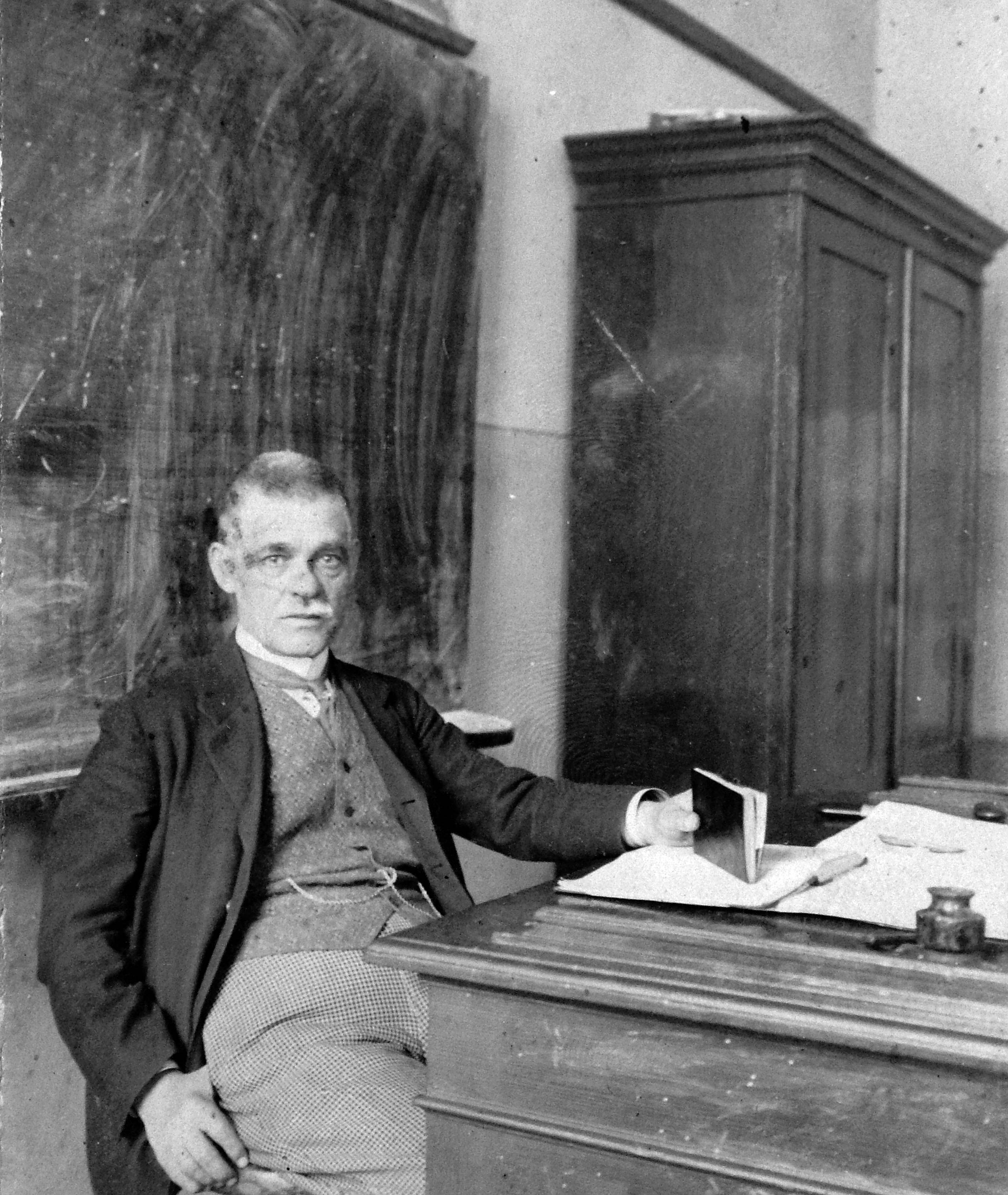
To-do lists work for some, but a more holistic approach to researcher development may bring larger rewards.{credit}By FOTO:Fortepan — ID 2278: Adományozó/Donor: Unknown. [Public domain or Public domain], via Wikimedia Commons{/credit}

There’s a difference between mentoring and doling out to-do lists. This is something I’ve learned over the past year, my first as a mentor. Mentoring undergrads became part of my job only recently – in the past, research came first. Most advisors value research outcomes over mentoring, and departments certainly place more value on publications. Before this past year, I was used to just a single undergrad working in my lab, and I thought of them as worker bees, not as future colleagues.

Put simply: I did not think about teaching in the lab.

Now, after guidance from recent research on mentoring, I realize that if graduate students like myself were more invested in mentoring, there would be many more small-but-important teaching opportunities.

Continue reading

Human Pipettes: Scientific training and education in biomedical research

David Rubenson and Paul Salvaterra share their thoughts on a damaged and damaging research system

A recent cancer research symposium displayed a familiar asymmetry. 90% of the attendees were PhD students or postdocs sitting obsequiously in the rear and asking 10% of the questions. 10% of the attendees were front-sitting faculty providing 90% of the inquiries.

A simple case of youthful hesitancy and opaque presentations requiring years of experience to comprehend? But did individual Principal Investigators (PIs) meet with conference planners before advising their students to attend? Did conference planners consider the likely audience and ask speakers to modify their talks? And did faculty members attend the related trainee poster session?


Are junior scientists little more than human pipettes?

Are junior scientists little more than human pipettes?{credit}Paper Boat Creative/Getty{/credit}

Continue reading

Scientific presentations: A cheat sheet

Scientific culture and insufficient training in public speaking leads to dull, text-heavy talks. Put more effort into presentations, say Andrew Gaudet and Laura Fonken

As postdocs with a combined 20 years of experience in neuroscience research, we’ve attended hundreds of talks and delivered dozens of presentations. We’ve realized it is imperative to perform your best every time you present — whether at a weekly meeting or at a job interview.

Your preparation and organization will help the audience understand your main points, and this professionalism will boost your reputation, which could lead to further opportunities. Ultimately, a presentation is one of the ways of influencing how others perceive your science and your competence. Here, we’ve put together some ideas for creating polished presentations.

presentation-1559937_1280

Continue reading

Seeking out stronger science: An incomplete, non-systematic list of resources

Our reporter Monya Baker runs through some of the statistical tools she found when writing her latest story.

As I reported in a Nature feature published this week, I found more online courses that were being developed than were actually in place. Resources to help scientists do more robust research are set to expand quickly. For example, the National Institute of General Medical Sciences has a competitive program that awards funds to institutions to enhance graduate student training; of 15 such supplements awarded in 2015, a dozen involved data analysis, statistics, or experimental rigor. You can find more here, and that is only a fraction of what is available. Some courses are still being developed and piloted to select students; others are being offered only to those in a particular department or training grant. If you find one that interests you, it can’t hurt to ask.

data-science-industry

{credit}PW Illustration/Getty{/credit}

Continue reading

How do you handle conflict?

Conflict is inescapable. Even if you’re the least contentious person on the planet, disputes will arise – between you and other lab members, your adviser, your principal investigator, collaborators, co-authors. The list goes on.

{credit}iStockphoto/Thinkstock{/credit}

Continue reading

In the classroom: Broadening students’ minds

A training programme is proposed to improve the interdisciplinary breadth and depth of a nanoscience research group.

Nature-nanotechnologyNanotechnology requires expertise from a range of fields, but students often have difficulties thinking about research in an interdisciplinary manner. In the November issue of In the classroom, Philip S. Lukeman (St. John’s University, New York) and Stefan Howorka (University College, London) outline a three phase training programme to help improve a student’s interdisciplinary skills. The approach is based around the widely used idea of a ‘journal club’, but is set in the context of a group’s interdisciplinary research and can be tailored to any specific topic. Experience with the training programme in Howorka’s own research group suggests that it can help students in a variety of ways, and can also benefit research teams as a whole.

Read Philip S. Lukeman and Stefan Howorka’s article, Broadening students’ minds, for free on the Nature Nanotechnology website.

Leaving academia: Do’s and Don’ts

Elizabeth Silva’s six Do’s and Don’ts on transferable skills before looking for a job outside of academia.

Contributor Elizabeth Silva

entrepreneur-naturejobsIn a previous article I discussed the importance of honing the soft skills that are central to a research PhD, which are useful regardless of career path. Experiences outside the lab primarily provide the opportunity to develop hard skills. There are thousands of different skills, requested by thousands of employers, in an infinite number of combinations. It’s no wonder PhDs are daunted by the prospect of navigating the options and give up before they begin. The good news: many of these specific skills can be readily learned by someone who has already mastered dozens of ridiculously specific, esoteric and finicky experiments.

First, a few dos and don’ts:

  • Don’t be tempted to develop an array of skills with the hope of marketing yourself to whatever job happens to arise. Start exploring different careers to get an idea of what you want to do, then develop skills that are related to that job or career. Continue reading

How to identify and leverage experiential opportunities to bolster your credentials

Jim Gould, a Naturejobs Expert, answers the question: How do I identify and leverage experiential opportunities to bolster my credentials?

Contributor Jim Gould

No matter what you ultimately do in your career, you have to gain and master many skills not directly related to your scientific training. However, if you are focused and efficient, there are ways to build your professional credentials with relevant experiences. Once I had decided that one day run a postdoc office, I realized I would need more experience in four areas: leadership, teaching and service, programme management and writing. I was determined to systematically gain these experiences and take time to reflect on past achievements.

This blog post, for example, is a calculated move. I combined my expertise and experience with my interest for online writing to ask the editor if there was anything I could contribute to Naturejobs Blog.

Through trial and error I developed a process that allowed me to identify and leverage many of the experiences that helped land my current job and position me well for the future. Based on these personal experiences, I want to share a practical approach to identifying and leveraging your own experiential opportunities to bolster your credentials. Continue reading