Want to find investors for your research idea? Change the way you pitch

A fundraising pitch involves vastly different style and substance than a scientific talk. Entrepreneurial scientists and engineers need to understand and manage the differences.
In a funding pitch, complexity is your enemy — no matter how significant the science

By David Rubenson, Wendie Johnston and Ned Perkins.

Many scientists hope to translate their discoveries into something useful and financially profitable. A biologist, for example, might hope to create a new line of health care products. Many use special grants or family resources to establish small companies. However, given the enormous challenges in the healthcare market, virtually every nascent enterprise needs outside funding; whether from wealthy “angel investors,” venture capital, or investment from large pharmaceutical and device developers. Continue reading
The long and winding road for training scientists to engage the general public

Efforts to encourage better public outreach are admirable, but better communication between scientists must come first, says David Rubenson.

communication

{credit}iStockphoto/Thinkstock{/credit}

Continue reading

Human Pipettes: Scientific training and education in biomedical research

David Rubenson and Paul Salvaterra share their thoughts on a damaged and damaging research system

A recent cancer research symposium displayed a familiar asymmetry. 90% of the attendees were PhD students or postdocs sitting obsequiously in the rear and asking 10% of the questions. 10% of the attendees were front-sitting faculty providing 90% of the inquiries.

A simple case of youthful hesitancy and opaque presentations requiring years of experience to comprehend? But did individual Principal Investigators (PIs) meet with conference planners before advising their students to attend? Did conference planners consider the likely audience and ask speakers to modify their talks? And did faculty members attend the related trainee poster session?


Are junior scientists little more than human pipettes?

Are junior scientists little more than human pipettes?{credit}Paper Boat Creative/Getty{/credit}

Continue reading

Successful vs. effective research presentations

In a disturbing trend, biomedical researchers can achieve a degree of career success despite an inability to effectively communicate scientific information, say David Rubenson and Paul Salvaterra.


“I have only made this letter longer because I have not had the time to make it shorter.”

– Blaise Pascal, The Provincial Letters, 1657

It goes without saying that every biomedical researcher wants to give effective presentations. Or does it? Is a presentation effective if it merely wows the audience with dense data, causes minimal objections, but fails to convey true scientific understanding? While such presentations may provide a degree of career success, they rarely inspire systematic or creative thinking. Scientists are wasting significant time listening to presentations that fail to effectively communicate information.

messy-cropped Continue reading

Multi-disciplinary Centers are lousy lifeguards when drowning in sea of PowerPoint slides

Structured efforts to build collaboration-encouraging centers cannot overcome fundamental problems in scientific communication.

These centers should focus on new scientist-to-scientist communication techniques before designing formal programs, says David Rubenson.

Multi-disciplinary, trans-disciplinary, translational, team science. These are the buzzwords for a consensus that transformative science requires collaboration among diverse disciplines. With scientists locked into narrow sub-disciplines, universities are dedicating enormous resources for top-down multi-disciplinary “programs,” “centers,” and “institutes” that attract diverse researchers, with the aim of encouraging more multidisciplinary collaboration.

communication

Continue reading

Revitalising the scientific research conference

Many biomedical research conferences rehash old ideas rather than define key challenges. The problem is tied to fundamental issues in the research culture.

Guest contributors David Rubenson and Paul Salvaterra


“Would you tell me, please, which way I ought to go from here?”

“That depends a good deal on where you want to get to,” said the Cat.

“I don’t much care where—” said Alice.

“Then it doesn’t matter which way you go,” said the Cat.

Lewis Carroll, Alice in Wonderland

Continue reading

A David Letterman-like countdown to the 10 biggest pitfalls in scientific presentations

Making a good scientific presentation takes time, but awareness of common mistakes is the first step to improving performance.

Guest contributor David Rubenson

The slide presentation has become the most ubiquitous form of scientific communication and it is causing havoc.  Scientists spend enormous amounts of time preparing presentations, travelling to conferences to deliver them, and listening to them almost every day.   But most scientists simply aren’t very good at them – we should change that.

image_0.img.full.high

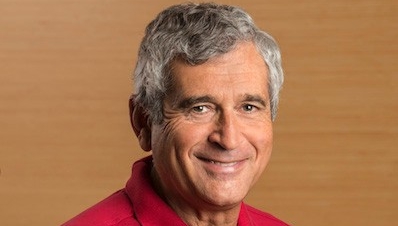
David Rubenson

I previously argued that this problem underlies a significant communication crisis in research.  As I’ve learnt as a scientific presentation coach at Stanford, there’s a broad understanding of this problem, but insufficient incentive for the time-intensive training many scientists need.  Still, following simple lists of “dos” and “don’ts” is a great way to improve presentation skills.

In that spirit, and to supplement an earlier list of eight positive suggestions, here’s a David Letterman-like countdown of the 10 biggest pitfalls in creating and delivering a scientific presentation:


Continue reading