Efforts to encourage better public outreach are admirable, but better communication between scientists must come first, says David Rubenson.

{credit}iStockphoto/Thinkstock{/credit}

{credit}iStockphoto/Thinkstock{/credit}
Naturejobs journalism competition winner Jessica Gorrill
The future of STEM (science, technology, engineering and mathematics) in the UK is on shaky ground. The numbers of entries at A-level for Biology, Physics and Chemistry dropped by 1%, 2.6% and 1.6% respectively in 2016, according to statistics collected by the Joint Council for Qualifications. This ends the steady increase seen since 2009. Whilst this drop may be attributed to the first year of new government reforms, it could be the beginning of a worrying trend of students neglecting careers in science.

{credit}Topp_Yimgrimm/ThinkStock{/credit}

Guest contributor Maria Wheeler-Dubas
The average American does not personally know a scientist, which leaves their opinions of science open to the mercy of pop culture and political pundits. In spite of this concern, one thing that has been greatly encouraging to see in the scientific community is the rise in discussion of STEM outreach. More and more scientists are recognizing science engagement as a way to break stereotypes, have a broader impact with their work, and manage sceptics of tax-funded grants—which is fantastic. However, an important part of the discussion that has been missing is how to go about getting involved in meaningful outreach. How can a research scientist maximize the use of what little time for outreach they might have? Here is what I’ve learnt as Science Outreach Coordinator. Continue reading

What does a scientist look like?
You don’t look like a scientist.
Have you ever been told this? I get it quite often. Sometimes from children, but also from adults. Occasionally, if I feel like turning that comment into a discussion, I ask:
How so?
They would hesitate, tilt their head, and make a careful comment about my outfit or my hair.
And you are a girl. Continue reading
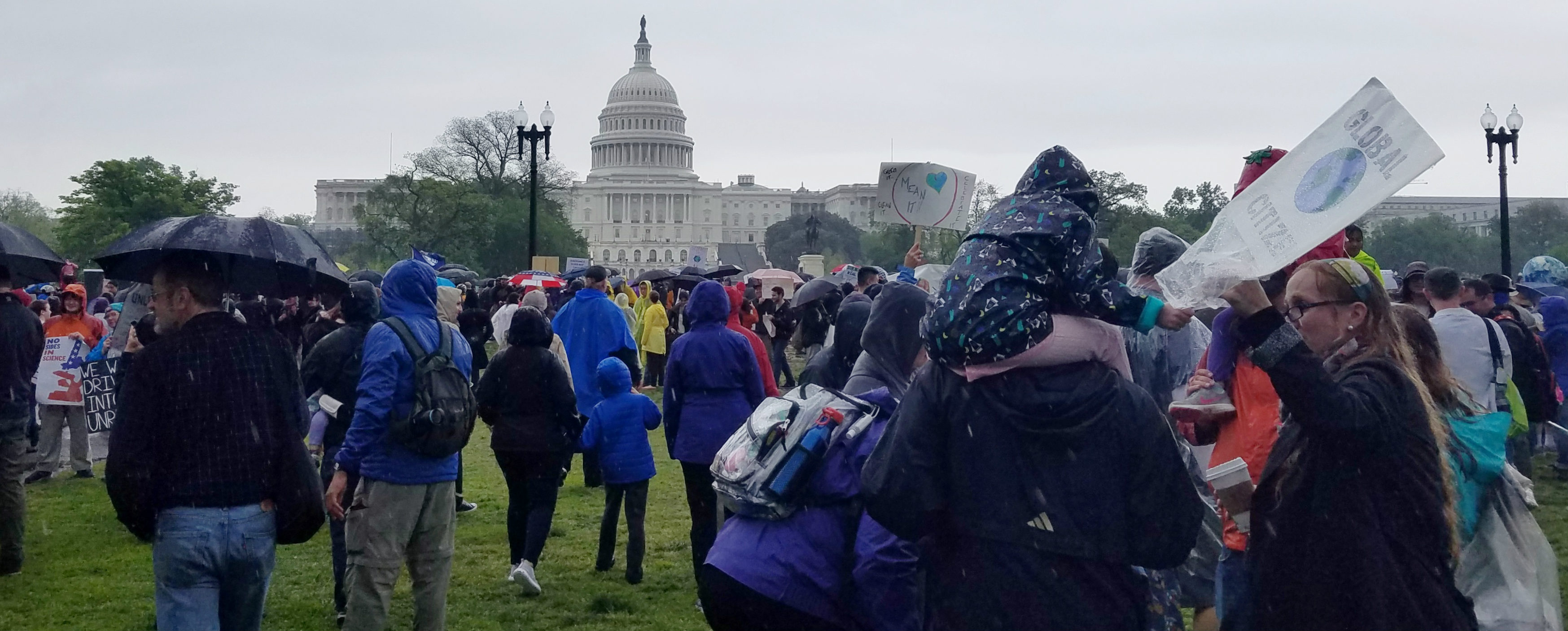
April 22 began with a drizzly ride on rented bikes through the streets of southeast D.C. to the Washington monument. I was accompanied by Dylan Jones, an outdoor recreation and environmental writer from West Virginia. “I typically opt for escaping civilization on Earth Day,” Jones said, “but today I decided to go straight into the heart of it.” We weaved through roads littered with people in rain shells and lab coats, carrying vibrant signs and rainbow umbrellas.
On Saturday, April 22nd, myself and an estimated 11,000 other science supporters marched in Berlin. The event was part of the global “March for Science” that took place in over 600 cities worldwide. While the March here and everywhere else was a great success in putting a spotlight on the importance of research and the danger of building on false facts, I’m worried it won’t have a lasting effect on the public perception of science if we don’t improve our science communication.
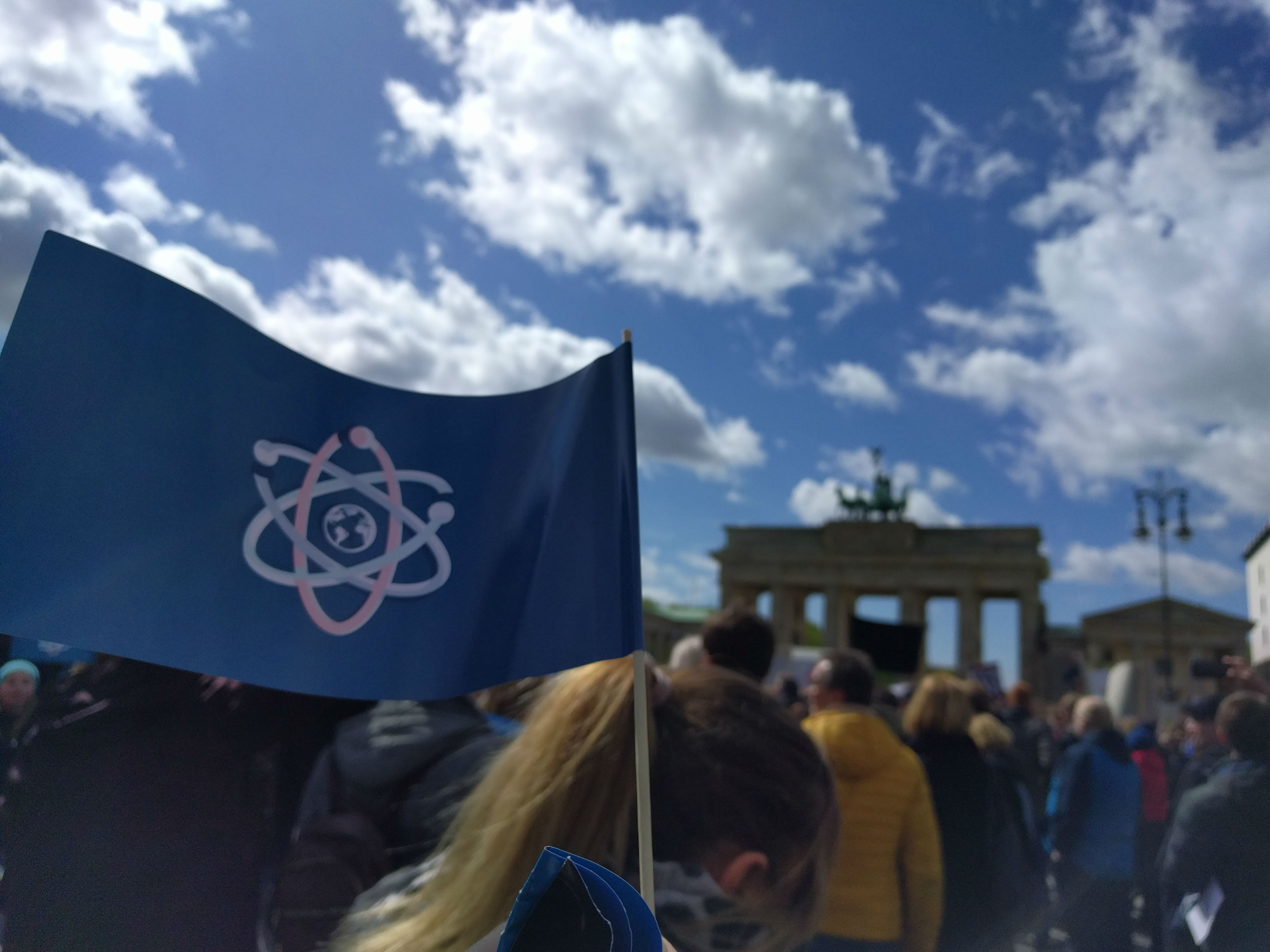
The March for Science passes the Brandenburg gate in Berlin, Germany
In the wake of the US presidential election in November 2017, the scientific community has recognized that it has fallen short in communicating the value of science and research. As a result, scientists are now calling for increased public outreach and communication efforts. While this awareness is important, the path forward is not entirely clear.
There’s a few reasons why scientists may be discouraged from science communication. Here, I’m hoping to break down some of those barriers, and introduce channels and platforms where scientists can practise. First, here are some of the reasons stopping more scientists from practising science communication, as well as my rebuttals.
Communicating about science is a noble profession, and one that’s becoming increasingly and ever more popular. Yet it isn’t the right fit for everyone. I got started in this field about five years ago, and was surprised by many of the things I needed that no one had ever mentioned. Here’s what no one ever tells you you’ll need.

If you don’t care about science, you’re going to burn out fast. Science is hard, so science communication is hard, too. You’re going to have to delve into complicated issues quickly. I’ve worked on projects ranging from solar panel taxes to integrated imaging, from public perceptions of pork to international trade databases. You really have to care about good science communication to get a message across. The only thing worse than no science communicator is a science communicator who hates their job.
I didn’t have an immediate interest in food and agricultural topics when I started my job. But I audited a course on food security, read tons on the subject and sat down with my colleagues to figure out why these topics are so critically important. It made all the difference. Continue reading
Guest contributor Virginia Schutte
The international conference Comm4Science: communicating science beyond the lab took place in Heidelberg in early May. Around 100 participants attended, where they met a great roster of speakers, took part in a communication workshop, and asked questions of a panel of experts.

Virginia Schutte