The million-dollar question every scientist should be asking

Both science communicators and researchers carry the onus of answering science’s most important question

By Jessica Eise

I recently had a phone call with a frustrated colleague looking for some advice. She had two key pressure points, both common in the field of science communication.

First, she often couldn’t make sense of what scientists were telling her. They would explain their advanced, varied concepts increasingly quickly and impatiently as she struggled to understand them. Both parties would leave frustrated, having not achieved much. The scientists might wrongly assume she’s stupid to have not understood.
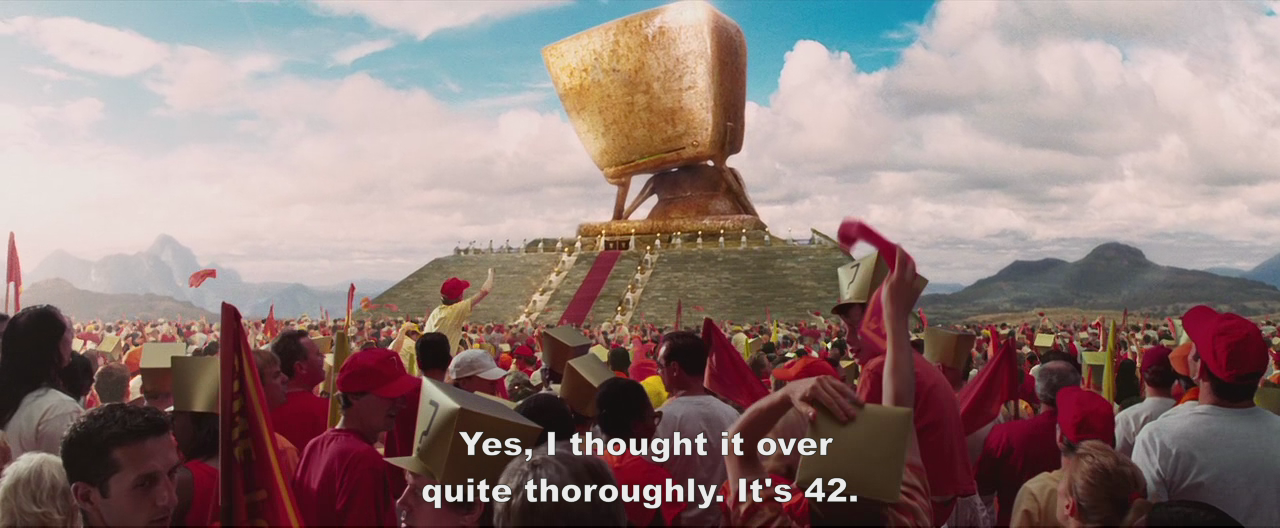
Douglas Adams’ The Hitchhiker’s Guide to the Galaxy asked “What is the answer to life, the universe and everything?” To communicate effectively, scientists should simply ask “So what?”{credit}By IllusionConscious [CC BY-SA 3.0 (https://creativecommons.org/licenses/by-sa/3.0)], from Wikimedia Commons {/credit}
Continue reading

The discomfort is worth it: share more

Making sure to communicate with the public is hard and takes time. Scientists should keep doing it, says Jessica Eise.

When David Eagleman, a neuroscientist at Stanford, wrote the New York Times bestseller Incognito, I read it voraciously. The world of the mind opened to me. My subconscious brain took on an entirely new meaning to me. Eagleman’s research felt salient, relevant, and crucial to our understanding and progress as a species.

Knowledge-sharing

{credit}Asonlobo/Wikipedia; CC-BY-SA-4.0{/credit}

Continue reading

Getting started on an academic book: five questions to ask

Turning your academic book ‘idea’ into a solid concept can be done, says Jessica Eise

Publishing an academic book is an accomplishment to which many aspire. A book is, essentially, your work, thoughts and research agglomerated in one neat, tidy package of bound paper. It’s rewarding both personally and professionally. Not only are you sharing your ideas and contributions to the broader world, but you can actually hold in your hands the fruit of your labor.writing-1043622_1920-smaller Continue reading

Science communication: What it takes

Science achieves little if it stays in the lab. Here’s what you need to get it out to the world, says Jessica Eise

Communicating about science is a noble profession, and one that’s becoming increasingly and ever more popular. Yet it isn’t the right fit for everyone. I got started in this field about five years ago, and was surprised by many of the things I needed that no one had ever mentioned. Here’s what no one ever tells you you’ll need.

analytics-282739_1280

Passion for science

If you don’t care about science, you’re going to burn out fast. Science is hard, so science communication is hard, too. You’re going to have to delve into complicated issues quickly. I’ve worked on projects ranging from solar panel taxes to integrated imaging, from public perceptions of pork to international trade databases. You really have to care about good science communication to get a message across. The only thing worse than no science communicator is a science communicator who hates their job.

I didn’t have an immediate interest in food and agricultural topics when I started my job. But I audited a course on food security, read tons on the subject and sat down with my colleagues to figure out why these topics are so critically important. It made all the difference. Continue reading