Both science communicators and researchers carry the onus of answering science’s most important question
By Jessica Eise
I recently had a phone call with a frustrated colleague looking for some advice. She had two key pressure points, both common in the field of science communication.
First, she often couldn’t make sense of what scientists were telling her. They would explain their advanced, varied concepts increasingly quickly and impatiently as she struggled to understand them. Both parties would leave frustrated, having not achieved much. The scientists might wrongly assume she’s stupid to have not understood.
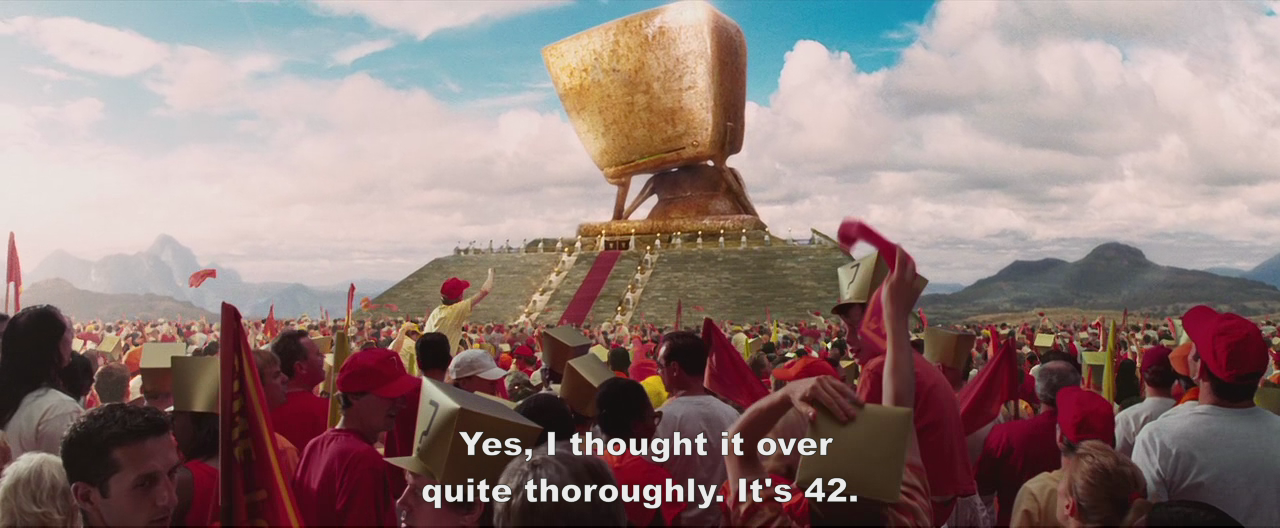
Douglas Adams’ The Hitchhiker’s Guide to the Galaxy asked “What is the answer to life, the universe and everything?” To communicate effectively, scientists should simply ask “So what?”{credit}By IllusionConscious [CC BY-SA 3.0 (https://creativecommons.org/licenses/by-sa/3.0)], from Wikimedia Commons {/credit}