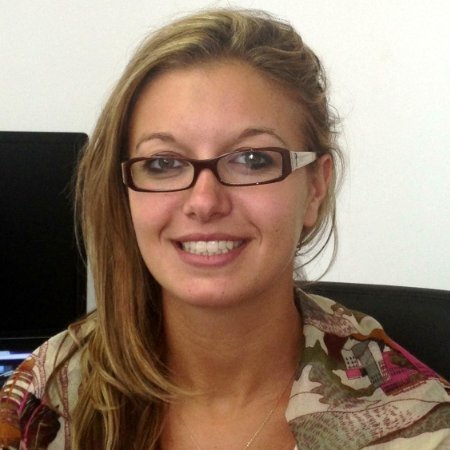
Boston Career Expo Journalist competition runner-up: Marta Wegorzewska

marta

{credit}Bill Everding{/credit}

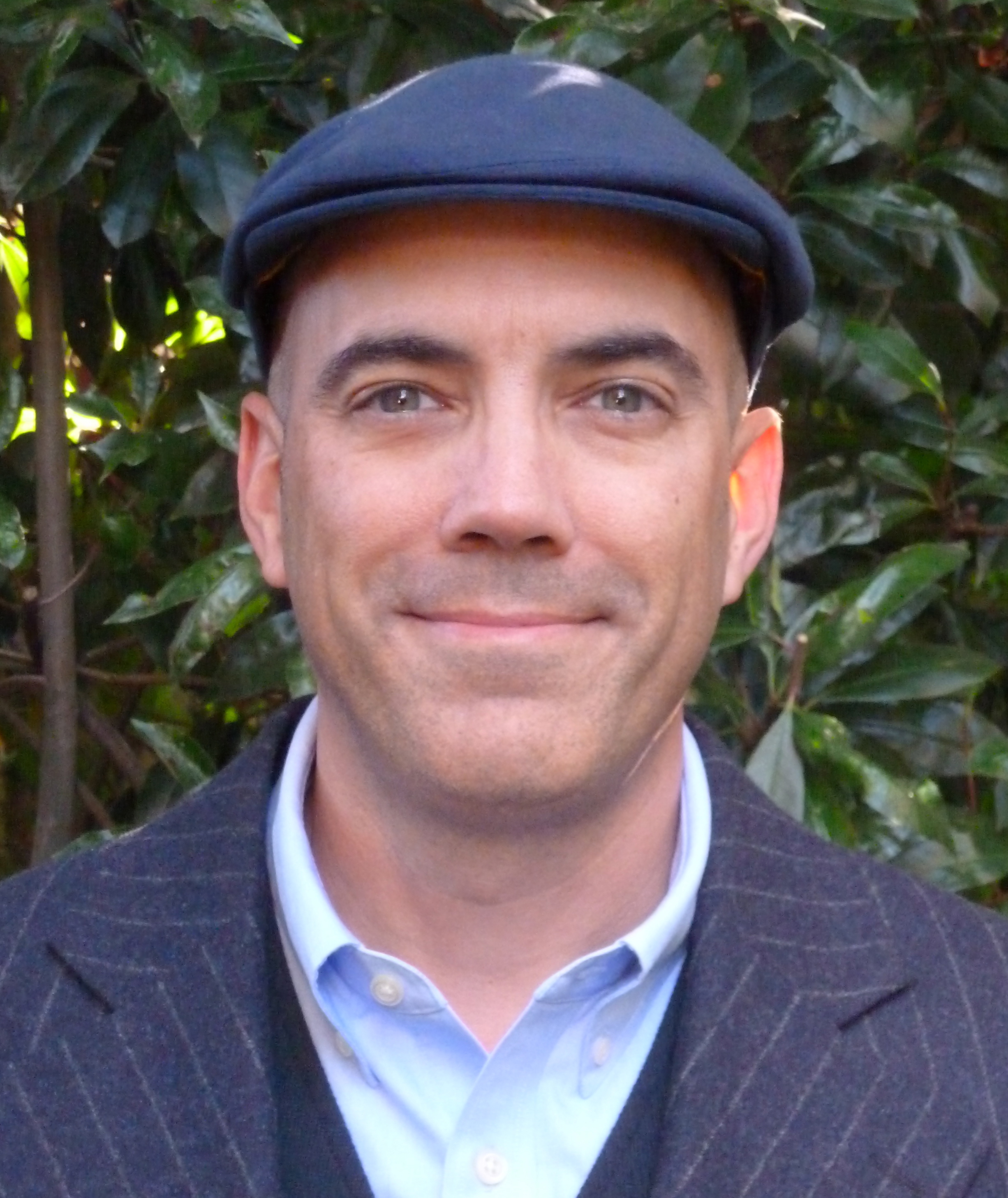
Marta Wegorzewska recently received her PhD in Immunology from the University of California, San Francisco. She is passionate about science communication and educates women about pregnancy on her blog, StorkPhD. She is originally from New York City and enjoys running half marathons and spending weekends exploring the outdoors with her Cavalier King Charles Spaniel. 

A penguin walks through that door right now wearing a sombrero. What does he say and why is he here?

The Penguin of Reason

I rub my bloodshot eye as I sip the coffee that fuels my addiction. The sun rises as I read through my thesis for final edits. Suddenly, a penguin walks through the door of my room wearing a sombrero. He says, “Marta, pack your bags. You are going to Boston.” In my sleep-deprived stupor, I obey his order.

The penguin traveled to San Francisco to inform me that I am one of the five budding science communicators chosen to be a journalist for the Naturejobs Career Expo. I am going to Boston to be a journalist. I wanted to scream it for everyone to hear. I grab my freshly pressed suit and MacBook Air, and I follow the penguin out the door of my apartment for Boston.

As the cab makes its way to the airport, a moment of silence invites feelings of self-doubt. The reality of my task in Boston starts to settle in. Suddenly, my excitement is overcome by a fear of failure. What if I don’t meet expectations? What will people think when they find out I am a scientist and not a journalist? Am I capable of doing this? Continue reading
Boston Career Expo journalists

Naturejobs Boston Career Expo

I would like to say a big thank you to everyone who sent in applications to be a Naturejobs journalist for the Career Expo in Boston on May 20th.

As part of the competition, we asked you to submit 600-word articles answering one of the following questions:

  1. What advice would you give to a friend who is having trouble dealing with a devil-in-disguise boss?
  2. You are invited to travel back in time and ask anyone a question. Who would it be and why?
  3. You’re working with the world’s worst slacker, and on top of that, they’ve stolen your glory. How would you deal with them?
  4. A penguin walks through that door right now wearing a sombrero. What does he say and why is he here?
  5. You are given a million dollars to launch your favourite scientific business idea. What is it, and what would you do with the money?

As a journalist, it’s important to understand the outlet you are writing for and in particular its audience. Your audience at New Scientist, for example, would be different to those at The Times or the Economist. Once you are clear on what the audience wants, you then need to work out how to deliver your message in  way that will resonate with readers.

The Naturejobs blog reaches an international audience of scientists from both academia and industry and aims to provide practical content to help readers deal with situations in both environments. We like to add a personal touch by inviting writers to share their stories with us, so that you, the reader, can relate to their experiences.

The objective of this competition was to see if you, our readers, had worked this out. We had some great entries, and will share the 5 winning ones plus 5 runners up with over the next fortnight. We hope you enjoy them as much as we did.

Joining a start-up fresh out of university

Martine Bernstein

{credit}Alex Greenbaum{/credit}

In 2009, Dan Senor and Saul Singer christened Israel the “Start-Up Nation” in their best-selling book, a title that Israelis have whole-heartedly embraced. The book details how Israel has experienced success in the high-tech sector, seeing hundreds of software and communications businesses start, many of which have flourished.

Martine Bernstein did not know this when she decided to go to Israel to finish her MSc in Human Molecular Genetics. She wanted to combine her Jewish roots with her fascination for genetics, and knew the Weizmann Institute of Science was doing high quality research in this field. “It was a phenomenal place to study; I had some great hands-on lab experience,” says Martine. Continue reading

London’s biotech hub with Kit Malthouse

Is London ready to become the next biotech hub?

Kit Malthouse

{credit}Hannah Lucy Jones{/credit}

In this month’s Windback Wednesday series, we’re all about entrepreneurship: what it takes to be one, how to become one and more. But if you’re based in London, it’s not so easy. Although it’s got the brains and research centres to make it a hub, setting up shop in London is the tricky part. In this podcast, I speak to Kit Malthouse, the Deputy Mayor of London for Business and Enterprise, and find out how London is preparing to become the next biotech hub.

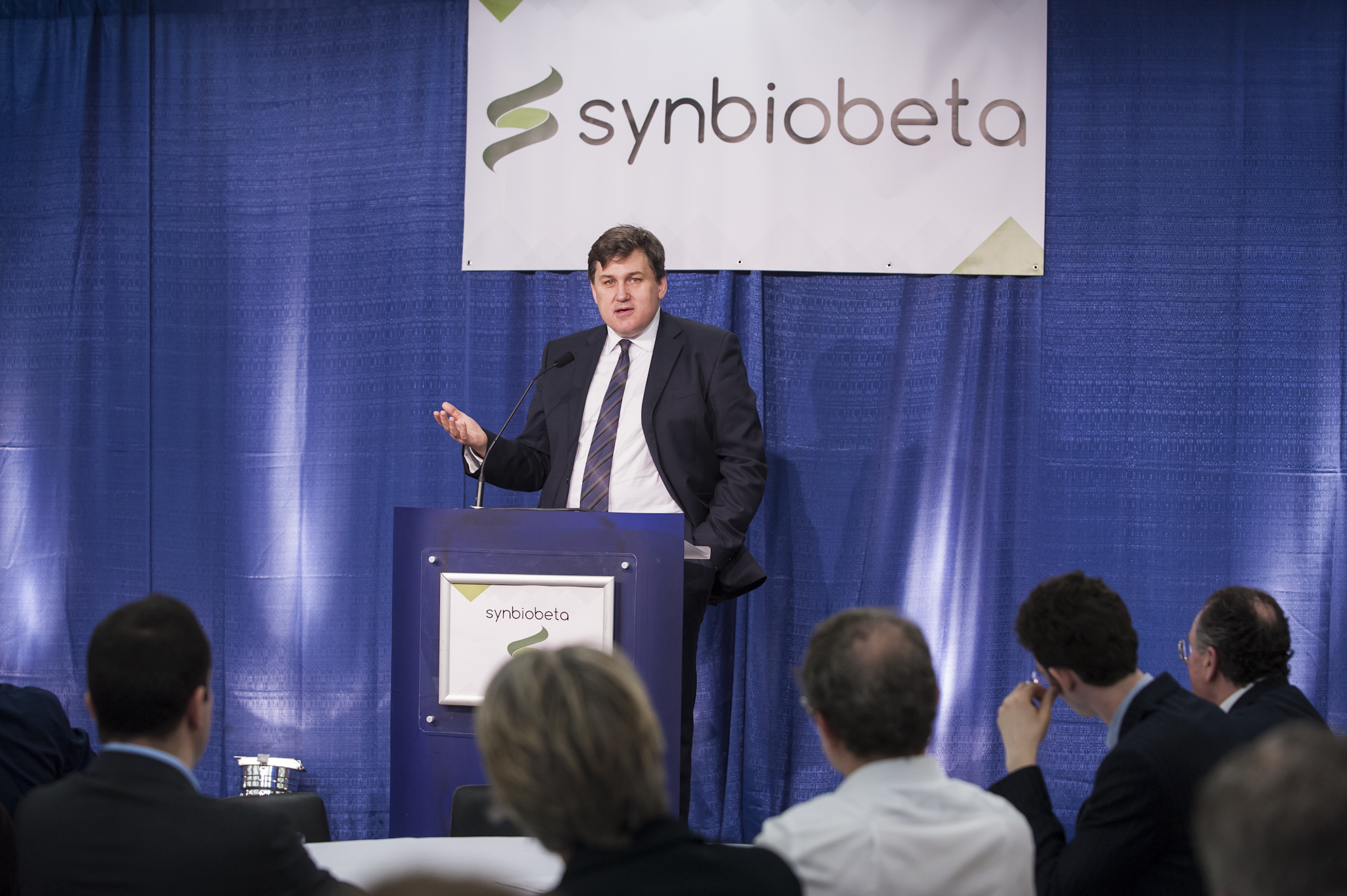
Kit Malthouse, the Deputy Mayor of London for Business and Enterprise has big plans for London. In his speech at SynBioBeta event at Imperial College London, he spoke of his dreams of London becoming the next big hub for biotech start-ups. He is aware that the foundations for this already exist.

“To a certain extent we already are. We have a huge life sciences sector.” Five large research institutes, many hospitals, Institute for Cancer Research the Crick Institute (soon!) and many more are part of an ecosystem that already exists in London. But what the Deputy Mayor hopes to do is “give it some coherence, so that it comes together as an entity… promote it, and fundamentally attract investment in.” 

Continue reading

The biotech industry with Rob Carlson

Rob Carlson

{credit}Eric Carlson{/credit}

In this interview, I speak to Dr. Rob Carlson, a Principal at Biodesic, an engineering and strategic consulting firm in Seattle that provides services to governments and corporations around the globe. At the broadest level, Dr. Carlson is interested in the future role of biology as a human technology. He is the author of the book Biology is Technology: The Promise, Peril, and New Business of Engineering Life, published in 2010 by Harvard University Press; it received the PROSE award for the Best Engineering and Technology Book of 2010 and was named to the Best Books of 2010 lists by writers at both The Economist and ForeignPolicy.com. Carlson is a frequent international speaker and has served as an advisor to such diverse organisations as The Hastings Center, the PICNIC Design Festival, the UN, the OECD, the US Government, and companies ranging in size from start-ups to members of the Fortune 100. Carlson earned a doctorate in Physics from Princeton University in 1997.

How did you move into the industrial world of biotech?

I followed my nose. My formal education is in physics, with some neurobiology and electrical engineering thrown in. I spent a number of years labouring under the expectations of my professors that I would eventually become a professor, too. Continue reading

Trouble in Haven: Resolving conflicts in academia

Sharing a laboratory with others is typically rewarding – peers in close quarters become a sounding post for new ideas and a support network for the highs and lows of research life. But you don’t choose your desk mates and things can go wrong. Regular Naturejobs contributor Shimi Rii recently experienced how small disagreements can escalate quickly. Finding the right way to deal with conflict is not easy but necessary in order to ensure a harmonious work environment.

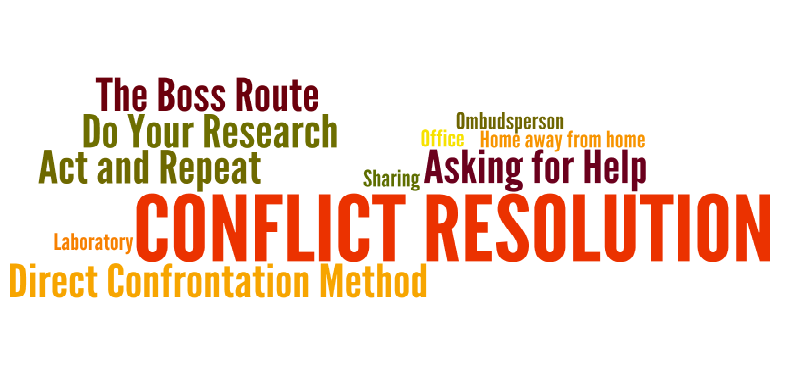
conflict resolutionI recently encountered a conflict in my office, a ~300 sq. ft. space I share with four graduate students. With each of us nestled into a 5-ft wide cubicle with pictures of friends and family, an emergency pack of ibuprofen and vitamin C, and granola bars for late night studying, the office is a home away from home. In this safe haven where we spend most of our waking hours, there is virtually no room for conflict.

When my office mate first started conducting the behaviour, it was sporadic and didn’t really bother me. (To protect the privacy of parties involved, I won’t describe the actual behaviour, which was on par with general housekeeping violations.) After a month, the frequency increased, and it began to directly affect me, whose desk was located adjacent to theirs. When I asked my other office mates how they felt about the action, they were indifferent. I was on my own to address the behaviour. Continue reading

Entrepreneurship with Steve Blank

What does it mean to be an entrepreneur?

Steve Blank

{credit}Eric Millette{/credit}

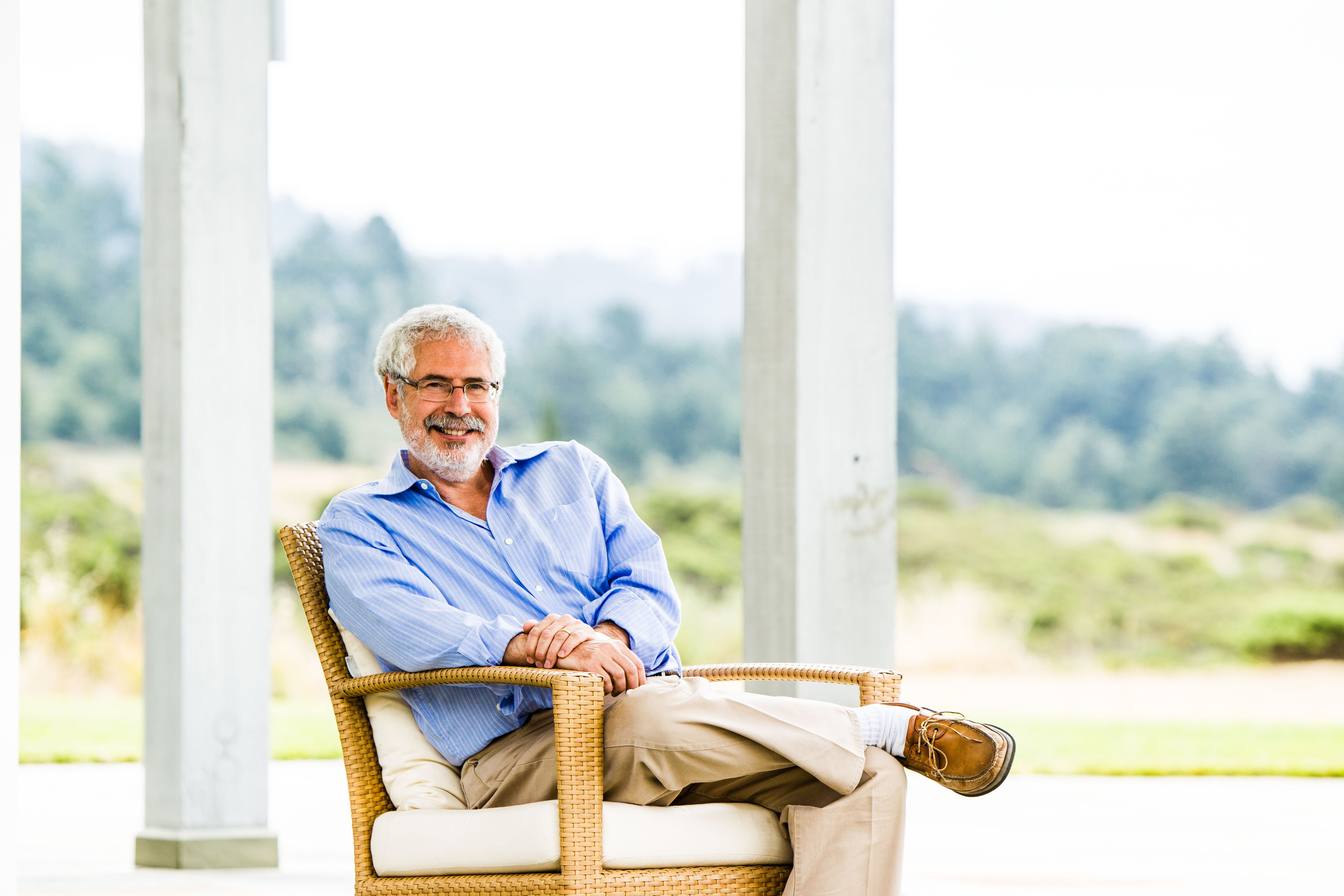
In this month’s Windback Wednesday series, we’re exploring entrepreneurship: how to brush up on your business skills, where to get venture capital funding and more. In this podcast, I speak to Steve Blank, an associate professor at Stanford University engineering school, a lecturer at UC Berkeley Haas Business SchoolColumbia Business School and the University of California in San Fransisco (UCSF). On top of all of that, he is also a thought leader of the Lean Start-up movement.

I met Steve last week at a SynBioBeta event at Imperial College London. He gave a very engaging key note speech on the Wednesday evening, giving us a flavour of what a Lean Start-up business is. He put several audience members on the spot, asking them to sell someone else’s “idea or concept”  to neighbours, who always (as per Steve’s instruction) said no thanks. They said no thanks, because of who was doing the selling. Steve was trying to make the point that if you, the scientist, have an idea or an invention that you think could be commercialised, then you, the scientist, need to go out and sell. You can’t hire a VP of sales or a marketing manager. YOU know your invention better than anyone else, YOU need to leave the lab and sell YOUR idea.

https://www.nature.com/multimedia/podcast/naturejobs/naturejobs-2014-04-10.mp3 Continue reading

Windback Wednesday: Entrepreneurship

Scientists are full of ideas, constantly creating wonderful research, but what can you do when one of these ideas could make you some money? In this Windback Wednesday series we’re digging up some articles from Nature Careers and the Naturejobs blog on entrepreneurship

windbackweds

{credit}Naturejobs{/credit}

The word entrepreneur comes from the 13th century french verb entreprendre, which literally translates to “to do something” or “to undertake”. By the 16th century, the word entrepreneur had developed a meaning of its own: someone who undertakes a business venture. It’s distinguishing features, according to Richard Cantillon (an 18th century economist), are an understanding of risk and being prepared to do business without guaranteed profits. Sounds scary, but it doesn’t need to be.

In a recent interview with Naturejobs (podcast to follow soon!), Steve Blank, a Silicon Valley entrepreneur, described entrepreneurship as a cross between science and art:

“Artists have something inside of them that they want to bring to fruition, and actually see tangible results of: it’s not just thinking about music or listening to music, they want to make music. Making a start-up and making something commercial is exactly that same feeling, and if you don’t have that passion for it, you shouldn’t get engaged. But if you do have that passion for it, you will figure out how to split up some time, take 6 months off or take a sabbatical…. [and] you will find, once in your life, you will experience what it takes to actually do a start-up. But this isn’t a job, this is a passion.”

On that much happier note, we’re going to start this month’s series on entrepreneurship with Neil Savvage’s article on Innovation: Brushing up on business. As well as case-studies, this article gives some insight into practical talks and training courses scientists can do to brush up on their business skills.

Throughout this month, we’ll also be looking at how to find some venture capital to fund ideas, how to become a bio-entrepreneur and how women can find a way in to the entrepreneurial world.

But what we’d like to know is: what does the word entrepreneur mean to you?

How to break out of a scientific career rut, Part 3: Investigate internal barriers

 Contributor, Ben Thomas

Time spent gathering data on potential career options is time well-spent. As the saying goes, “knowledge is power”, and a clearer view of the non-academic job market, along with a few encouraging emails from scientists in other sectors can serve as powerful motivators to start making your own career upgrade.

Thinkstock

Thinkstock

Continue reading

Digital lab notebook


“The conventional paper lab notebook is dead – or at least it’s on life support. With the advent of open electronic notebooks, data and methods are no longer cloistered in books or tucked away on private hard drives. But this gives the user some tradeoffs to consider. Read more about it on Nature Careers